Posts about Tokyo
Main content
99 Street Type Findings
The Good, the Bad and the Ugly: Tokyo Edition
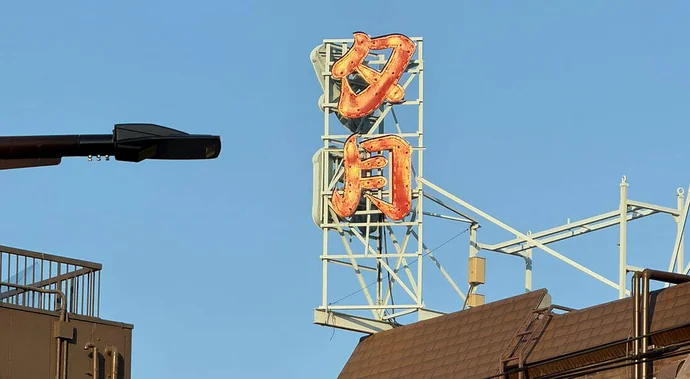
The series ‘The Good, the Bad and the Ugly’ brings together typographic finds from a range of cities. The photographs present them as they were encountered: unembellished, unedited and without aesthetic or qualitative judgement. Rather than distinguishing between ‘good’ and ‘bad’ or ‘ugly’ design, the focus is on typography as a direct expression of everyday urban culture.

Detailed view of Hideji Terada’s “Tamiga” exhibition
Interview with Artist Hideji Terada
Of People, Characters and Layers of Time
Before Hideji Terada began his artistic career in 2022, he was a highly regarded graphic designer whose work had been featured, among other places, in the Tokyo issue of Slanted Magazine. In recent years, the artist, whose background lies in graphic design and lettering, has focused on expressive black-and-white forms and figures.

Double-page spread from Manami Okazaki’s book “Kokeshi from Tohoku with Love”
Interview with Author Manami Okazaki
From Shitamachi with pride
Her articles have appeared in the Wall Street Journal, The Guardian, The Japan Times, and the South China Morning Post. Given the breadth of her work, the author Manami Okazaki can justifiably be described as tireless. I meet Manami in the historic district of Kyojima, at her studio which is housed in a traditional nagaya (row house). A conversation about traditional crafts, transformation, and cultural continuity, seated on tatami mats and surrounded by books.

On display in the Japan Poster Shop showroom: the huge B0 billboard for Stanley Kubrick's 2001: A Space Odyssey, a monumental survivor from the era of roadshow science fiction.
The World of Japanese Film Posters
Designed to Disappear
In the second half of the nineteenth century, Europe fell under the spell of Japonisme. The visual language of a country that had only recently opened its doors to the West transformed painting, graphic design, fashion and the decorative arts. More than 150 years later, Japan is once again inspiring a renewed fascination around the world. A glance at today’s social media makes it clear that a new generation has developed an appreciation not only for Japanese pop culture, but also for the country’s everyday aesthetics, craftsmanship and design heritage. One indication of this shift came during Asian Art Week at Christie’s in New York last spring. Under the title Anime Starts Here: Japanese Subculture Reimagines Tradition, the auction house presented anime, manga, film posters and popular culture within the broader context of Japanese art and design. It marked a significant moment: for perhaps the first time, original Japanese film posters were presented not merely as collectibles, but as cultural artefacts worthy of standing alongside more established forms of Japanese art.

Anti-gentrification protest in Kōenji, 2018. Photo: Andhika Faisal
Interview with SUBstore Founder Andhika Faisal
Koenji, Tokyo’s Defiant Neighbourhood
Just a few stops west of Shibuya in western Tokyo, the neighbourhood of Koenji feels like a different world. While the capitals famous entertainment districts are defined by neon lights and constant redevelopment, this corner of the city has long maintained a more independent spirit. Few people embody that connection between music, community and activism better than Andhika Faisal (Andy), founder of SUBstore. I met him to talk about the neighbourhoods unique character, its long-running anti-gentrification movement and why zines remain an important tool for documenting communities before they disappear.

Nike Shinjuku, façade. Photo: Nike
Shūetsu Satō’s adhesive tape lettering
Tokyo Tape Type: From the Underground to the Flagship Store
In April 2026, a new NIKE flagship store opened on the east side of Shinjuku Station. In an environment that all but overwhelms the viewer with advertising messages, the creative team led by the Creative director Shuichi Narita (Nike) and art director Shun Sasaki (Ayond) achieved a move that was as engaging as it was clever: for the branding, they drew on the iconic adhesive-tape lettering Shūetsu-tai by security guard Shūetsu Satō, which for over twenty years has been inseparably associated with Tokyo’s busiest railway station—and indeed the busiest in the world.