Posts about India
Main content
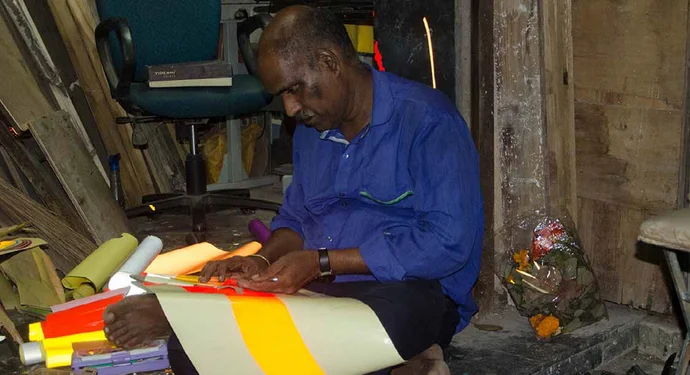
Mumbai Taxi Art
Sameer Mistry, artist with a fine blade
In 2009, the magazine Creative Review appeared with a cover that brought sudden attention in the West to an art form that had hitherto remained almost entirely unknown: the ornate typographic embellishments adorning Mumbai’s kaali peeli taxis. A decade later, I set out in search of the artists behind these “Mumbai Typo Taxis,” seeking to discover what, if anything, has endured of their once resplendent decorations.
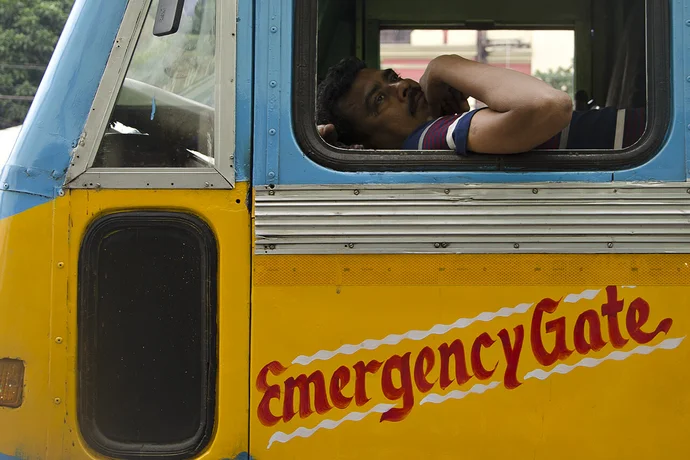
Kolkata’s hand-painted buses
Pilot!
Kolkata seems to be full of pilots. At least if one follows the inscriptions on its public buses. On the driver’s side door, the word “Pilot” is often painted in bold letters, while the opposite side prominently bears the designation “Emergency Gate.” No two of these meticulously crafted inscriptions are alike. Each is hand-painted, frequently embellished with floral motifs or other decorative elements.
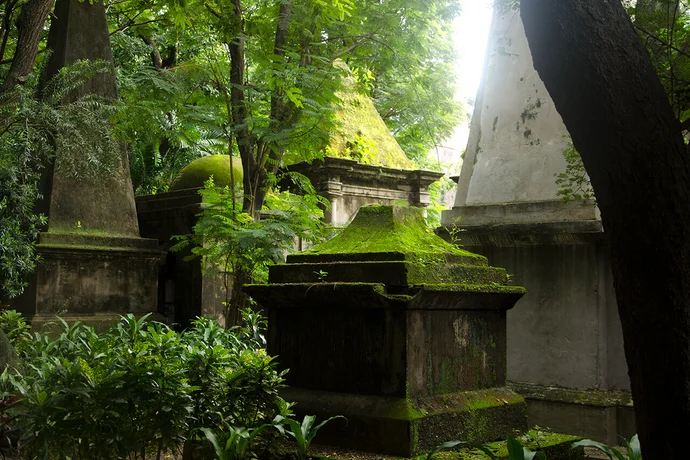
Kolkata’s hidden oasis
Park Street Cemetery
South Park Street Cemetery was among the earliest non-ecclesiastical cemeteries in the world and, in the nineteenth century, likely the largest Christian burial ground outside Europe and the Americas. Opened in 1767, the site is today enclosed by a brick wall that shelters an eclectic assemblage of graves, mausolea, and dense tropical vegetation, set apart from the surrounding bustle of Kolkata.
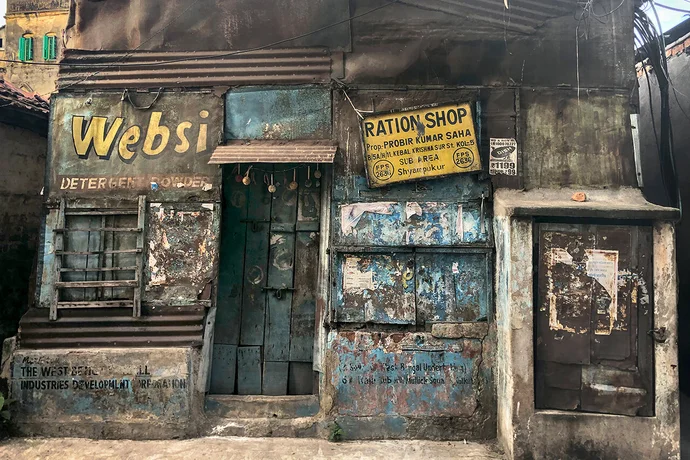
Deserted streets in India? An uncommon sight.
Empty streets
Cars, buses, countless yellow Ambassador taxis, hand-pulled rickshaws, and India’s only tramway: the streets of Kolkata exist in a near-constant state of movement and congestion. Yet during Durga Puja, the most significant religious festival in Bengal, this intensity briefly subsides. The streets appear almost emptied, revealing a quieter urban surface in which numerous typographic details come into view.
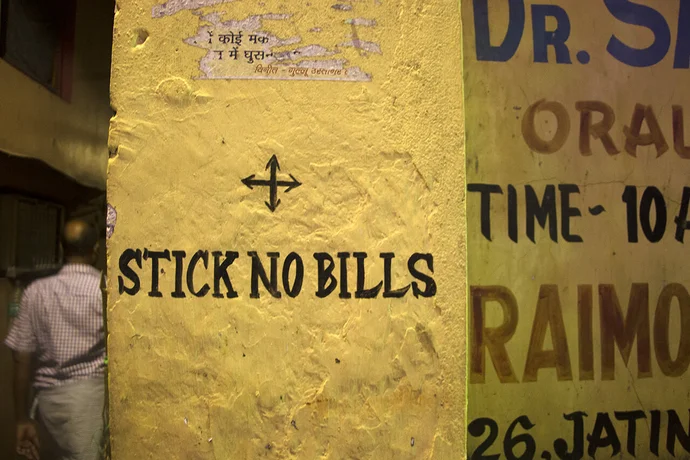
Poetic overlays in Kolkata
Stick no bills!
Kolkata, the capital of Bengal, is considered the intellectual centre of India. Its inhabitants are known for their passion for politics and their affinity for art and literature. The city’s cultural offer is correspondingly large. This is also reflected in the street scene: literally from every wall, political slogans, local services, film posters and other messages compete for the attention of passers-by.