Places
Main content
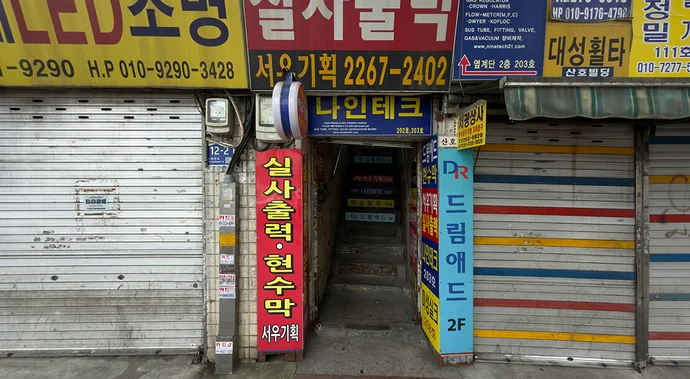
66 Street Type Findings
The Good, the Bad and the Ugly: Seoul Edition
From the workshop signs of the increasingly gentrified Mullae-dong district and the backyard print shops around Euljiro Printing Alley to the student-oriented streets of Hongdae and slightly faded nightlife districts such as Sinchon, Seoul presents a remarkably broad spectrum of individual public lettering.
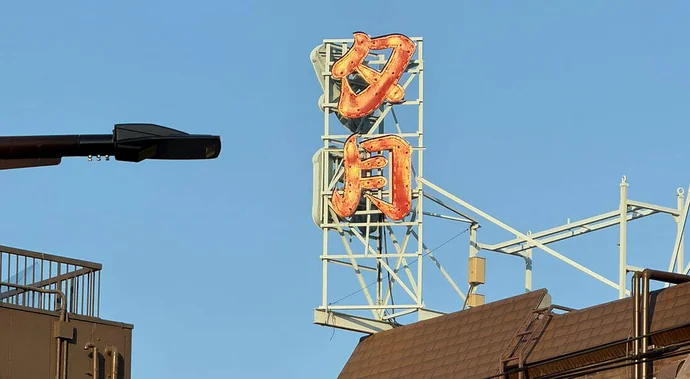
99 Street Type Findings
The Good, the Bad and the Ugly: Tokyo Edition
The series ‘The Good, the Bad and the Ugly’ brings together typographic finds from a range of cities. The photographs present them as they were encountered: unembellished, unedited and without aesthetic or qualitative judgement. Rather than distinguishing between ‘good’ and ‘bad’ or ‘ugly’ design, the focus is on typography as a direct expression of everyday urban culture.

Double-page spread from Manami Okazaki’s book “Kokeshi from Tohoku with Love”
Interview with Author Manami Okazaki
From Shitamachi with pride
Her articles have appeared in the Wall Street Journal, The Guardian, The Japan Times, and the South China Morning Post. Given the breadth of her work, the author Manami Okazaki can justifiably be described as tireless. I meet Manami in the historic district of Kyojima, at her studio which is housed in a traditional nagaya (row house). A conversation about traditional crafts, transformation, and cultural continuity, seated on tatami mats and surrounded by books.

Anti-gentrification protest in Kōenji, 2018. Photo: Andhika Faisal
Interview with SUBstore Founder Andhika Faisal
Koenji, Tokyo’s Defiant Neighbourhood
Just a few stops west of Shibuya in western Tokyo, the neighbourhood of Koenji feels like a different world. While the capitals famous entertainment districts are defined by neon lights and constant redevelopment, this corner of the city has long maintained a more independent spirit. Few people embody that connection between music, community and activism better than Andhika Faisal (Andy), founder of SUBstore. I met him to talk about the neighbourhoods unique character, its long-running anti-gentrification movement and why zines remain an important tool for documenting communities before they disappear.

Nike Shinjuku, façade. Photo: Nike
Shūetsu Satō’s adhesive tape lettering
Tokyo Tape Type: From the Underground to the Flagship Store
In April 2026, a new NIKE flagship store opened on the east side of Shinjuku Station. In an environment that all but overwhelms the viewer with advertising messages, the creative team led by the Creative director Shuichi Narita (Nike) and art director Shun Sasaki (Ayond) achieved a move that was as engaging as it was clever: for the branding, they drew on the iconic adhesive-tape lettering Shūetsu-tai by security guard Shūetsu Satō, which for over twenty years has been inseparably associated with Tokyo’s busiest railway station—and indeed the busiest in the world.
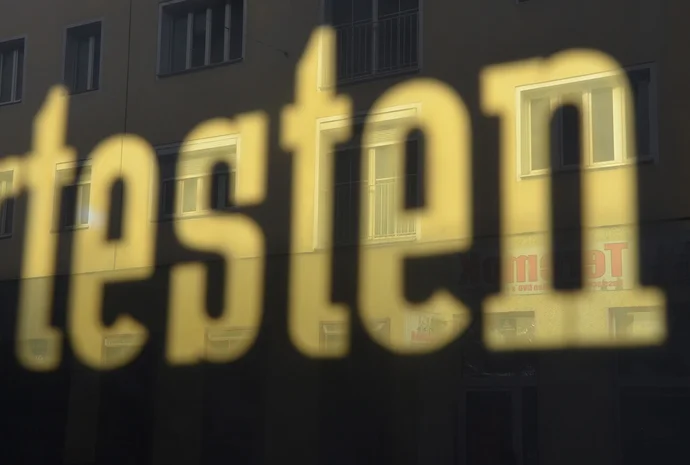
A (virtuell) walk to Vienna’s gilded Signs
Vienna, Gilded
Pallas Athena, the Secession, the Plague Column—Vienna has never been sparing in its use of gilding on architectural landmarks. Far less attention, however, has been paid to the gilded shopfronts and commercial portals that came into vogue around the turn of the twentieth century, and which played a formative role in establishing Vienna’s reputation as a centre of sign painting.

A visit to (the real) Hallstatt
Hand-painted skulls in Hallstatt’s charnel house
Hallstatt was inscribed as a UNESCO World Heritage Site in 1997. In recent years, the village has come to exemplify the phenomenon of overtourism: despite a resident population of approximately 750, it has recorded up to 900,000 visits annually. Following the construction of a full-scale replica near Hong Kong in 2012, interest—particularly among Chinese visitors—has increased markedly. In May 2020, however, this dynamic was temporarily suspended. Owing to the Covid-19 lockdown, Hallstatt appeared almost entirely deserted.
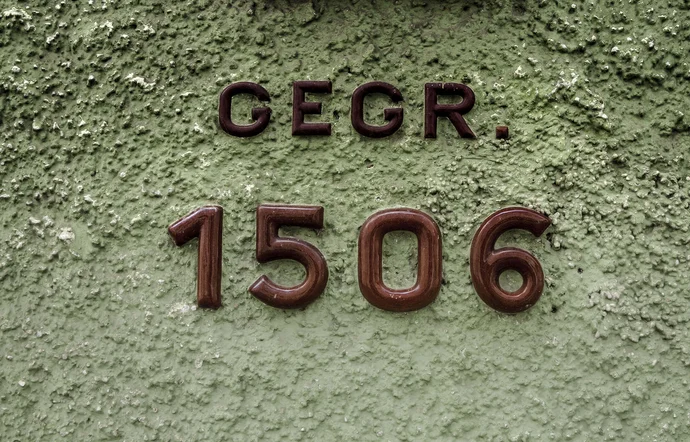
Gmunden Ceramics
Type, fired in ceramic
Gmunden, a small town situated in Austria on the shores of Lake Traunsee, is recognised as an important centre of ceramic production. This tradition is visibly embedded within the townscape: ceramic reliefs and typographic elements appear throughout the streets, forming subtle yet characteristic details that attest to a long-standing artisanal practice.
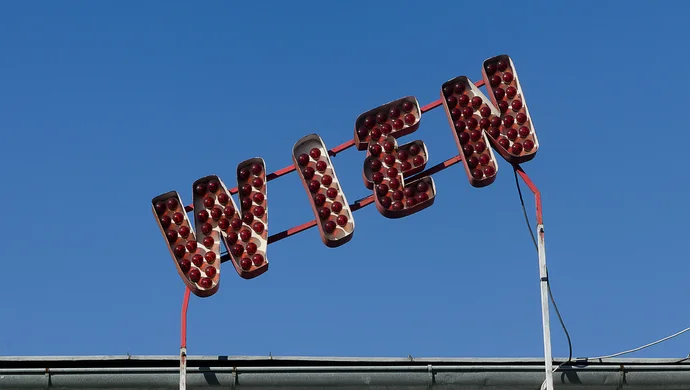
Alone in the Wiener Prater
Lockdown in the Amusement Park
Vienna’s Prater looks back on more than 250 years as a place of recreation on the city’s doorstep. The Wurstelprater in particular, with its array of attractions, has long been a favoured destination for Viennese families and a place of longing for generations of children. In spring, the Prater enters its high season, when tourists and local families alike crowd around its stalls. In April 2020, however, everything was different. During the first lockdown, the deserted Prater revealed itself as both captivating and eerily uncanny.
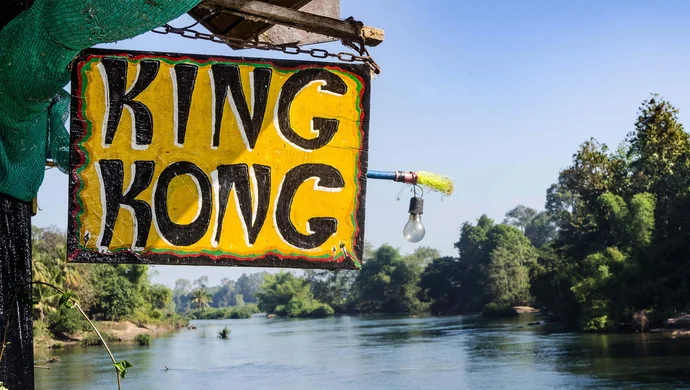
Advertising in Southern Laos
Been there, Don Det
The region of the Si Phan Don in southern Laos can, with little exaggeration, be described as the very end of the world. Of the countless islands scattered across this stretch of the Mekong, only a few are inhabited, and a mere three have seen any degree of tourist development. The electrification of the islands has brought with it a modest prosperity—alongside a steady flow of visitors. Where competition emerges, so too does the impulse to advertise.