Icons
Main content

On display in the Japan Poster Shop showroom: the huge B0 billboard for Stanley Kubrick's 2001: A Space Odyssey, a monumental survivor from the era of roadshow science fiction.
The World of Japanese Film Posters
Designed to Disappear
In the second half of the nineteenth century, Europe fell under the spell of Japonisme. The visual language of a country that had only recently opened its doors to the West transformed painting, graphic design, fashion and the decorative arts. More than 150 years later, Japan is once again inspiring a renewed fascination around the world. A glance at today’s social media makes it clear that a new generation has developed an appreciation not only for Japanese pop culture, but also for the country’s everyday aesthetics, craftsmanship and design heritage. One indication of this shift came during Asian Art Week at Christie’s in New York last spring. Under the title Anime Starts Here: Japanese Subculture Reimagines Tradition, the auction house presented anime, manga, film posters and popular culture within the broader context of Japanese art and design. It marked a significant moment: for perhaps the first time, original Japanese film posters were presented not merely as collectibles, but as cultural artefacts worthy of standing alongside more established forms of Japanese art.

Nike Shinjuku, façade. Photo: Nike
Shūetsu Satō’s adhesive tape lettering
Tokyo Tape Type: From the Underground to the Flagship Store
In April 2026, a new NIKE flagship store opened on the east side of Shinjuku Station. In an environment that all but overwhelms the viewer with advertising messages, the creative team led by the Creative director Shuichi Narita (Nike) and art director Shun Sasaki (Ayond) achieved a move that was as engaging as it was clever: for the branding, they drew on the iconic adhesive-tape lettering Shūetsu-tai by security guard Shūetsu Satō, which for over twenty years has been inseparably associated with Tokyo’s busiest railway station—and indeed the busiest in the world.
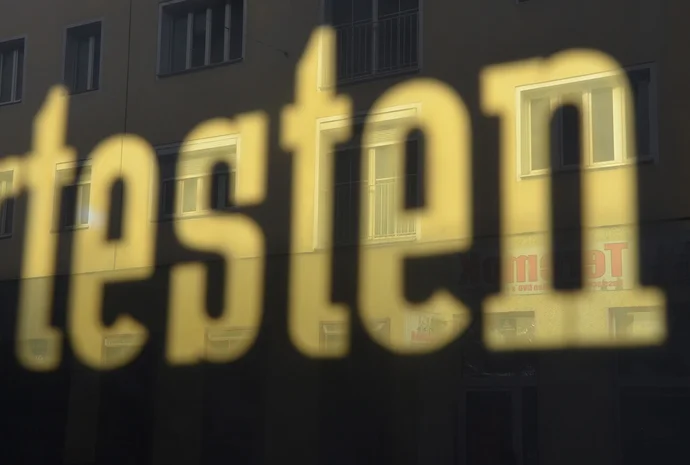
A (virtuell) walk to Vienna’s gilded Signs
Vienna, Gilded
Pallas Athena, the Secession, the Plague Column—Vienna has never been sparing in its use of gilding on architectural landmarks. Far less attention, however, has been paid to the gilded shopfronts and commercial portals that came into vogue around the turn of the twentieth century, and which played a formative role in establishing Vienna’s reputation as a centre of sign painting.
In the Wien Museum Depot
A Visit to the Prater Whale
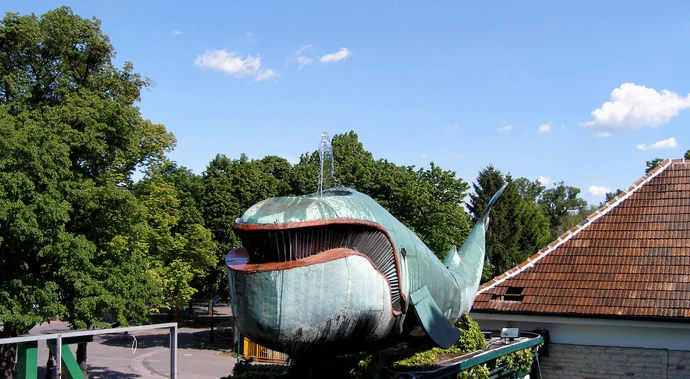
The inn Zum Walfisch, founded as early as 1782, was a true Prater institution and, for generations, a cherished destination for Viennese patrons. Above its entrance, a nine-metre-long whale—installed in the early 1950s—delighted visitors with its playful water fountain, captivating not least the younger among them. In 2013, however, the restaurant closed its doors, and with it seemed to come the end of the whale.
Signs of Saigon
Tracing Old Saigon
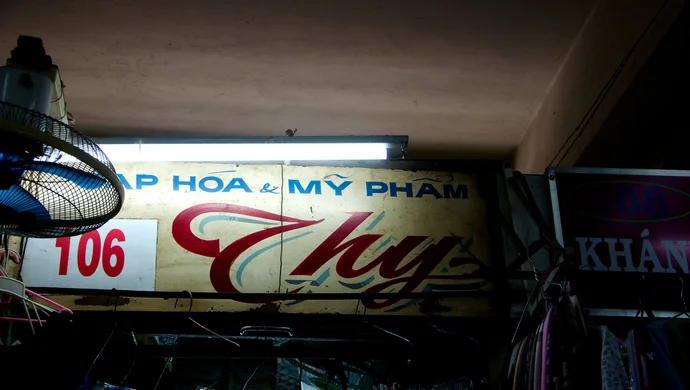
Inspired by the Signs of Saigon project by Steffi Neukirchen, I set out on my first trip to Ho Chi Minh City in December 2019 with the expectation of encountering a wealth of historic lettering. As it turned out, it proved less straightforward than expected.
Amsterdam’s Krulletters
Letters and Lager
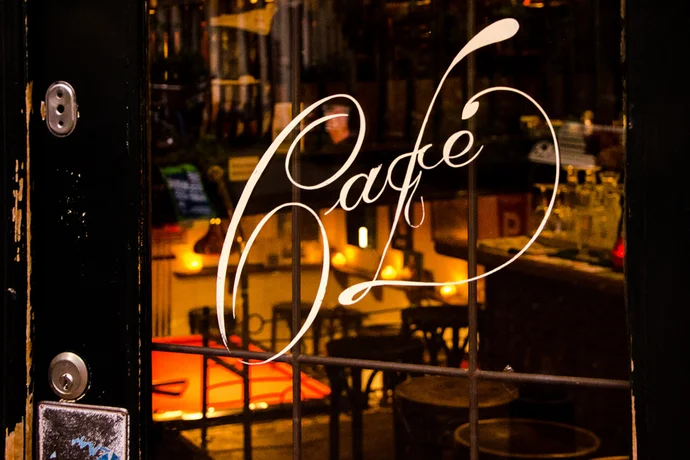
They belong to Amsterdam much as pubs belong to London: bruin cafés—intimate, traditional establishments frequented by locals and, for the most part, still largely untouched by gentrification and the excesses of tourism. What unites these cafés, beyond their preserved local character, are the often playful letterings at their entrances, known as krulletters.
Mumbai Taxi Art
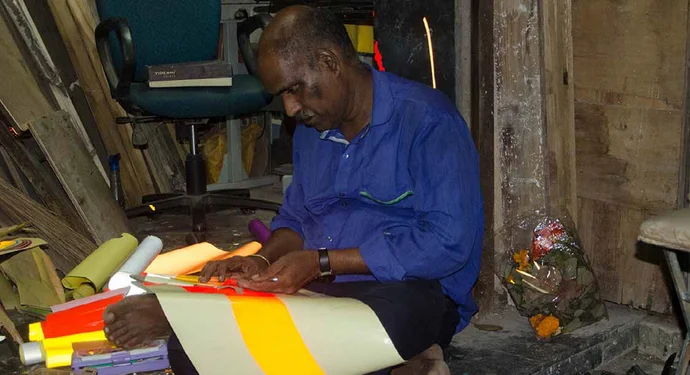
Sameer Mistry, artist with a fine blade
In 2009, the magazine Creative Review appeared with a cover that brought sudden attention in the West to an art form that had hitherto remained almost entirely unknown: the ornate typographic embellishments adorning Mumbai’s kaali peeli taxis. A decade later, I set out in search of the artists behind these “Mumbai Typo Taxis,” seeking to discover what, if anything, has endured of their once resplendent decorations.
Kolkata’s hand-painted buses
Pilot!
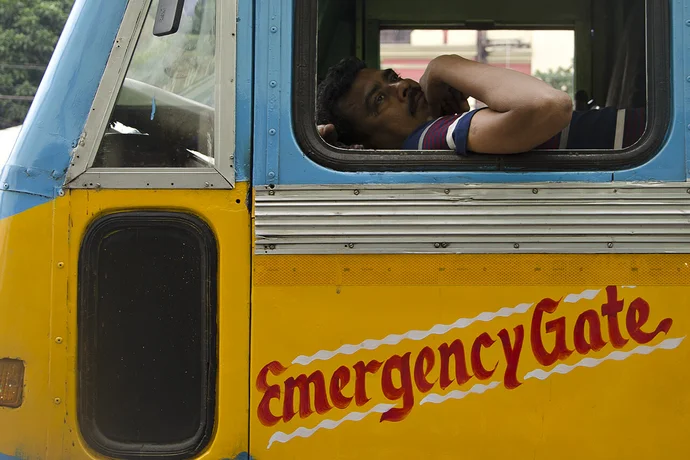
Kolkata seems to be full of pilots. At least if one follows the inscriptions on its public buses. On the driver’s side door, the word “Pilot” is often painted in bold letters, while the opposite side prominently bears the designation “Emergency Gate.” No two of these meticulously crafted inscriptions are alike. Each is hand-painted, frequently embellished with floral motifs or other decorative elements.
Hong Kong Neon
The colours of Wong Kar-Wai
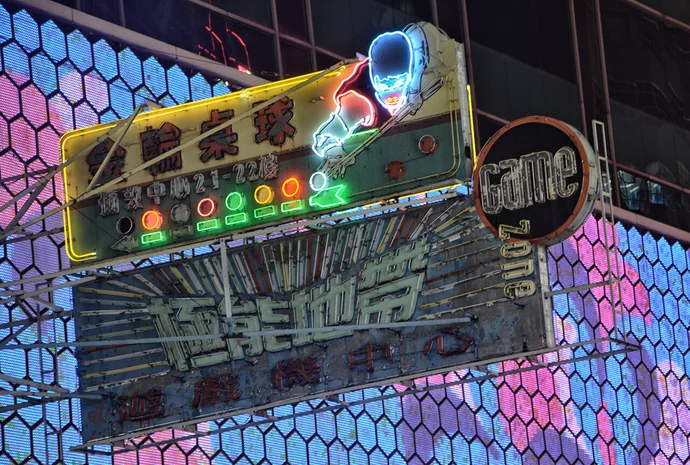
In December 2017, I travelled to Hong Kong to document the remaining neon signs. My explorations took me across all parts of the city; night after night, I followed the glow of this distinctive medium. Although Hong Kong’s neon may be in decline, it has lost none of its enduring fascination.