Main content
Mumbai Taxi Art
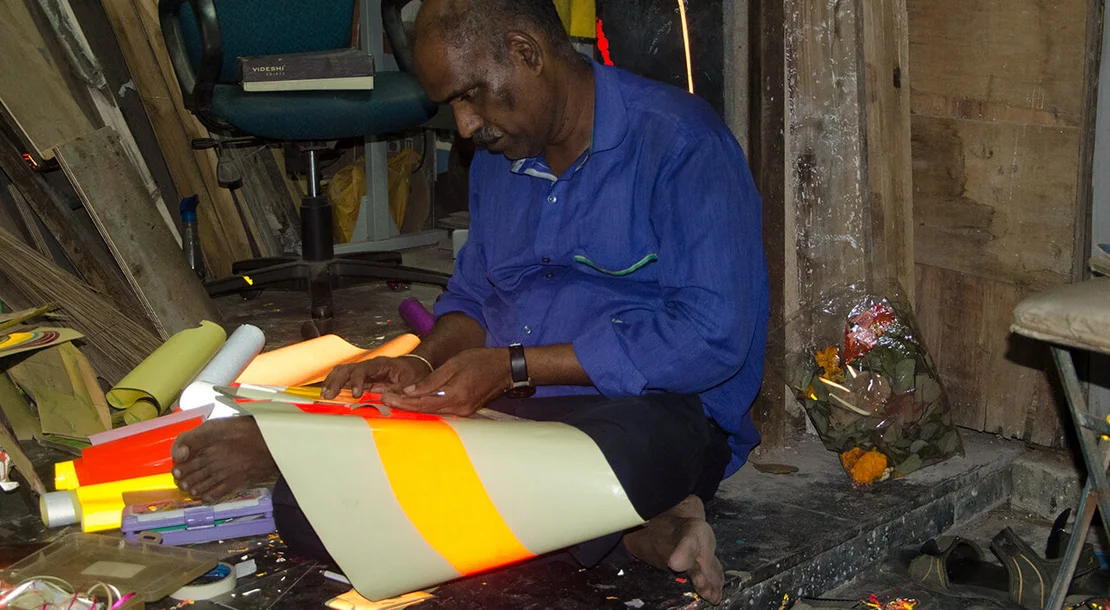
Sameer Mistry, artist with a fine blade
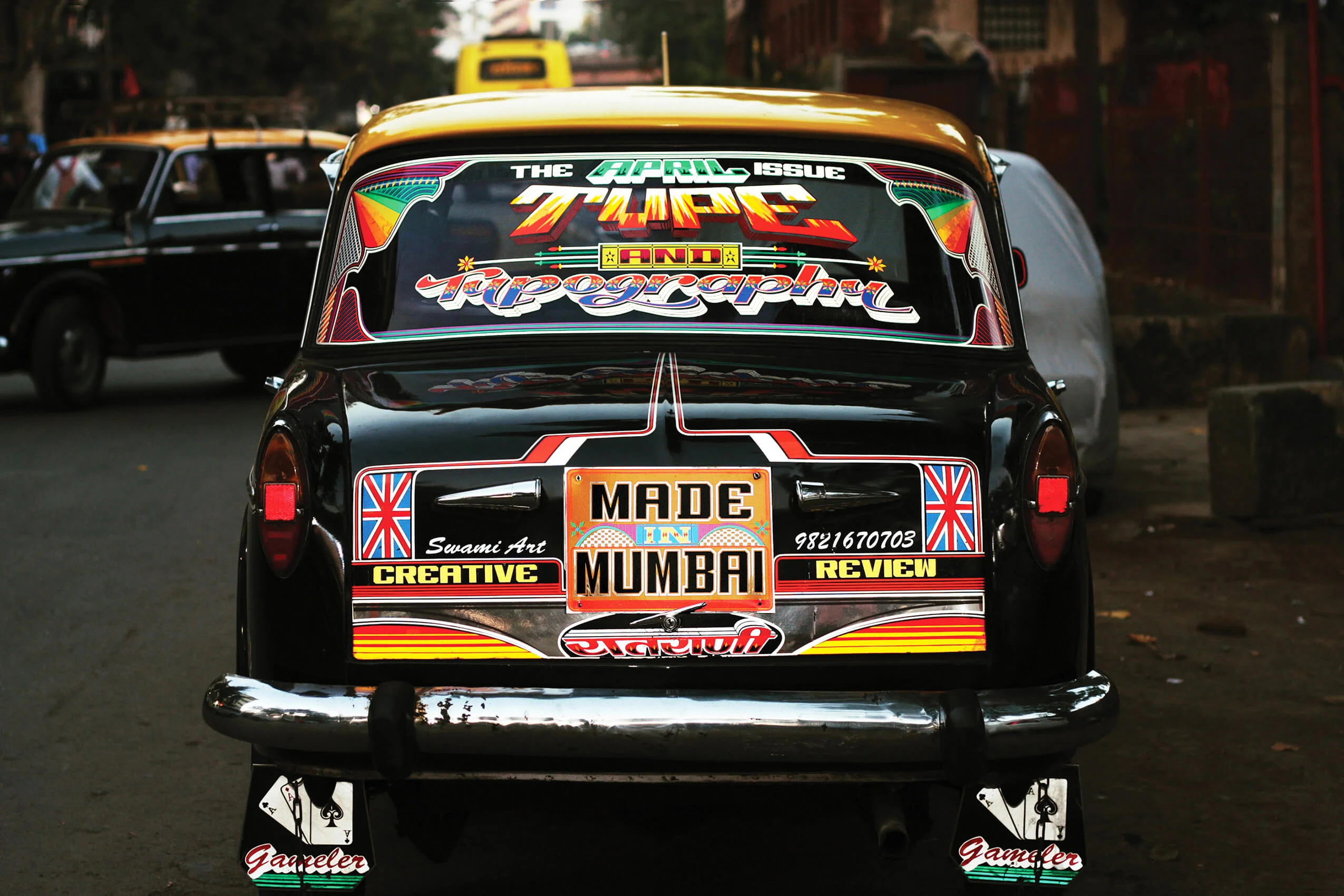
In 2009, Creative Review commissioned the Mumbai-based design studio Grandmother India to realise the cover. Kurnal Rawat, a member of the studio, had long been engaged with the city’s distinctive typographic vernacular and had initiated the Typocity project—an online resource dedicated to the signage of Bombay.
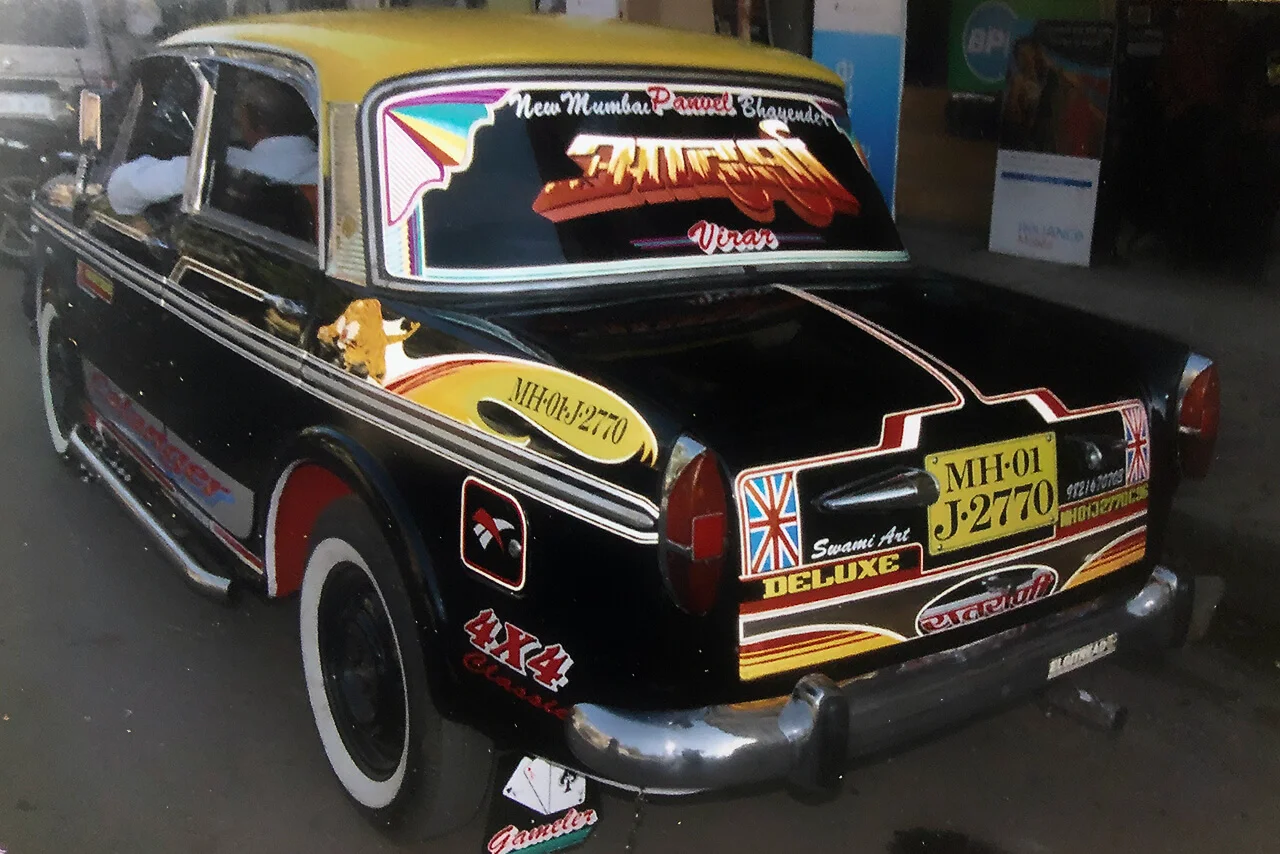
He and his team conceived the taxi’s design, while the manual execution was entrusted to two of the city’s leading taxi artists: Manohar Mistry and his son Sameer Mistry.
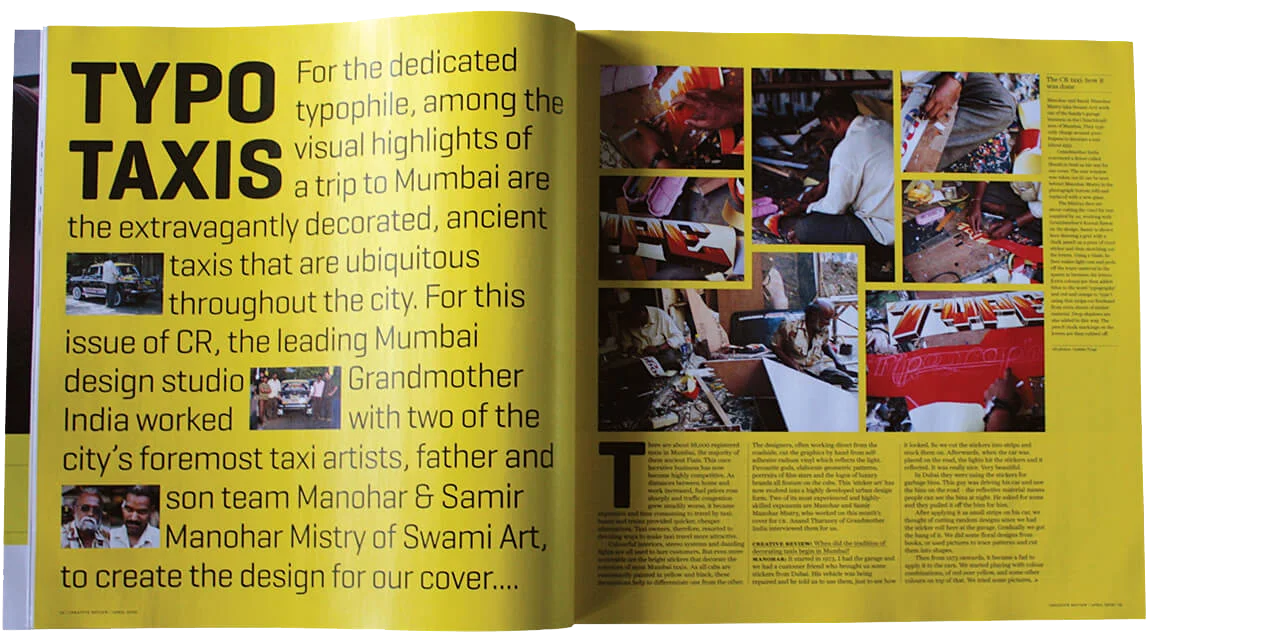
Manohar Mistry and his son Sameer were not only among the most sought-after taxi artists in the city; they had, in fact, been instrumental in introducing these ornate embellishments to Bombay in the first place. The initial inspiration came from an acquaintance who returned from Dubai with photographs of refuse bins clad in reflective foil—and, at the Mistrys’ request, soon supplied the materials themselves. With remarkable ingenuity, they adapted this medium to lend the city’s black-and-yellow taxis a distinctive, highly individual character—an invaluable competitive edge amid a fleet of some 65,000 vehicles.
In an interview at the time, the two remarked that the finest days of their craft were likely already behind them. I found myself wondering what had become of them—and whether they might still be at work, continuing to endow taxis with a sense of soul.
There was, however, one complication:
no address could be found.
Bombay counts 23 million inhabitants.
The search would not be easy.

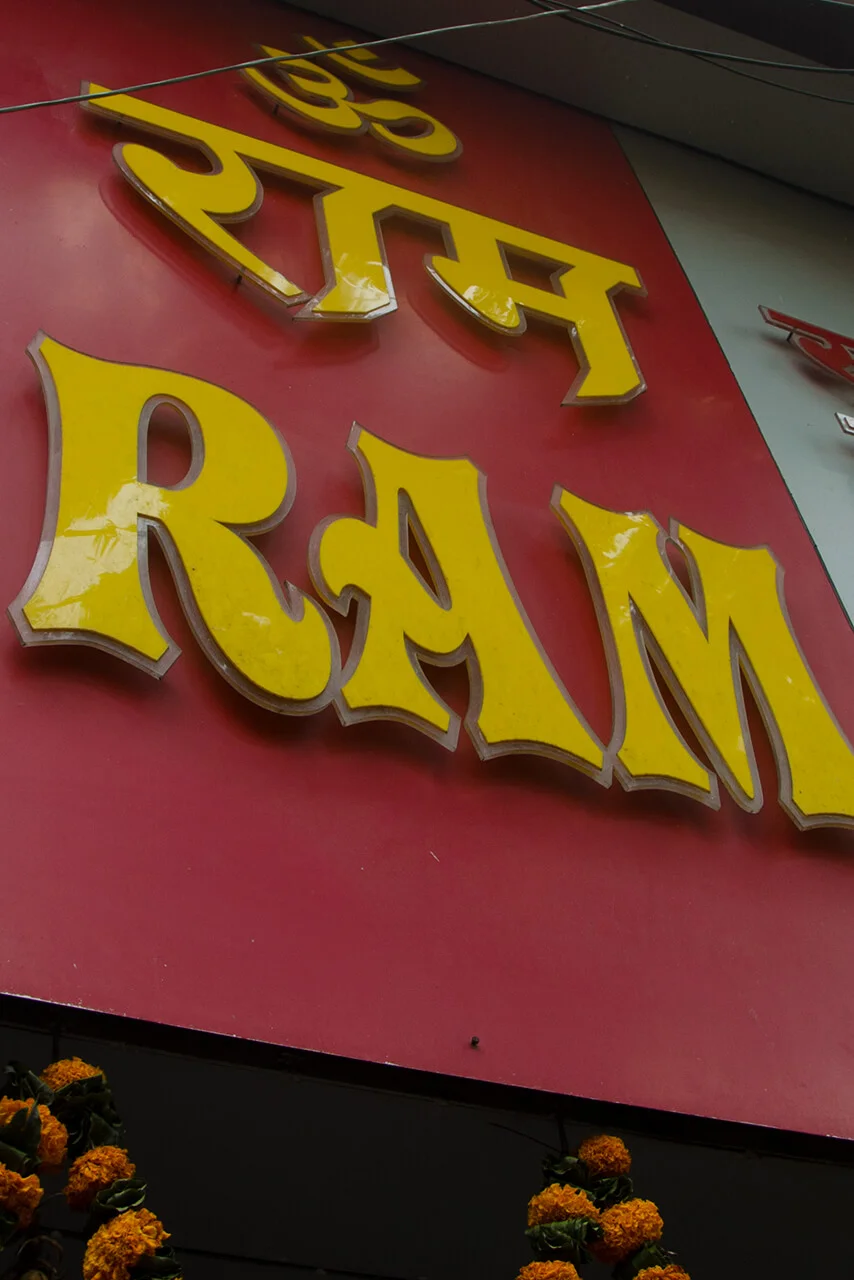
Ram Sticker House
There was, however, one promising lead: in that same interview, the two had mentioned Ram Sticker House, the supplier from which they obtained their foils. It was still in existence in 2019—and proved to be a stroke of rare good fortune.
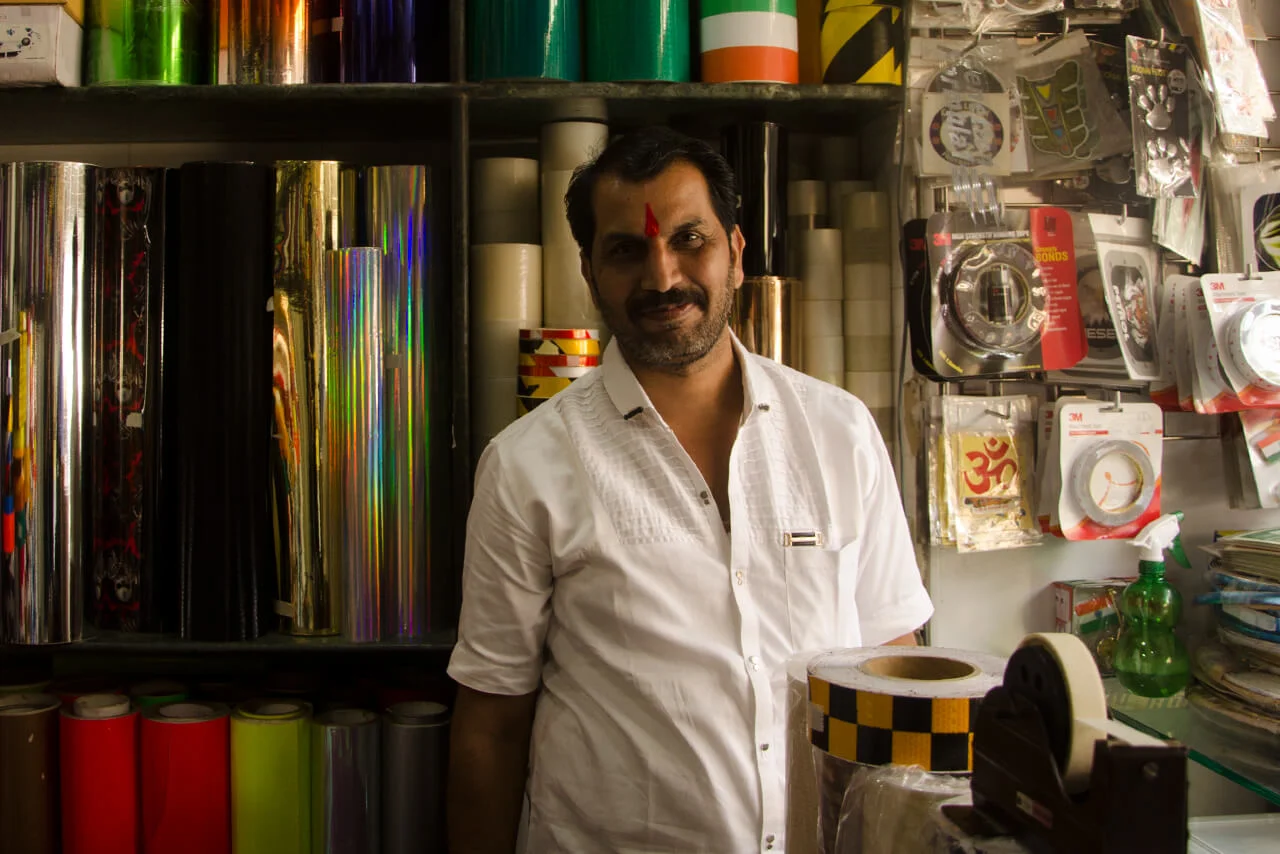
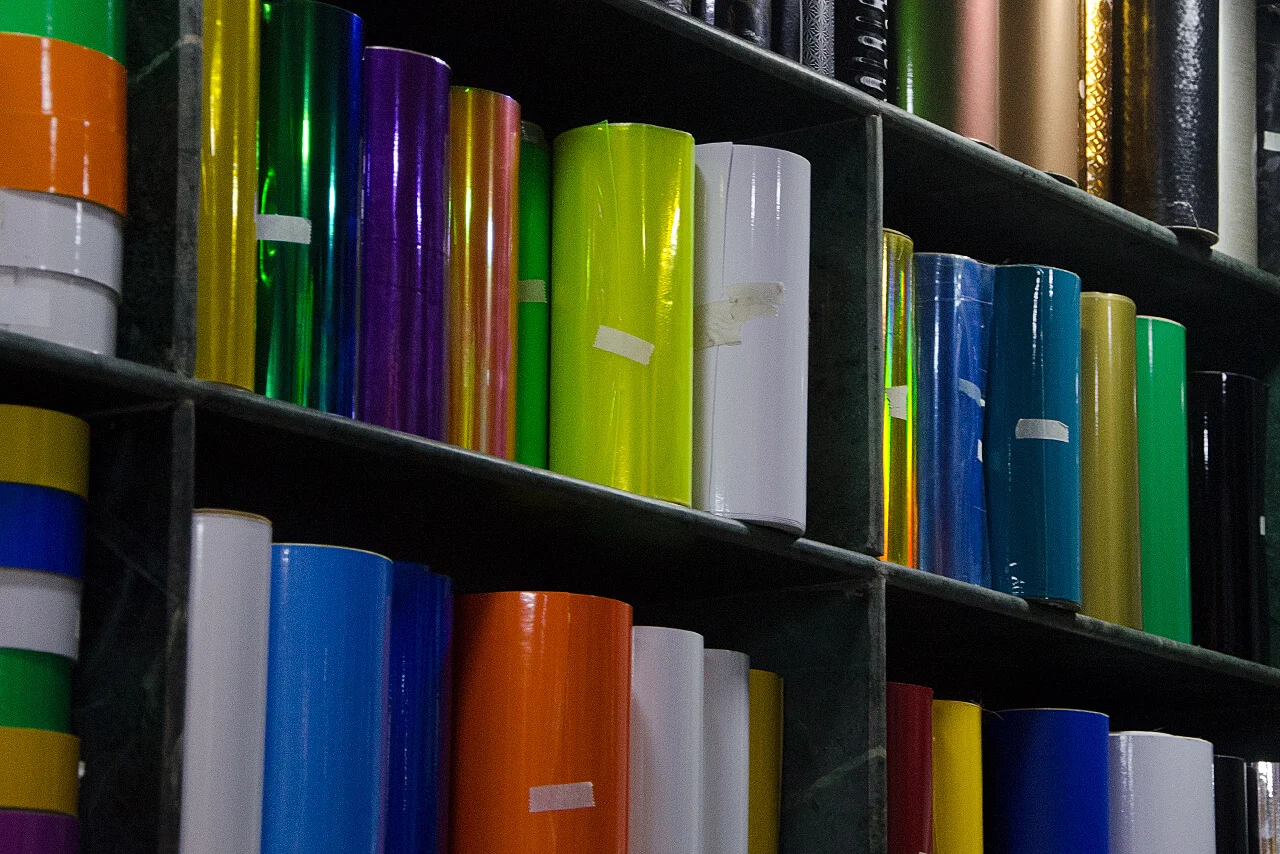
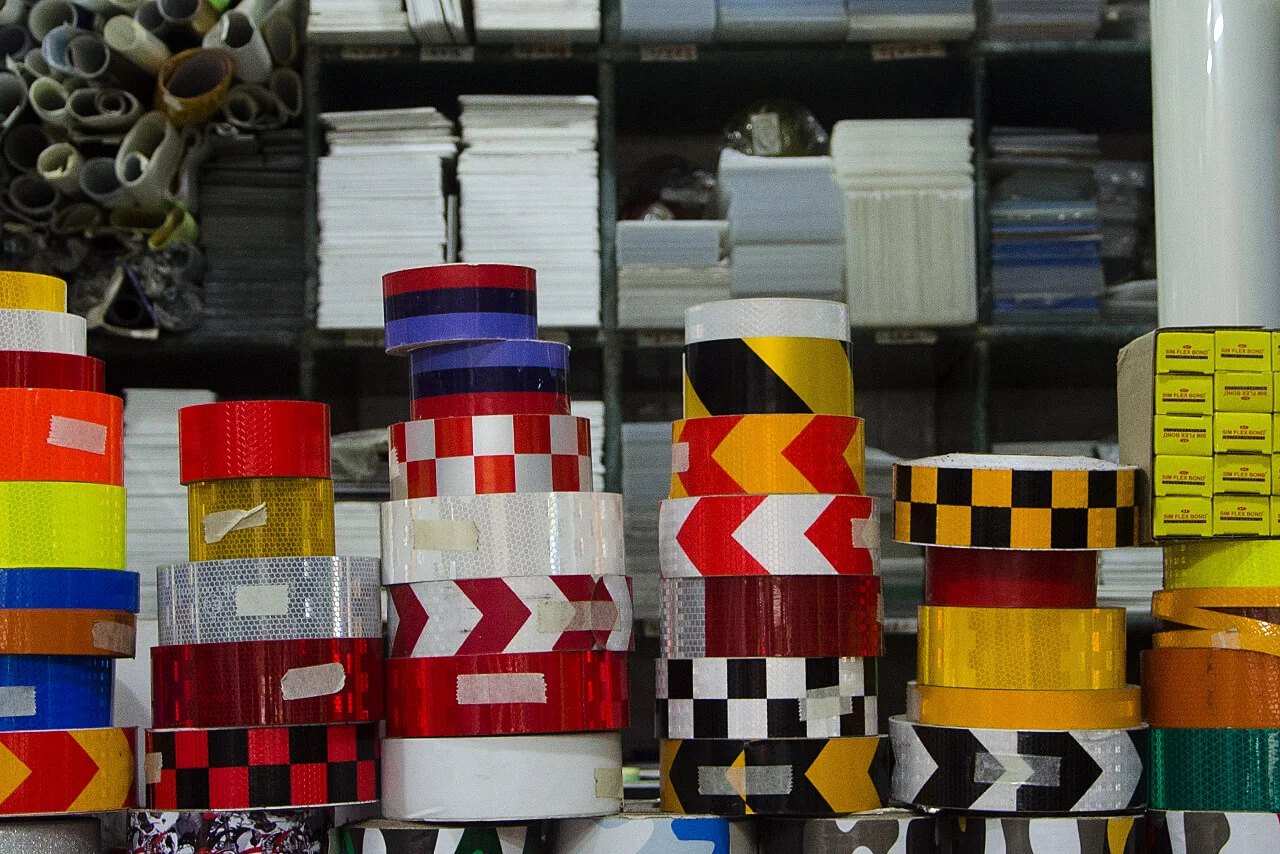
The small shop in Girgaon is run by Mangilal Rajpurohit and his son, who readily offered to assist in the search for Sameer Mistry—now managing the business on his own following his father’s death.
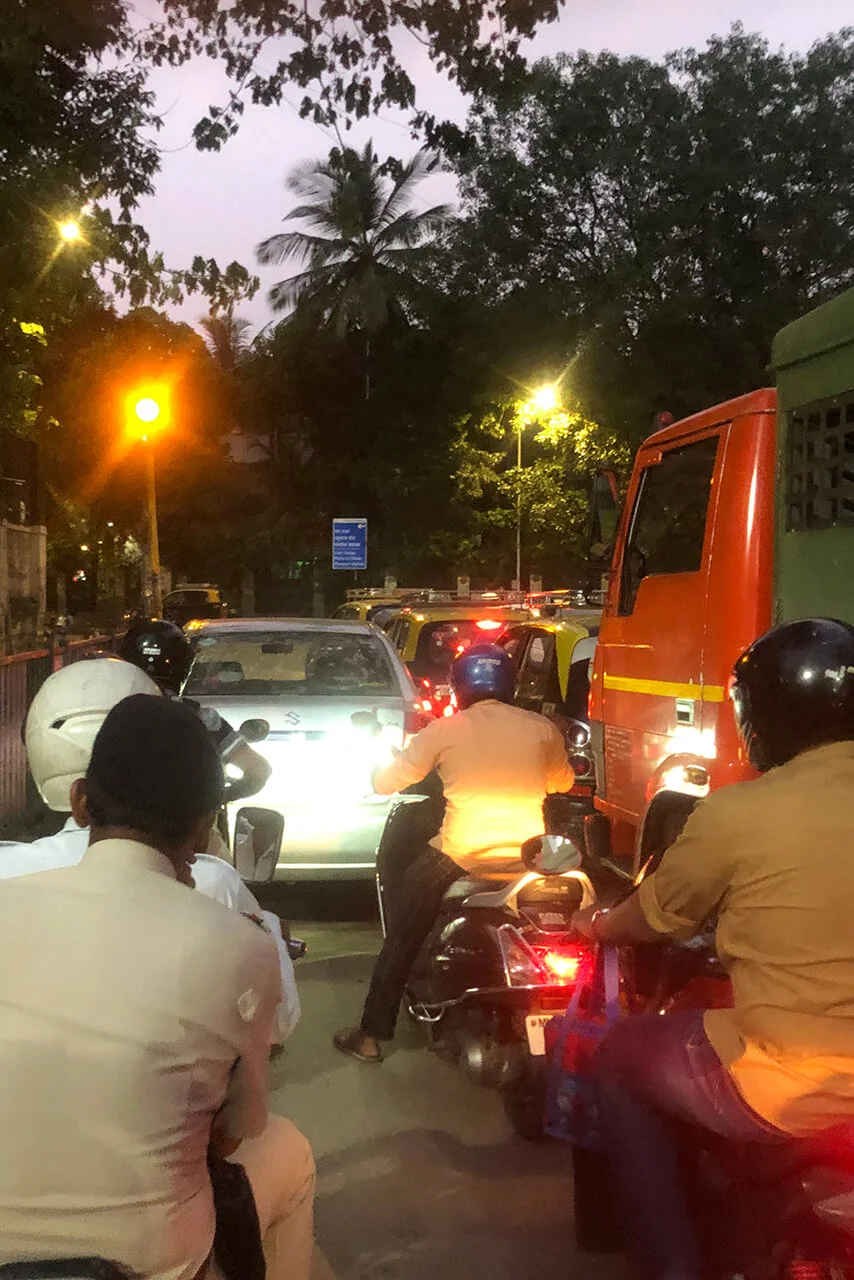
A few telephone calls later, an appointment had been arranged; that evening, we set off by motorcycle for Manohar’s workshop.
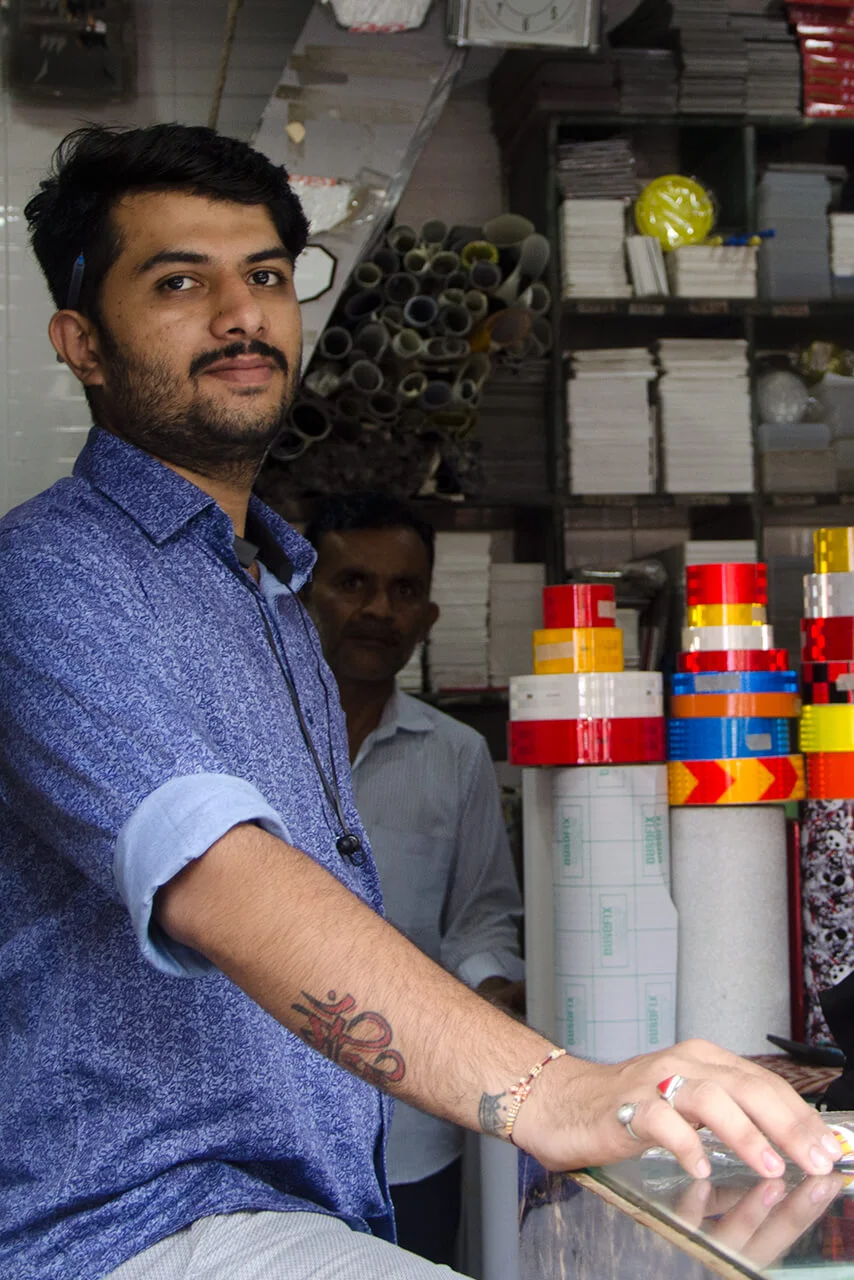
Sameer Mistry—
an artist with a finely honed blade.
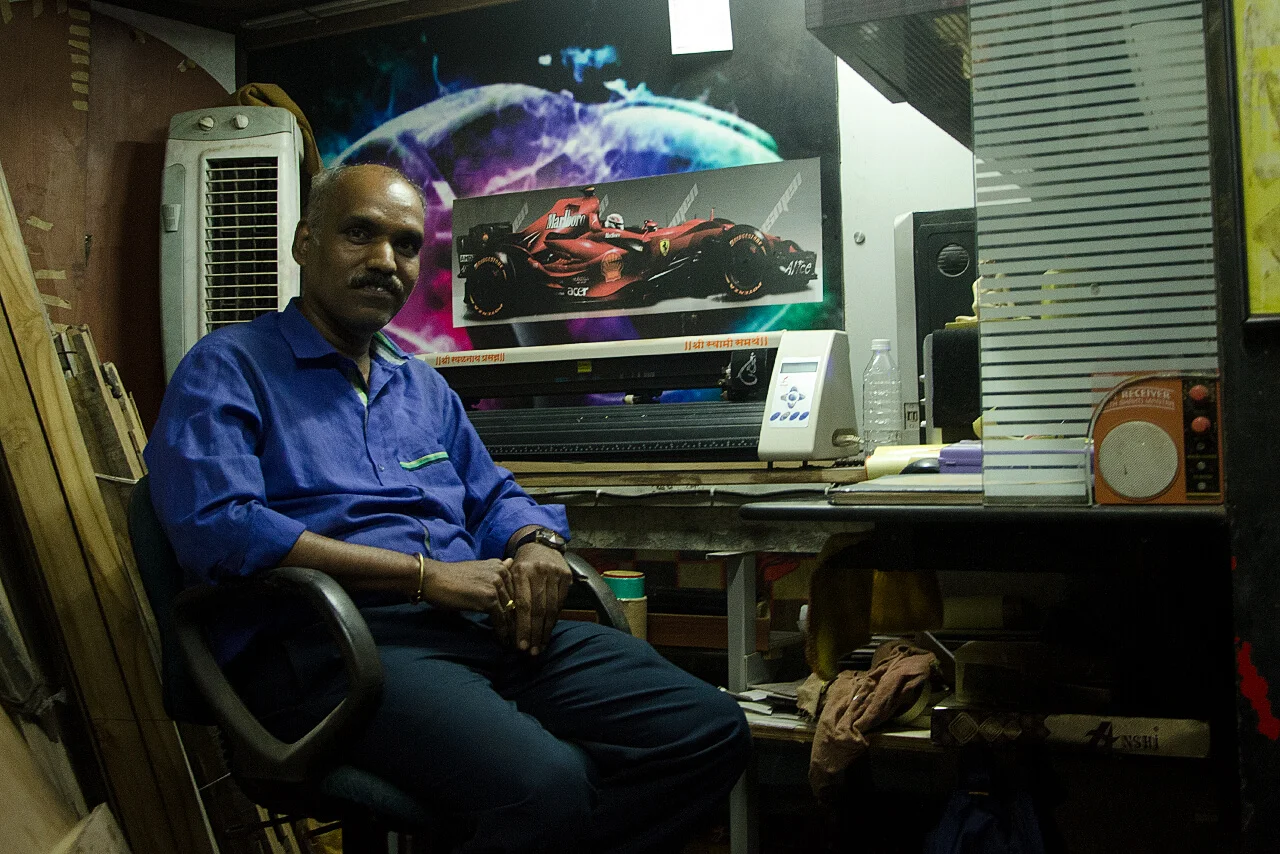
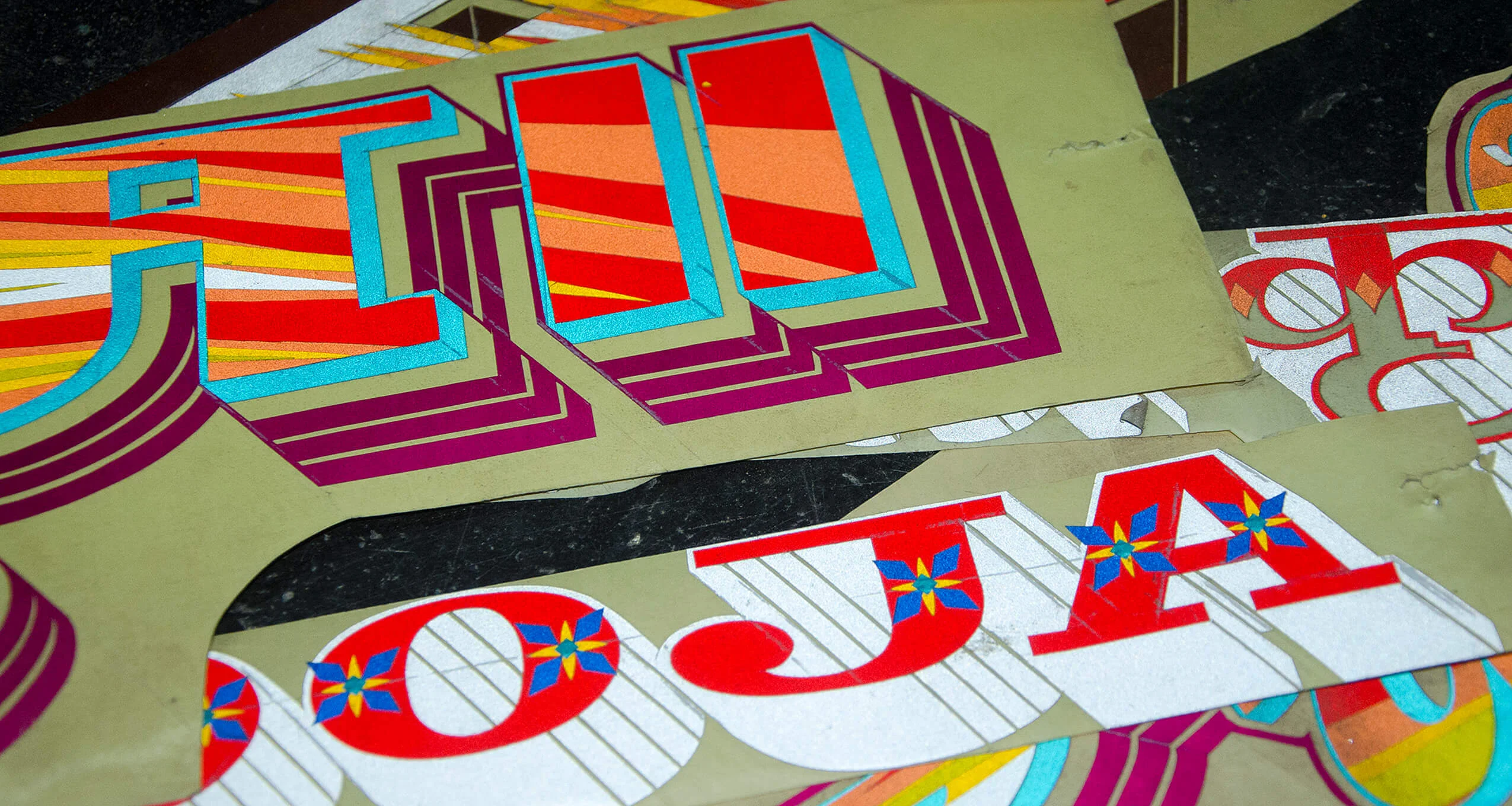
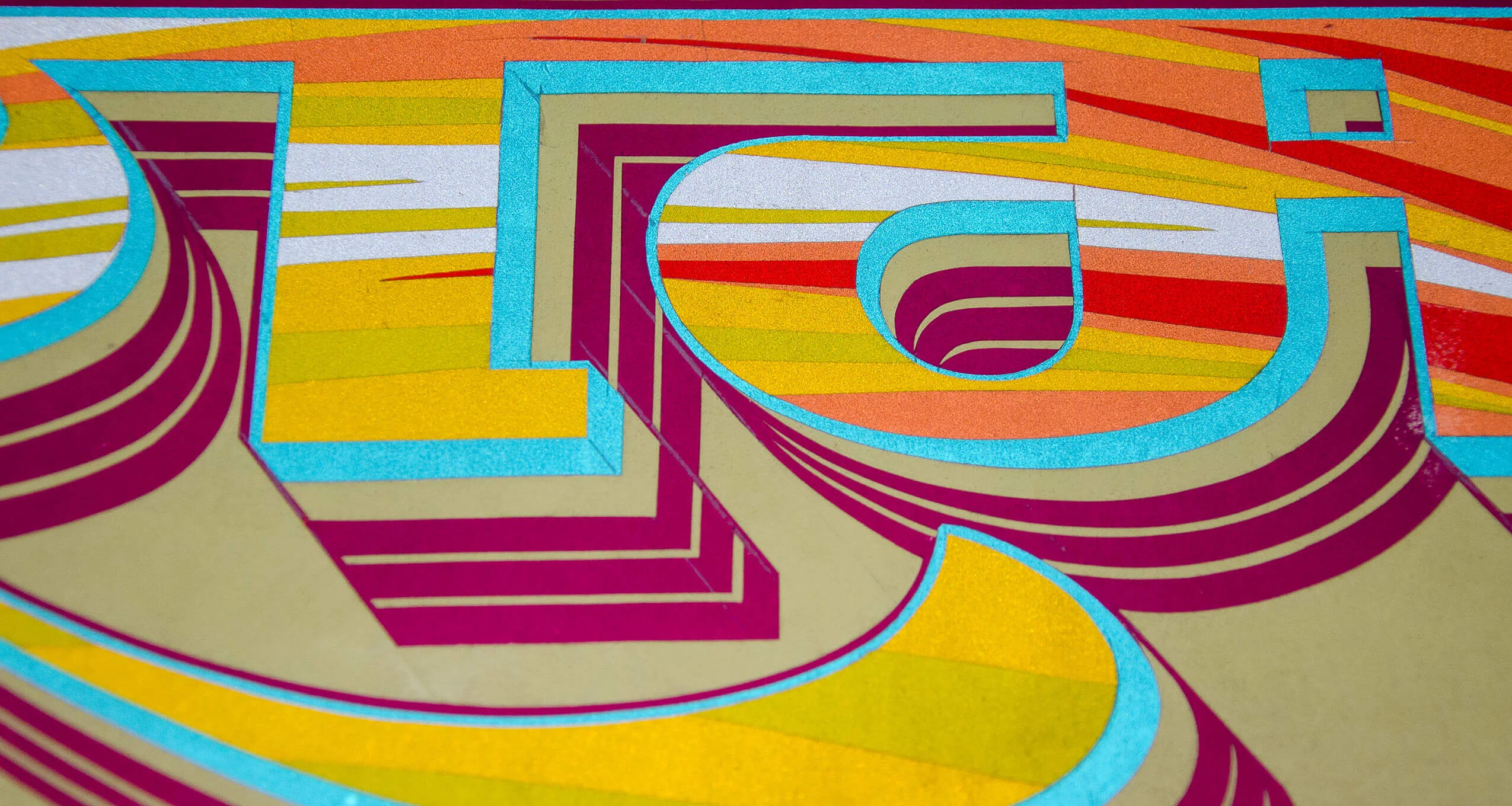
Sameer Mistry was visibly delighted by my interest in the Typo Taxi and in his work more broadly.
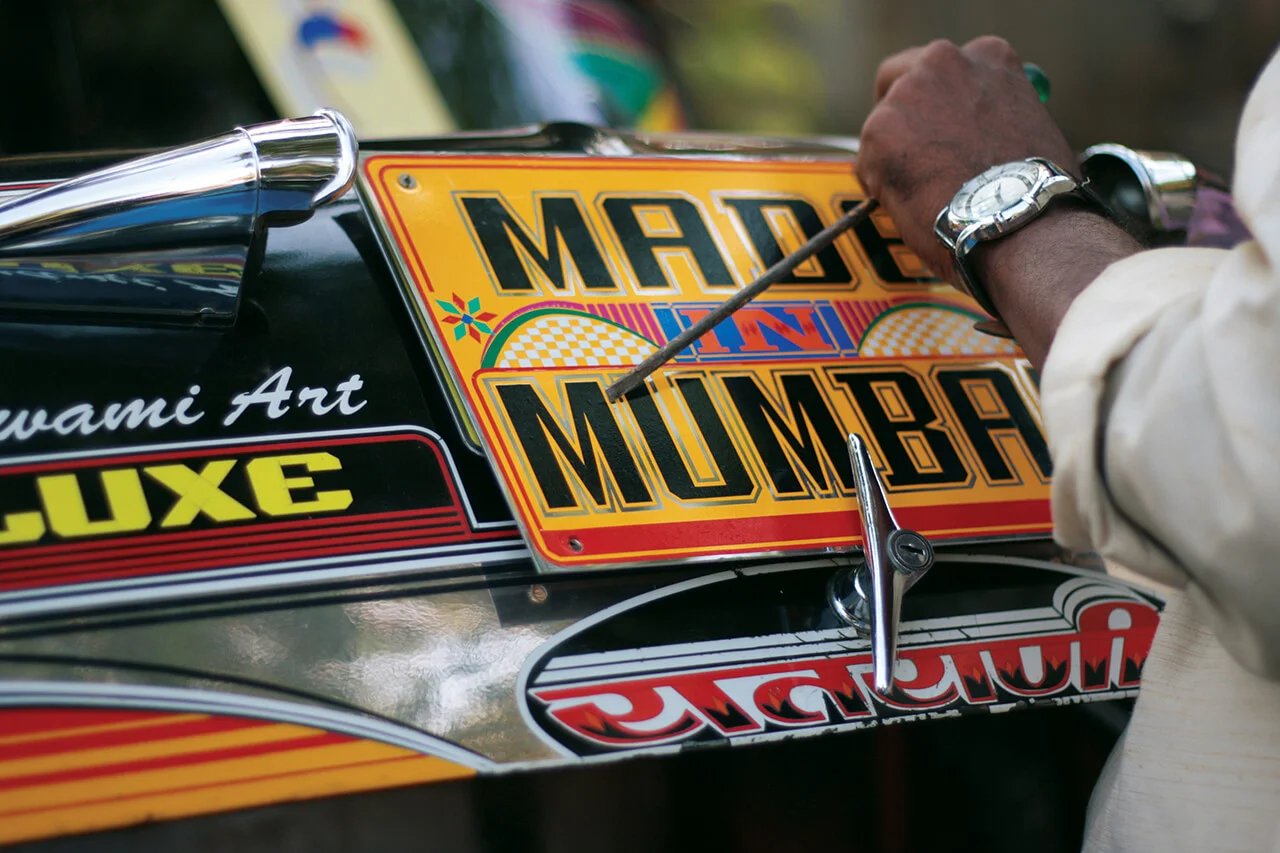
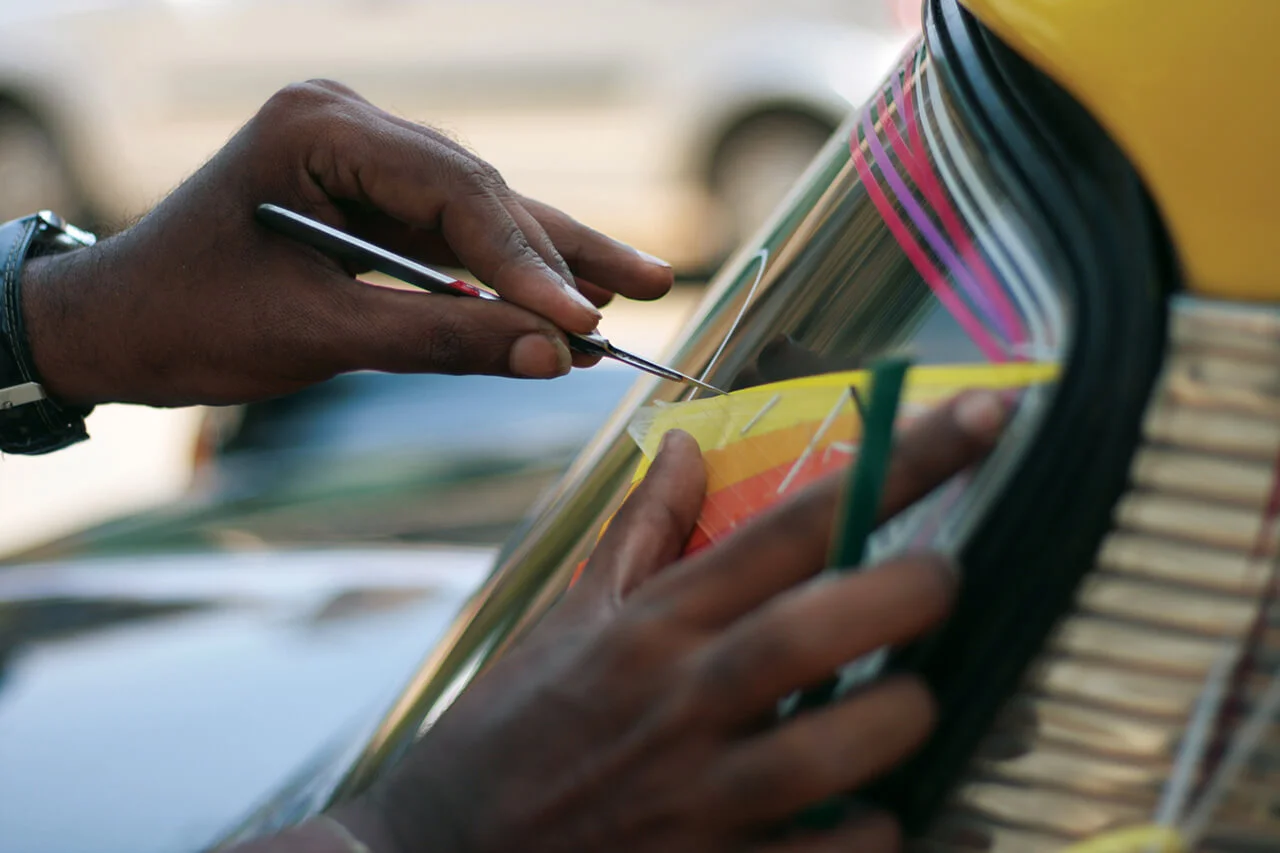
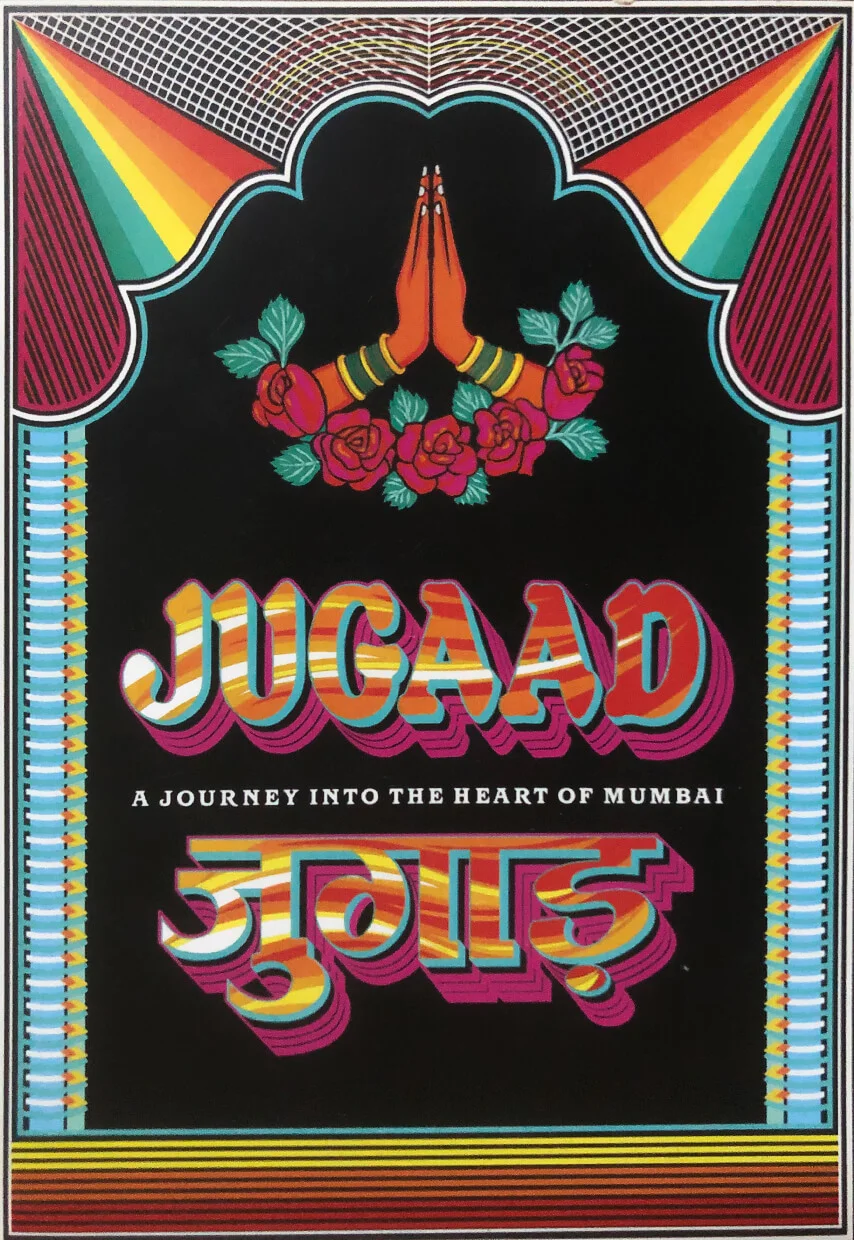
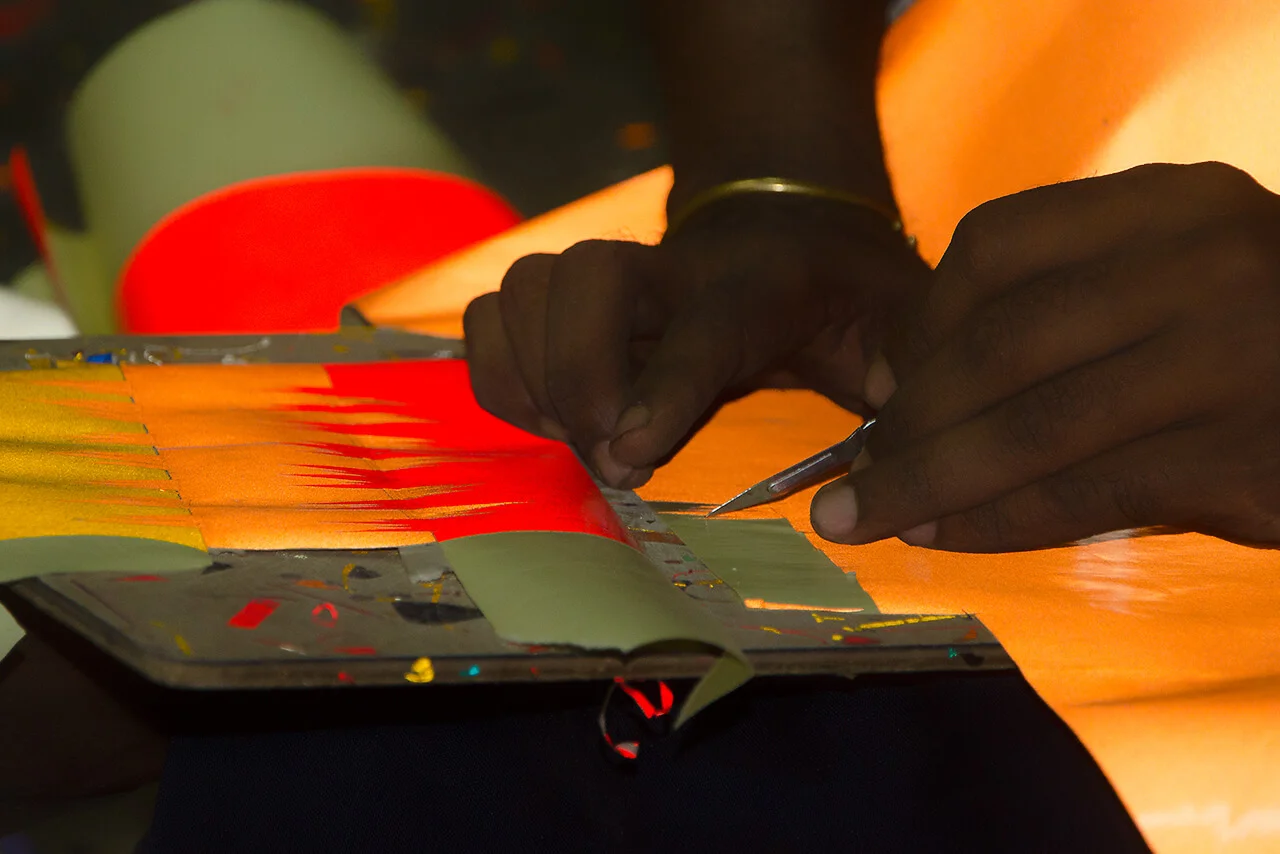
He showed me photographs of past taxi commissions, along with a wide array of extraordinarily intricate pieces—among them the artwork for the film Jugaad, a tribute to Mumbai’s diversity. All of it had been cut by hand from foil, executed with a scalpel of remarkable precision.

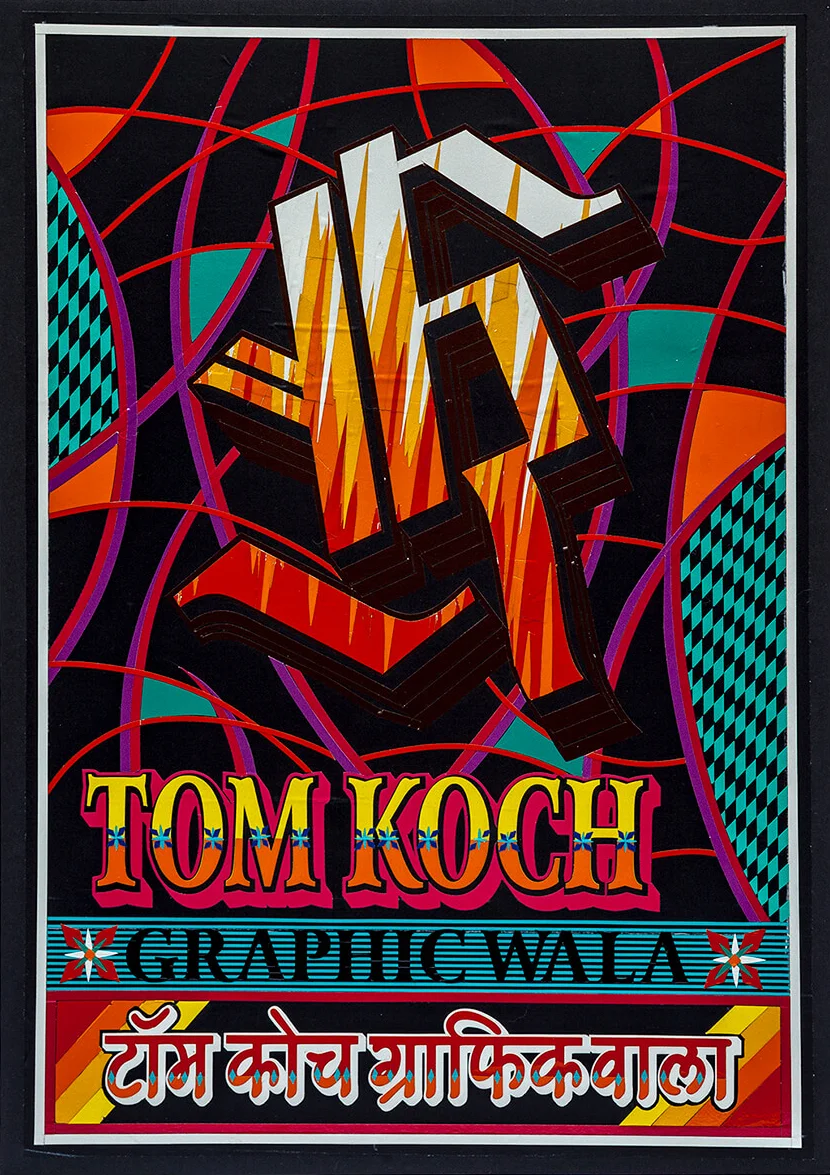
We quickly reached an agreement: using a business card I had brought with me as a starting point, he would create a “Bombay-style” artwork—incorporating my logo alongside the inscription Tom Koch Graphic Wallah.
Time, however, was short, as I was due to depart the very next day.
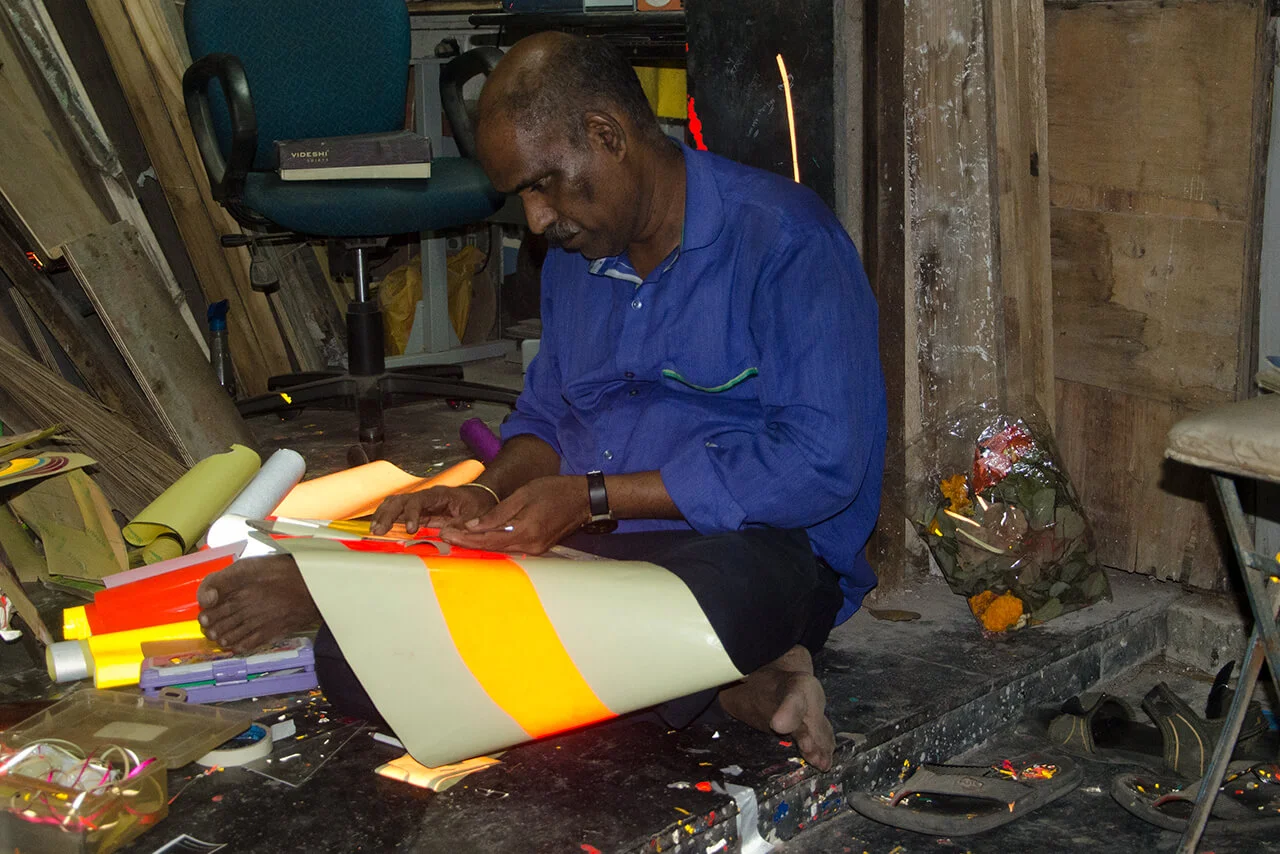
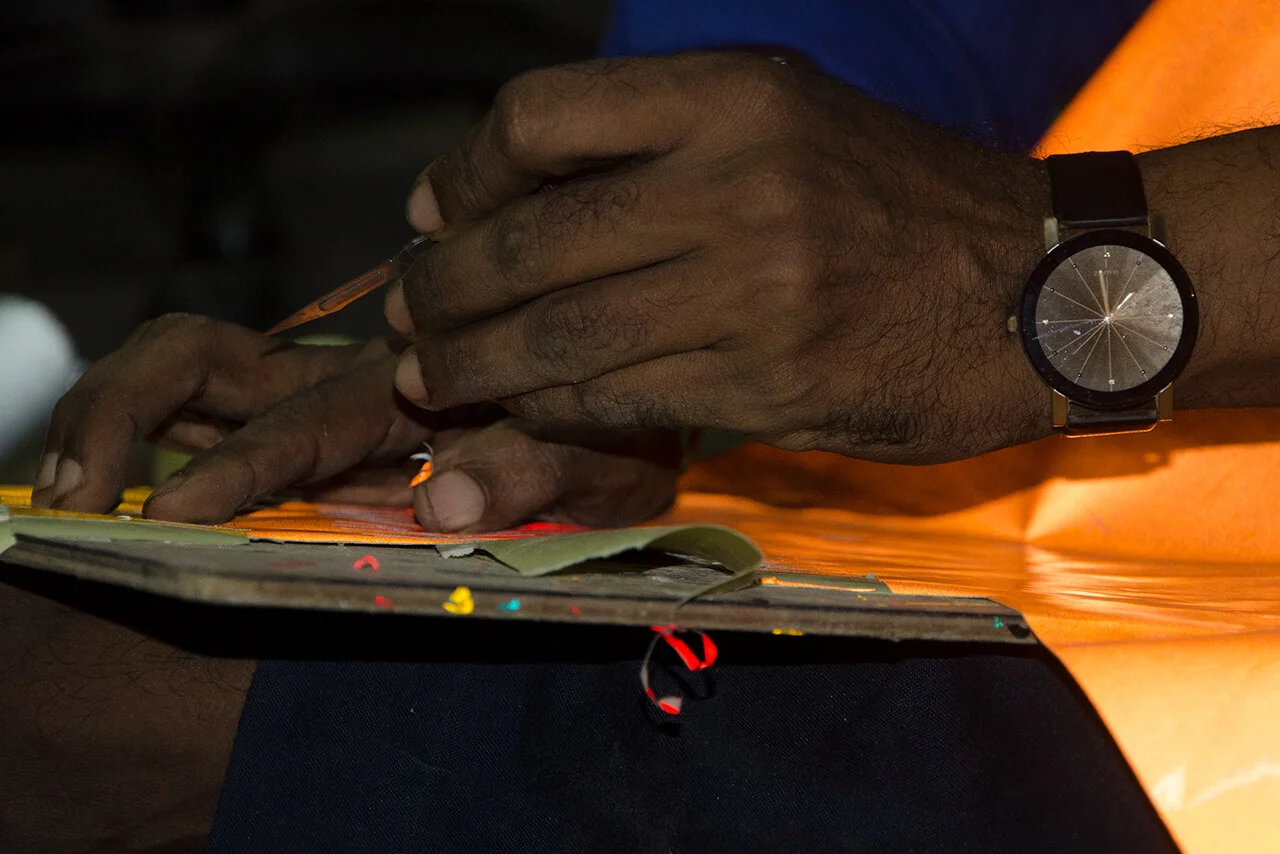
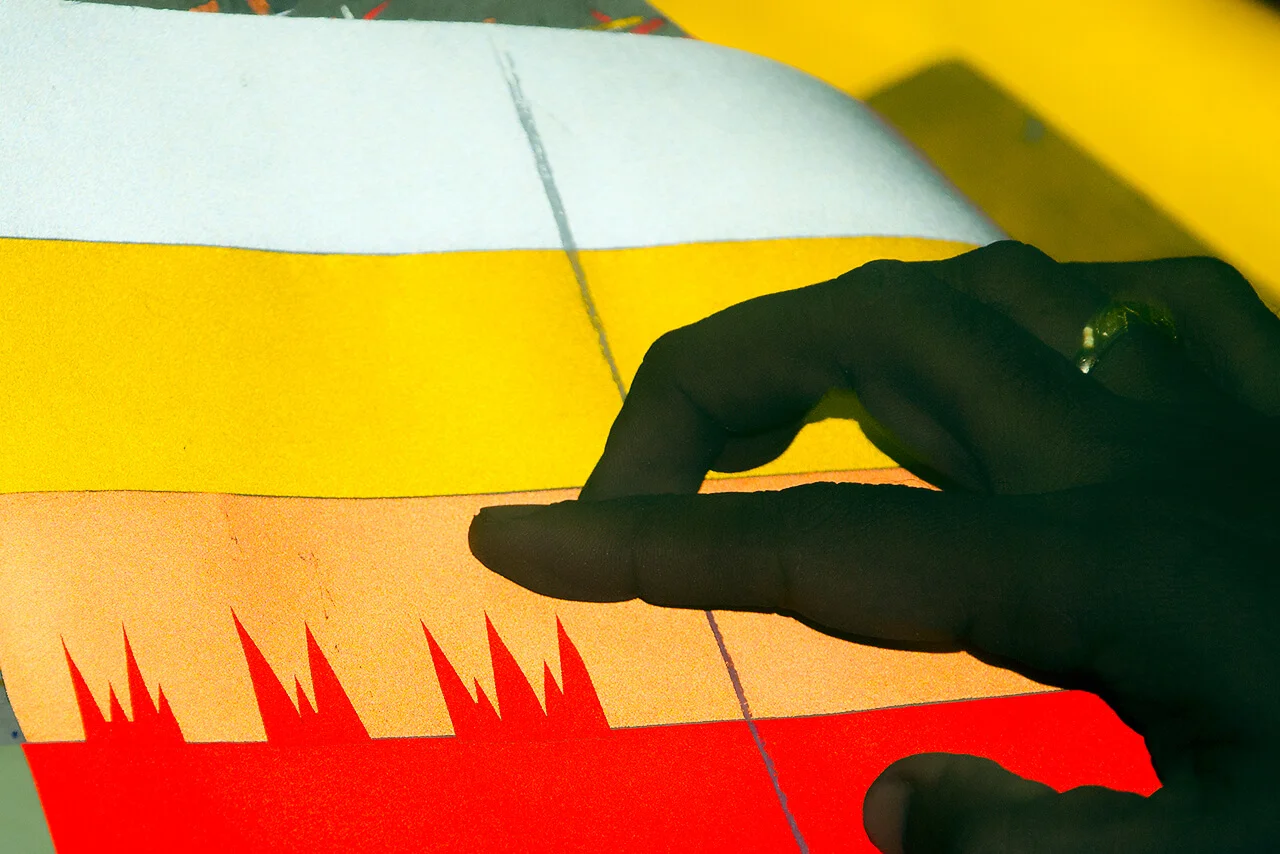
He begins by cutting the flamed background from countless layers of reflective foil, assembling strip upon strip with patient precision. Gradually, a dynamic ground takes shape, continually refined—extended, adjusted, corrected with ever new fragments of foil. Later, the contours of the logo are transferred freehand and cut with the scalpel; three-dimensional effects and shadows are applied, the logo set against a dark field, while ornaments and the finest of lines are meticulously articulated. Not once does he hesitate, falter, or lose his flow.
All these stages unfold with remarkable calm, almost contemplative in their rhythm: cutting, stripping away the remnants, aligning, pressing into place—again and again. One senses immediately that this is the work of a man with seventeen years of experience.
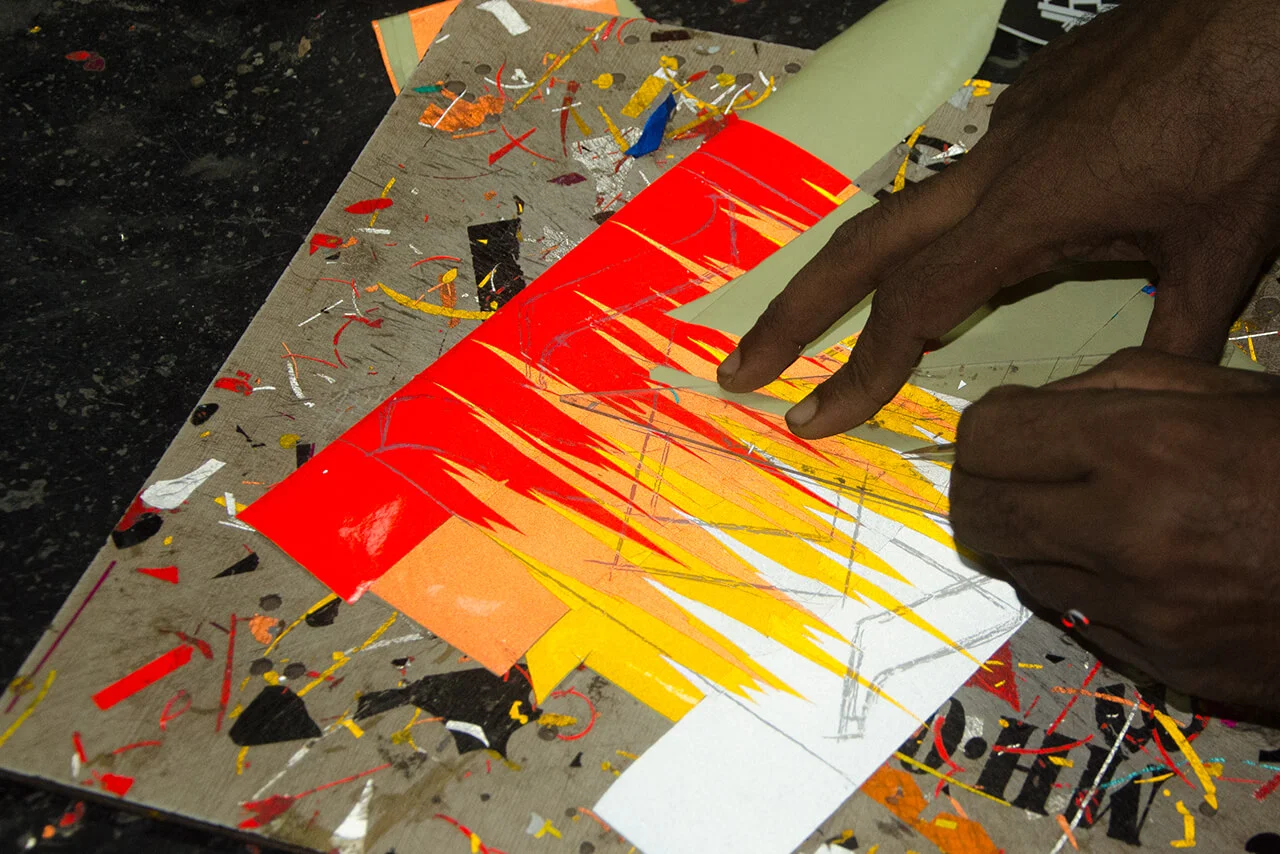

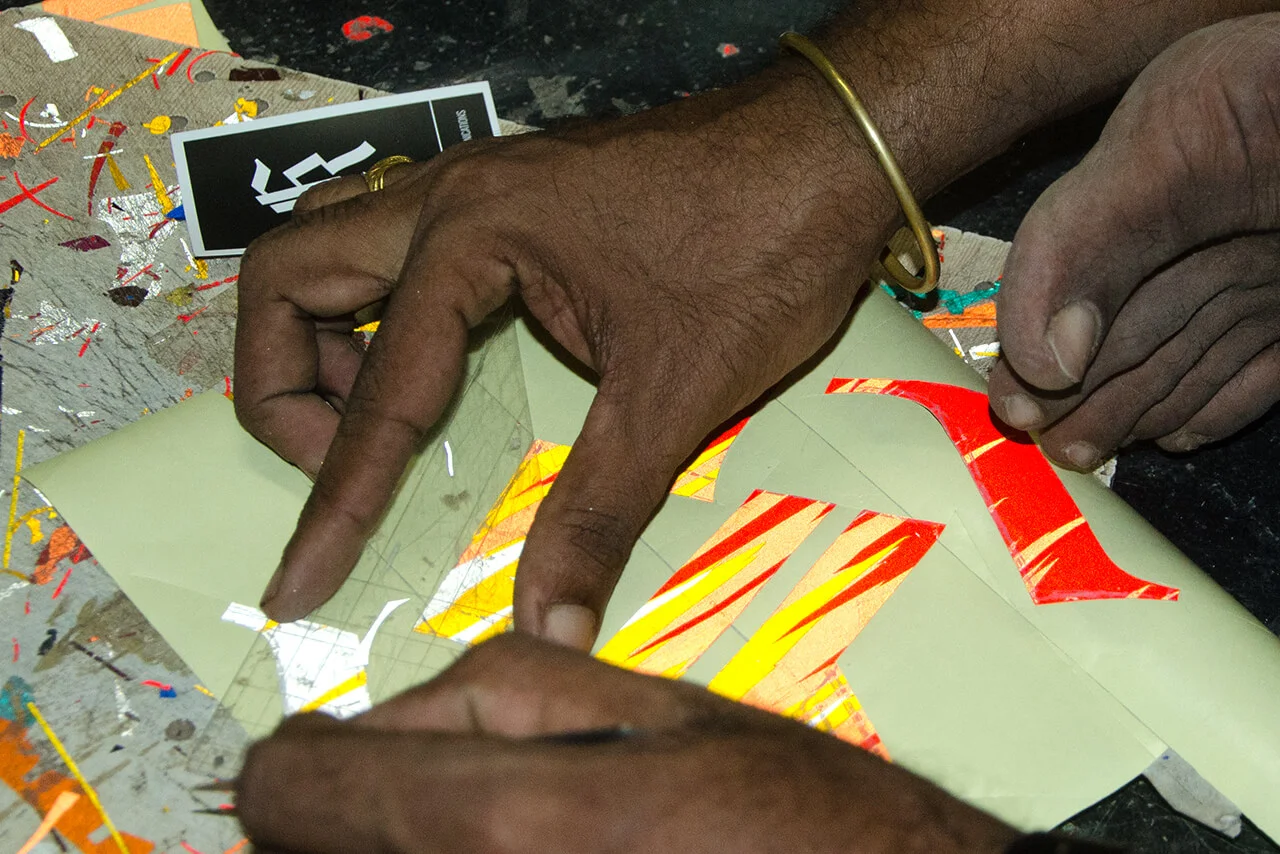
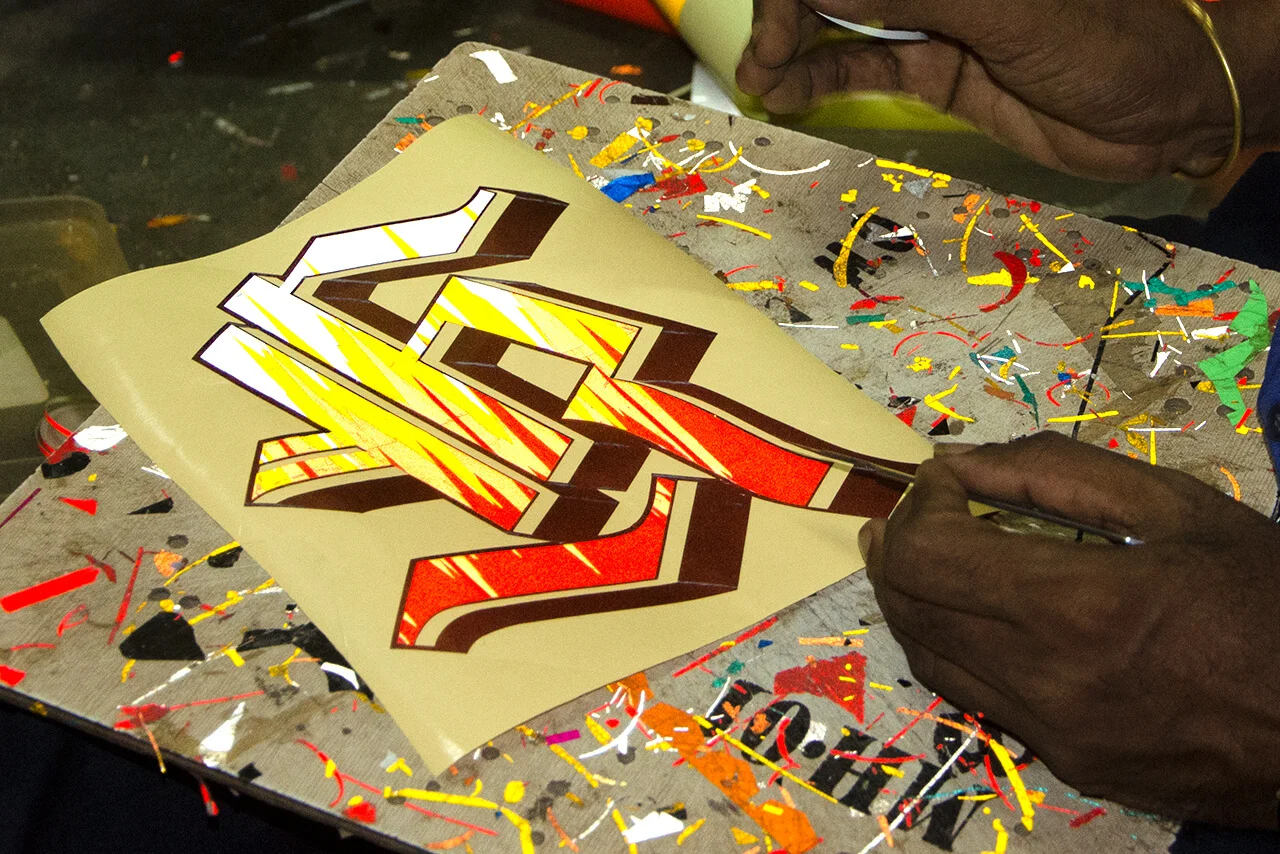
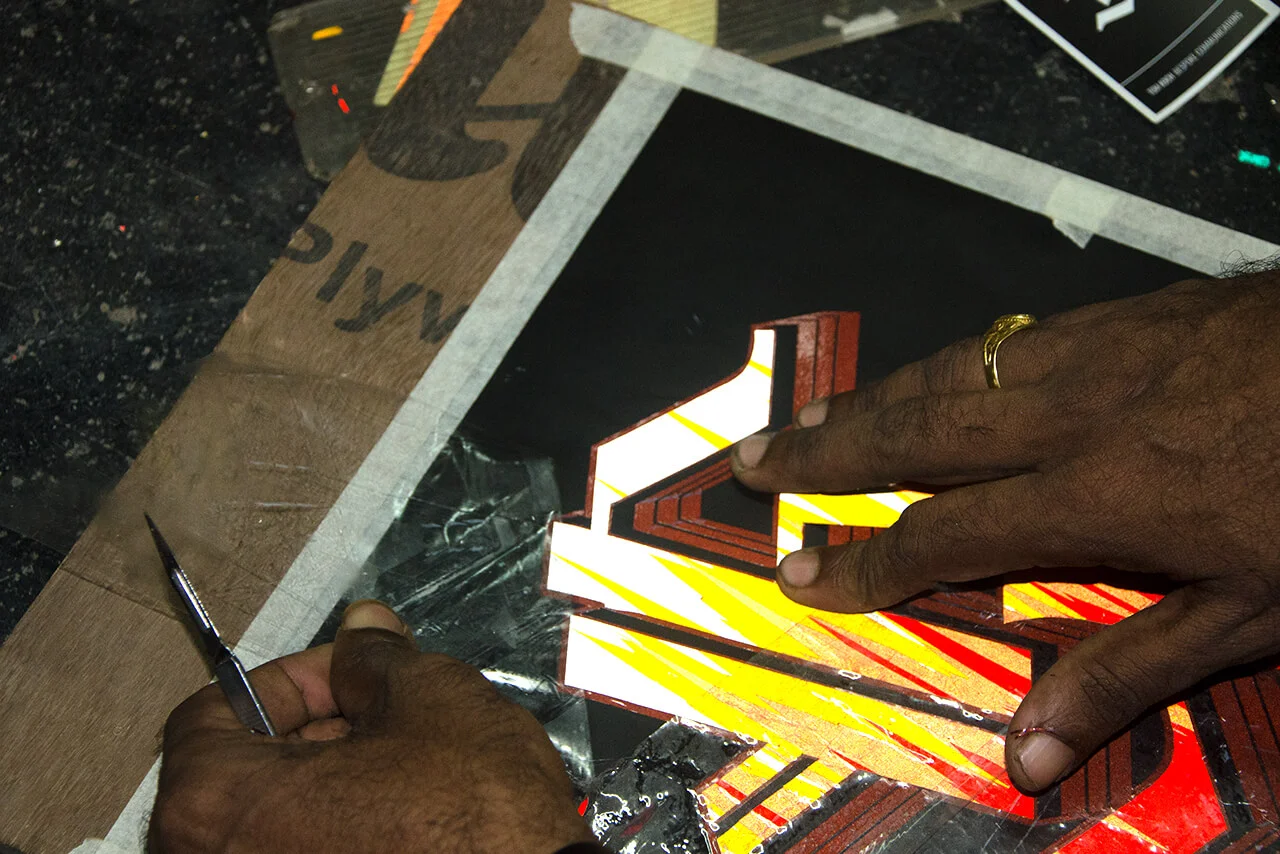
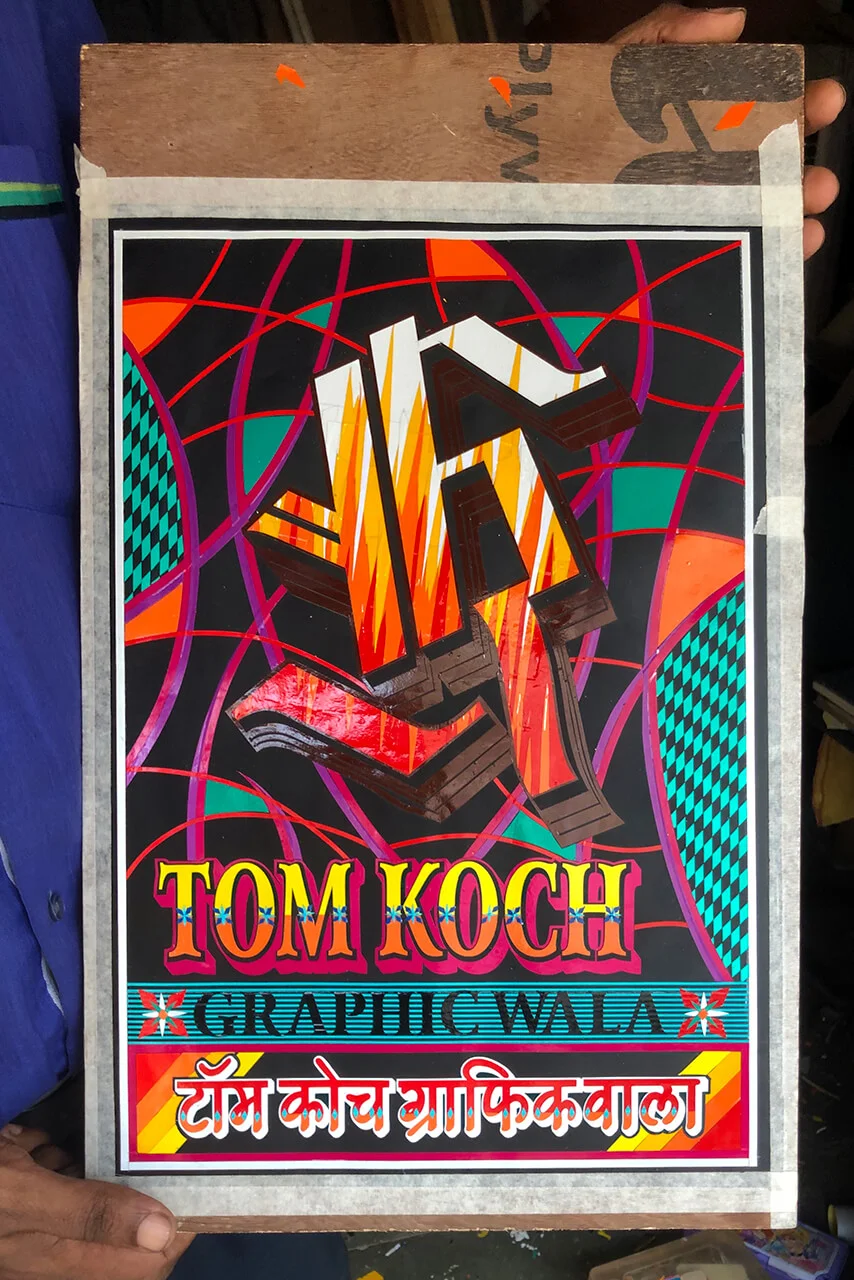
The following day, I return to collect the finished artwork. It is vibrant, richly detailed and mistakably Mumbai.
The search had, without question, been worth it.
A Bollywood Love Story: Mumbai and the Premier Padmini taxis
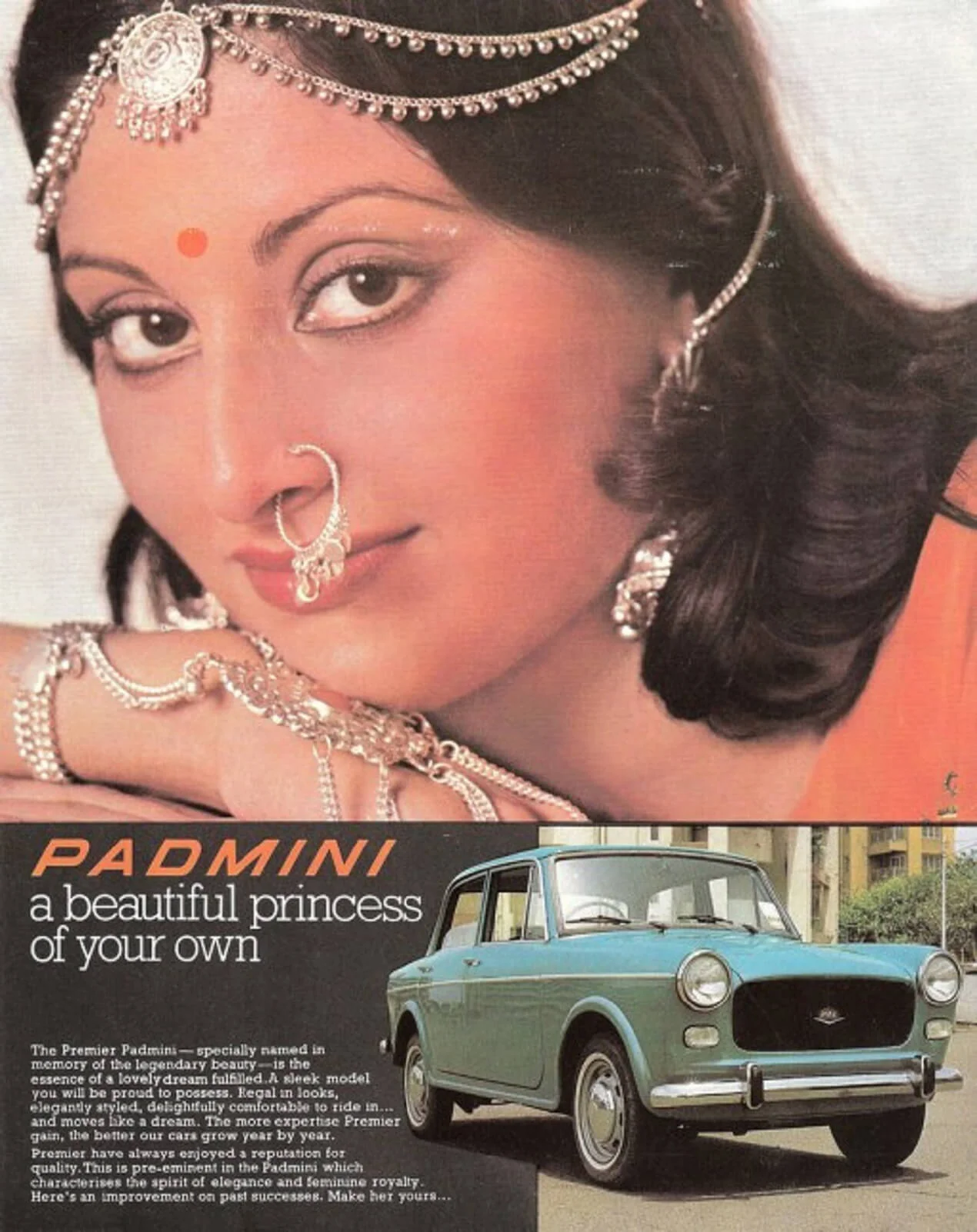
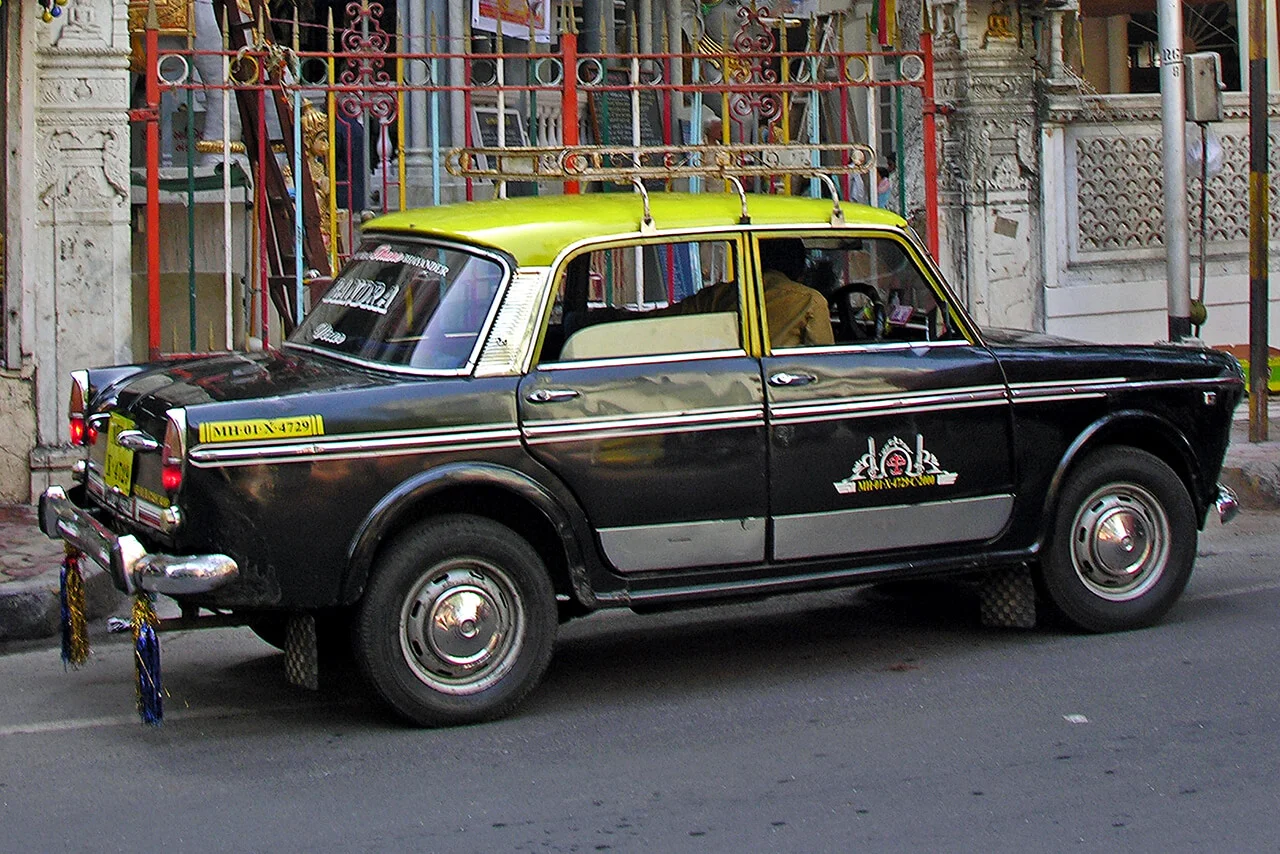
The Indian version of the Fiat 1100 made its debut on the subcontinent as early as 1964, under the name Fiat 1100 Delight. Renamed Premier President in 1965, the model was eventually marketed from 1974 onwards as the Premier Padmini—named after the legendary Indian queen—and swiftly captured the public imagination.
It was in Bombay, in particular, that these cars came to define the urban landscape. The city administration had favoured the Premier Padmini over competing models such as the Hindustan Ambassador, and had localised production within the city itself. What followed was a boom of remarkable intensity.
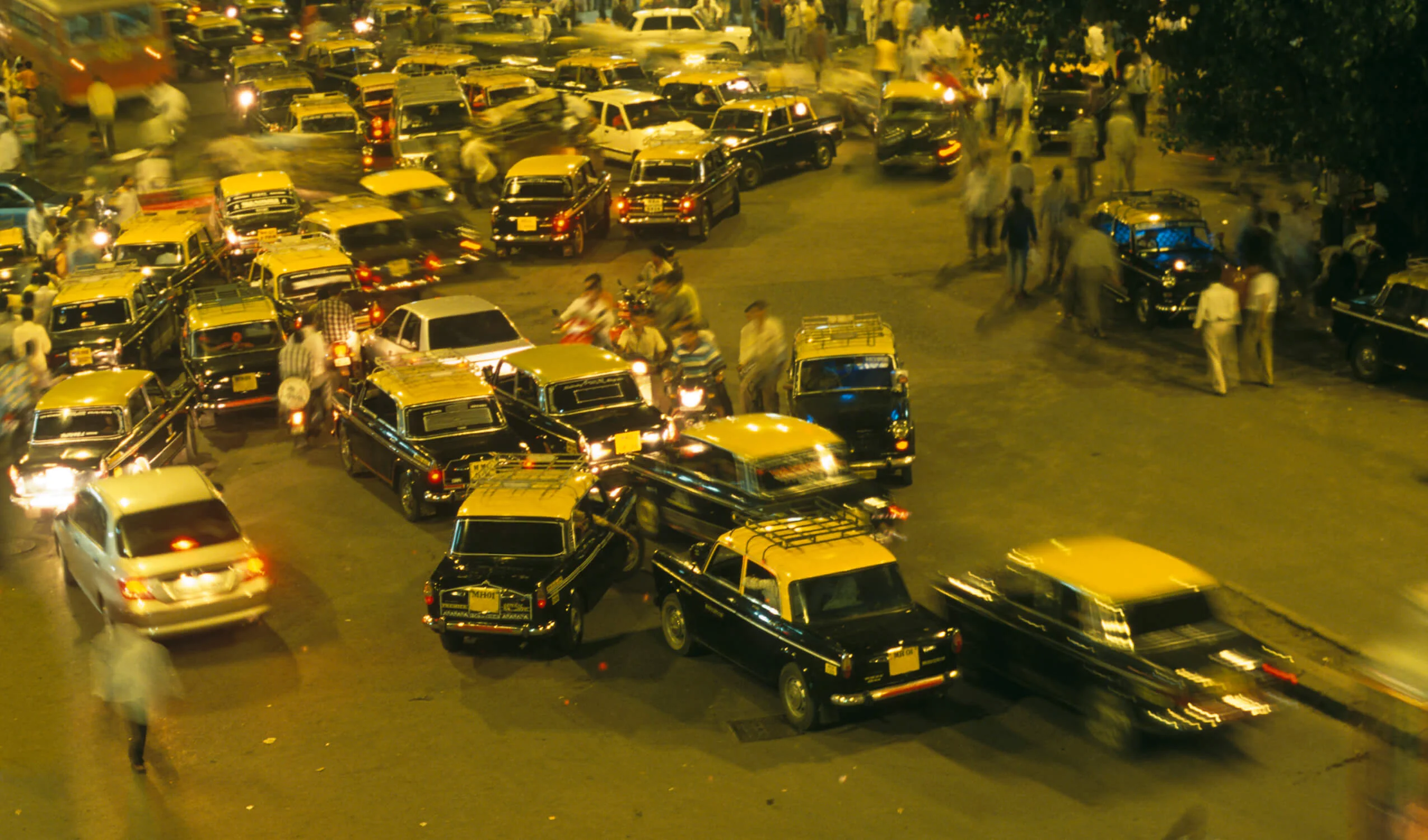
The Premier Padmini soon became the vehicle of choice for taxi drivers in Mumbai: economical to run, offering ample luggage space, and easily repaired in the countless small roadside workshops scattered across the city. At the height of its popularity in the 1990s, some 65,000 of the city’s iconic kaali-peeli taxis were licensed on Mumbai’s streets. They became stars of Bollywood cinema, and were even celebrated in popular songs.
Yet the Padminis had one notable drawback: they all looked the same.
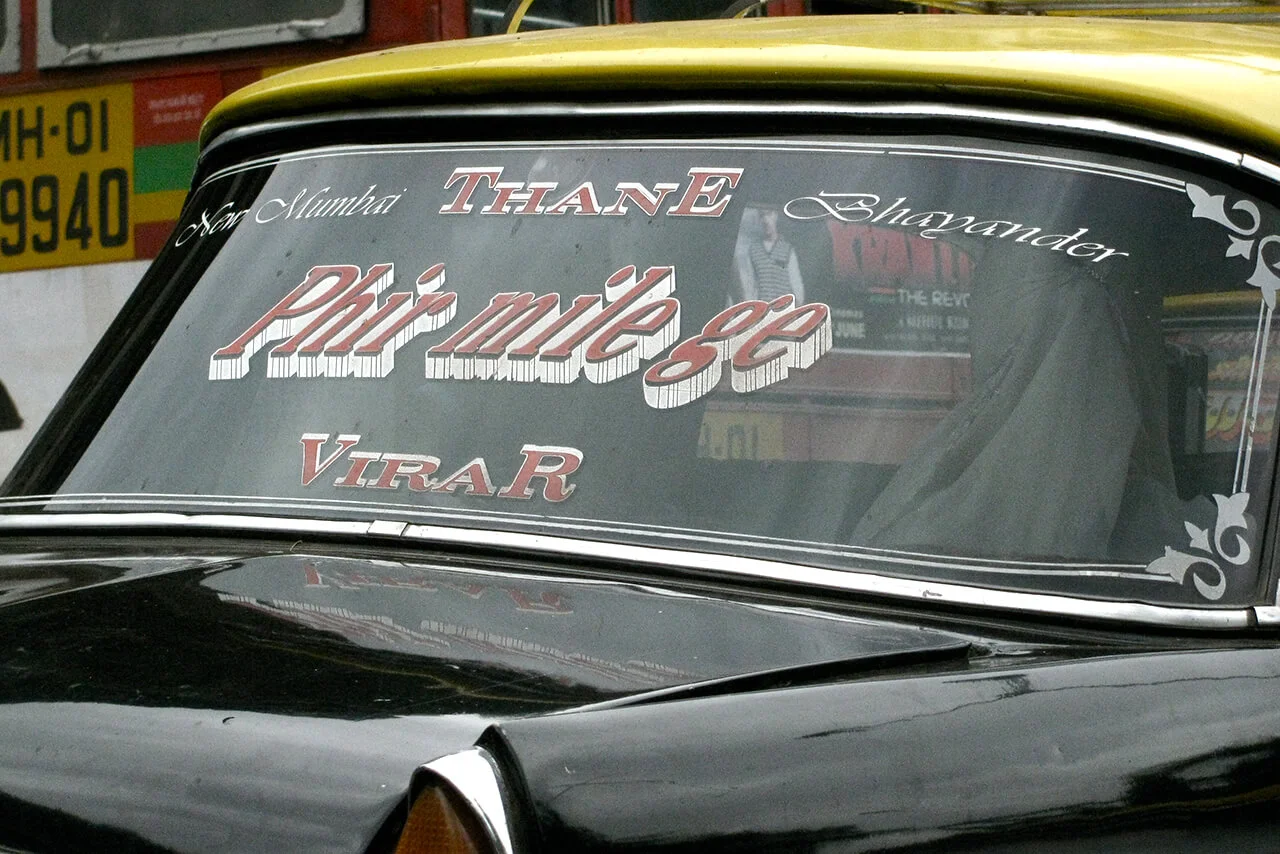
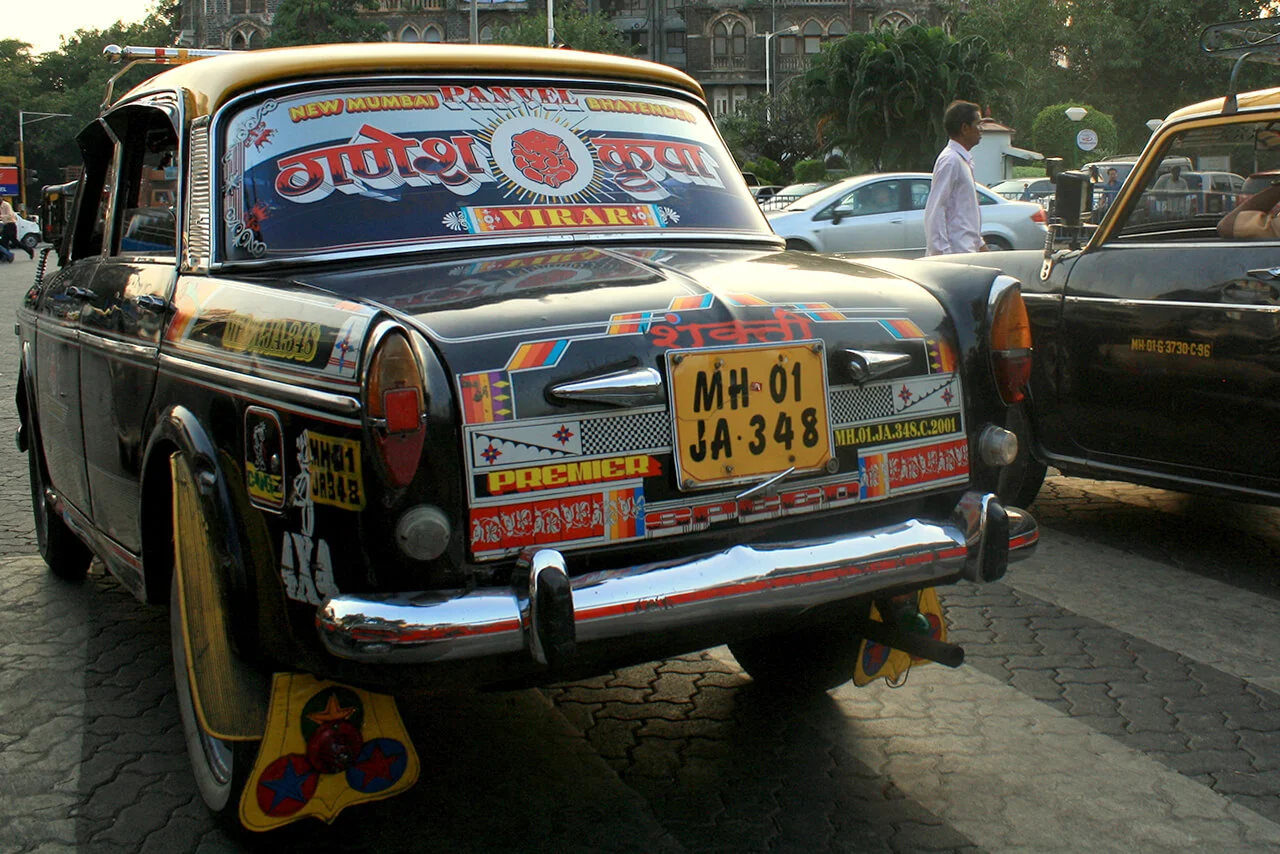
In response, drivers began to personalise their vehicles. Foil decals on the rear windows indicated their home base—Bandra, for instance—as well as the districts in which the taxi was licensed to operate. These were joined by personal mottos (King of the Kings), ornamental side elements, and elaborately decorated number plates, each transforming a standardised vehicle into a distinct and expressive presence on the street.
The turning point came in 2003, when the city administration ordered all vehicles more than twenty years old off Mumbai’s streets, citing concerns over air pollution. The measure was clearly aimed at the Premier Padmini, whose production had already ceased in 2000. From that moment on, their numbers began to dwindle, as other makes gradually took over the taxi market.
At the time of my visit, scarcely fifty Padminis remained in operation in Mumbai; by 2023, they had disappeared from the cityscape altogether.
With them vanished much of the elaborate decorative work created by taxi artists such as Sameer Mistry and Manohar Mistry. Yet the craft faces pressure from another direction as well: in recent years, the police have begun to crack down on such embellishments, citing concerns over road safety.




Write comment
Write comment
Comments
No Comments