Main content
A (virtuell) walk to Vienna’s gilded Signs
Vienna, Gilded
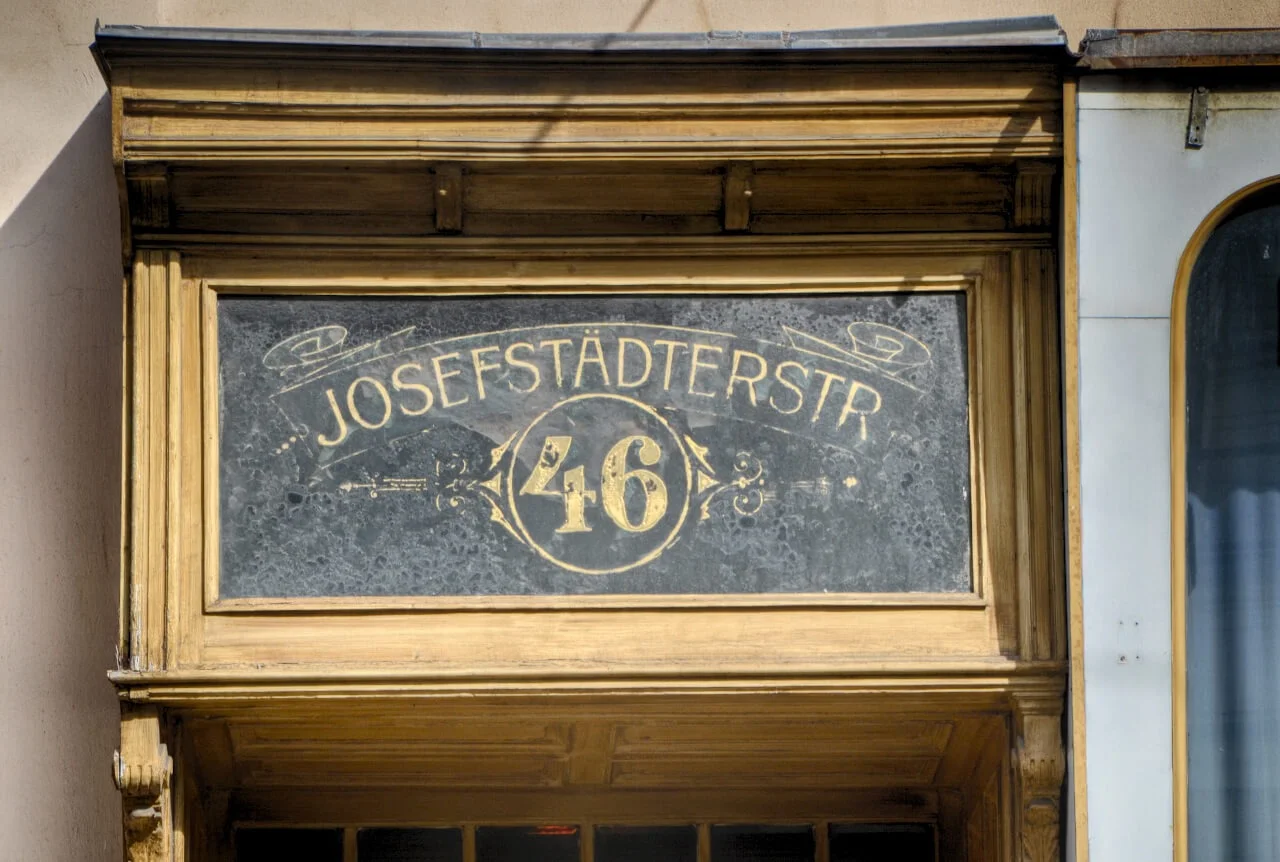
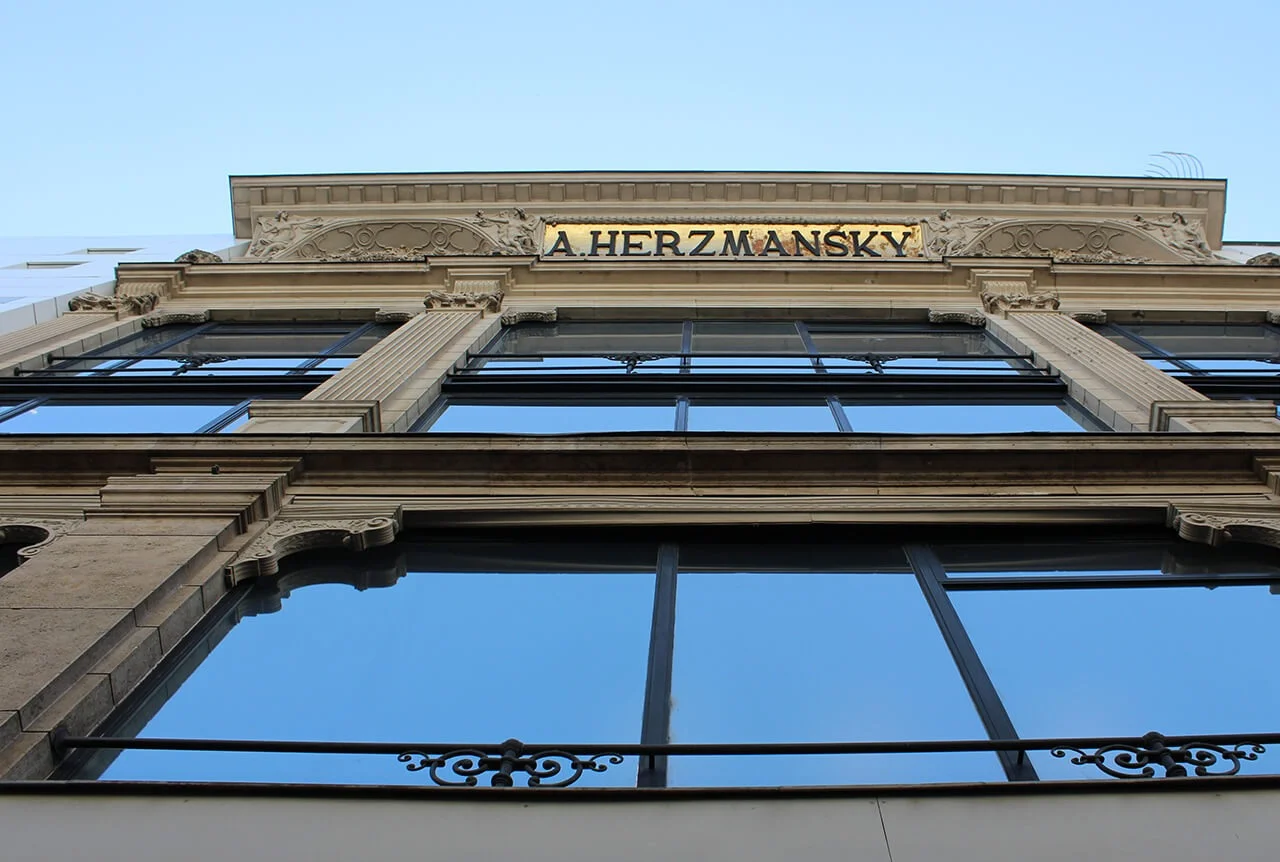
The use of gold conveyed both elegance and exclusivity; protected behind glass, the lettering was shielded from the elements. The spectrum of execution ranged from purely typographic compositions to richly detailed illustrations in matte and burnished gold.
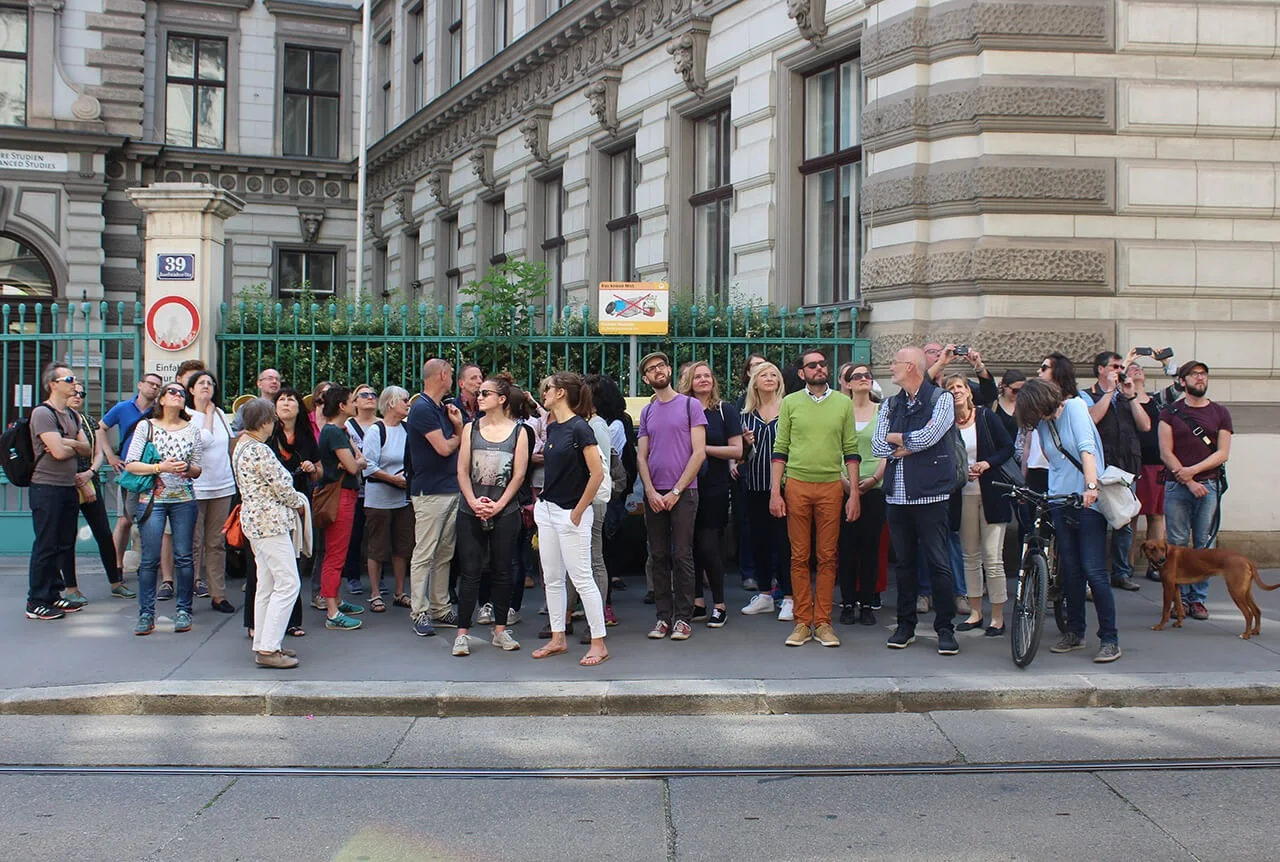
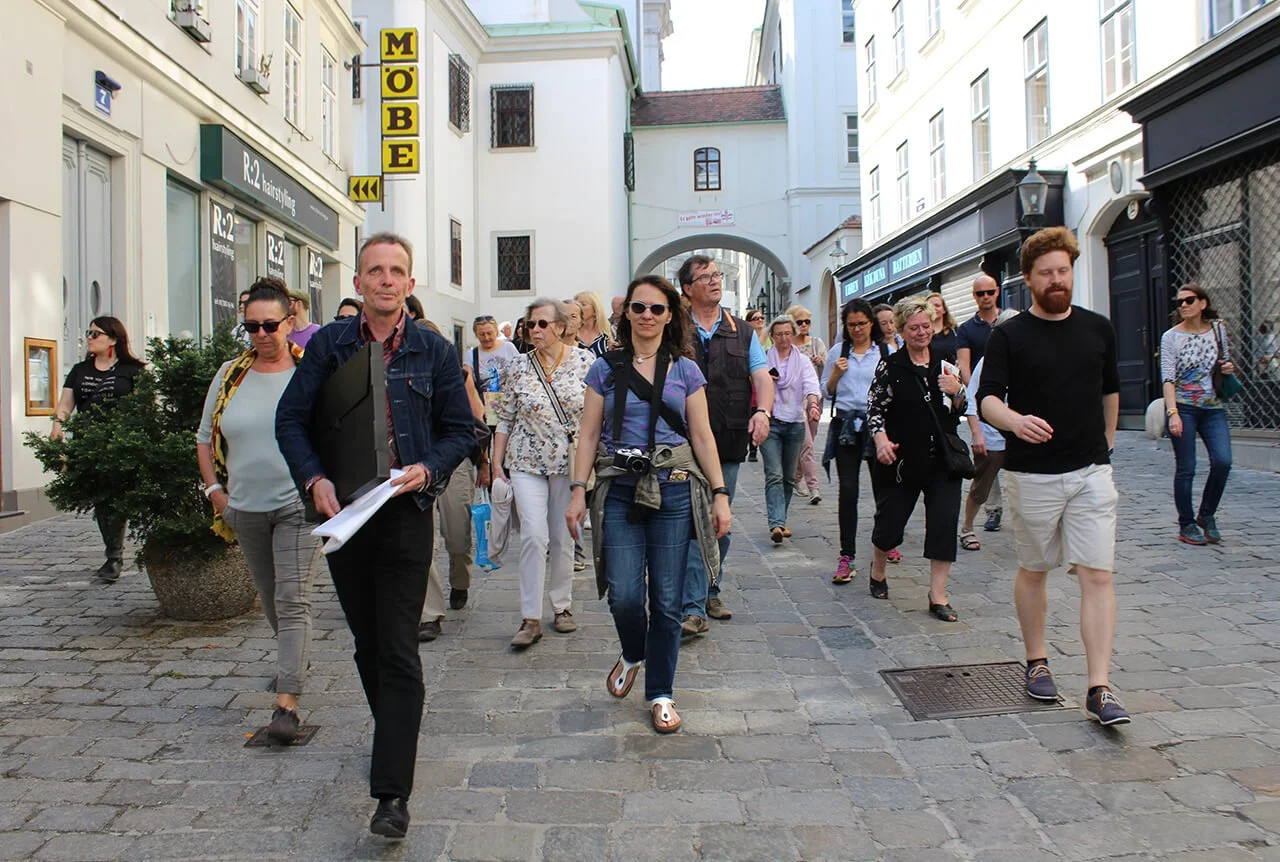
From 2017 to 2024, I conducted guided walks devoted to these surviving examples of gilding, among others for Design Austria, the Typographic Society, the Vienna Museum, and the Jane’s Walk.
Join me on a virtual tour through gilded Vienna! This article was updated 2025.
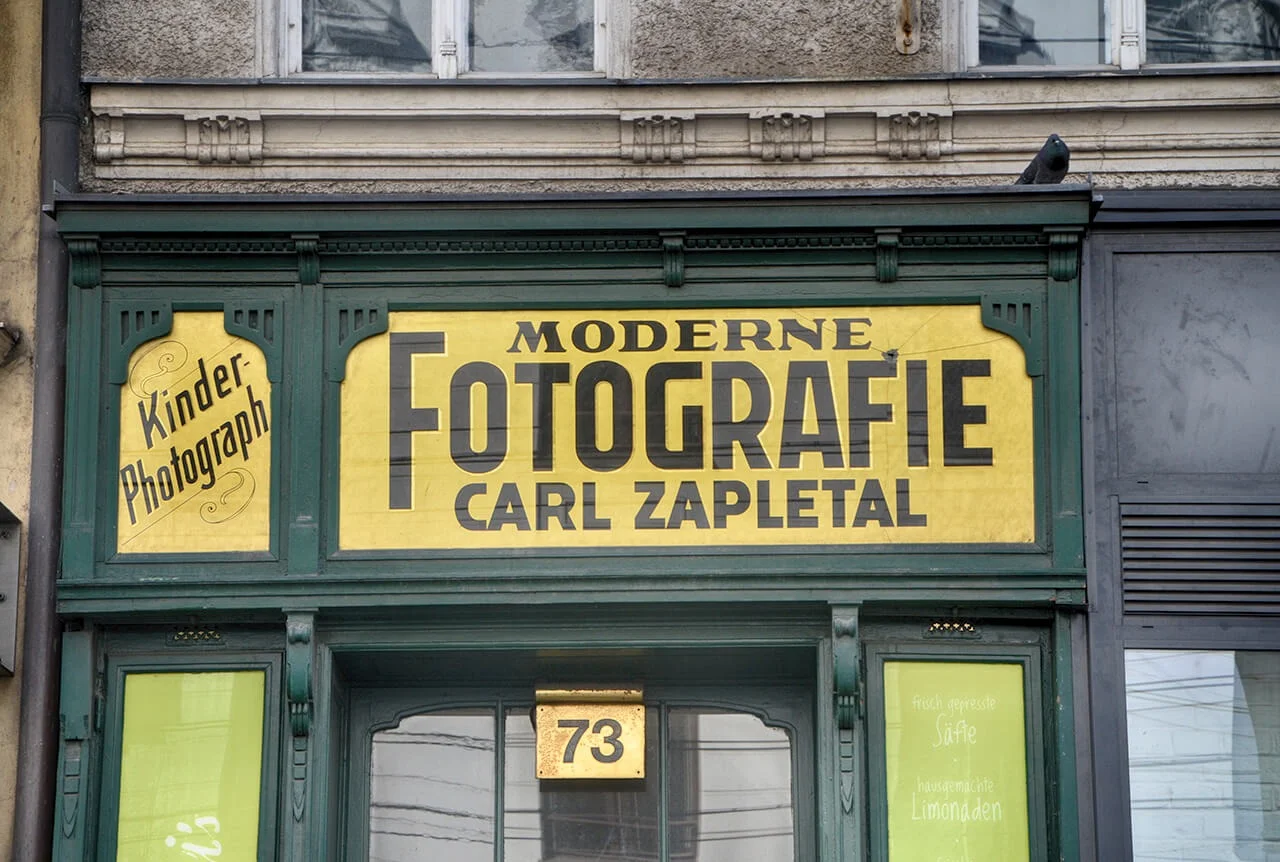
1080, Josefstädter Straße 73
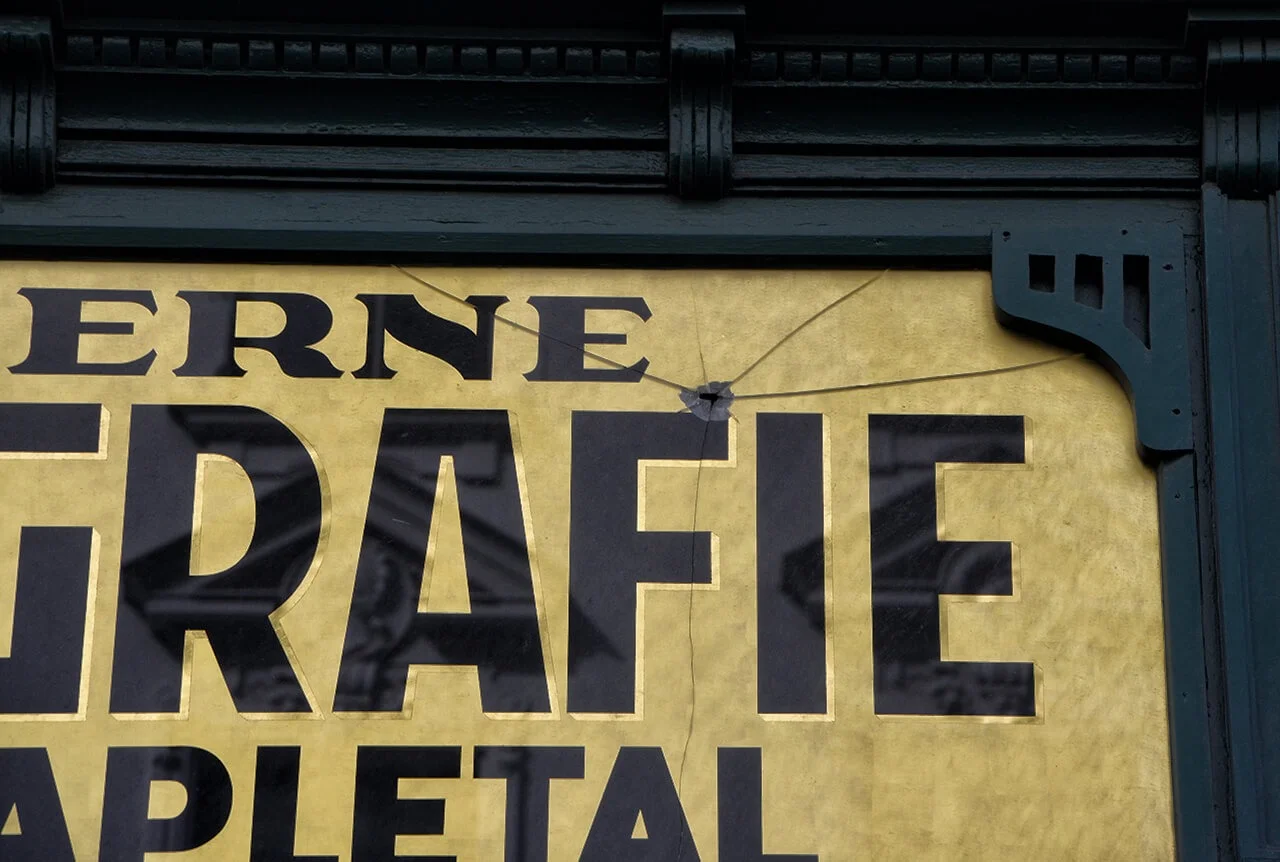
Modern Photography Carl Zapletal
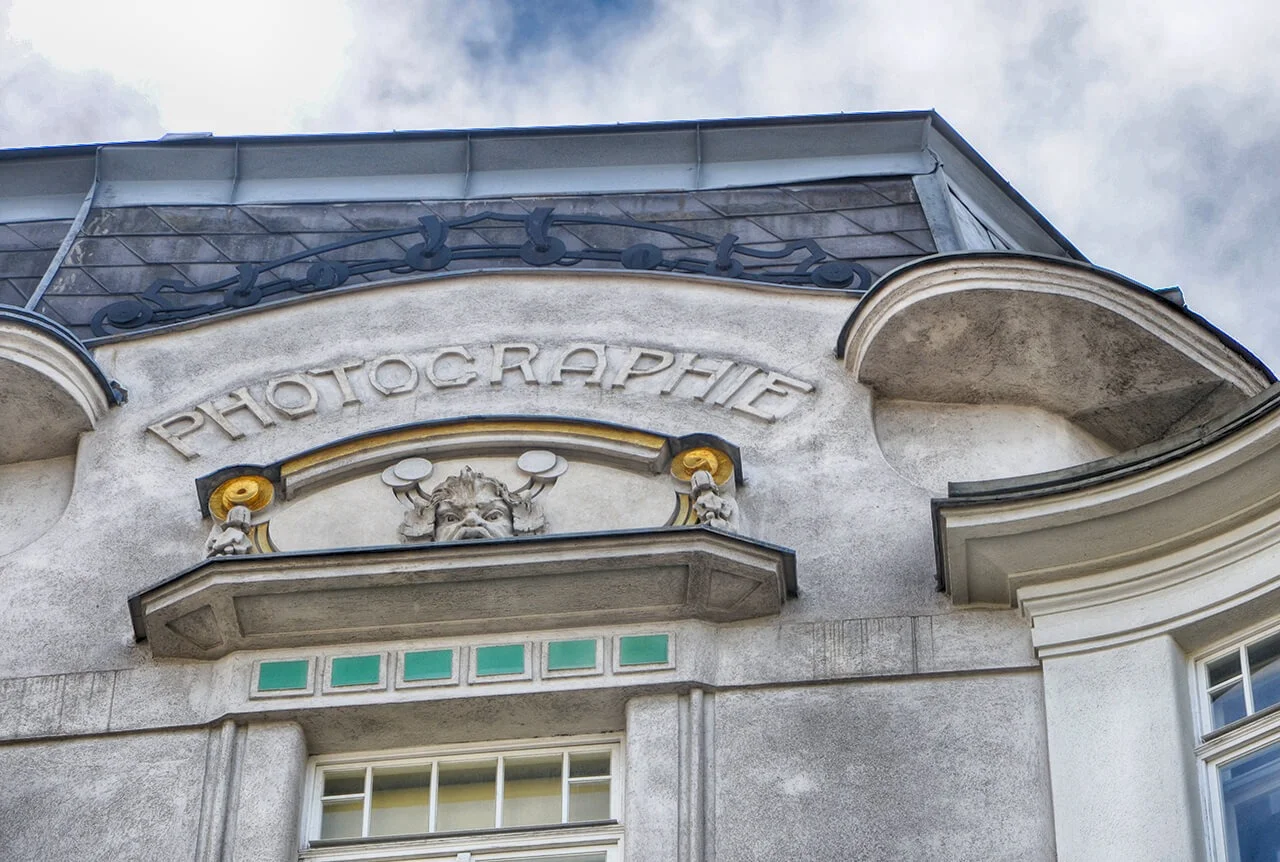
At the premises of “Kinder (Children) Photographs” Carl Zapletal, not only the gilded lettering above the entrance at No. 73 survives; high on the façade, the word “Photographie” can still be discerned. Zapletal moved to this address in 1923, increasingly devoting himself to portrait photography, having already gained recognition through his work in press and motorsport imagery.
As early as 1911, he became the first professional photographer in Austria to take photographs from an aeroplane—images that were subsequently presented at the International Aviation Exhibition (IFA) in the Rotunda.

1080, Josefstädter Straße 25
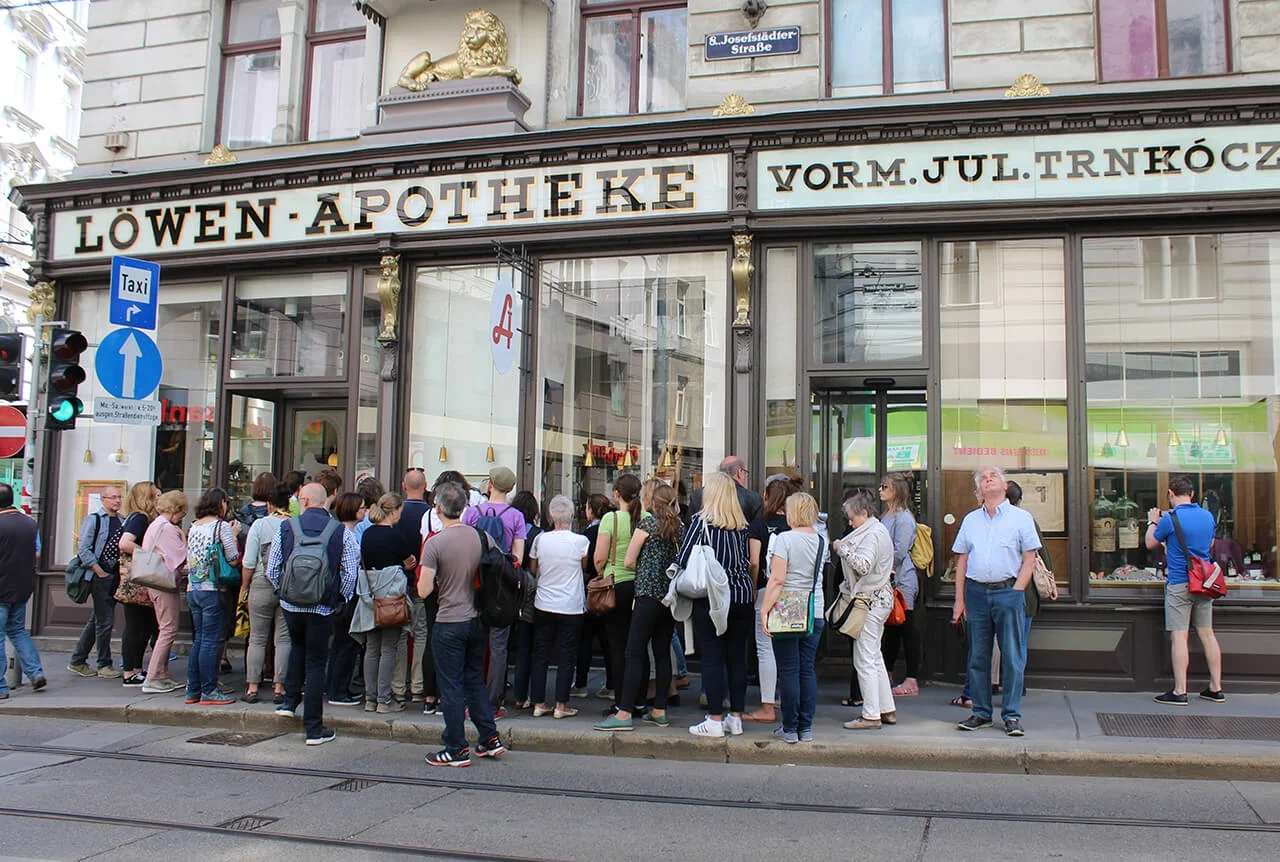
Alte Löwen Apotheke
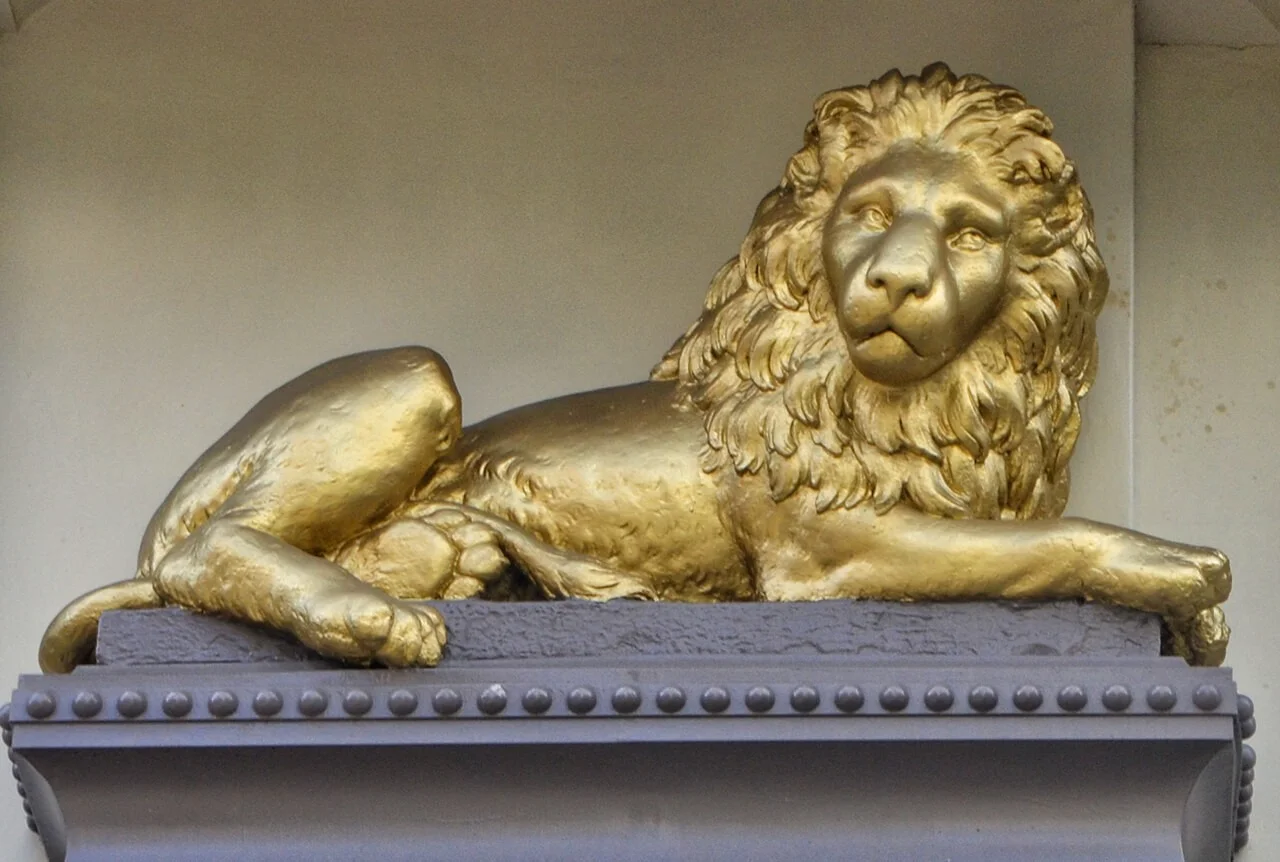
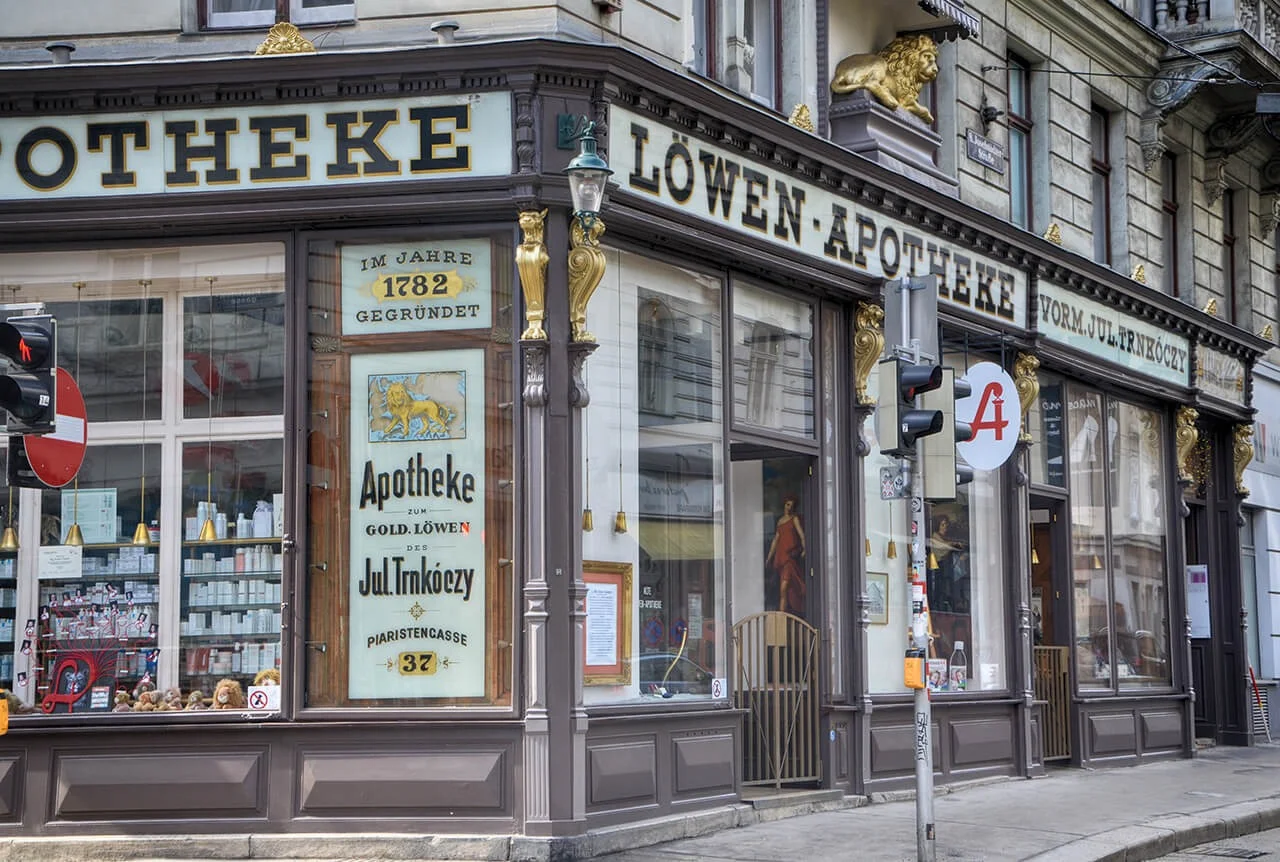
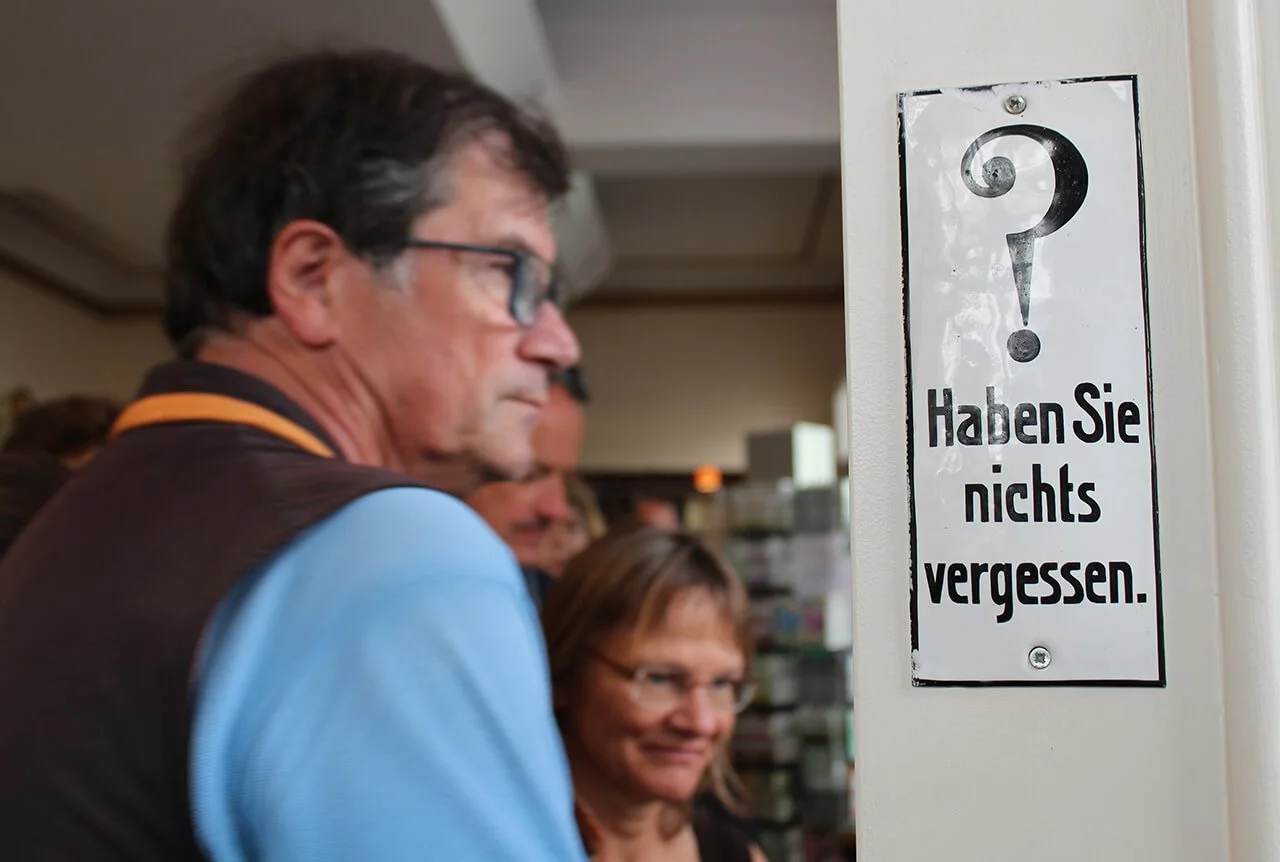
In 1782, Mathias Moser founded the Löwen Apotheke (pharmacy), then still located in the building opposite its present site. Under the stewardship of the founder’s son, the pharmacy gained considerable renown—not least because he invented gas lighting in its cellar. In 1816, the premises became the first house in Vienna to be illuminated by gaslight, an innovation so remarkable that even the Emperor came to witness it.
Moser was equally distinguished by his artistic sensibility: as shop signs, he commissioned four life-sized paintings from Ferdinand Georg Waldmüller. Today, the originals are held in the collection of the Belvedere, while replicas remain on display within the pharmacy itself.
1080, Piaristengasse 2
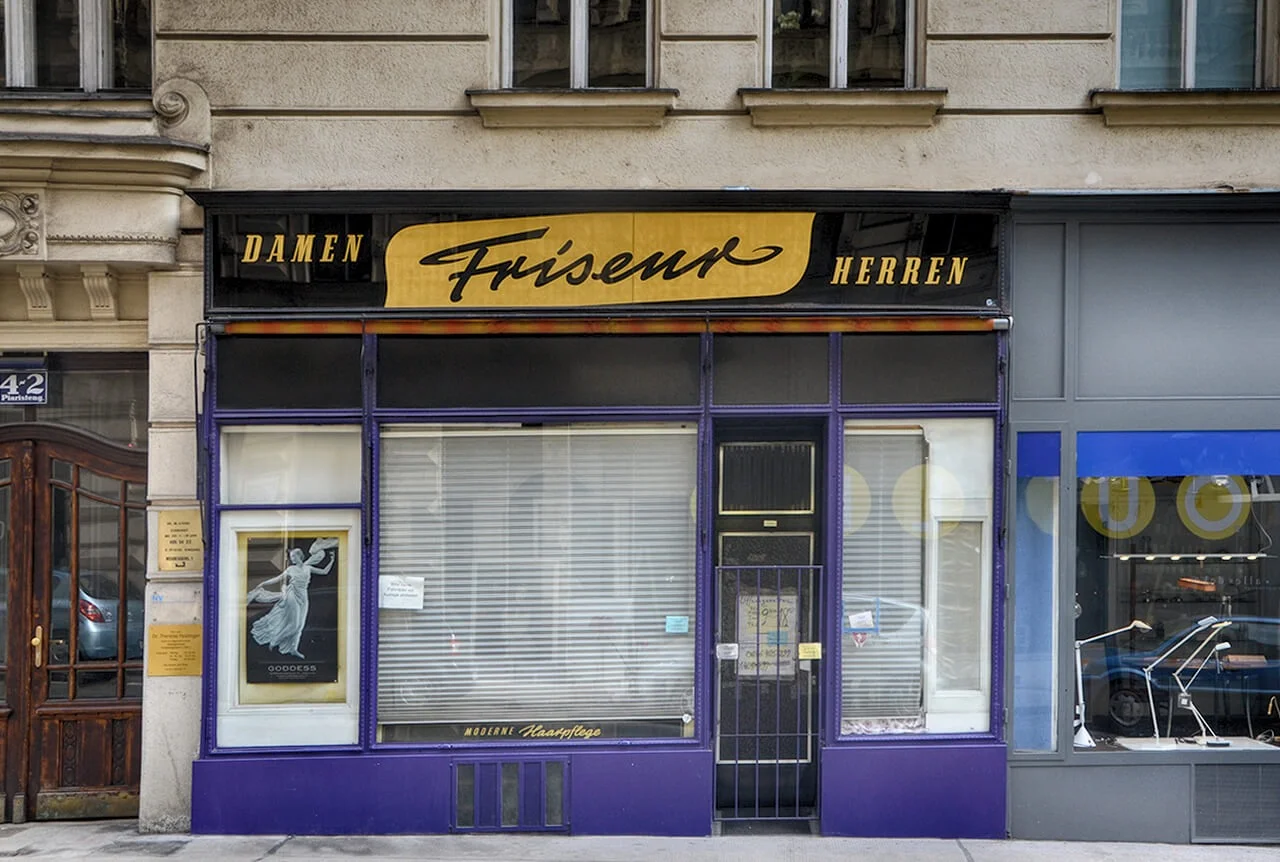
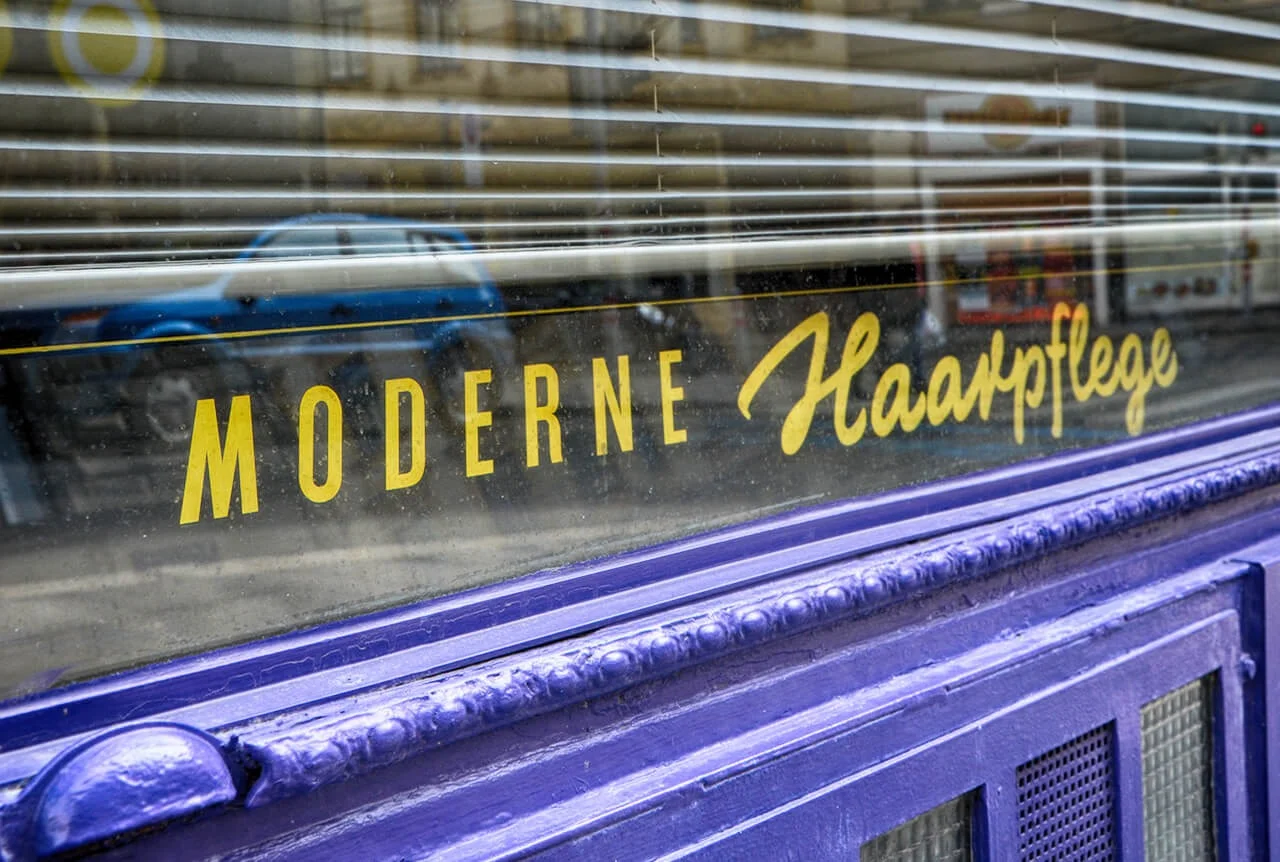
Ladies’ and Gentlemen’s Hairdresser †
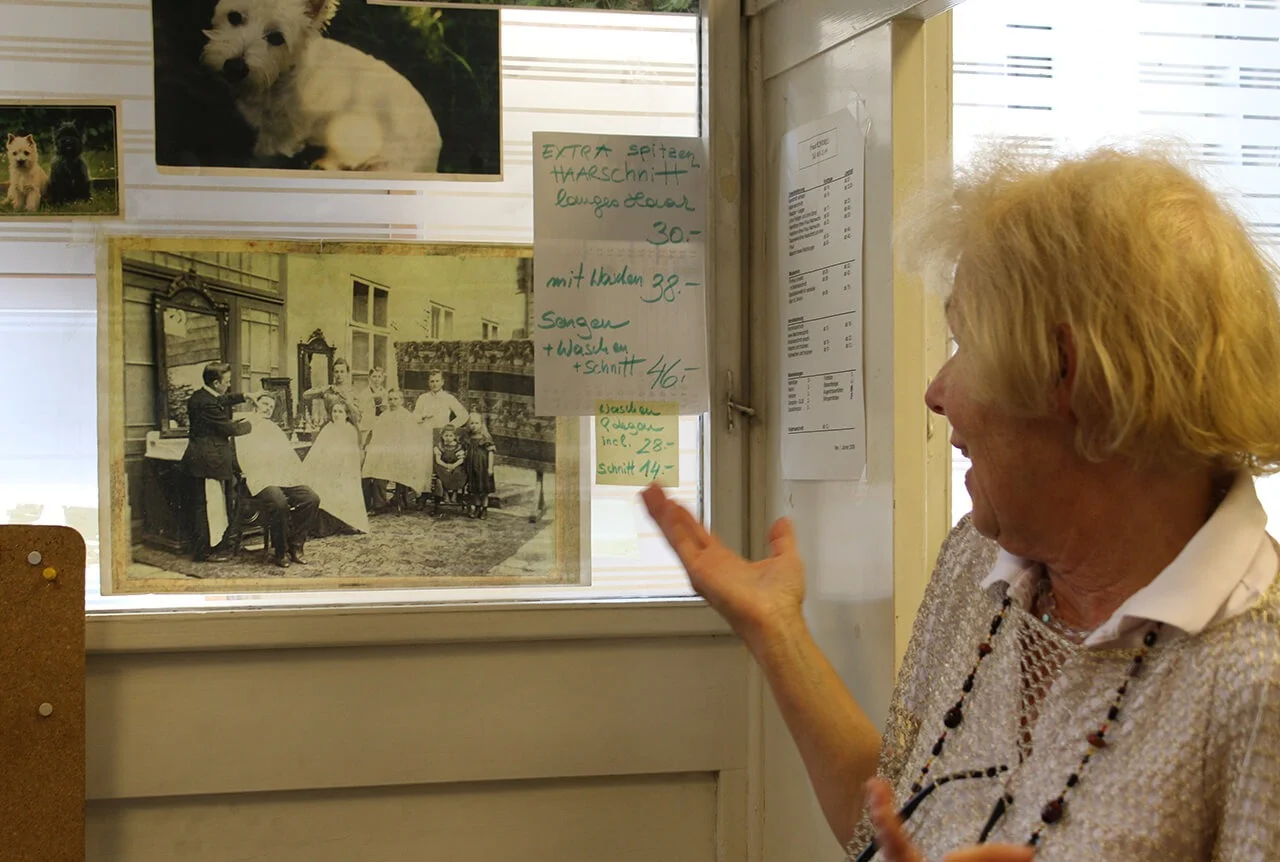
Most passengers on the 13A bus line likely knew the shop—with its striking 1950s portal and gilded signage—only in passing. Yet a closer look would have been well worth the effort, for it was Vienna’s only remaining “cabine salon,” with individual cubicles for its clientele. Its proprietor, Christine Endres, descended from a long-standing family dynasty of hairdressers and had a wealth of anecdotes to share.
In 2024, however, the portal was lost for good as a result of redevelopment works undertaken by the building’s management; Endres, too, has since closed her business.
1070, Burggasse 29
Alte Bäckerei
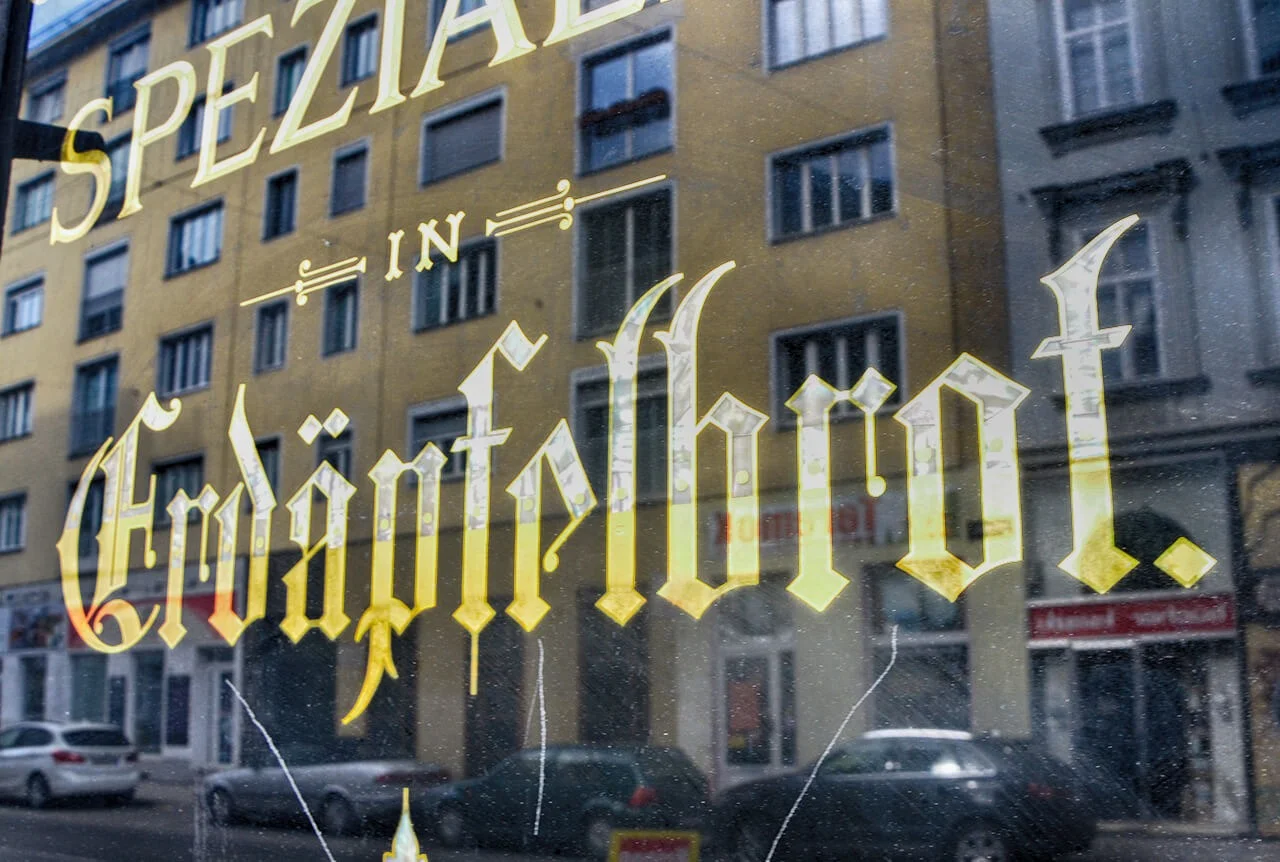
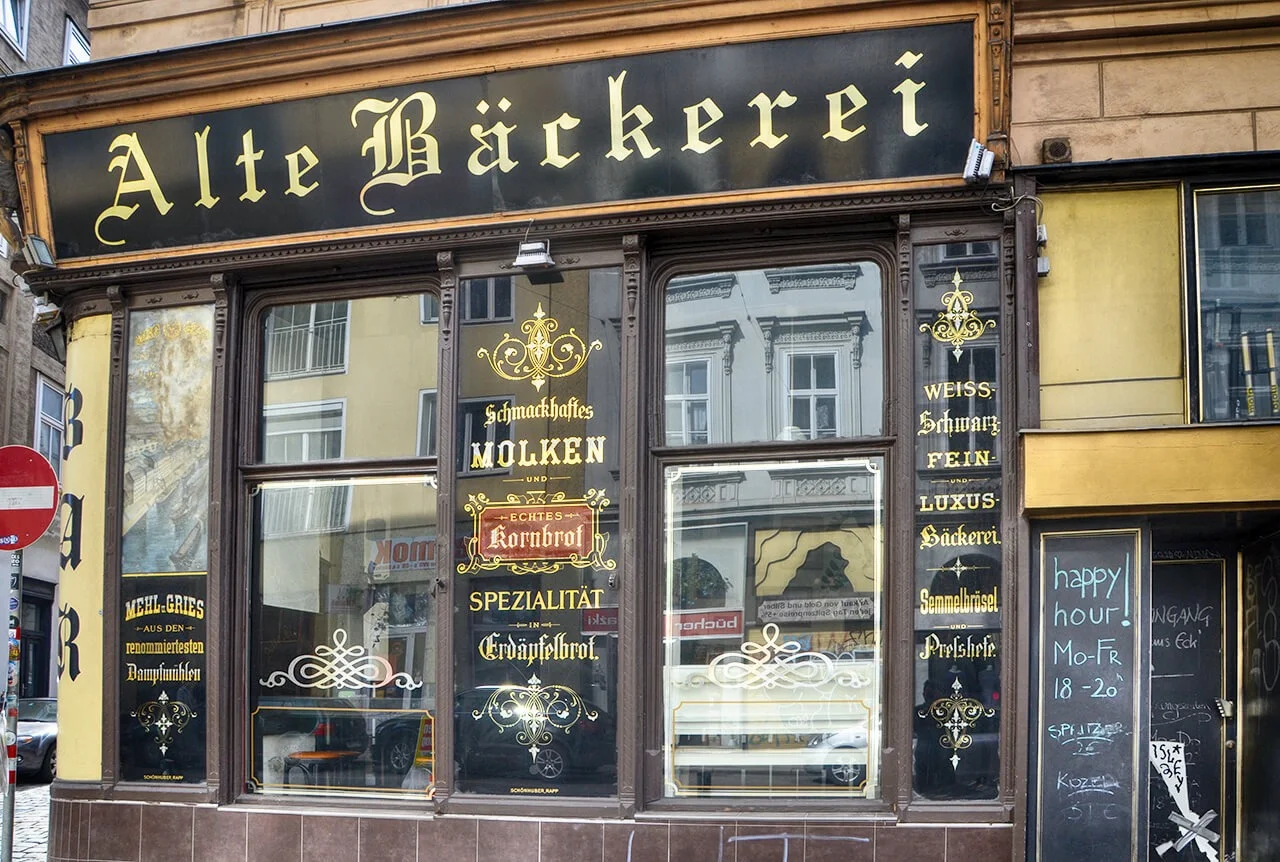
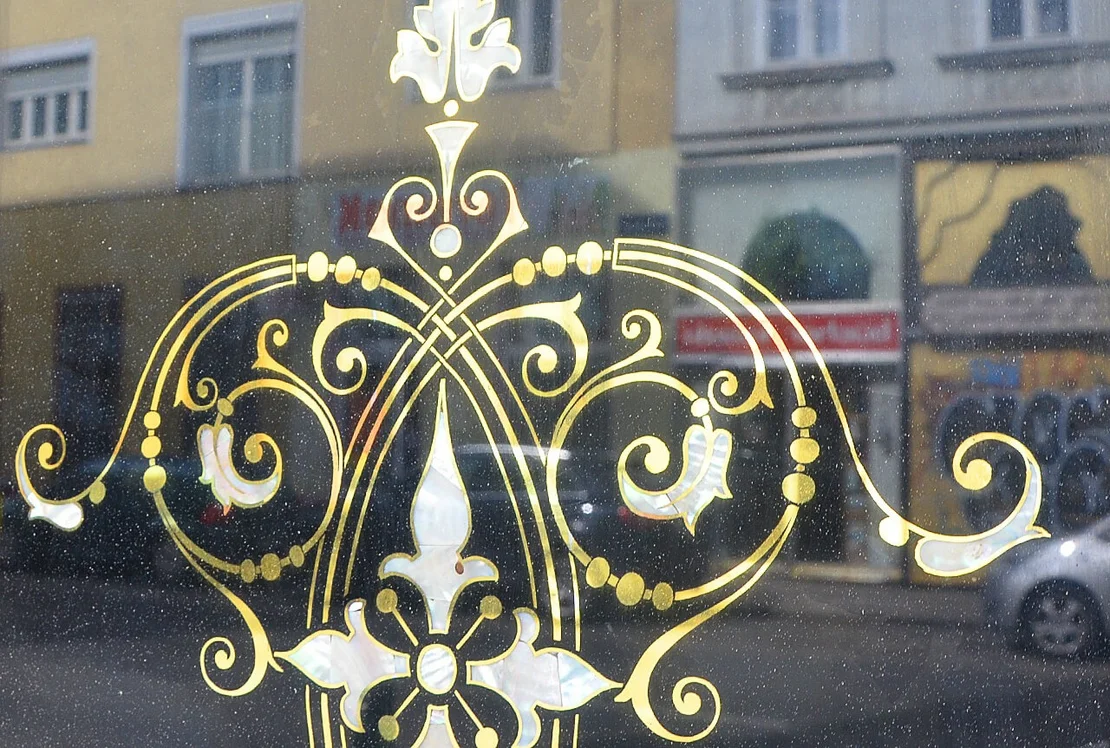
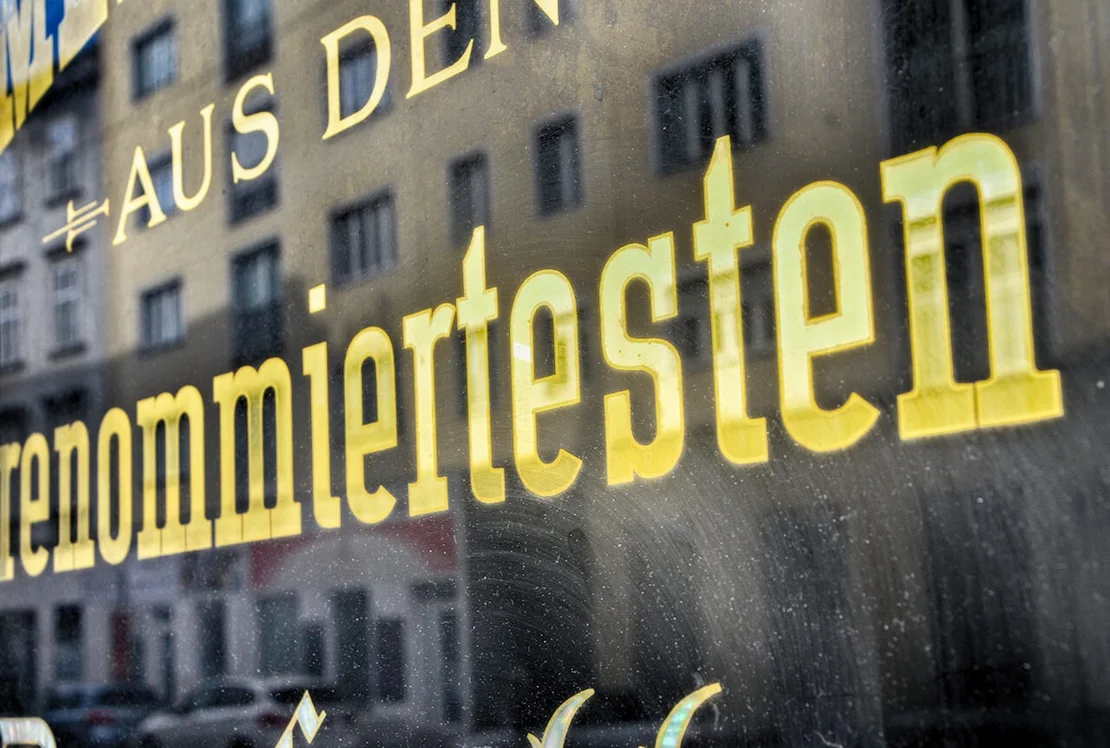
The richly detailed lettering of this corner premises at the foot of the Spittelberg bears eloquent witness to the range of goods offered around the turn of the twentieth century. “Wholesome whey bread, genuine grain bread, and the speciality potato bread” are advertised here, alongside “flour and semolina from the most renowned steam mills.”
From a craft perspective, the portal ranks among the most exceptional examples of sign painting in the city. Mother-of-pearl inlays, matte and burnished gold, and refined typographic compositions combine to form a work of remarkable sophistication. The Alte Bäckerei drew upon the full repertoire of the trade.
In the summer of 2018, however, the portal was entirely covered over following a change of tenancy. For several years, during my guided walks, only faint traces of the gilding—visible in the creases of the applied film—could still be discerned. Then, in 2025, came a welcome surprise: with yet another change of ownership, the lettering was uncovered once more and, after nearly a century, is again visible in its original splendour within the public realm.
1060, Barnabitengasse 8
Former Piano Factory Rudolf Stelzhammer
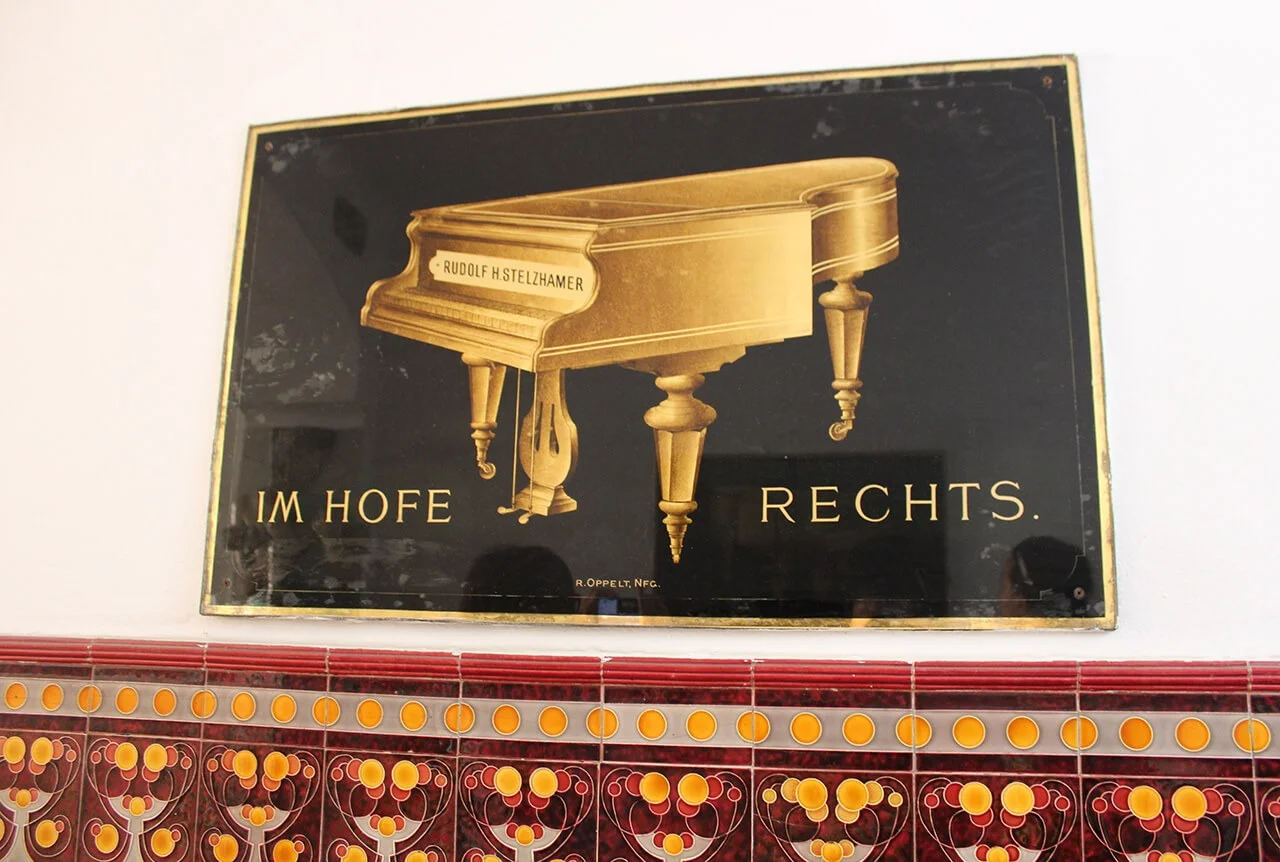
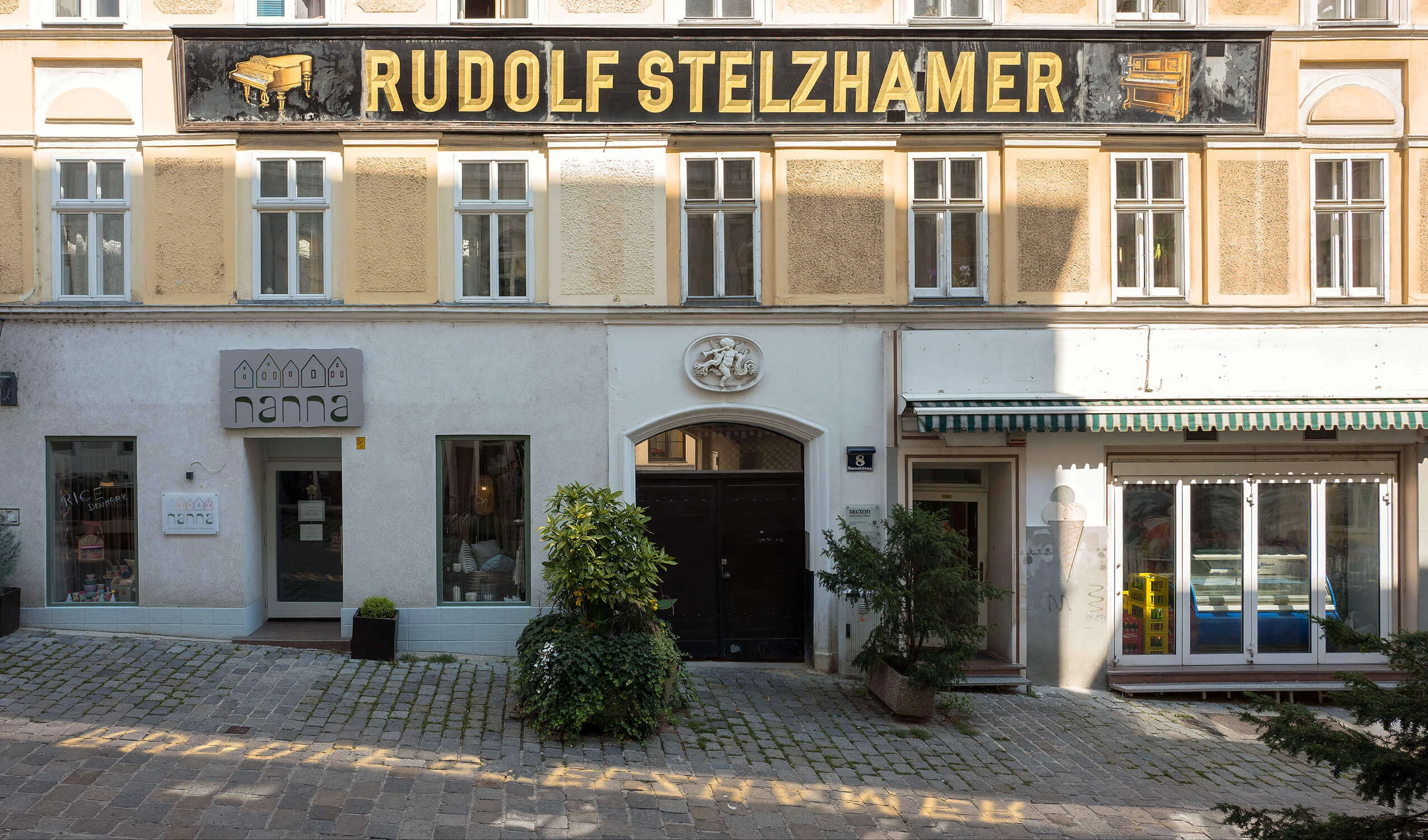
Our route leads us on to one of the highlights of the walk: the former piano factory of Rudolf Stelzhammer in Barnabitengasse 8.
Above the entrance, one encounters—quite unmistakably—what is perhaps Vienna’s most prominent orthographic error. The Stelzhammer family, who produced pianos here from around 1900, spelled their name with a double “m.” Yet the sign painter evidently omitted the duplication stroke and proceeded, with unwavering consistency, to render the name incorrectly on both signs within the entrance passage.
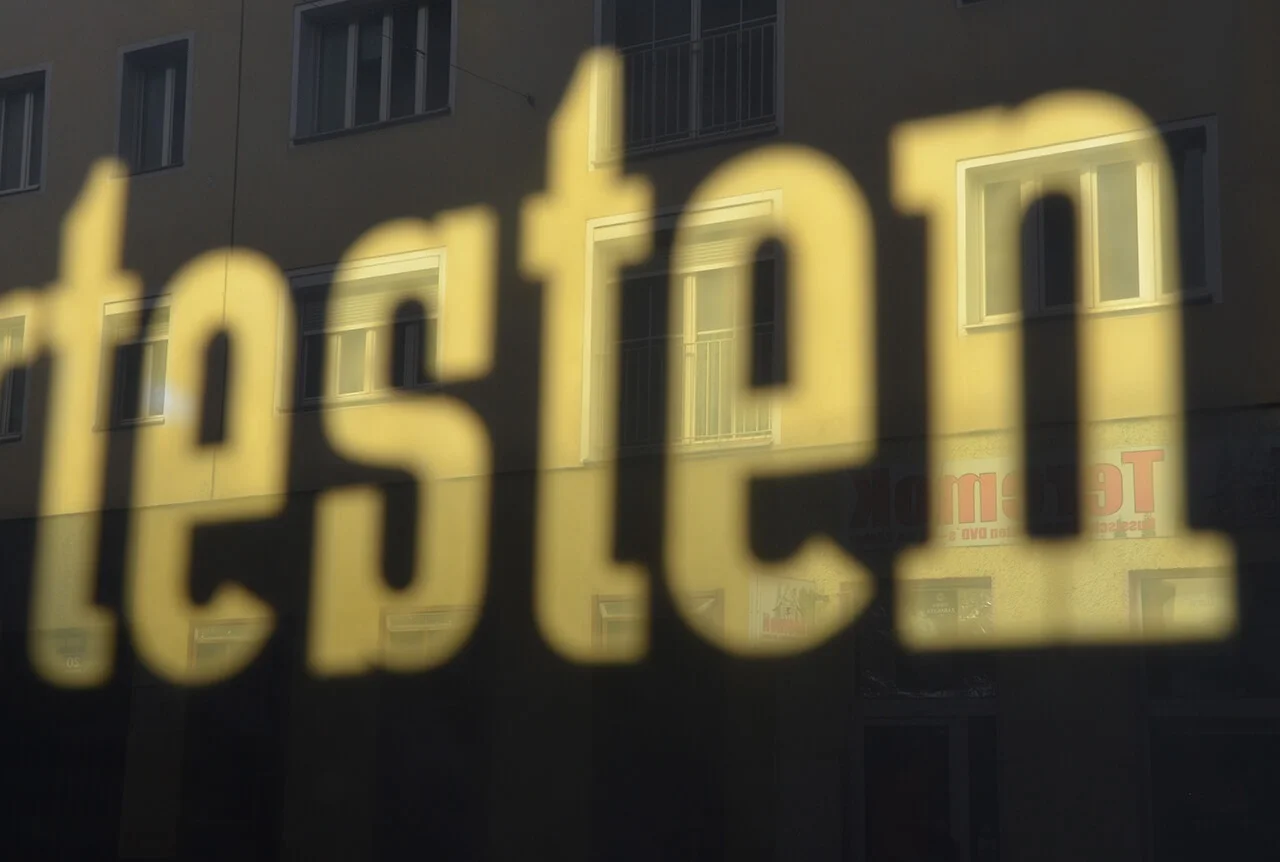
Another charming peculiarity of this gilded work reveals itself under favourable light conditions: the lettering “Rudof Stelzhamer” is reflected, as if in a mirror, onto the cobblestones of Barnabitengasse.
1010, Bräunerstraße 4–6
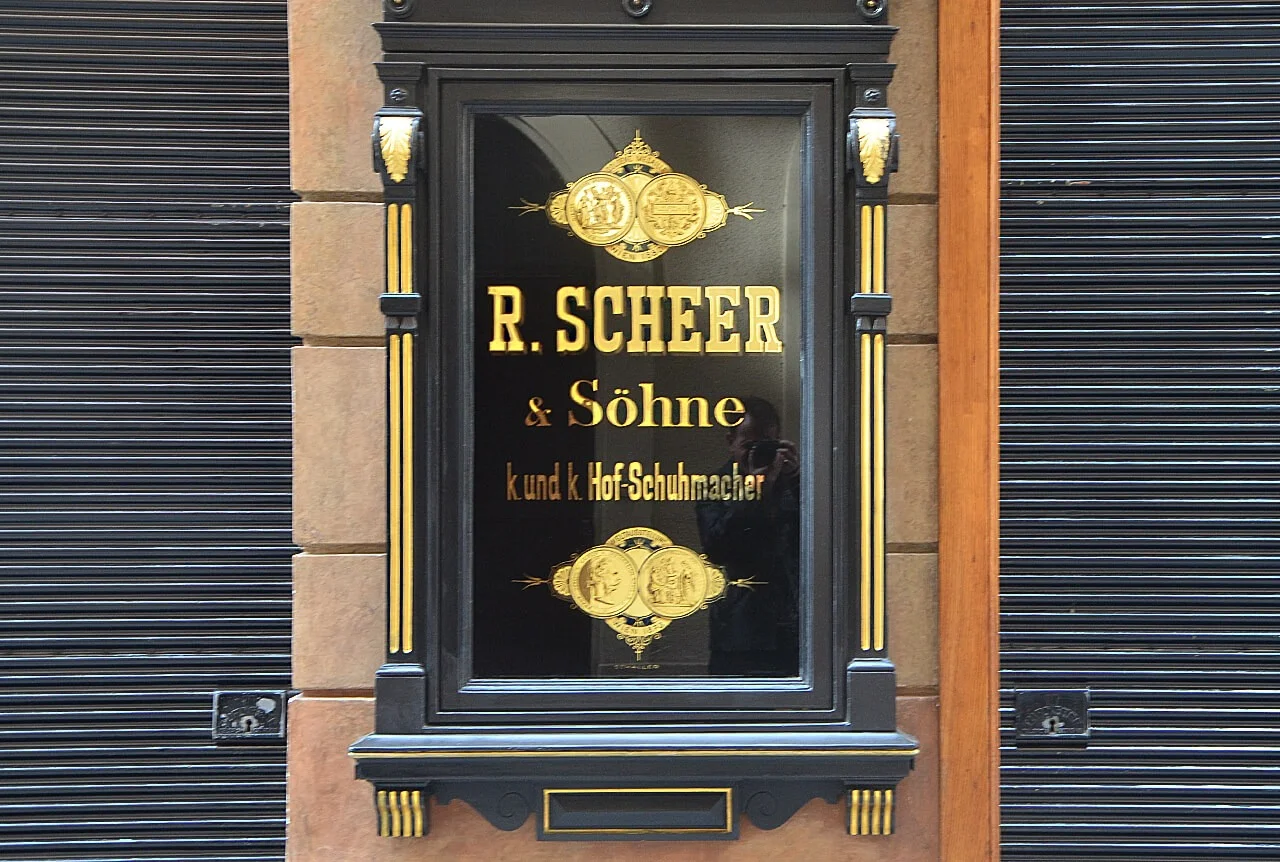
Shoemaker R. Scheer & Sons
For seven generations, the Scheer family has been crafting bespoke shoes of the highest quality. The portal, adorned with an elaborately illustrated gilded coat of arms, has remained unchanged since 1878—the year in which the firm was appointed Imperial and Royal Court Shoemaker.
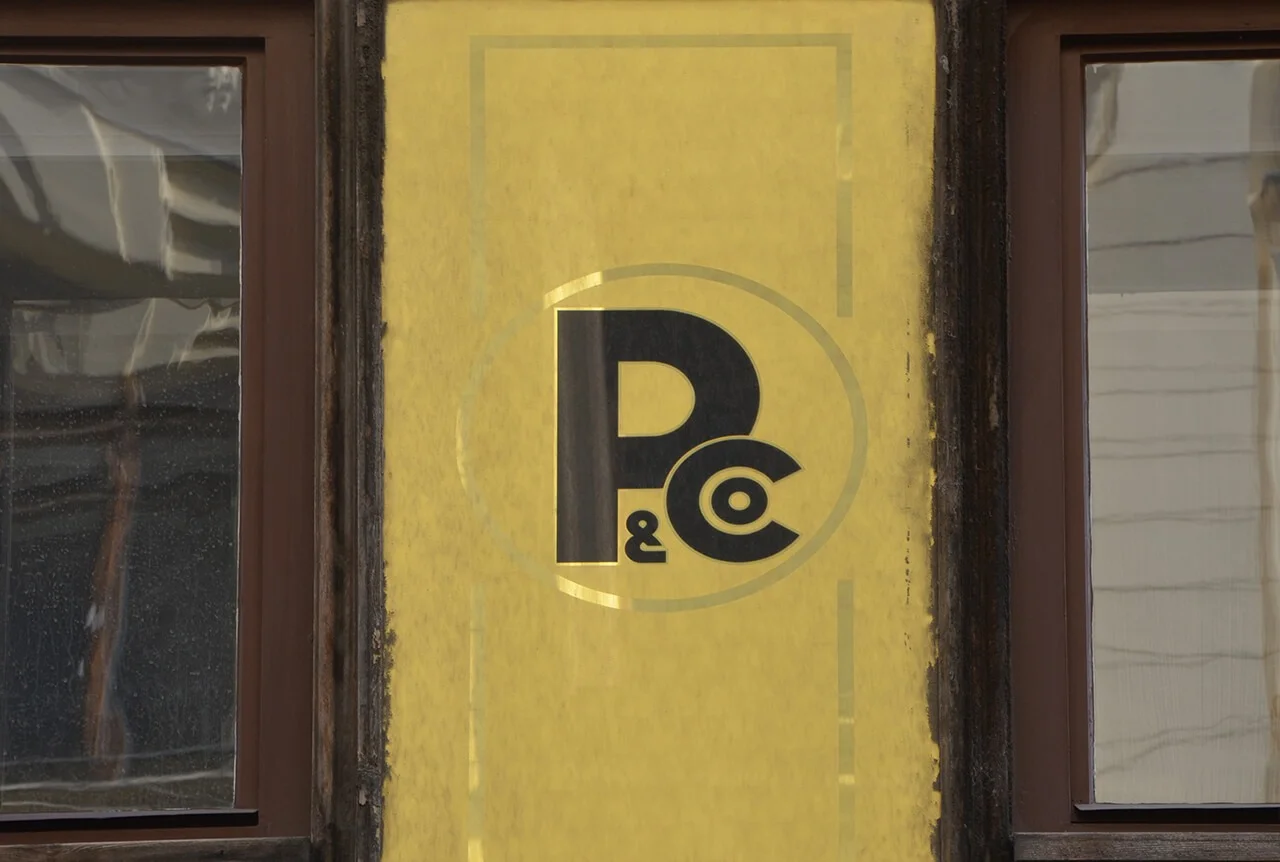
Just two streets away, at Spiegelgasse 3, one encounters an entirely gilded façade. The distinguished banking house Pinschof & Co once had the entire frontage of the building finished in gold, a striking expression of prestige and confidence.

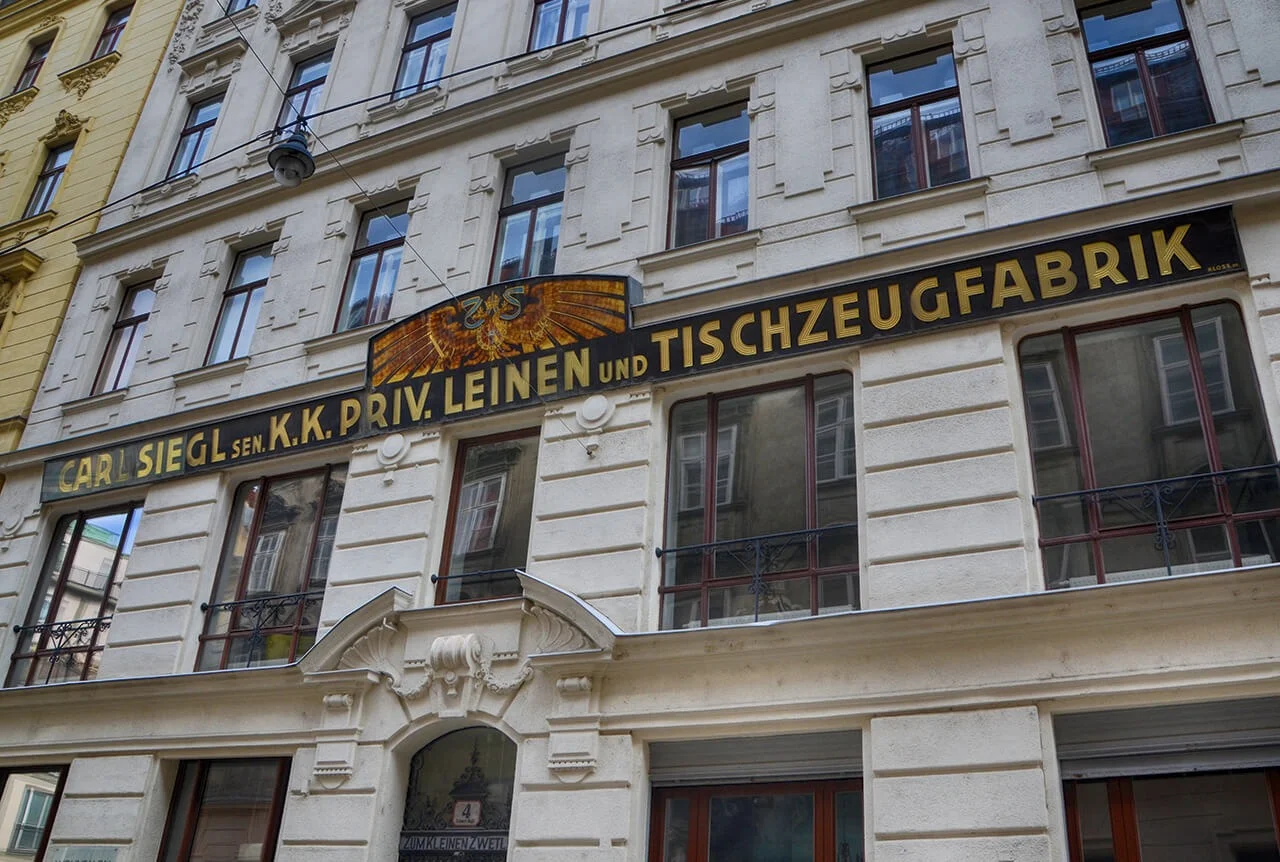
At the conclusion of the walk,
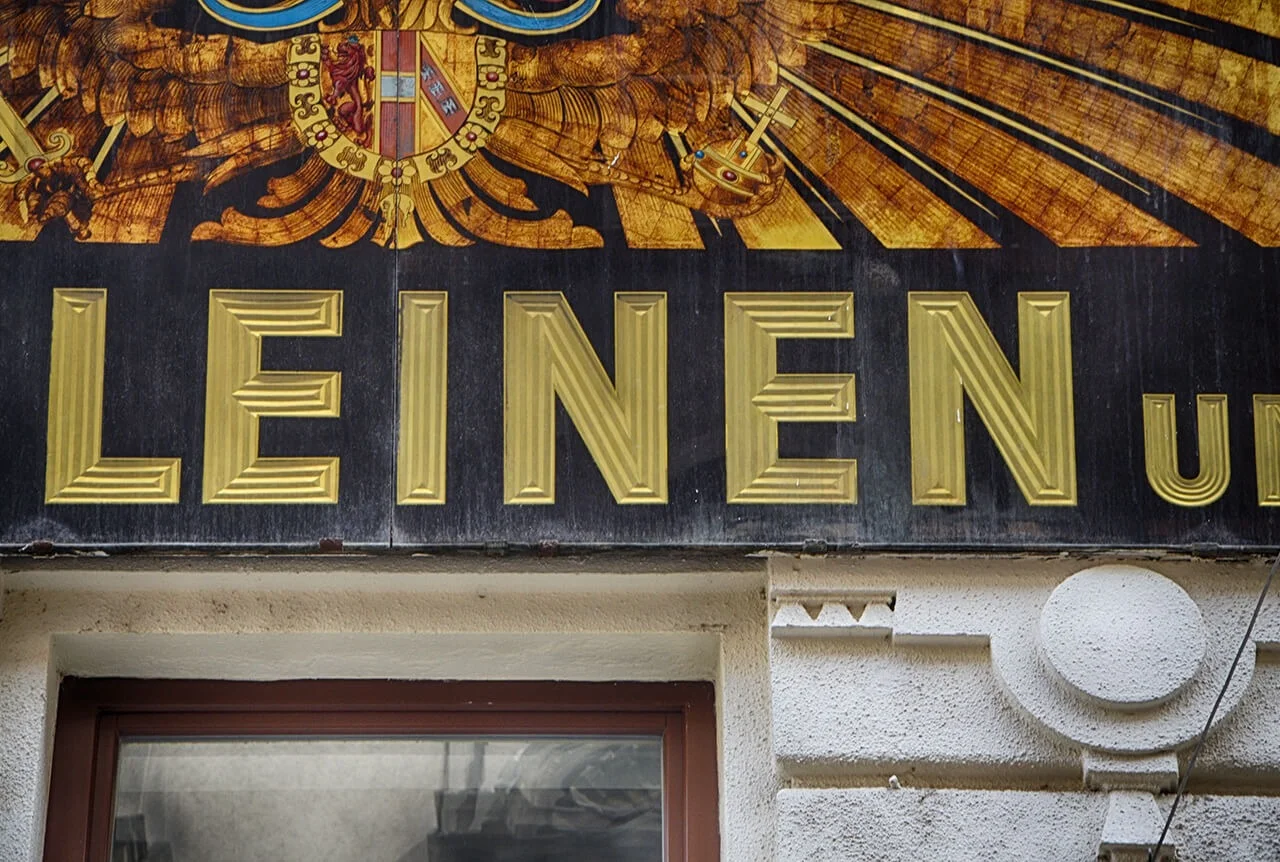
we encounter the monumental sign of the
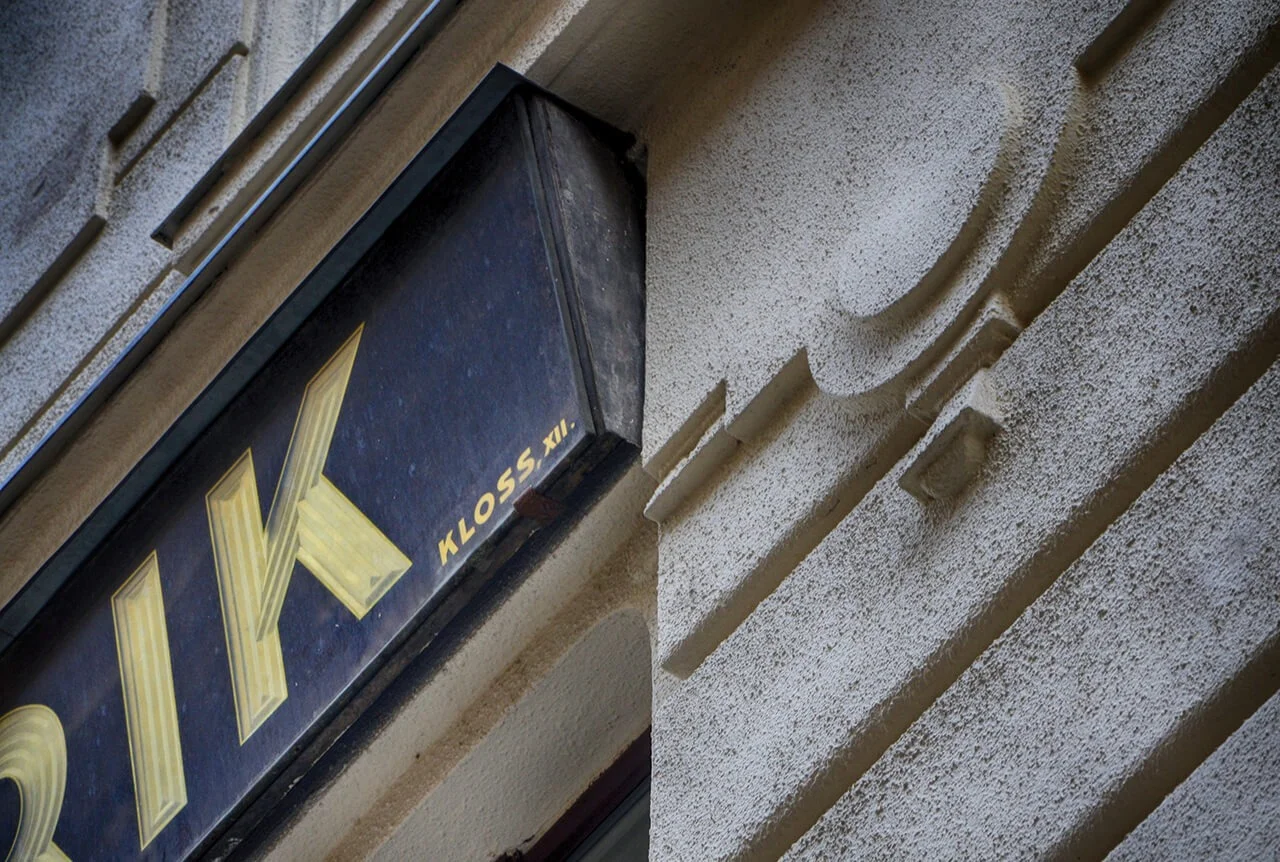
“Carl Siegl Sen. K.K. Priv. Leinen- und Tischzeugfabrik.”
Carl Siegl (1802–1889) was among the most prominent textile entrepreneurs in Mährisch-Schönberg. He founded the enterprise together with his sons Robert and Richard, while the necessary capital was provided by his wife, herself the daughter of one of the city’s oldest manufacturing families. Following Siegl’s death, his sons assumed control; by the turn of the twentieth century, the factory employed some 1,200 workers.



Write comment
Write comment
Comments
No Comments