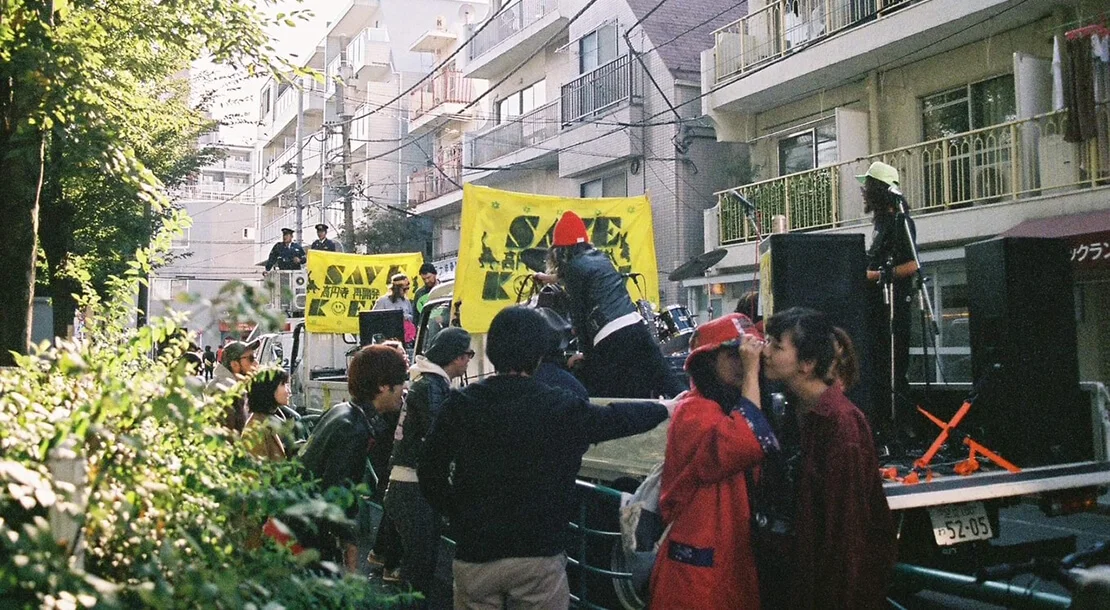
Anti-gentrification protest in Kōenji, 2018. Photo: Andhika Faisal
Main content
Interview with SUBstore Founder Andhika Faisal
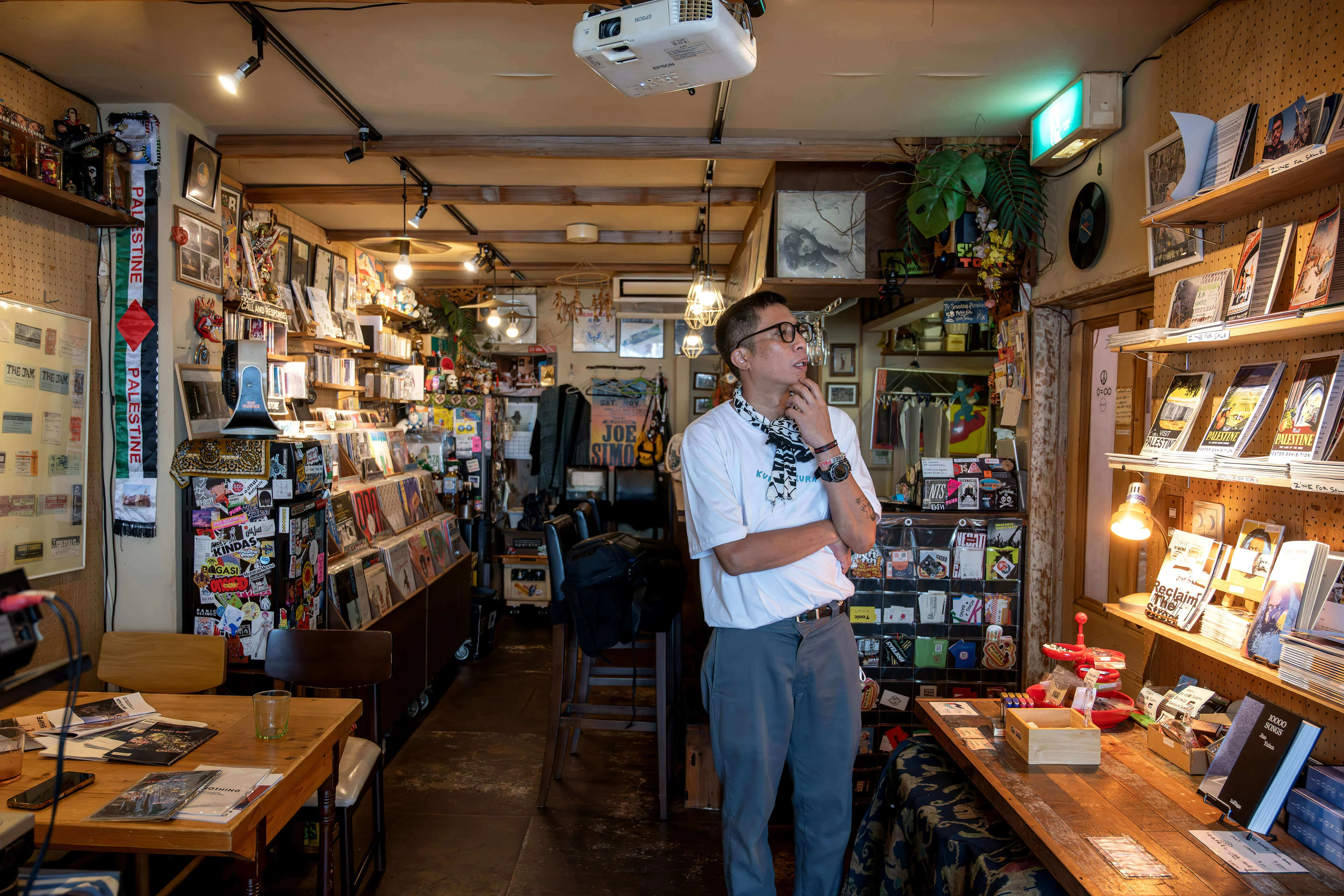
Koenji, Tokyo’s Defiant Neighbourhood

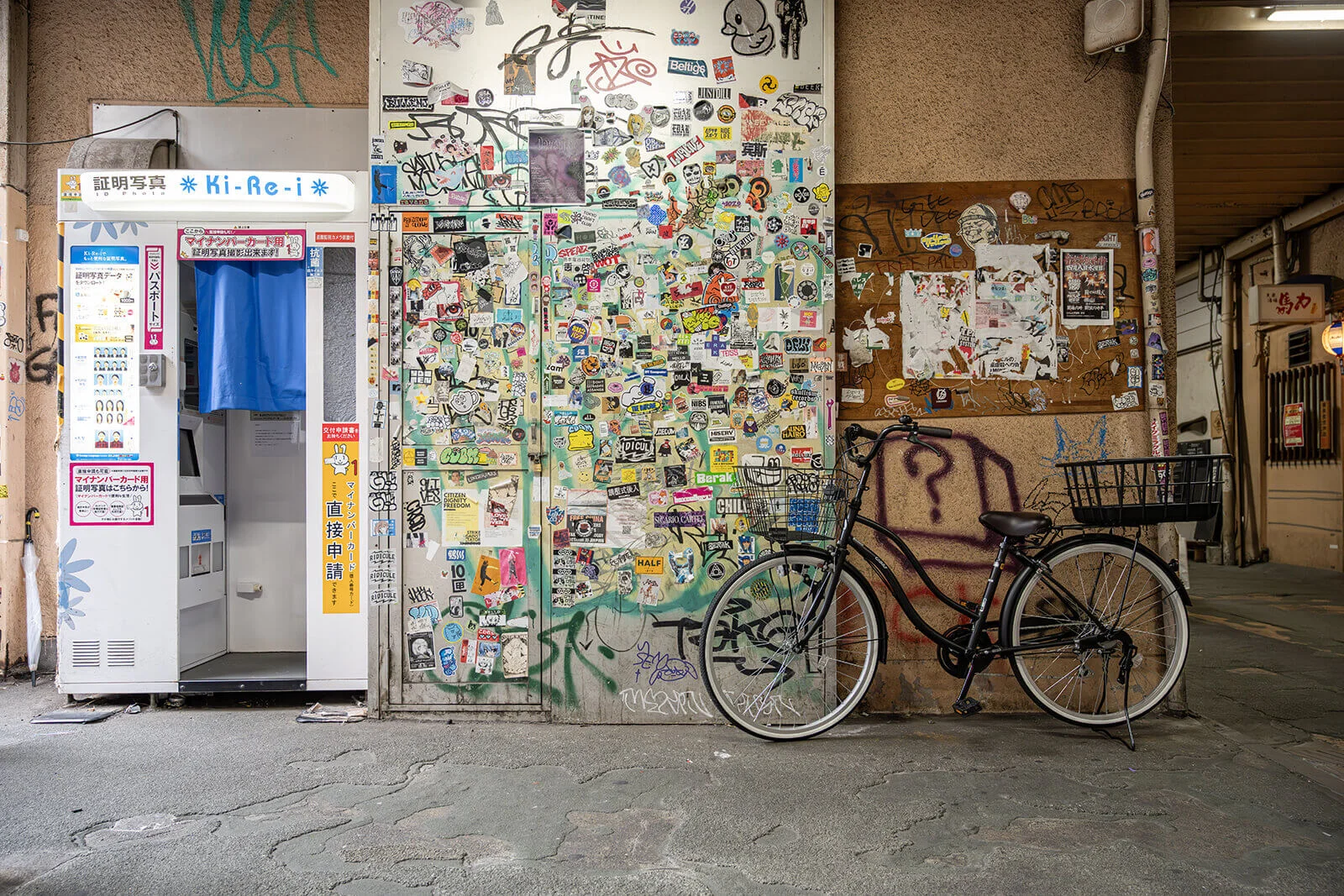
Just outside Kōenji Station, beneath the railway tracks, lies a microcosm of izakaya and live venues. Right next door: the SUBstore
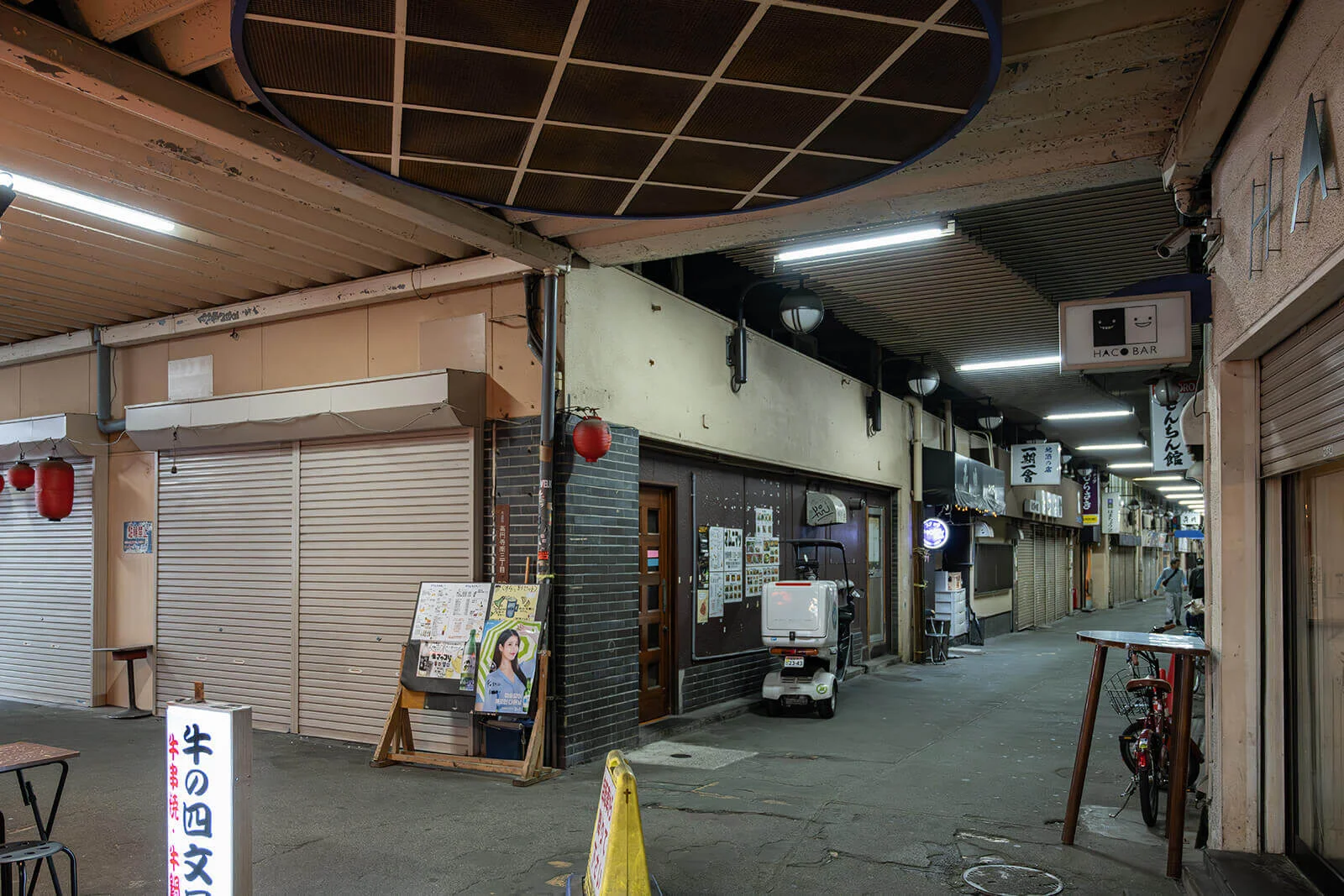
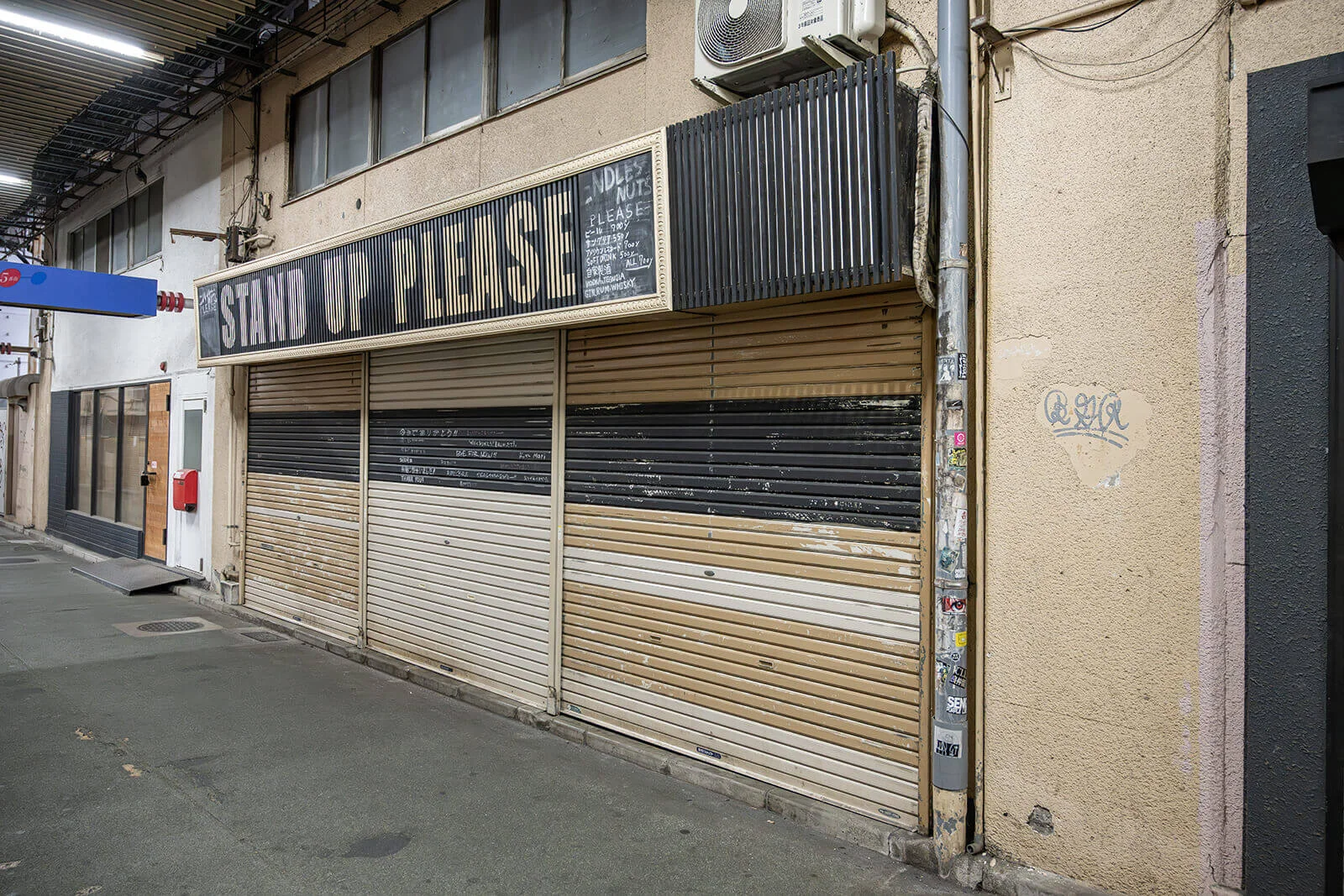
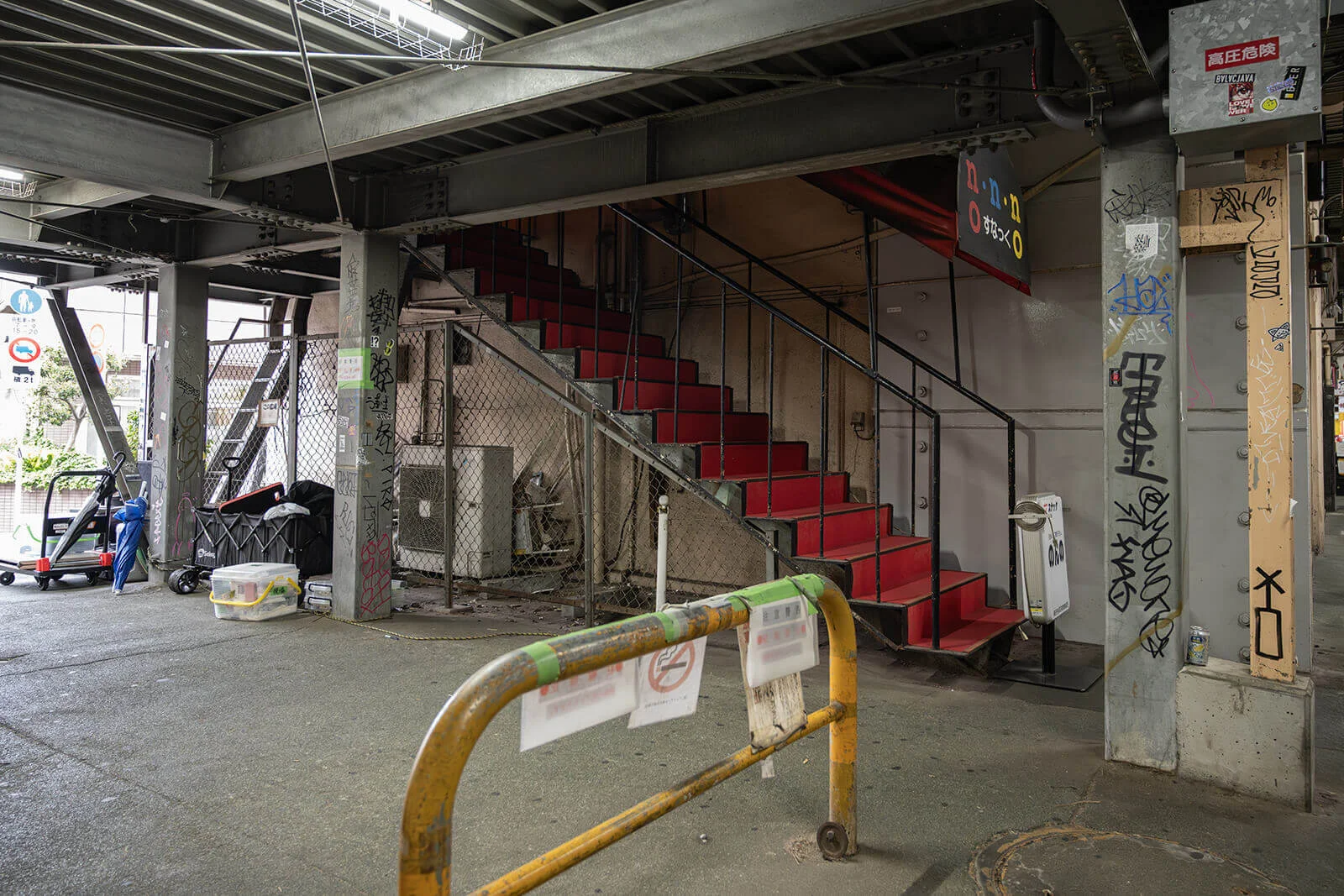
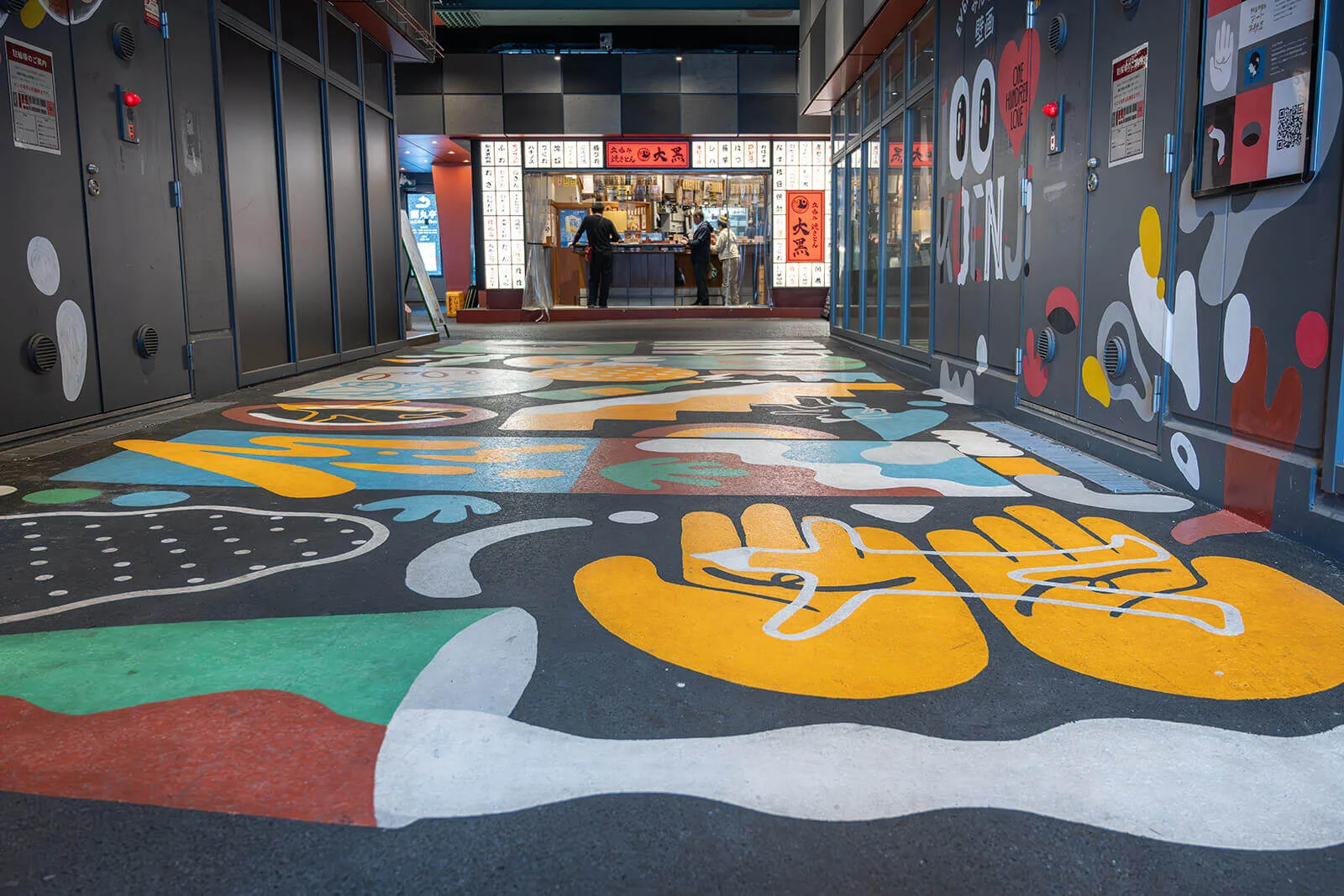
We’re sitting here at SUBstore in Koenji. It’s an ideal location, since music and counterculture have gone hand in hand in this neighbourhood for over 50 years. What brought you here personally?
I first came to Japan in 2010. At the time I was living in Nishi-Kasai and working for the design in the clothing store. But honestly, it was a boring place. I was always looking for music, record stores, live houses, places where something was happening. Every weekend I found myself coming to Koenji by myself.
Eventually I realised I was spending all my free time here anyway, so my wife and I moved to Koenji around 2014 or 2015. We didn’t know anybody. A year later we quit our jobs and opened SUBstore in 2016.
Back then I thought Koenji was mainly about music. I saw skateboarders, people with tattoos, guys carrying guitars, posters for live shows everywhere. That was my image of the neighbourhood. I didn’t know much about its political side.
That only changed after we opened the shop.
What’s the idea behind SUBstore, and why does it work particularly well in this neighbourhood?
The idea actually started before I moved to Koenji.
My younger brother had a small record store in Pasar Santa, Jakarta, and at the time I was sending him records and books from Japan. We were talking about opening some kind of cultural space together and needed a name. I was listening to a lot of Sub Pop records back then, and somehow the name SUBstore came out of those conversations. Originally it stood for “Small Unique Bookstore”.
At first it was really just an idea—a place that combined the things I was interested in: music, books, art, design and people. I never wanted it to be just a shop. I wanted a place where people could spend time, discover things and meet each other.
When we eventually opened in Koenji, that idea felt like a natural fit. This neighbourhood has always attracted musicians, artists, designers and people involved in different kinds of cultural activities. Many of them don’t have much money, but they have ideas, projects and a strong DIY spirit.
I think Koenji is one of the few places in Tokyo where a small independent space like this can still survive. People are curious. They come in for a record, stay for a drink, start talking to someone and suddenly spend the whole evening here. That’s probably why the concept works. The shop reflects the neighbourhood, and the neighbourhood reflects the people who come to the shop.
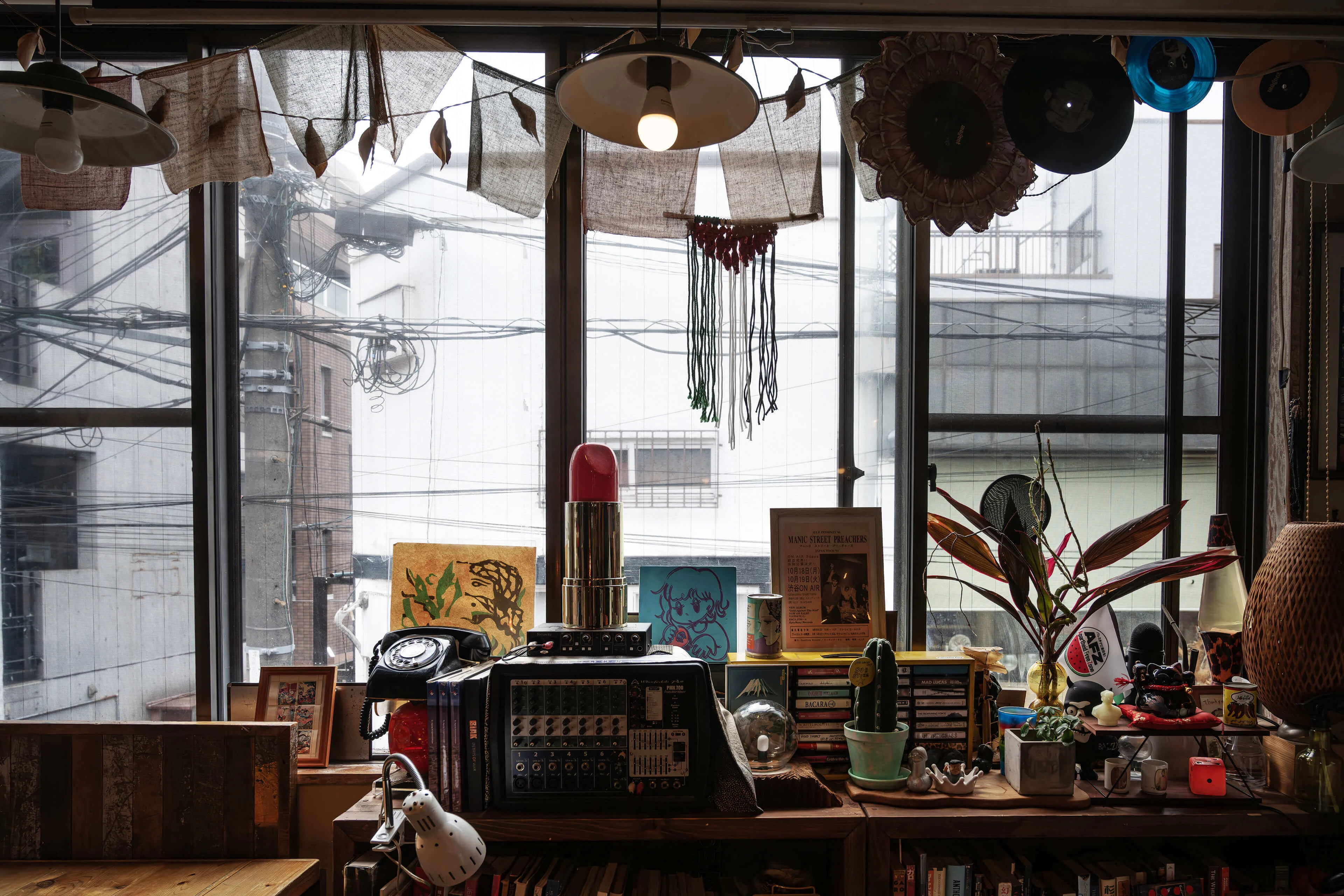
The store isn’t just a record and book shop, but also a bar, a neighbourhood hangout, and a place for discourse…
Yeah, and that happened quite naturally.
I had a few political posters in the staircase. Nothing too serious, but people noticed them. Suddenly older activists started showing up. They would come in, have a drink and start talking. Somebody invited me to an event called Koenji Ikki (Koenji Uprising). I remember asking, “What the fuck? Are we going to riot?”
They laughed and said, “No, it’s just the name.”
Then there was another event called No Limit, where people from different countries came together to talk, exchange ideas and organise things. Through those events I started meeting people who had been active in Koenji for decades.
That’s when I realised there was much more here than music.
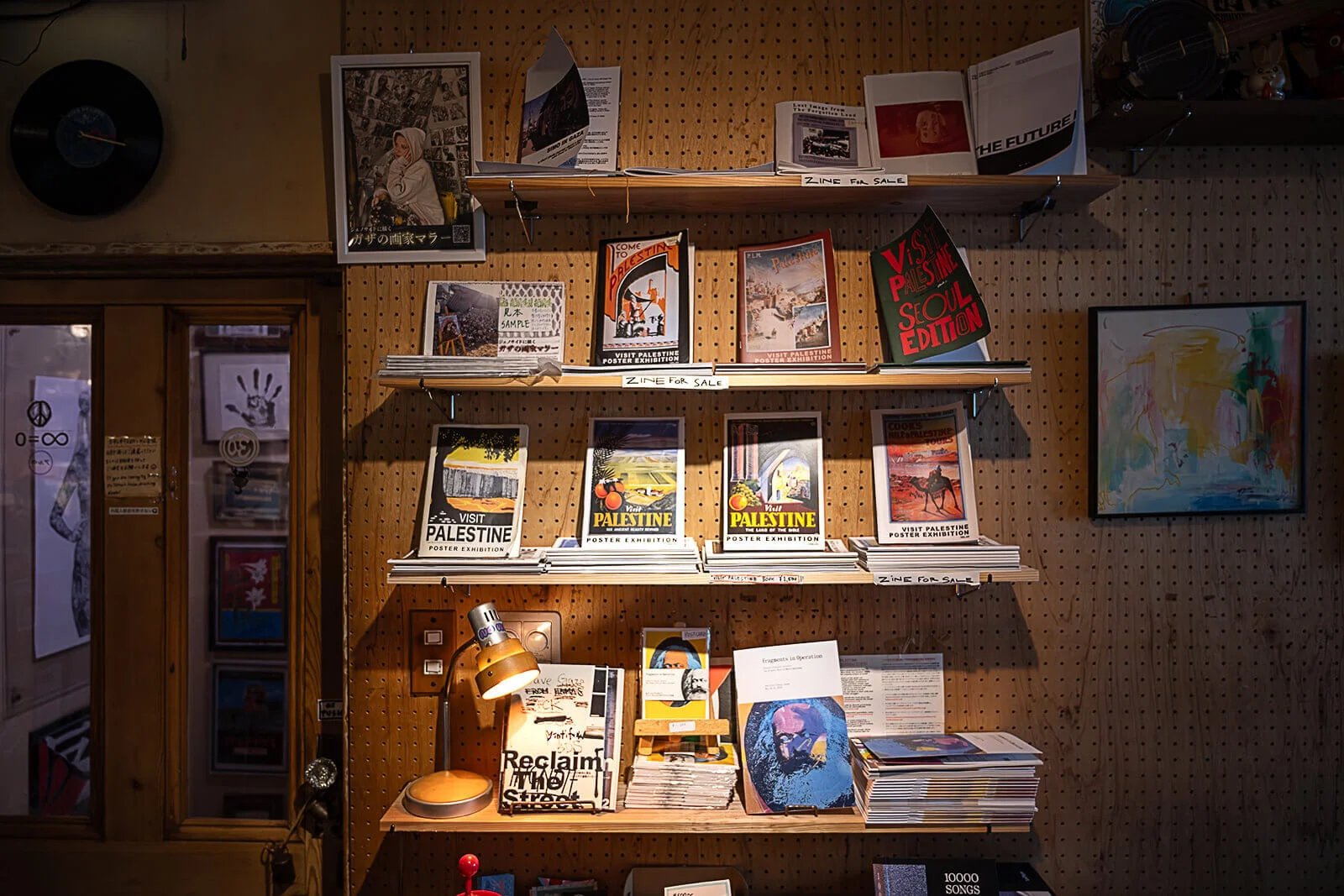
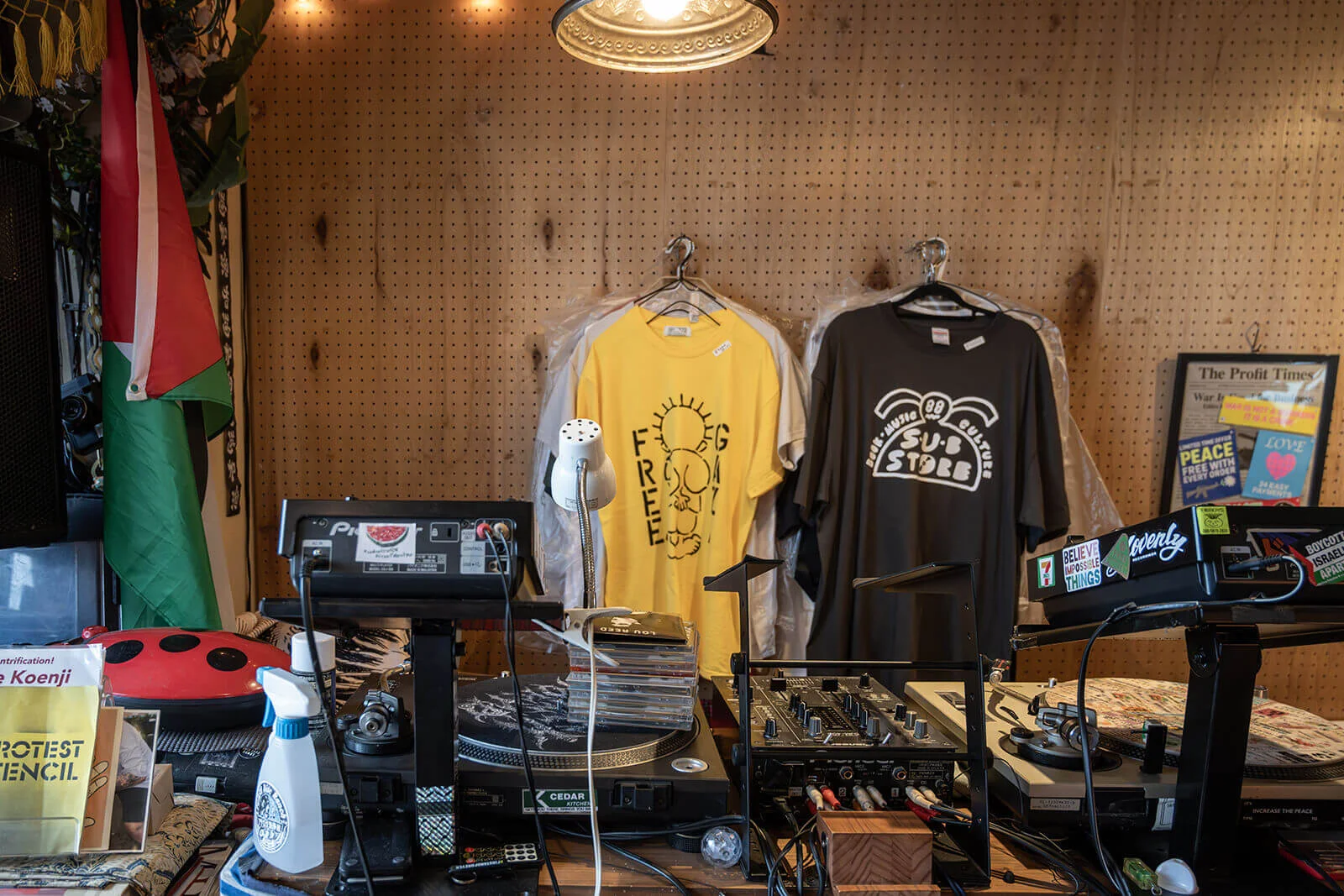
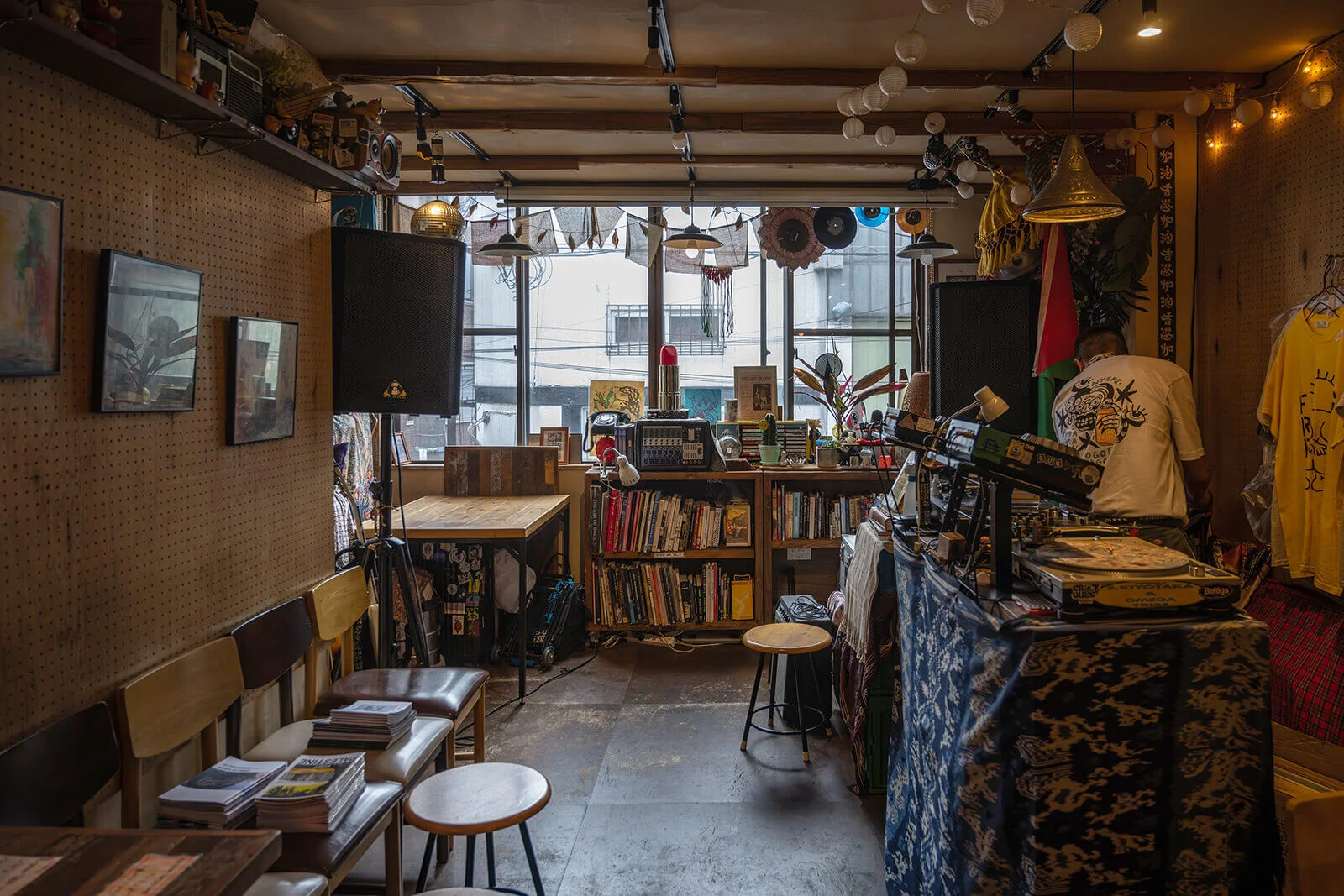
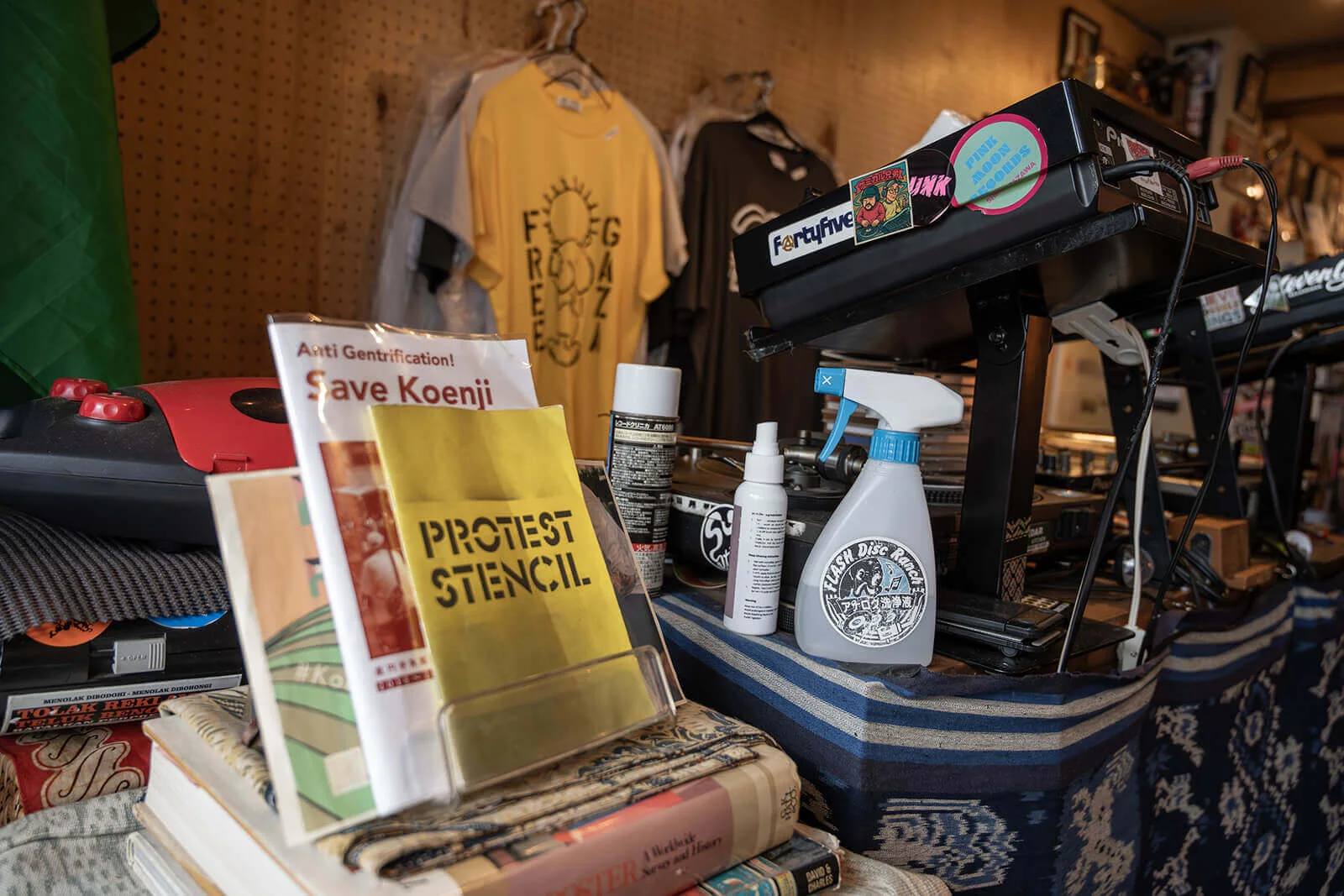
Discourse that can also lead to resistance. The residents of Koenji are known for their rebelliousness, and the neighbourhood seems to attract nonconformists as well, doesn’t it?
From what older people tell me, a lot of it goes back to the 1970s. Koenji was cheap. Students could afford to live here. Artists could afford to live here. Musicians could afford to live here. There wasn’t even a major university in the neighbourhood, but people still came because rents were low and there was a certain freedom here.
Over time all kinds of people gathered in Koenji. Musicians, poets, designers, activists, punks, drunks, weird people. Maybe that’s the best way to describe it. People who didn’t quite fit somewhere else.
Many of those people stayed.
That’s why even today you’ll meet old anti-war activists sitting in bars next to punk musicians, or artists talking to local shop owners. The music scene and the activist scene aren’t really separate worlds. They overlap.
One of the people who helped me understand that was Matsumoto Hajime. If you’re interested in Koenji, sooner or later you’re going to hear his name. He runs different projects around the neighbourhood—a guesthouse, recycle shops, community spaces—and he’s one of those people who seem connected to everybody. Meeting him changed the way I looked at Koenji.
Before that, Koenji was just a cool music town to me. Through Matsumoto and the people around him, I started meeting artists, activists, professors, archivists, people researching subculture and counterculture.
I remember thinking, “Fuck, Koenji is this, huh?” It wasn’t just music. There was a whole history underneath it.
As an Indonesian, some of it felt familiar. I grew up during the 1990s. There were demonstrations, resistance movements and political tensions. My father was very left-wing. We lived through a dictatorship. So political activism wasn’t something completely foreign to me.
What surprised me was finding that kind of culture in a Tokyo neighbourhood.
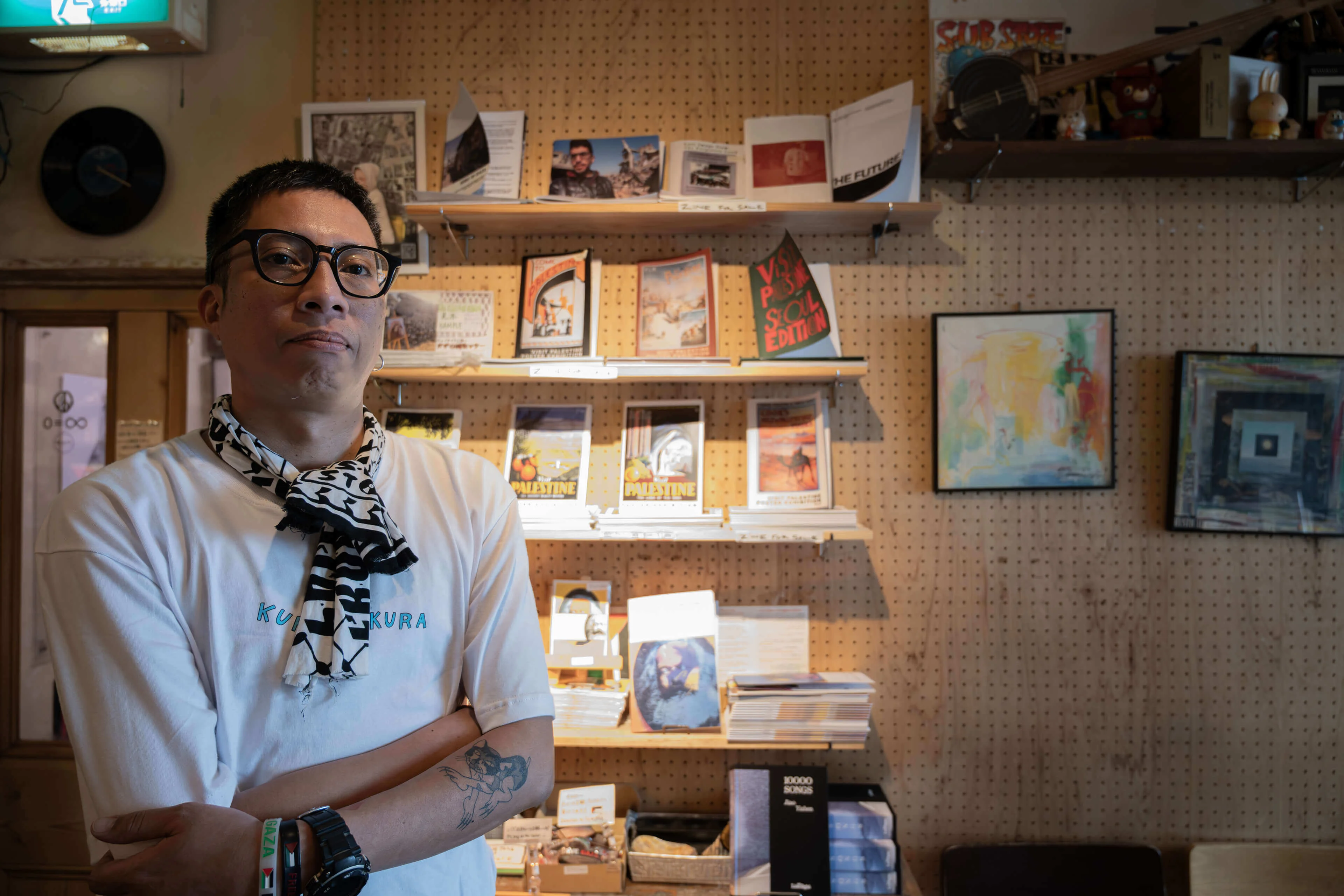
Specifically, there has long been resistance to gentrification plans for certain parts of Koenji. Can you tell us more about that?
The immediate issue is a planned road project that has existed for decades.
When I first heard about it, I didn’t understand why people were so upset. I thought, okay, it’s a road. What’s the problem?
Then I started talking to older shop owners and residents.
Some of them told me they had already been fighting this project since the late 1980s. They said every generation had tried to stop it. Some people moved away. Some people got tired. New people arrived and continued the fight.
That’s when I realised the road itself isn’t really the point. The fear is what comes after.
If the road is built, many old buildings and small businesses will disappear. Then property values go up. Then rents go up. Then developers arrive. New apartment buildings appear. Chain stores move in.
People don’t come to Koenji because they want another Starbucks.
They come because there are strange little bars, independent record stores, old coffee shops and places that somehow survived while the rest of Tokyo became more expensive and more uniform.
If those places disappear, then Koenji becomes just another neighbourhood. That’s what people are afraid of.
We keep hearing people say, “We don’t want to end up like Shimokitazawa, another trendy neighbourhood in western Tokyo.” What is so off-putting about that?
Because a lot of us feel we’ve already seen this story before.
When I came to Japan around 2010, people kept telling me: “If you like Koenji, you should go to Shimokitazawa.” So I went.
Back then there was a small cluster of old wooden buildings near the station. Maybe ten or twelve of them. Everything was low-rise. One floor, two floors. No big buildings.
I remember a shop selling traditional Japanese brooms. There was an oden restaurant. Tiny bars. Little businesses packed together. It felt almost like a village in the middle of Tokyo. Maybe a little rough. Maybe a little dangerous. But alive. I loved it.
Then I came back maybe a year later and they had already started tearing parts of it down. At the time I didn’t really understand what was happening. I saw flyers. I saw people protesting. But I wasn’t paying attention. Years later, after becoming involved in anti-gentrification activism in Koenji, I started thinking about Shimokitazawa again. Many of the fears people express here had already become reality there.
Independent businesses disappeared. Property values increased. New developments arrived. The neighbourhood became more attractive to investors. And once the process starts, it becomes very difficult to stop.
Today whenever somebody in Koenji talks about gentrification, Shimokitazawa comes up. It’s not some abstract example. It’s a memory. I also hear similar stories from people who come from London. They talk about Camden and say, “It’s gone.” They remember the music culture, the independent shops and the atmosphere. Then development arrived and changed everything.
People in Koenji don’t want that to happen here.
How is the protest in Koenji organised? And do you receive political support?
I first got involved around 2017. At the beginning I mostly listened. My Japanese wasn’t perfect and many of the people involved had been active much longer than me. They were the senpai. I was the new guy.
What surprised me was how diverse the movement was. There were artists, musicians, lawyers, students, old activists, shop owners and people who had lived in Koenji their entire lives.
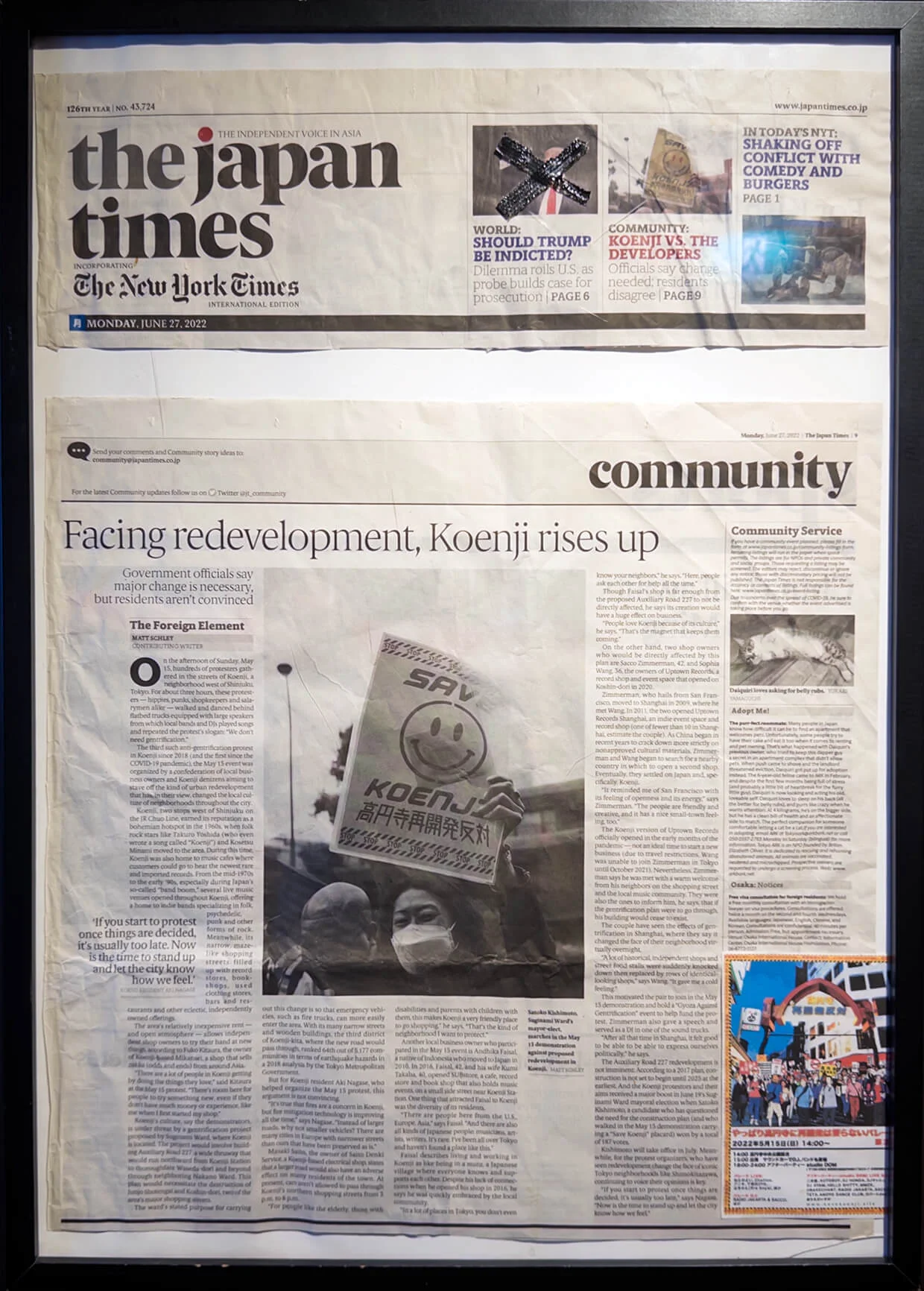
A lot of people had hopes when Satoko Kishimoto was elected. Before becoming mayor she attended demonstrations and spoke with activists. Many people felt she understood the neighbourhood and its concerns.
When she won, there was genuine optimism. People thought maybe things could change.
But politics is complicated. Once you’re inside the system, there are pressures from investors, bureaucracies, developers and larger political structures. Some activists feel disappointed because the road project is still moving forward. Others believe she has helped slow the process and create more space for opposition. I think most people understand that local politics alone isn’t going to solve everything. The movement still needs people on the street.
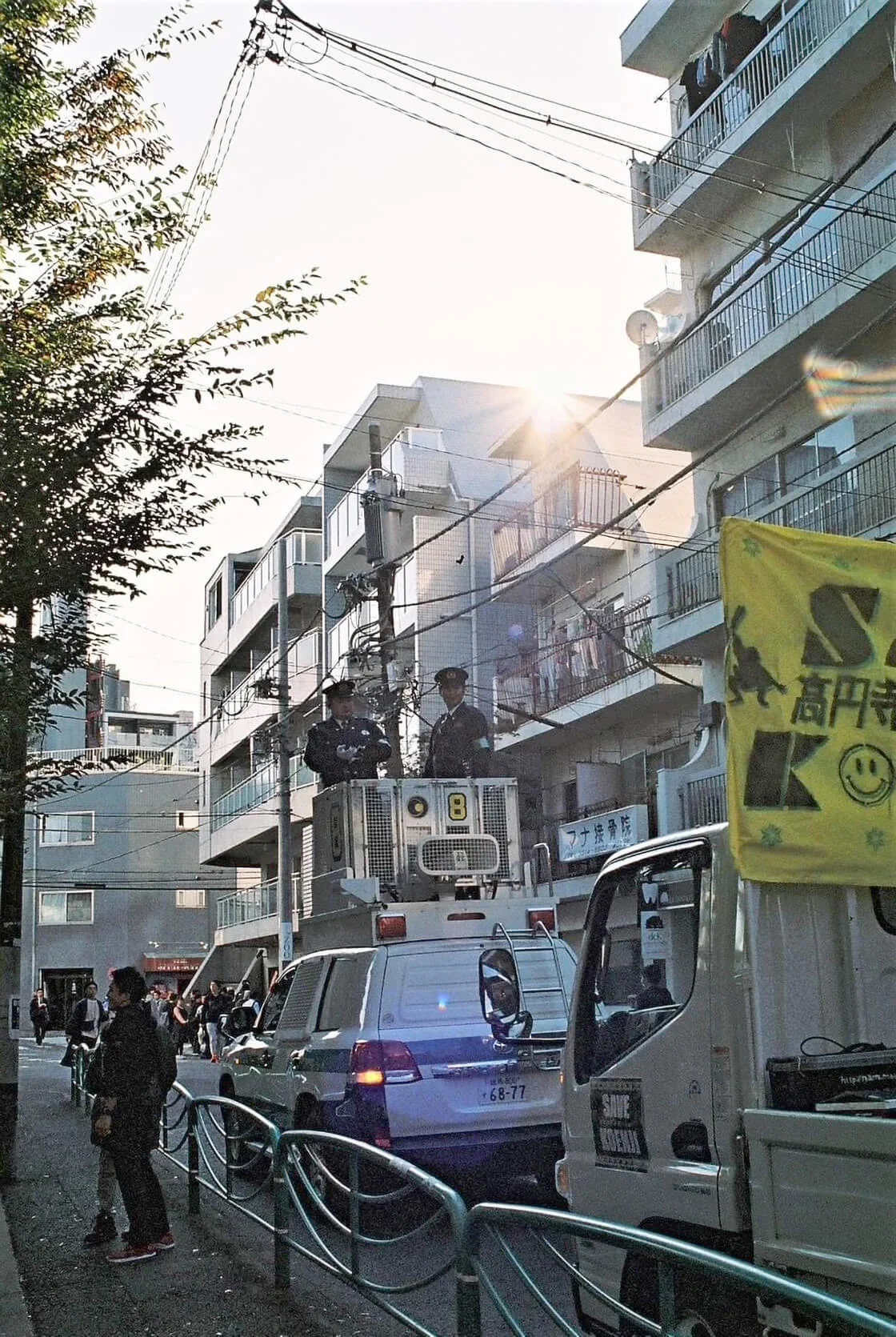
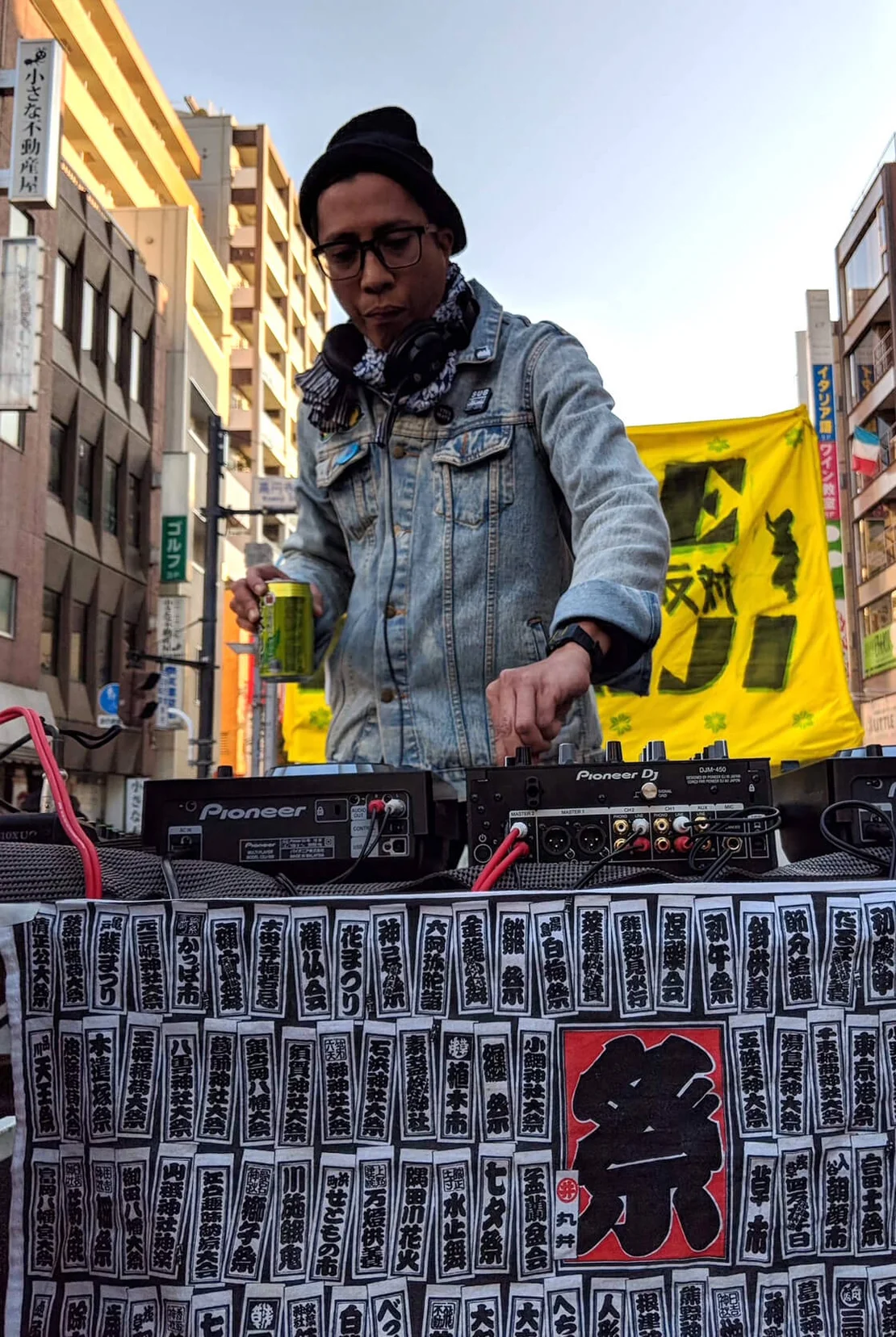
A distinctive feature of the local protest is the use of music. What have you organised in this regard in the past? Does this help you reach more people?
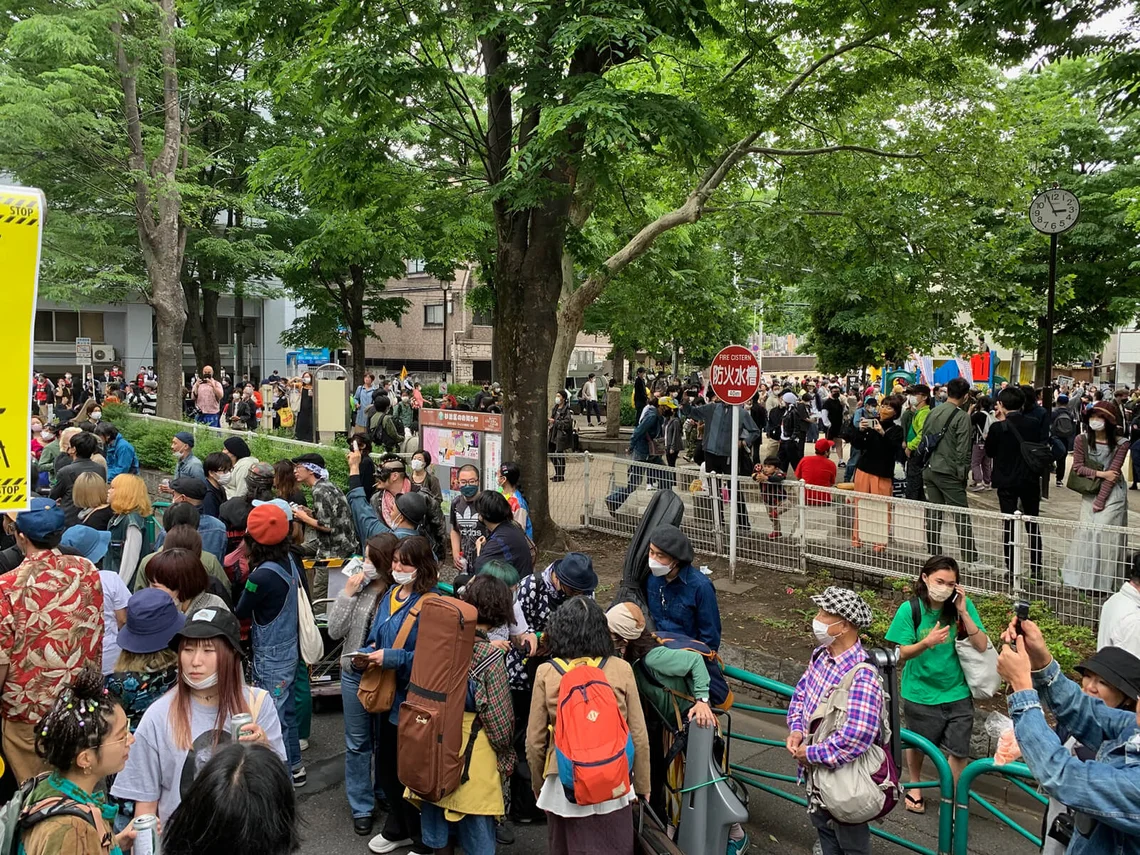
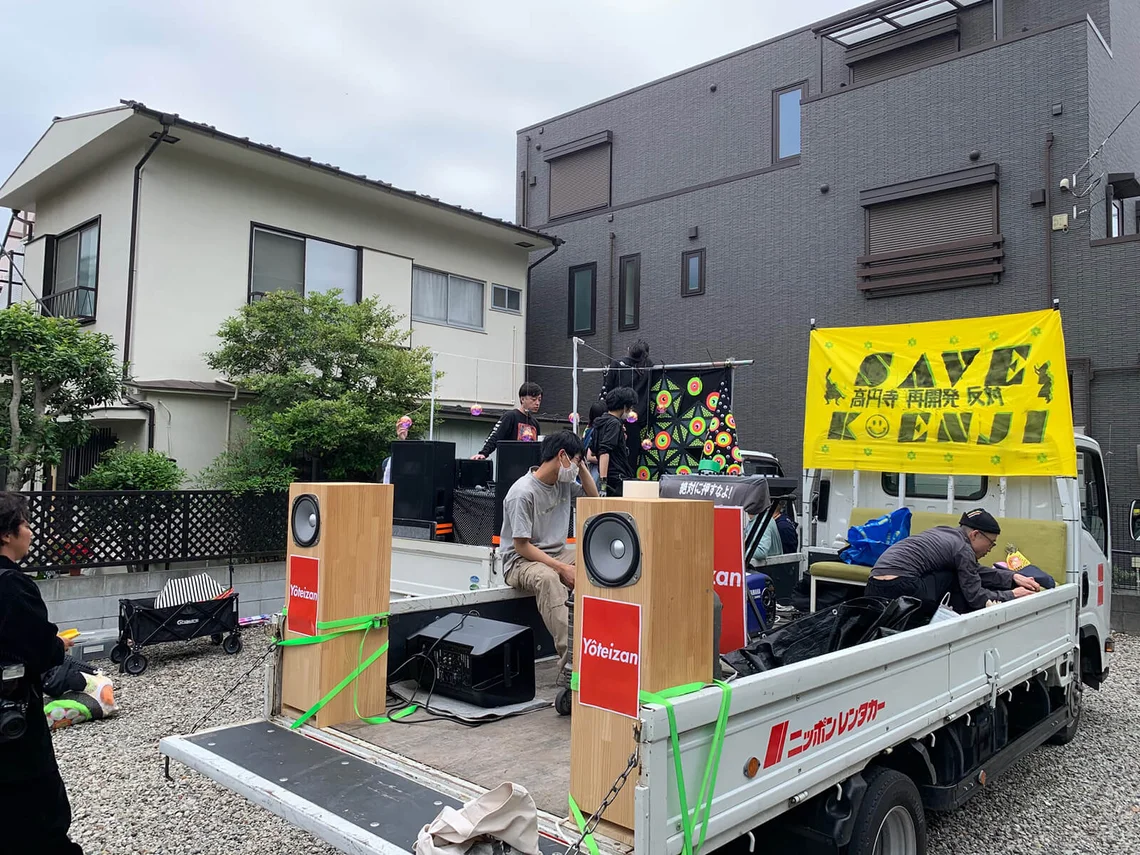
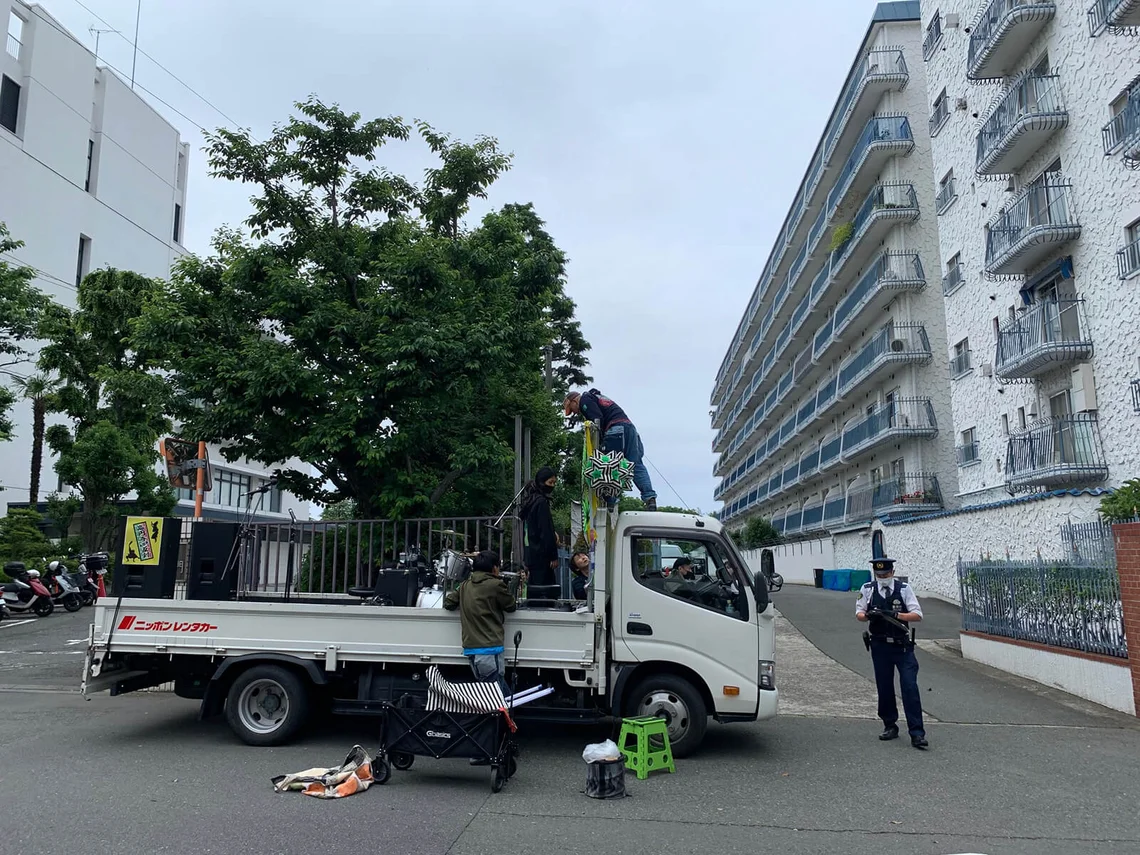
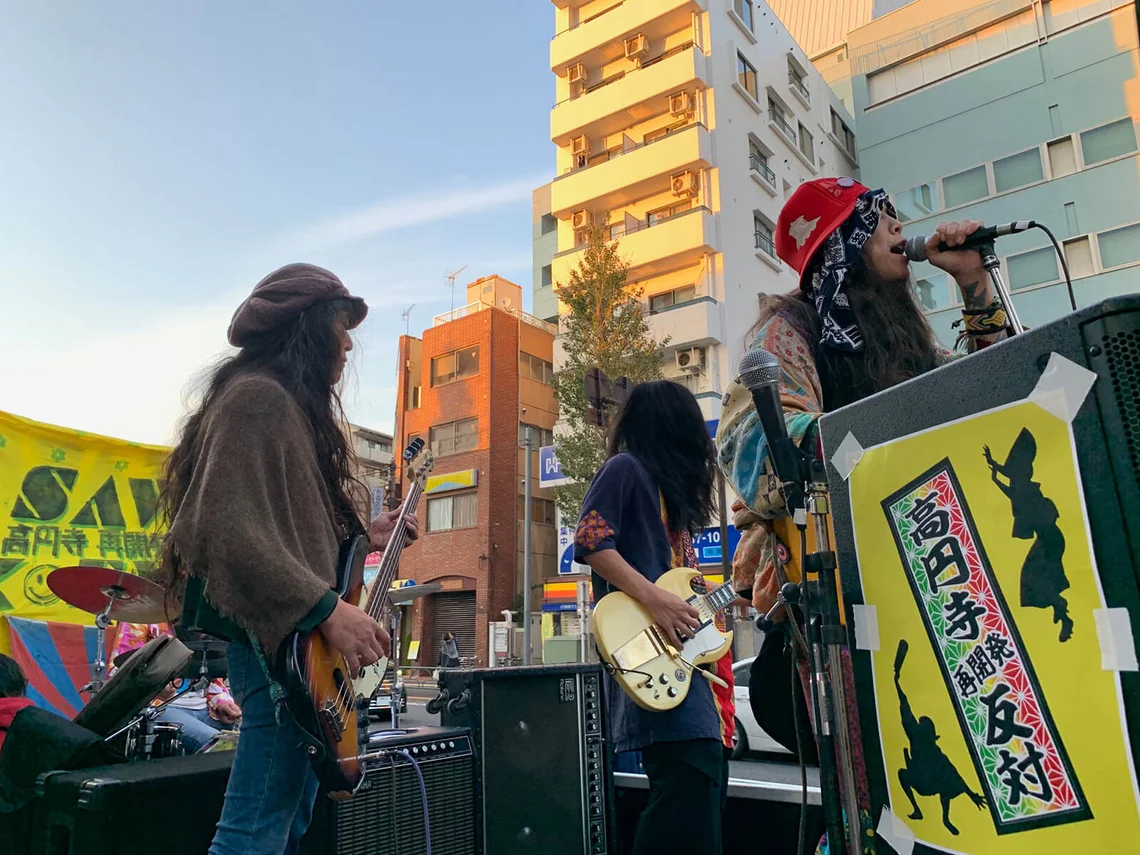
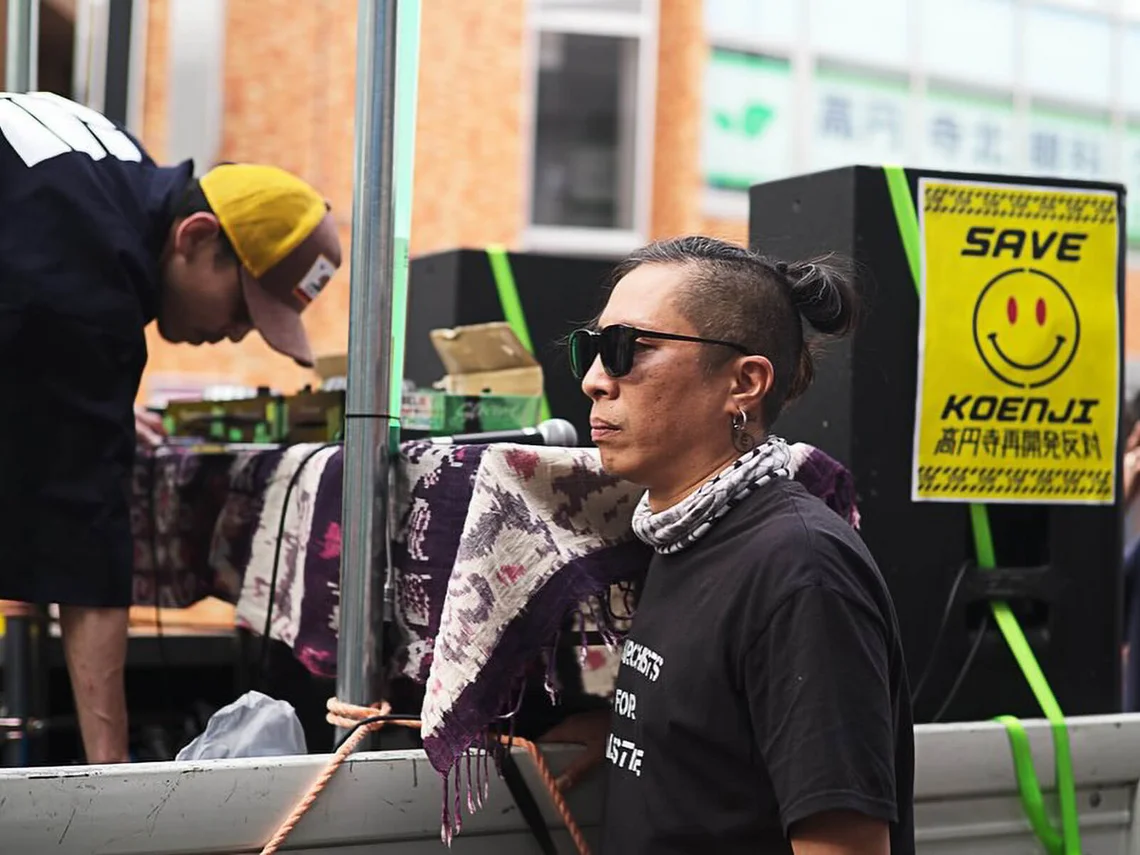
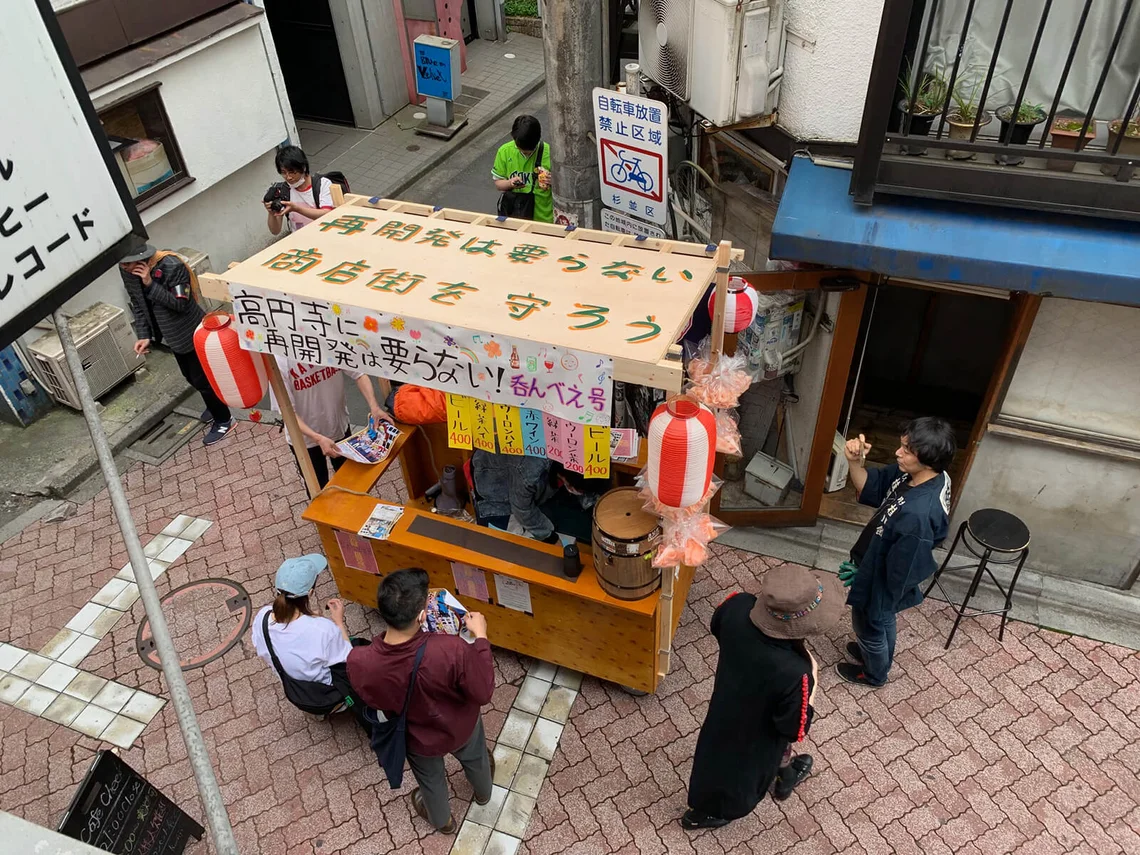
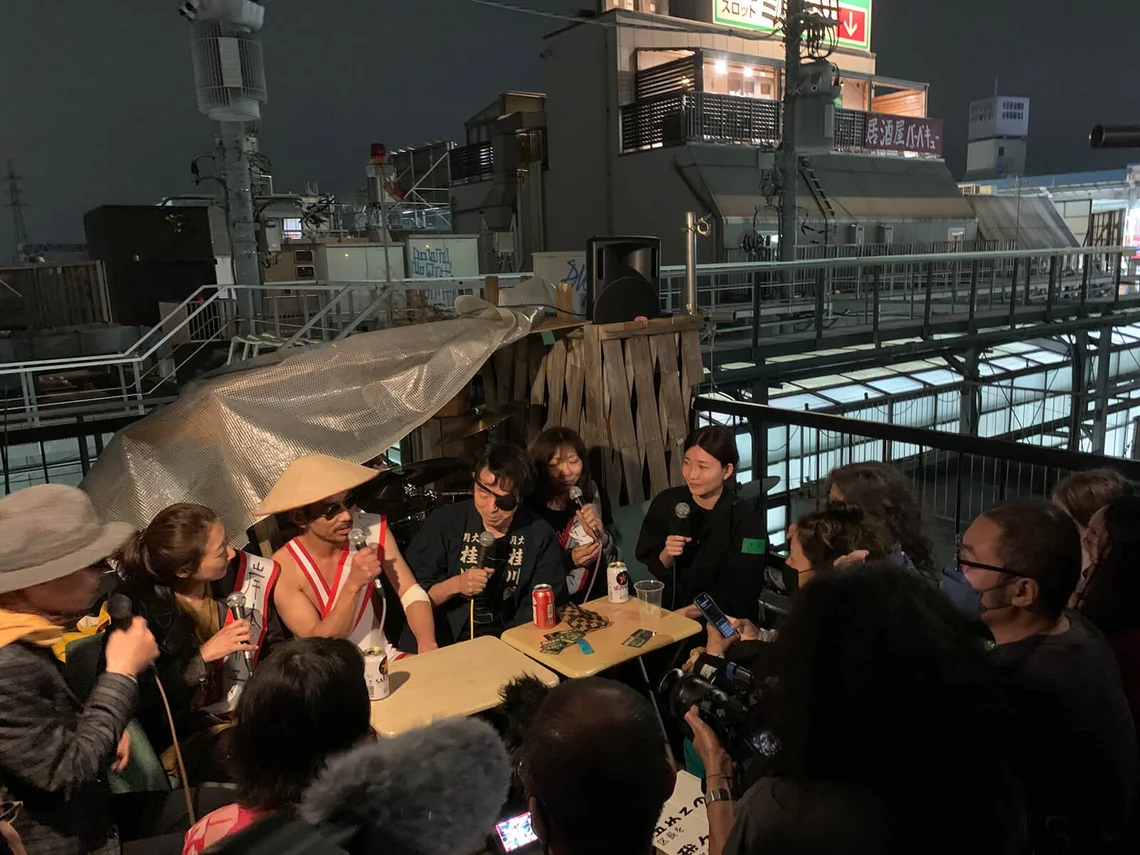
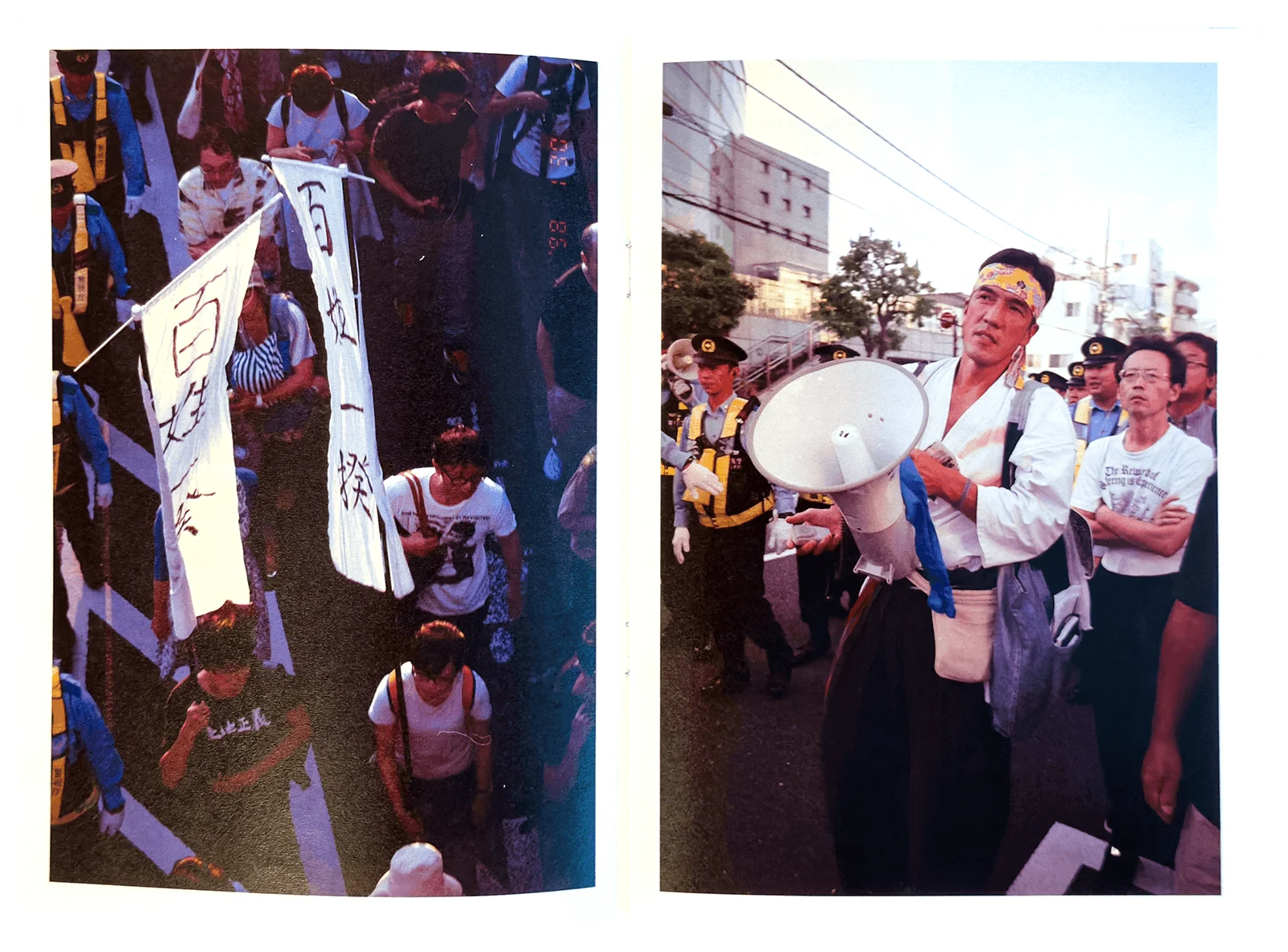
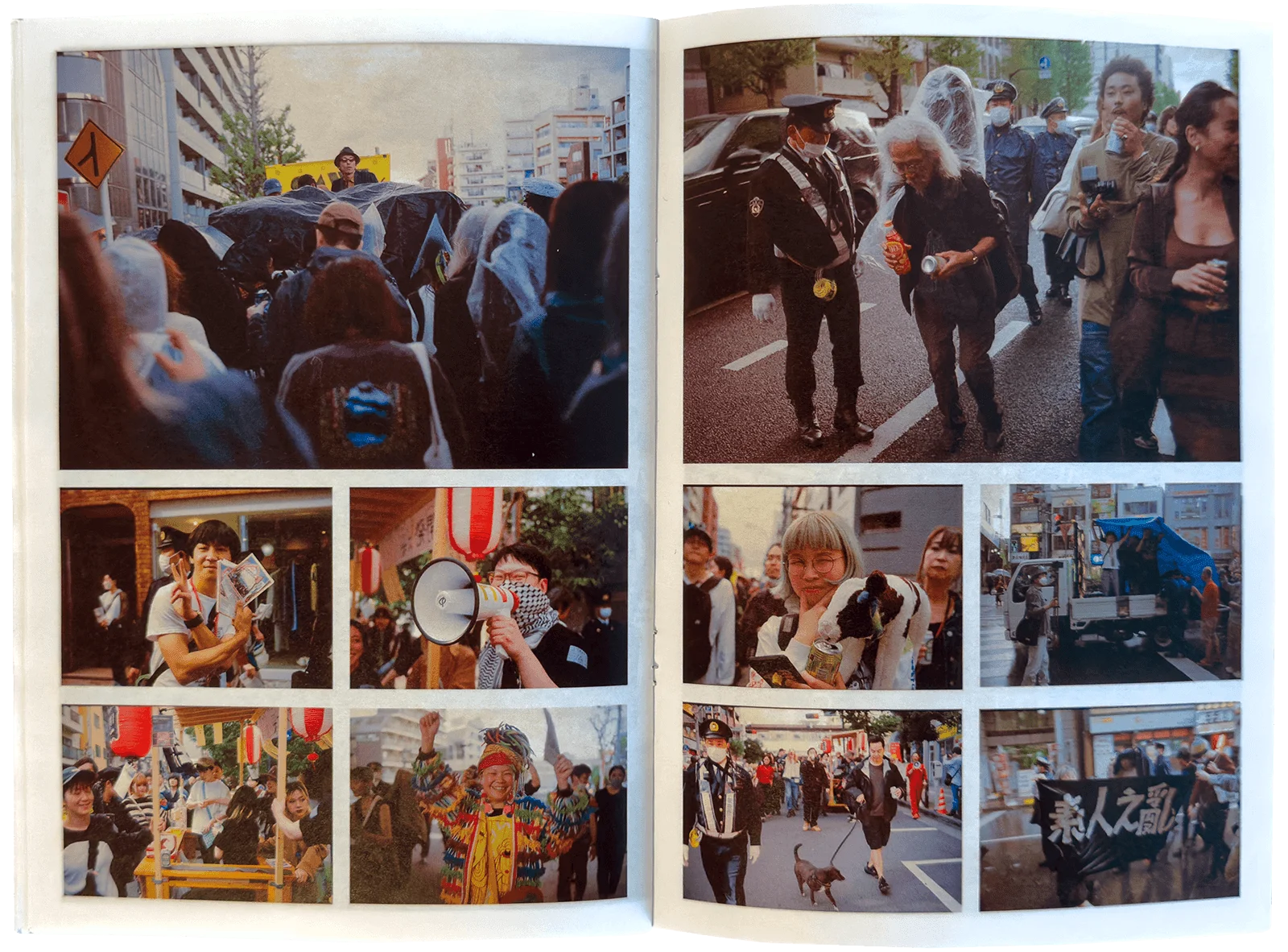
Definitely. The demonstrations themselves are very different from what many people imagine. We have bands. DJs. Decorations. Costumes. Sometimes mobile drink stands.
We’re not trying to create an atmosphere of anger. We’re trying to create an atmosphere that attracts people. In Japan, demonstrations are still taboo for many people. The moment they hear the word “protest”, they imagine violence, extremism or trouble. We try to break that image.
People hear music and come closer. They see a DJ truck or a band and get curious. Then they start asking questions. Then they learn about the road project or the history of the neighbourhood. We’re having fun, but we’re also educating people. That’s important.
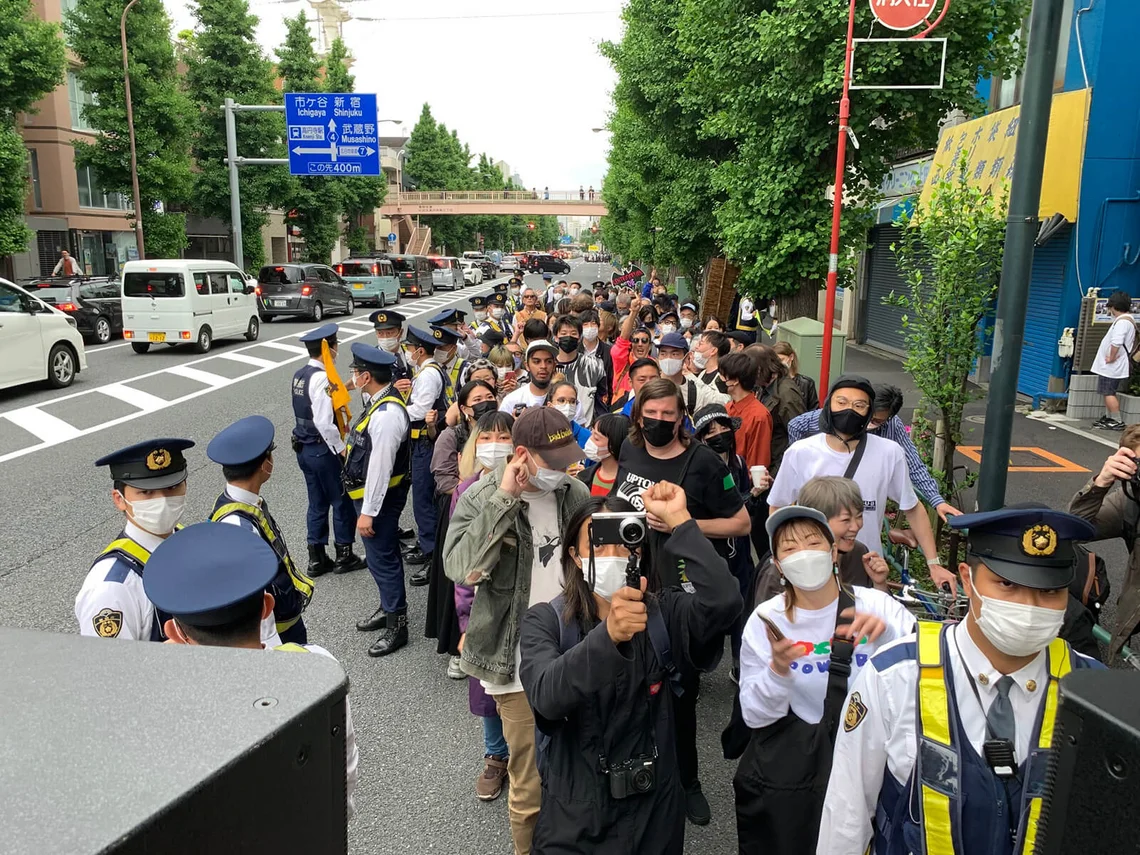
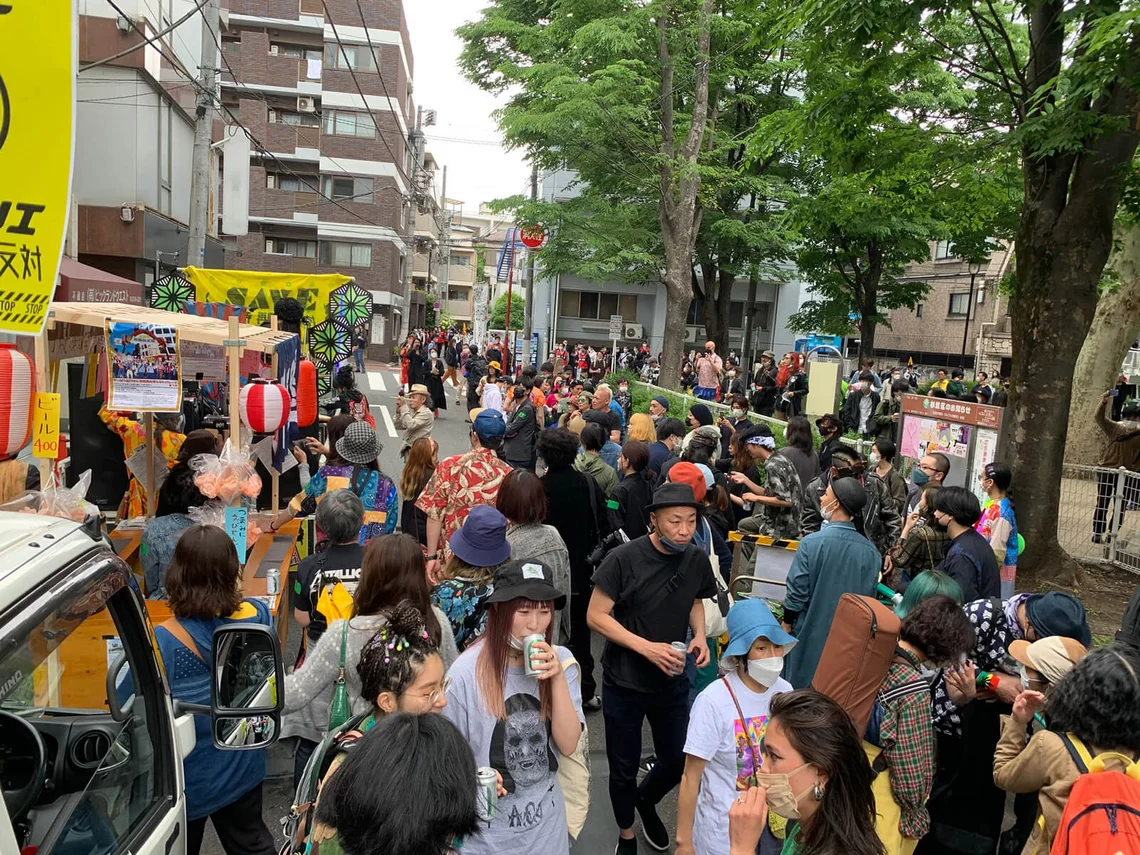
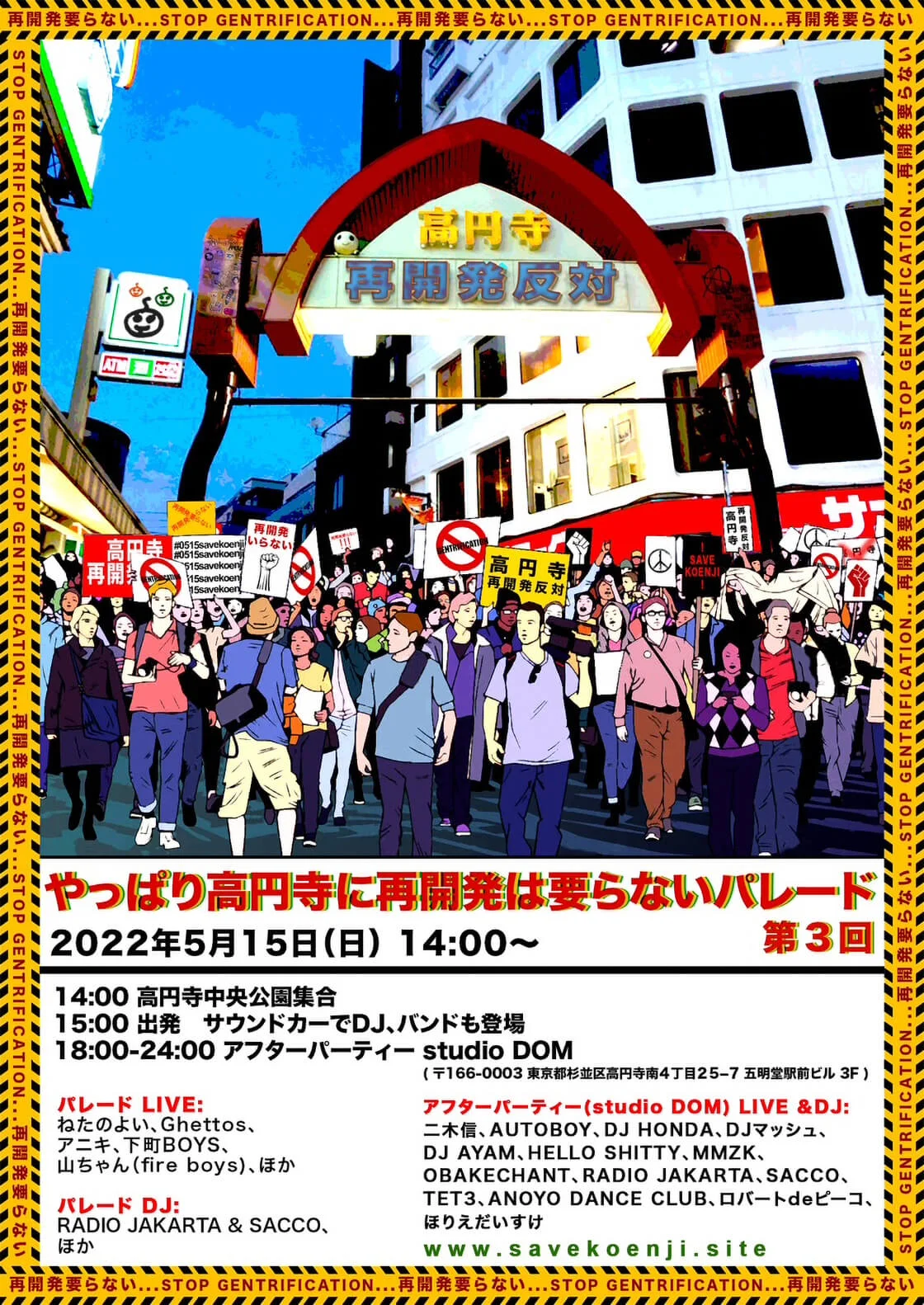
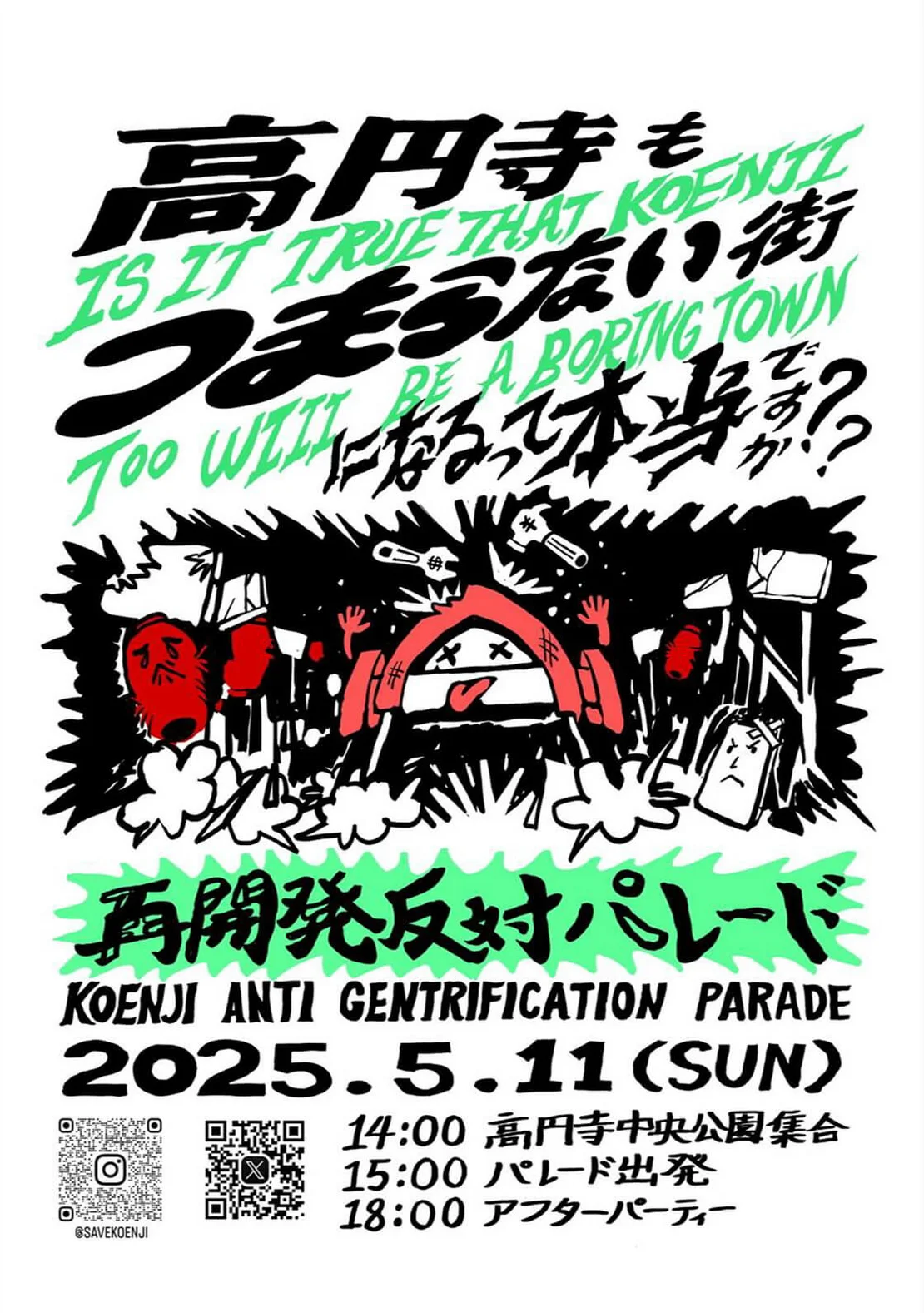
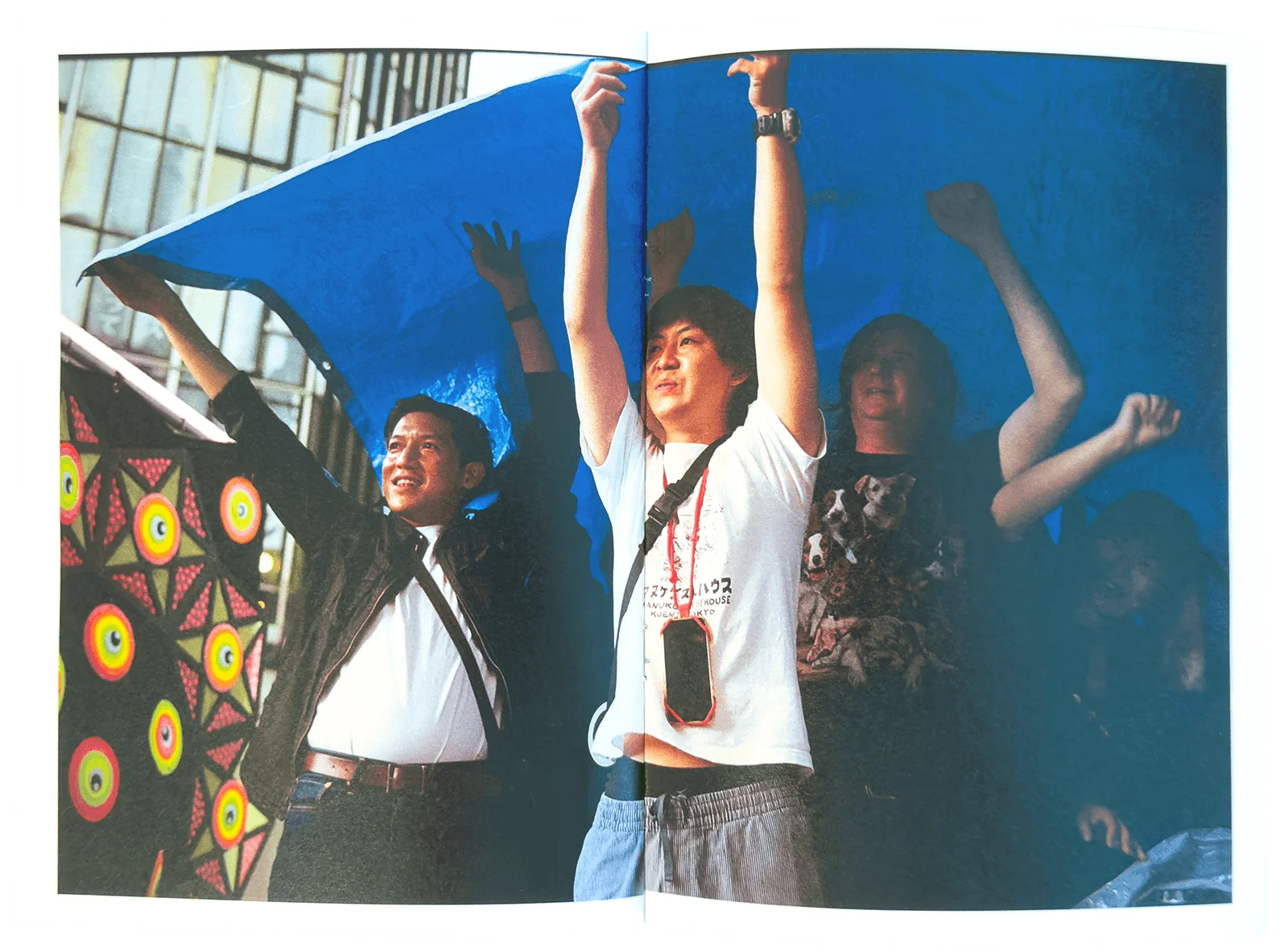
Scenes from the protest marches in 2018 and 2025, photos: Andhika Faisal
You’re originally a graphic designer. What is your contribution to the protest movement in that regard?
At the beginning they needed people to help with design, posters, flyers and music. So I started contributing in those areas. That’s really where I can help most. I’m not a politician and I’m not one of the older organisers who have been doing this for decades. But I can design posters. I can make flyers. I can help communicate ideas visually and make events more accessible.
At the same time, I try to connect different communities—musicians, artists, activists and people from outside Japan who are interested in what’s happening here.
Not everyone in Koenji supports the movement, and honestly that’s something that frustrates me. There are businesses that love to market themselves using the image of Koenji. They talk about creativity, independence, music culture and alternative lifestyles. But when there’s a demonstration against redevelopment, suddenly they disappear. They say it’s too political. Some say it’s anarchism. Some say they don’t want to be involved.
For me that’s strange. If you care about Koenji, you should care about what happens to it. Otherwise one day the things that made Koenji special won’t be here anymore.
Moving away from Koenji for a moment: At the SUBstore, you can find zines, including some from your home country of Indonesia. Zines are increasingly evolving from a counterculture medium into an art form. How do you view this development? What does the role of zines mean to you personally?
I first encountered zines through the Indonesian hardcore scene in the 1990s. People photocopied everything themselves, stapled it together and distributed it by hand. It was completely DIY. Later, after moving to Japan, I discovered Risograph printing and a much larger zine culture. Friends encouraged me to start making my own.
What I love about zines is their freedom.
You don’t need a publisher. You don’t need permission. You don’t need a big budget. You can simply document something and put it into the world. Most of my zines are about places and people.
One project grew out of a friendship with a young graphic designer in Gaza. This was before the war. We met online and stayed in touch. Sometimes I would help him with university expenses and he would send me photographs of daily life in Gaza. I had never seen Gaza through the eyes of somebody my own age living there.
So we turned those photographs into a zine. When I look at it today, many of those places no longer exist. That’s why I think zines matter.
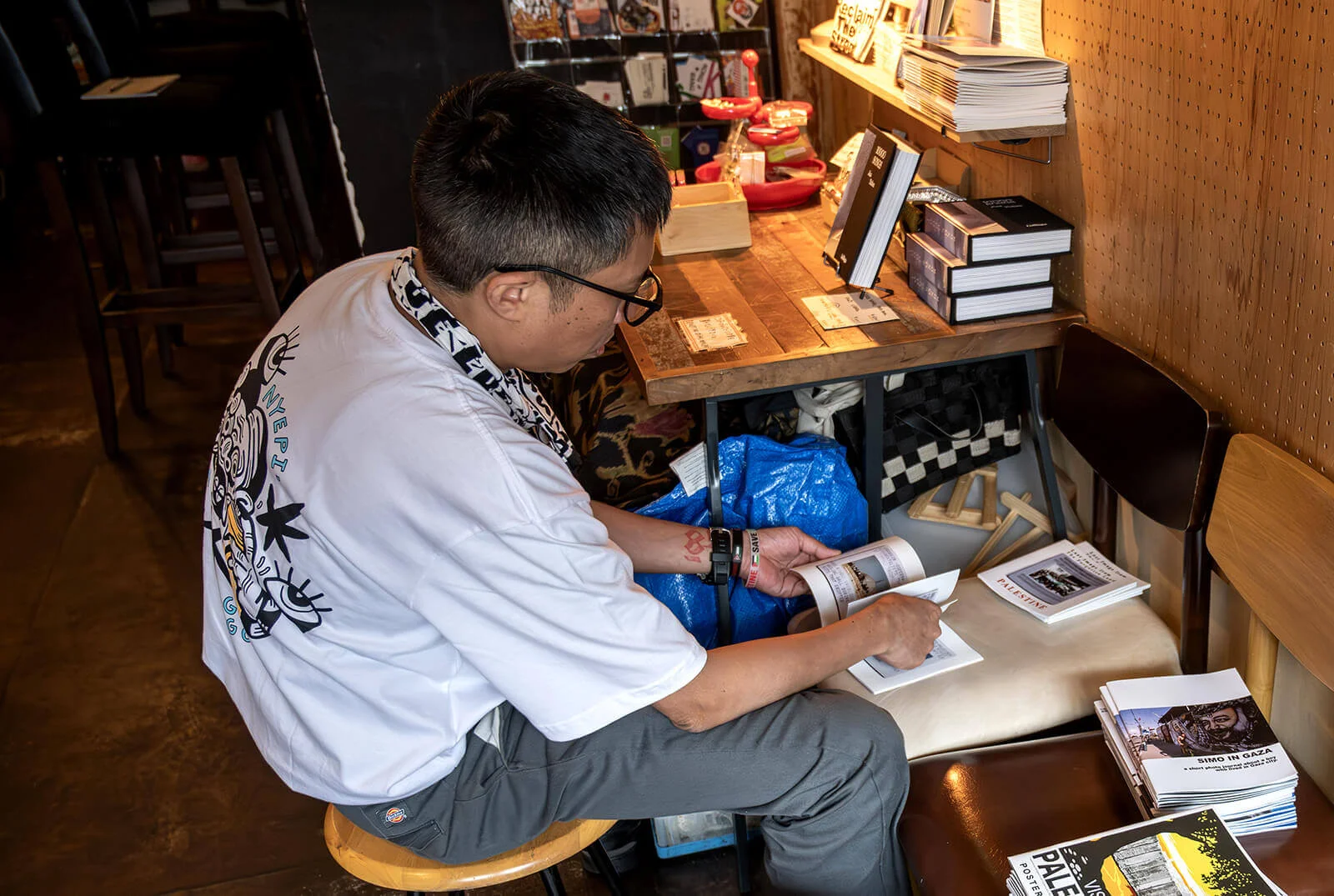
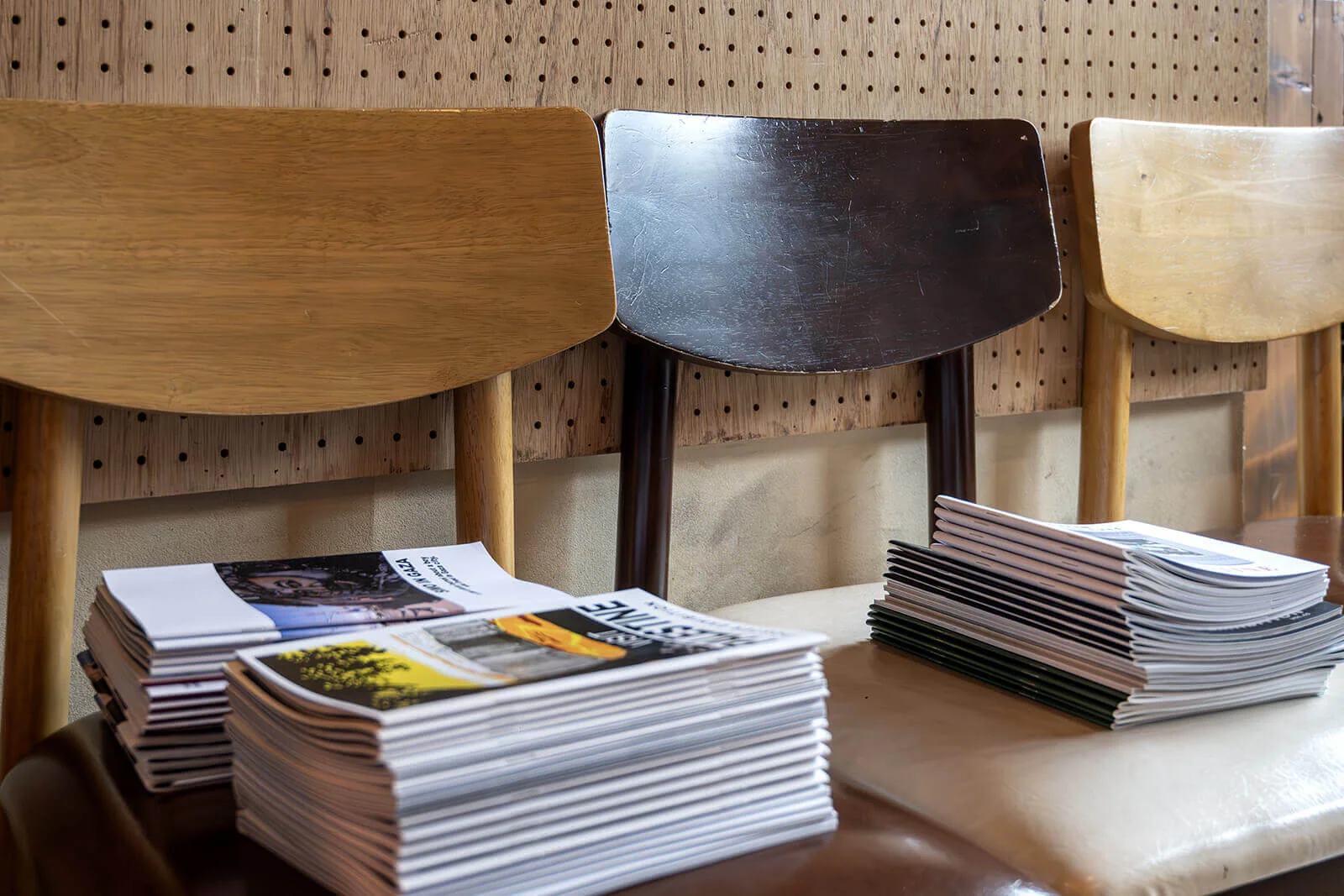
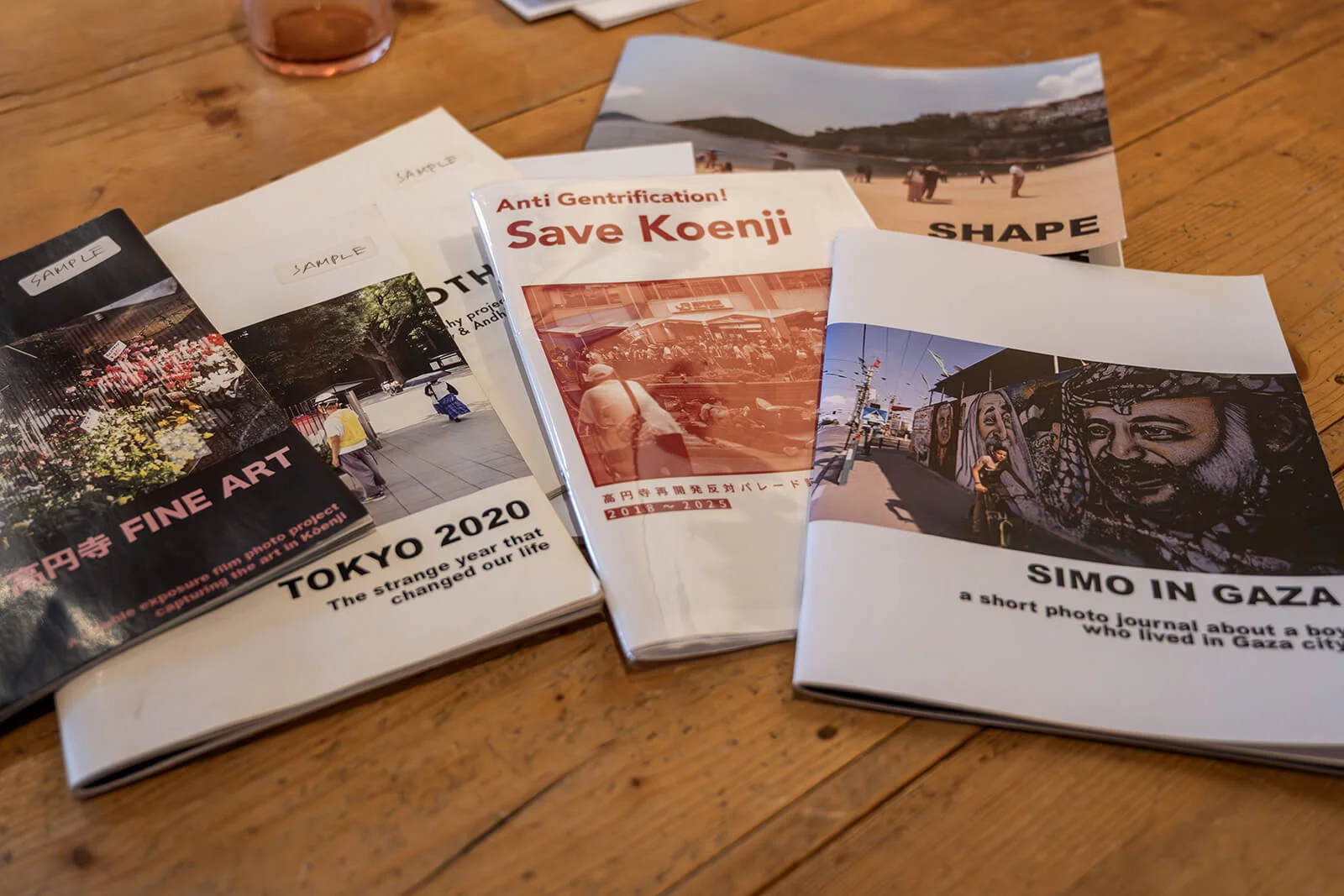
I’ve done the same with Nishinari in Osaka, with graffiti, with Tokyo during Covid and with other places that are changing or disappearing. Maybe that’s what connects everything I’ve been talking about. Whether it’s a neighbourhood, a building, a community or a city, things don’t stay the same forever.
Sometimes the best thing you can do is document them while they’re still there.
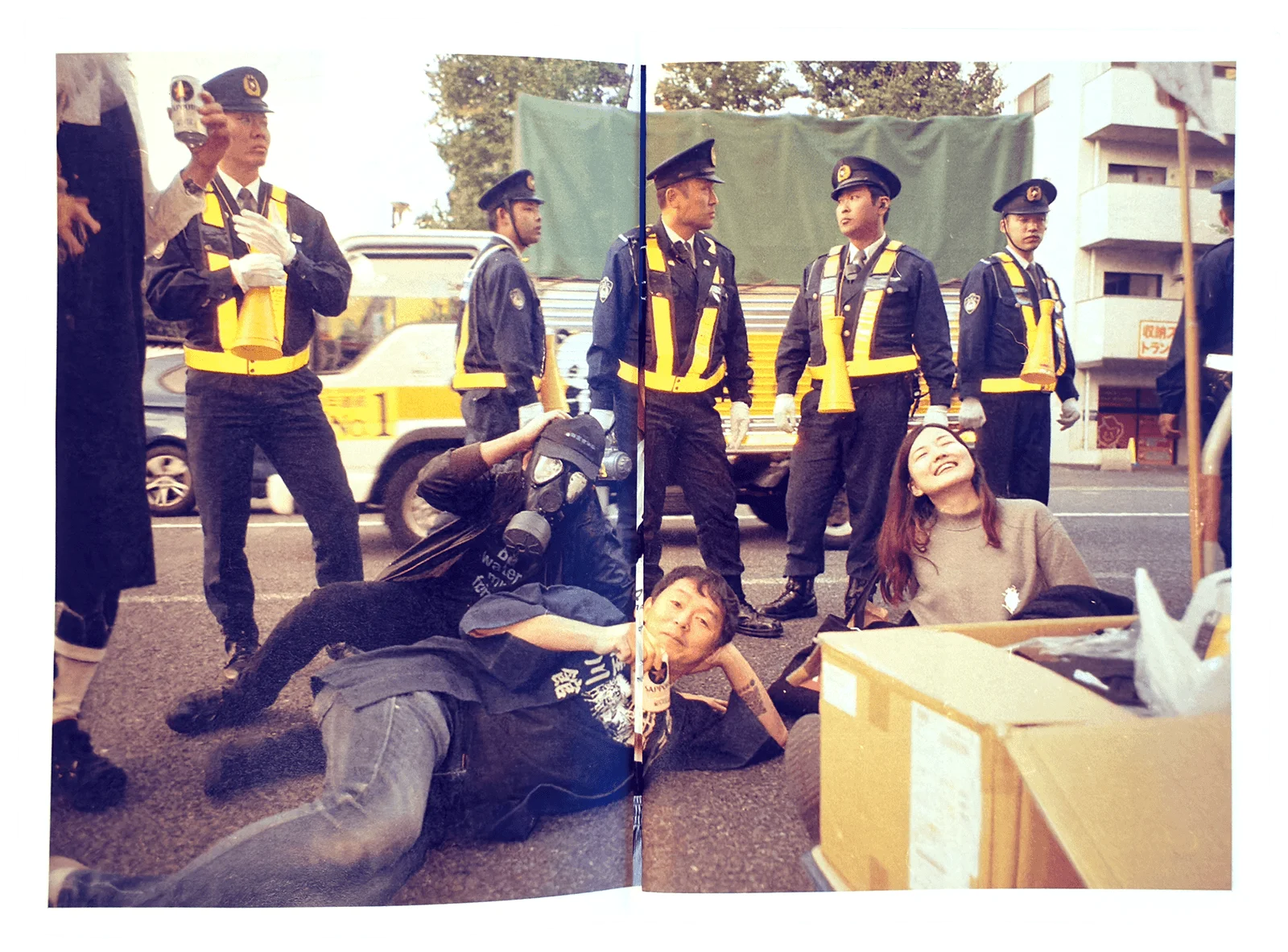
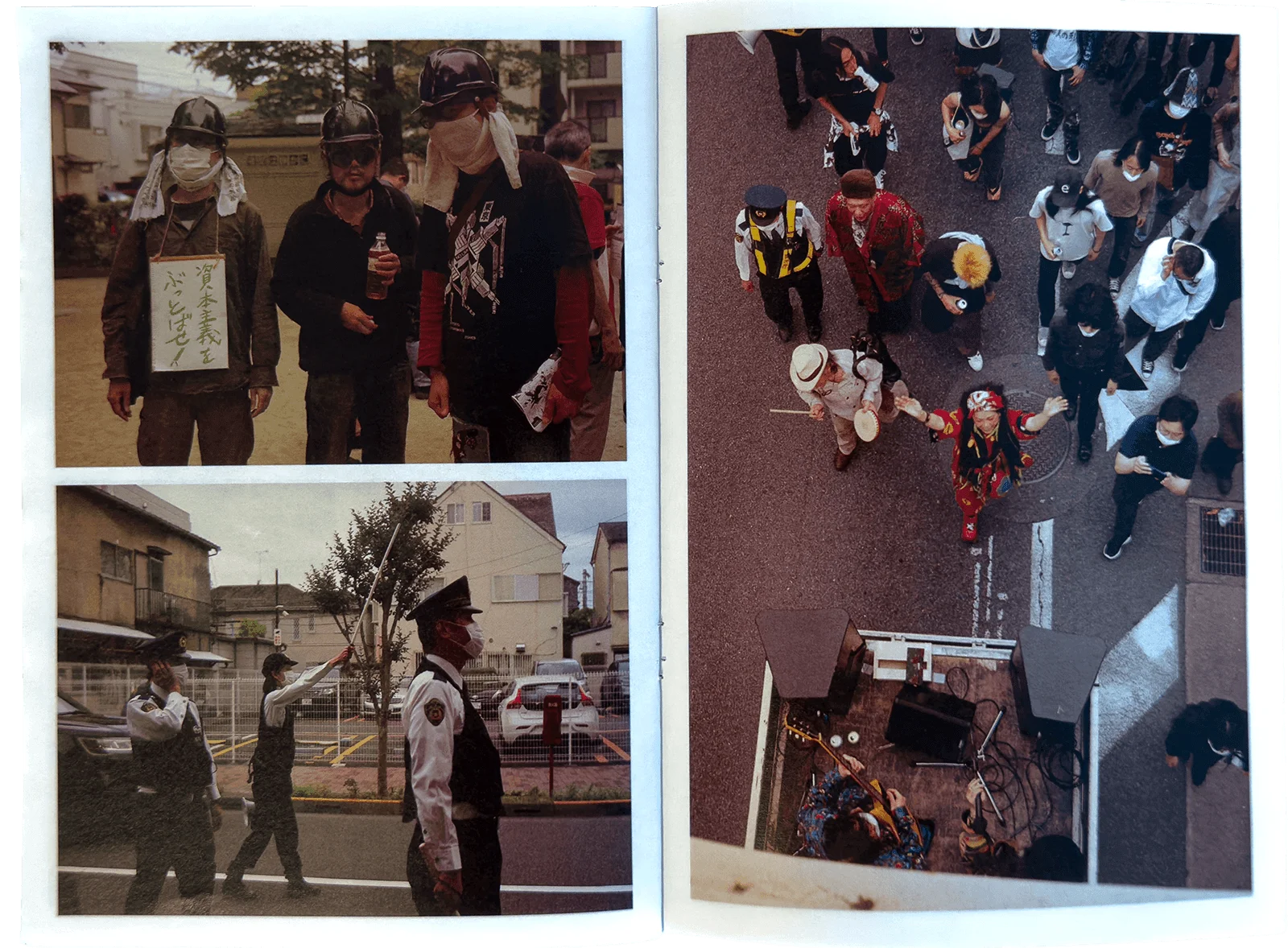
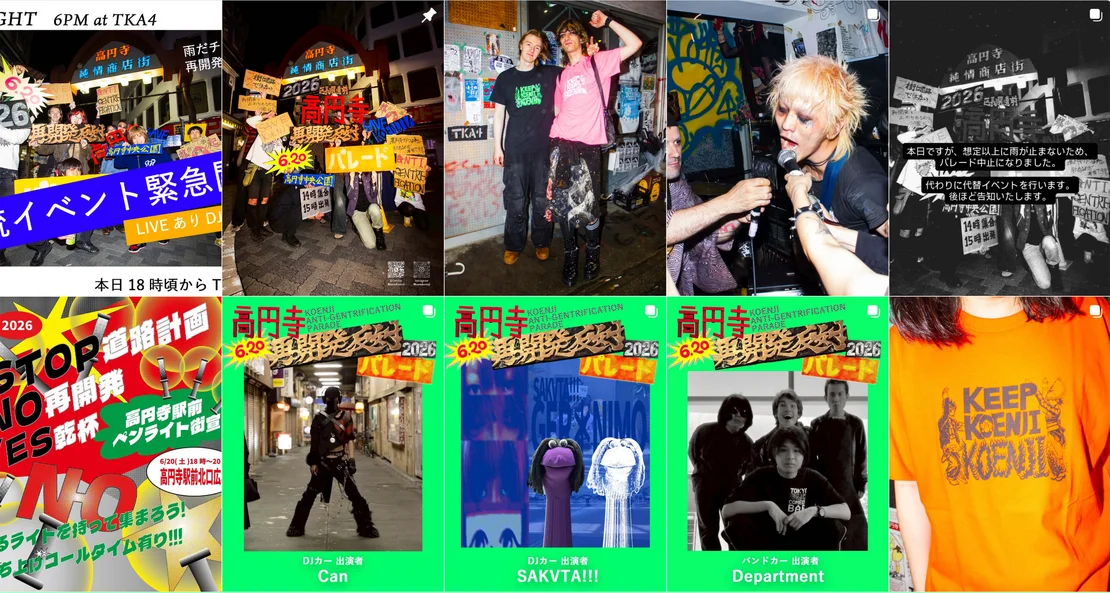
Spreads from the zine “Anti Gentrification! Save Koenji 2018–2025” by @16hon
At the end of the interview, I asked Andy the same question I ask all my interview partners: which place in Tokyo holds a special meaning for him?
His answer is telling. Rather than choosing a favourite bar, music venue or record store, he offers to show me the route of the planned road project that threatens parts of Koenji. It is there, he says, that one can best understand both the character of the neighbourhood and why so many people continue to fight for its future.
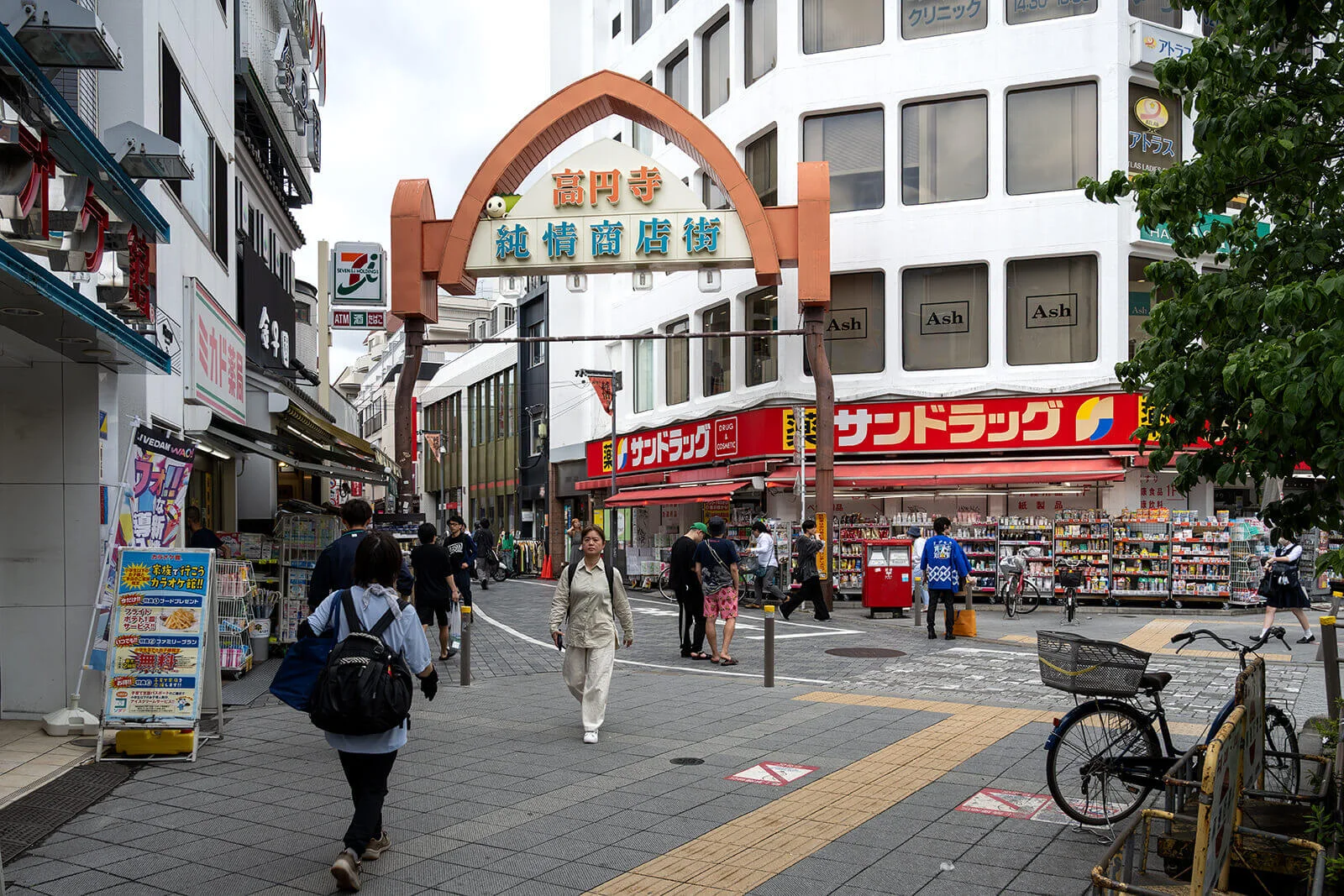
We begin at the station exit and take a closer look at the planned route of Tokyo Metropolitan Auxiliary Road No. 227 (補助第227号線). Just outside Kōenji Station lies Kōenji Junjō Shōtengai, a classic shopping street and one of the neighbourhood’s main arteries. It is precisely through this area that the proposed road would run.
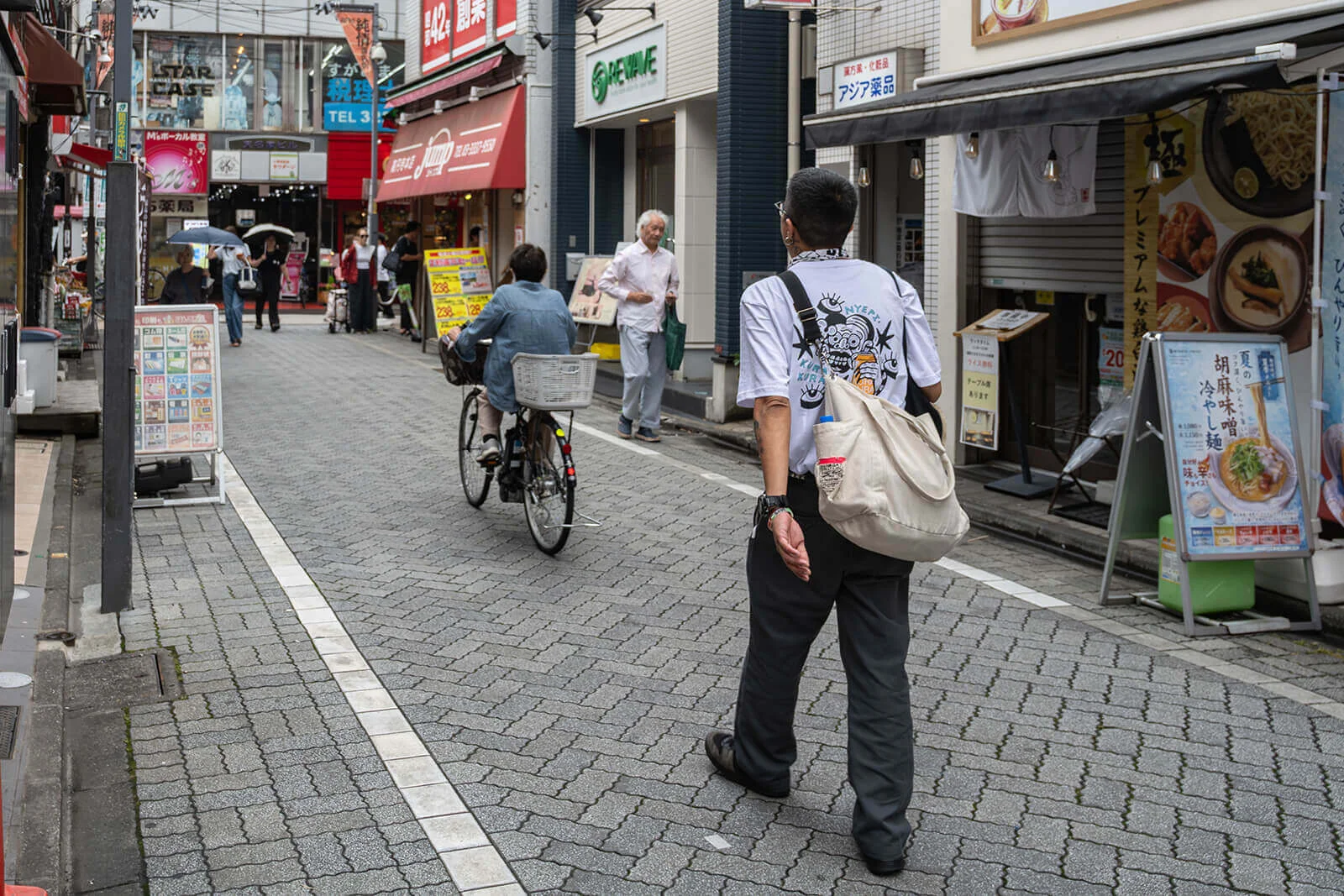
Many shōtengai in Japan are struggling with ageing populations and vacant shops. Here, the picture is different: a healthy mix of stylish new stores and everyday local services reveals a lively, functioning neighbourhood. What appears today as a dense, walkable shopping street of roughly 400 metres would become part of a much wider traffic corridor.
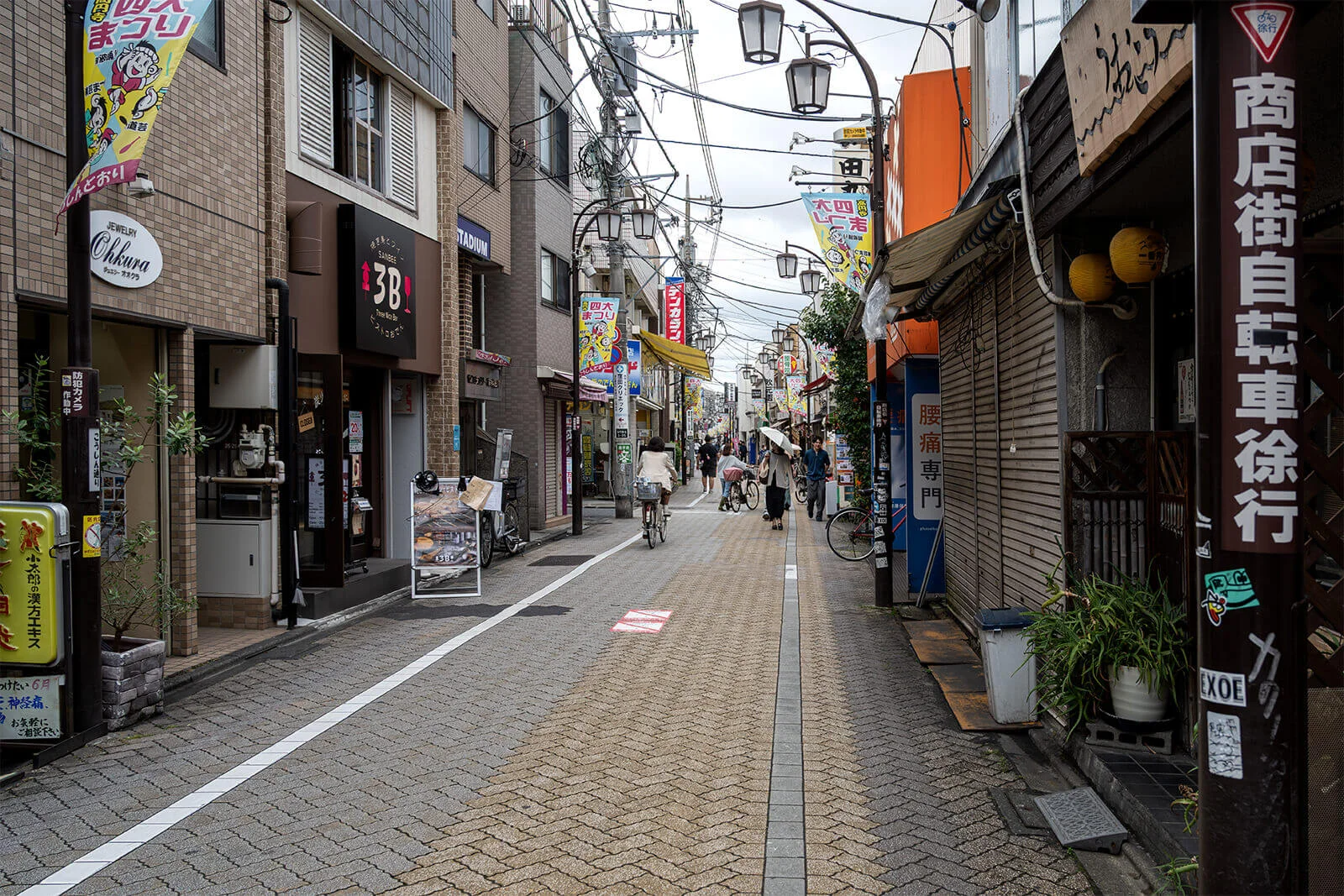
From Kōenji Junjō Shōtengai, the planned route would continue north towards the Nakano Yamatochō Post Office intersection along Waseda-dōri. This roughly 250-metre stretch is lined on both sides with small independent shops.

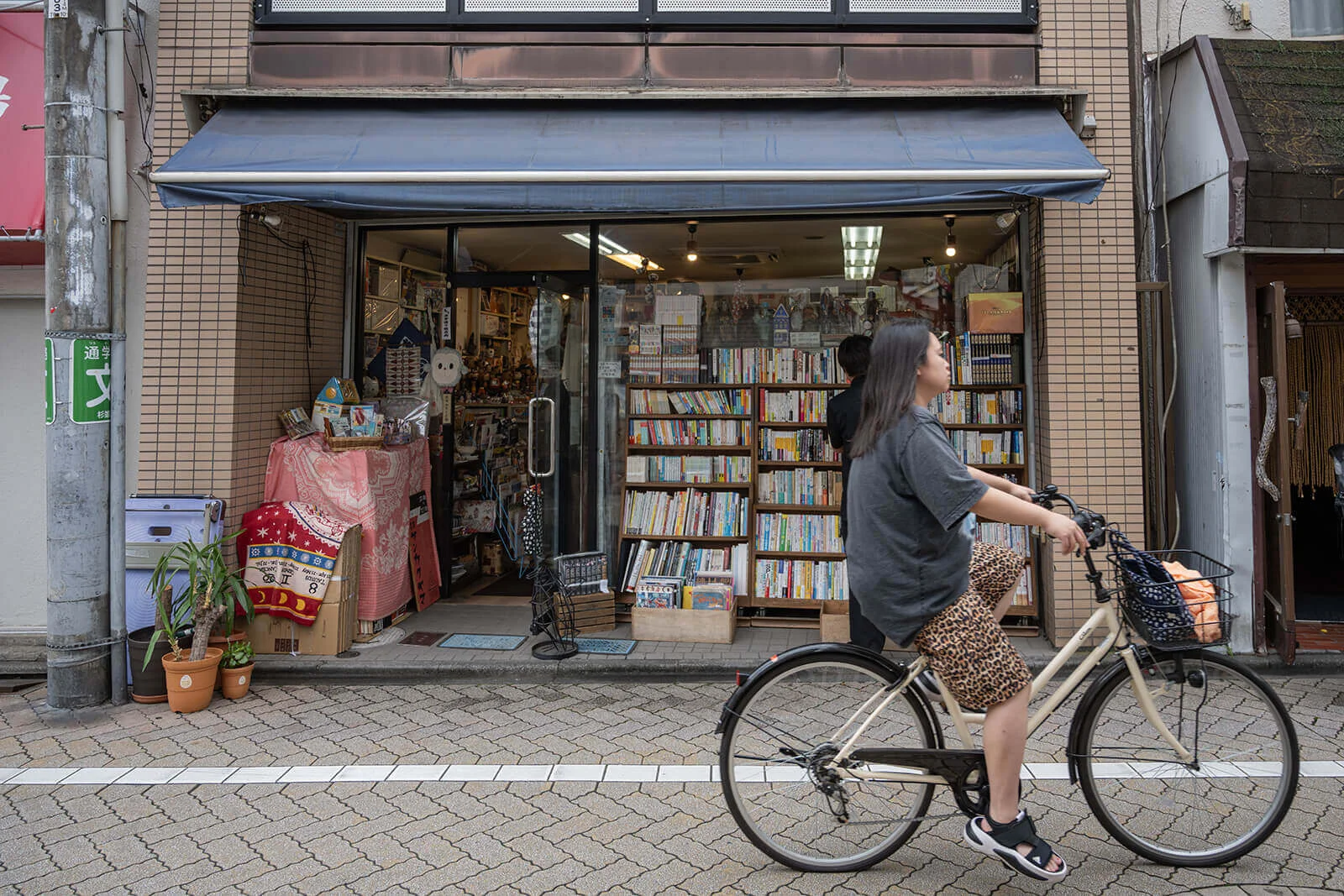
Andy explains that the road-widening project would force all these shops to disappear—from his favourite bookshop to several long-established restaurants. In total, around 200 businesses would be directly affected.

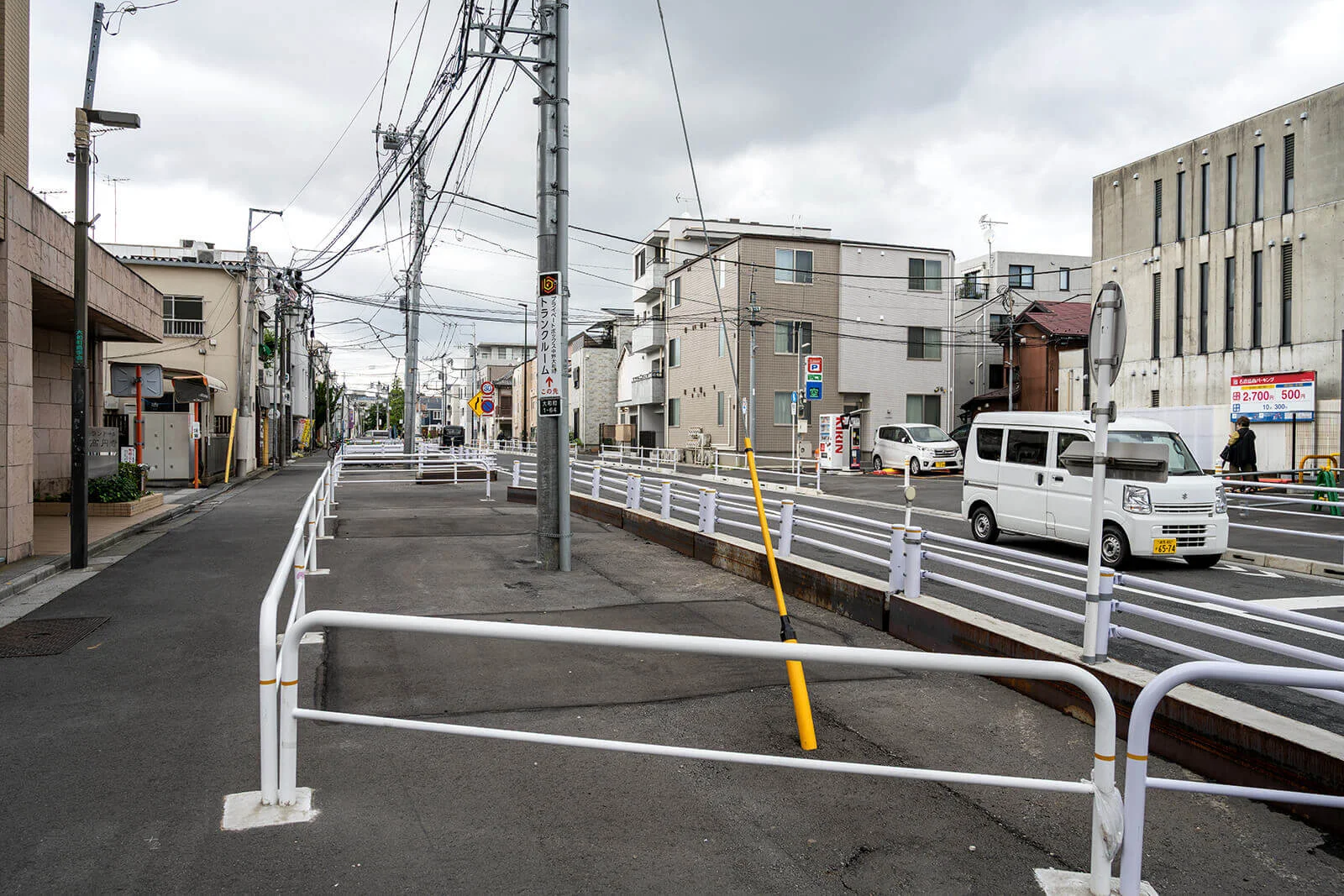
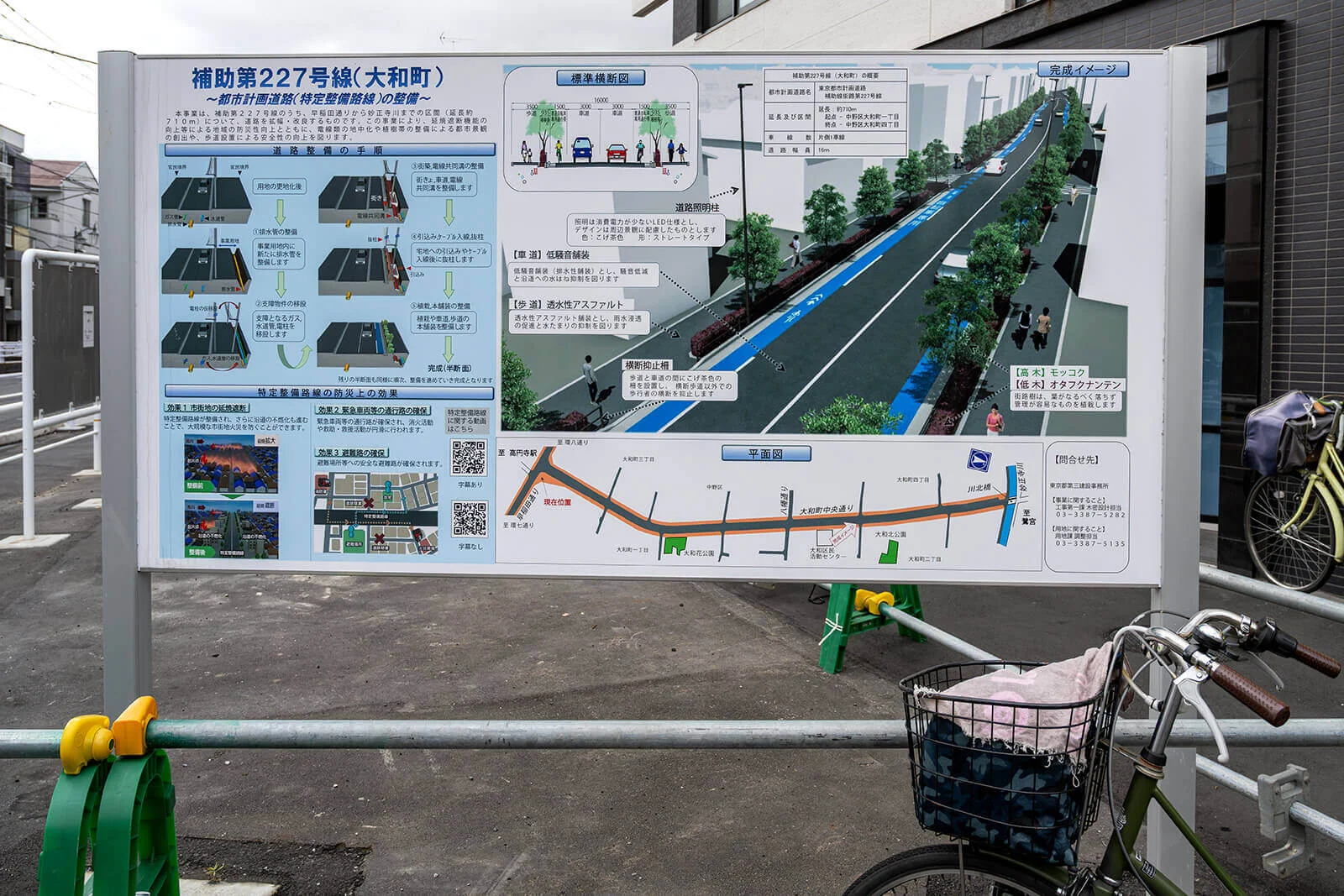
At the end of this stretch, at the Nakano Yamatochō Post Office intersection, Kōenji gives way to neighbouring Yamatochō in Nakano Ward. Here, the kind of gentrification so feared in Kōenji already seems well under way: streets have been widened, plots of land acquired by the city administration, and front gardens have given way to asphalt.
The information board could serve as a warning to Kōenji’s more defiant residents.
Further reading
SUBstore Koenji Website
SUBstore on Instagram: @substore.tokyo
Andys personal instagram: @andhika.substore
An article on Tokyo’s live music scene, featuring SUBstore, Jirokichi and other independent venues, with additional links for further reading.
The Save Kōenji initiative on Instagram
“Facing redevelopment, Koenji rises up”, articel about Mayor Satoko Kishimoto joining the protests in 2022, Japan Times (Paywall)
Opened in 1975, the live house Jirokichi forms the epicentre of Kōenji’s music scene. In 2025, it celebrated its 50th anniversary. Several older blog posts featuring archival material can be found here.


Write comment
Write comment
Comments
No Comments