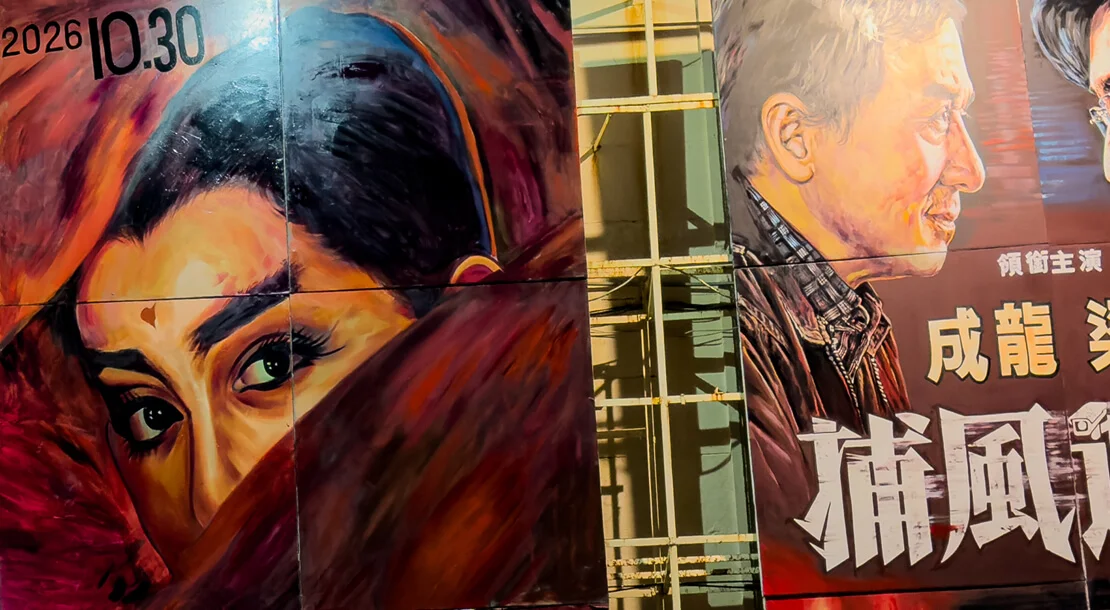
Chuan Mei Theater (detail) during the opening weekend of the 1st Tainan Art Biennale 2026
Main content
Hand-Painted Movie Posters and the First Tainan Art Biennale
Painted Memories, Reimagined
What connects them is more than just a shared location. It is also the question of how memories, images and cultural traditions can be preserved without turning them into mere museum pieces.
The presentation of Breguła’s film project Square brought contemporary art, film history and a nearly vanished graphic craft into dialogue. The cinema was more than just a backdrop. Its own history became part of the project.
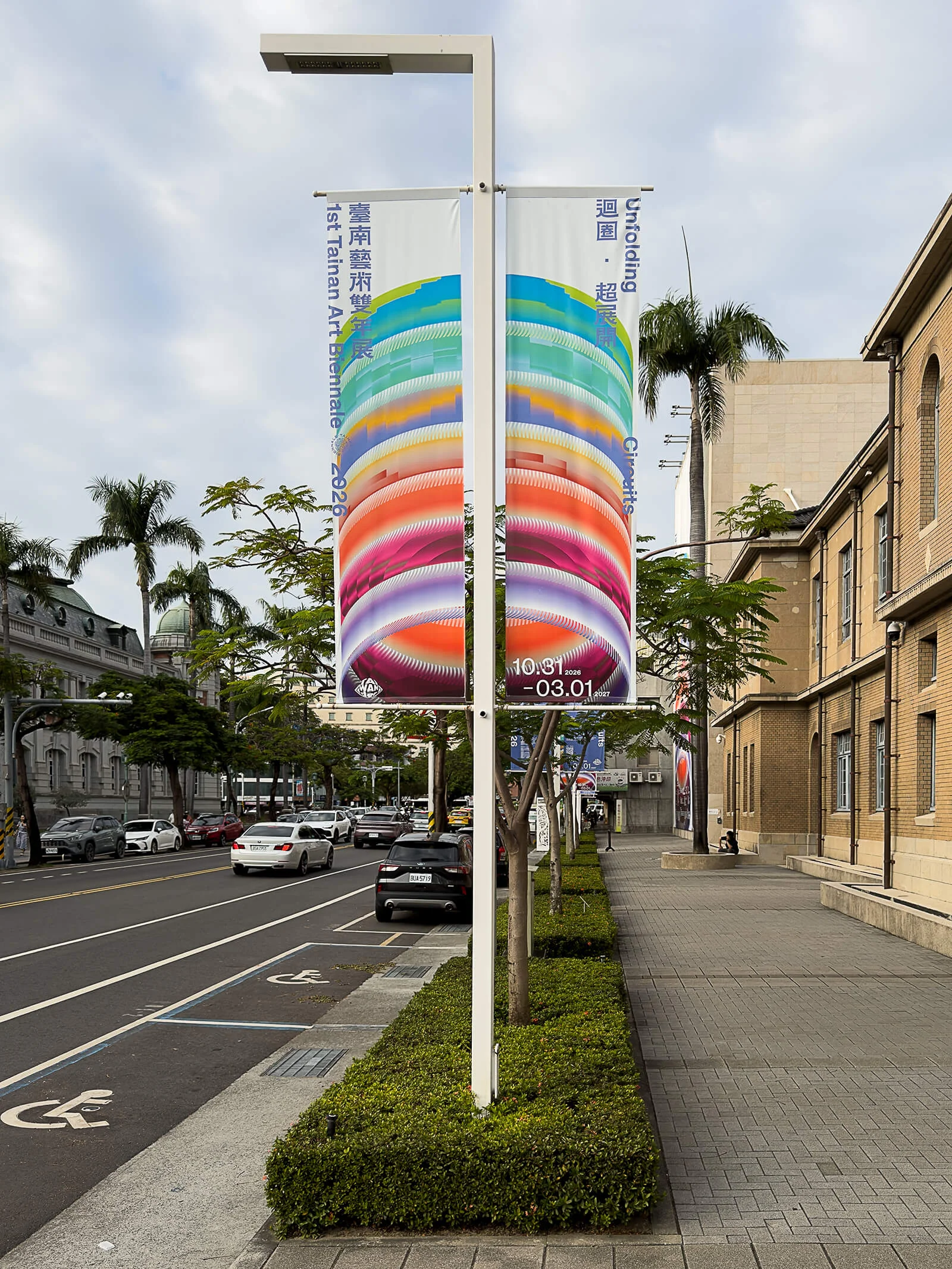
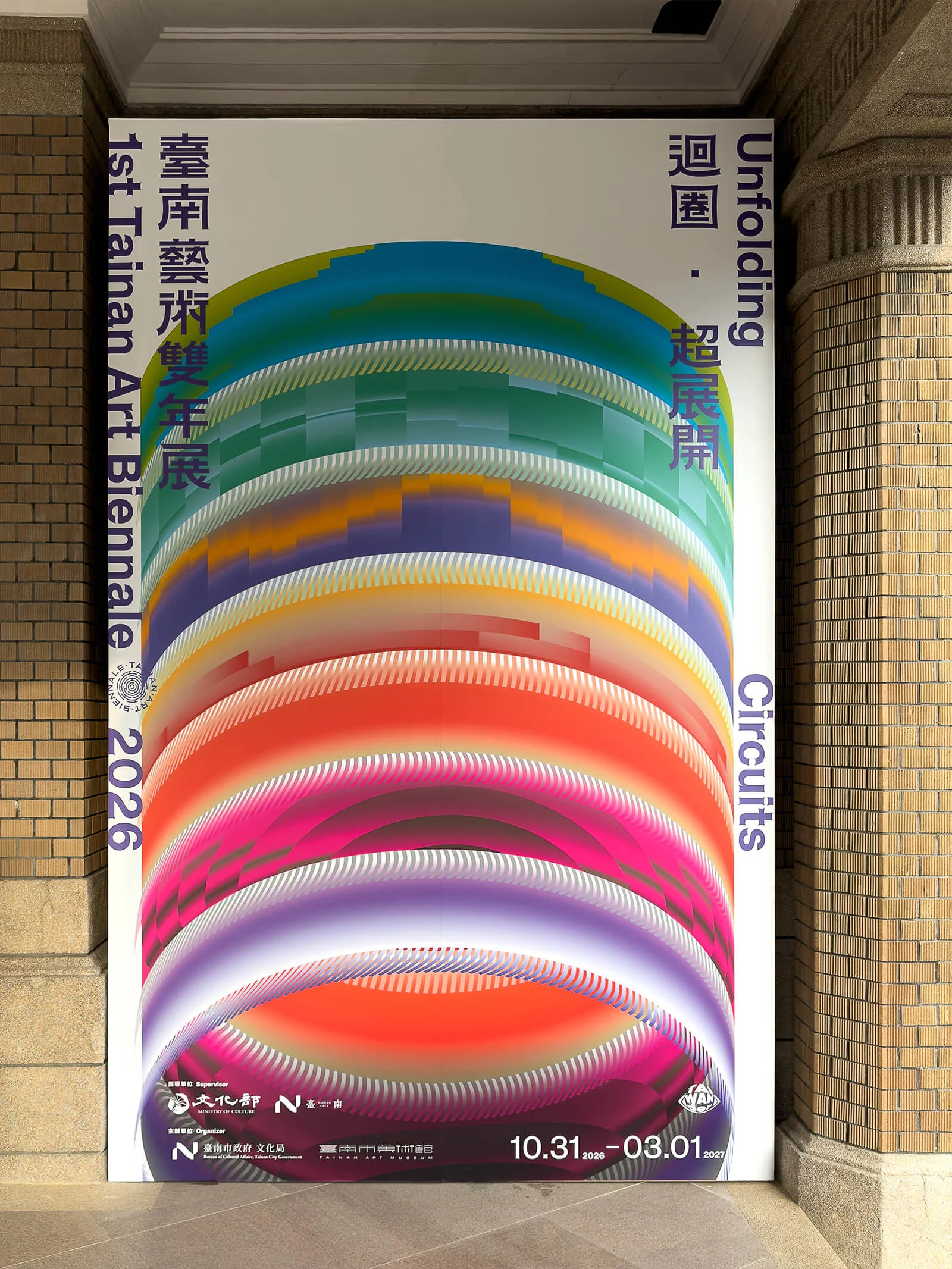
Project.
A biennale extends into the city
The inaugural Tainan Art Biennale runs from 31 October 2026 to 1 March 2027. Organised by the Tainan Art Museum, it spans 16 main exhibition venues and 16 additional locations. Designed as a City Walk Biennale, it invites visitors to discover art on foot while exploring the city, its people and its history.
The curatorial concept centres on Tang Te-chang Memorial Park, a roundabout from which seven streets radiate. Accordingly, the Biennale is divided into seven thematic sections. Breguła’s contribution is part of the Gathering Circuit, curated by Yang Chia-hsuan, which explores encounters, communities and different ways of coming together.
Square – A film about the unspoken
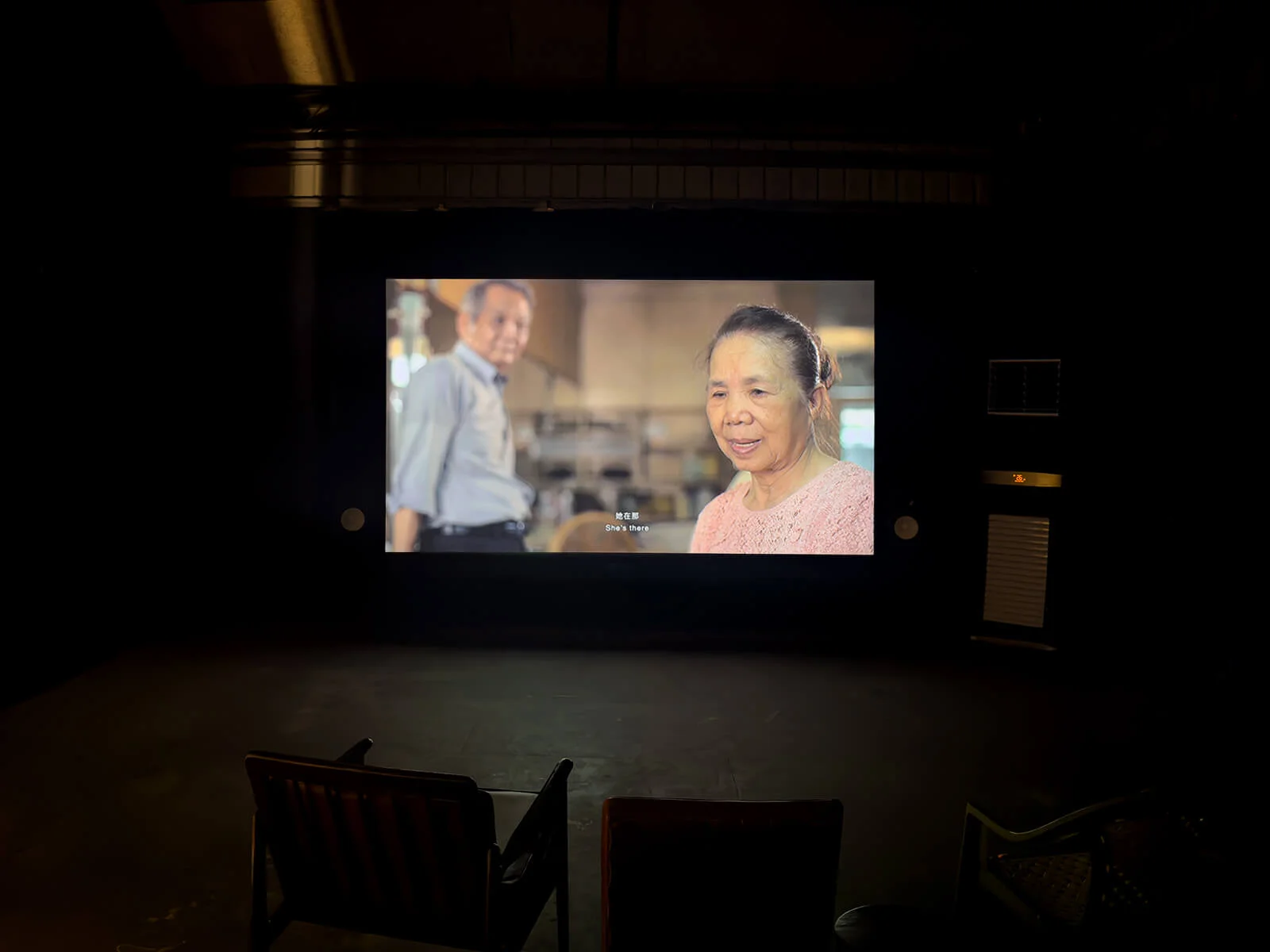
At the heart of Breguła’s contribution is Square, a film project from 2018 that was re-edited for the 2026 Biennale.
The story takes place in a seemingly peaceful small town. Hidden among the bushes in a public square is an old, almost forgotten sculpture, a relic of an earlier political era. One day, it begins to sing. At first, the residents react with curiosity and amusement. But as the voice repeats “I want to ask you a question” with growing insistence, their mood eventually turns into collective aggression.
Square explores collective memory and repression – and how a society deals with its past when uncomfortable questions can no longer be ignored.
The film was shot mainly in Tainan, with dialogue in Mandarin and Taiwanese.
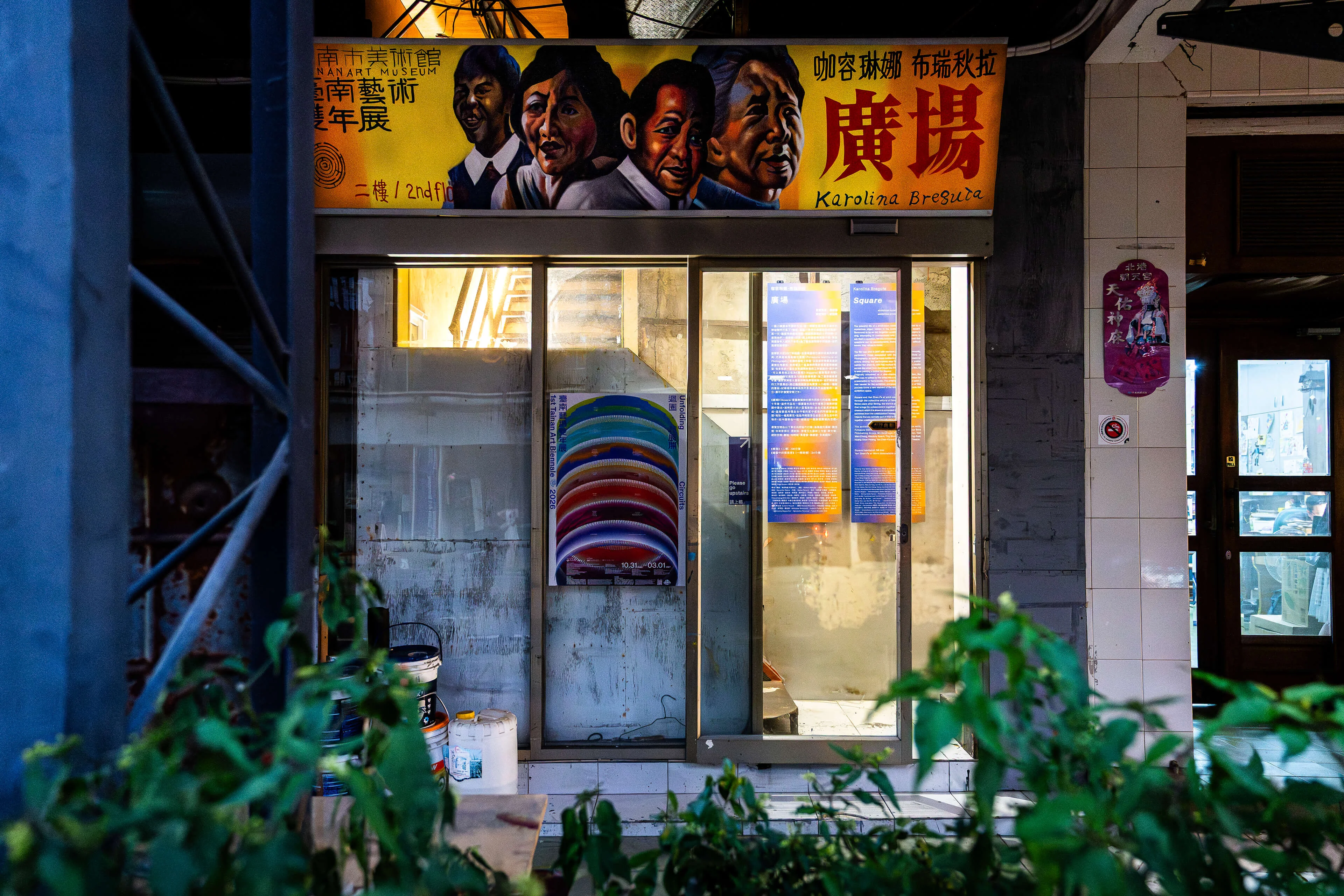
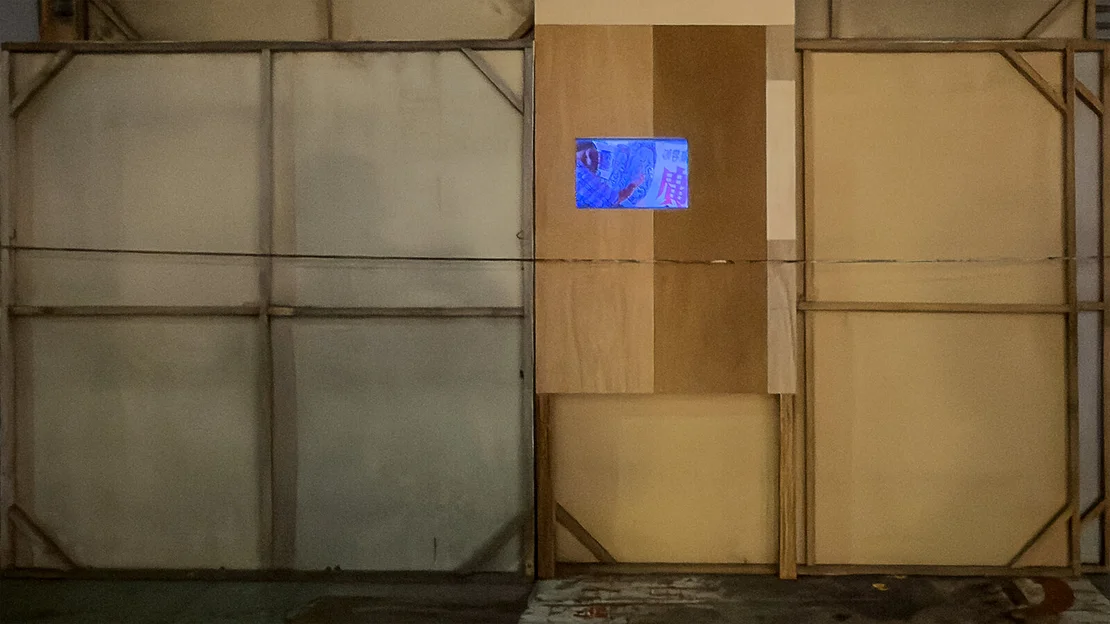
Square was originally conceived as a nine-channel video installation. For the Tainan Biennale, the work took on a new form. Together with the Fotoaura Institute of Photography and Yan Jhen-fa, Breguła developed an installation in the poster painter’s former workshop opposite the Chuan Mei Theater.
Yan created a new visual for the exhibition, with an accompanying video documenting its creation. As Karolina Breguła told me, this was the fifth visual he had painted for her, having illustrated every solo presentation of Square to date.
Place.
The Chuan Mei Theater
A cinema as part of the city’s memory
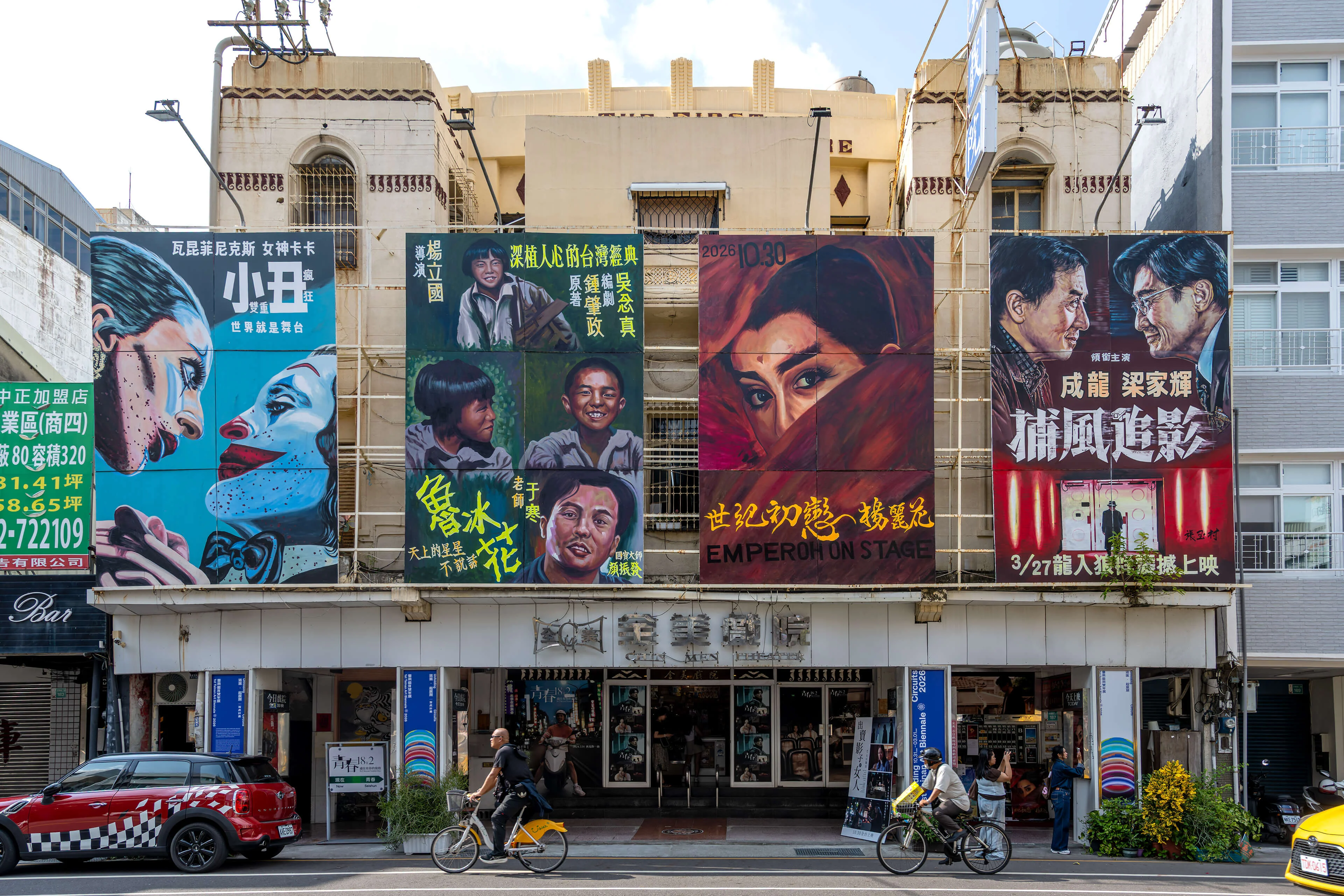
The history of the Chuan Mei Theater dates back to 1950. It was built on a site previously occupied by an imposing three-part residential and commercial building from the Japanese colonial period, which had been destroyed by American air raids towards the end of the Second World War. The new cinema incorporated elements of Baroque-inspired architecture. Its symmetrical façade, adorned with decorative reliefs depicting bats and seahorses, continues to define its appearance today.
During its early decades, the cinema was part of a thriving cinema scene in Tainan’s historic centre, which at one point was home to more than twenty cinemas. Its programme included Hollywood productions as well as Taiwanese and Japanese films.
In 1969, Wu Yi-yuan took over the cinema from his wife’s family and gave it its present name. Faced with growing competition, the cinema switched from first-run screenings to a second-run format on 1 May 1971.
From then on, visitors could watch two films back-to-back for an initial admission price of just six Taiwan dollars. The concept proved enormously successful. Teenagers and students in particular, but also families and couples, spent entire afternoons at the cinema. At its peak in the 1960s and 1970s, between 2,000 and 3,000 people reportedly queued for admission each day. The main auditorium seated more than 700 people, and standing-room tickets were even sold for particularly popular films.
The façade as a canvas
What continues to make the cinema distinctive is its hand-painted film posters. While printed advertising and, later, digital displays became the norm elsewhere, the Chuan Mei Theater maintained this tradition for decades. Large-scale paintings displayed above the entrance announced the films currently showing.
Their impact comes not only from their enormous size. The paintings have a visual language of their own: dramatic compositions, exaggerated facial expressions, vivid colours and sometimes highly individual interpretations of international film imagery. The posters bring together graphic design, commercial painting and visual culture in public space.
They were not created for galleries or museums but to attract attention on the street and draw audiences into the cinema. Photographic references were not simply enlarged to scale. Crops, figures and compositions had to be reinterpreted for the much larger format, with particular attention to how the images would be perceived from a distance.
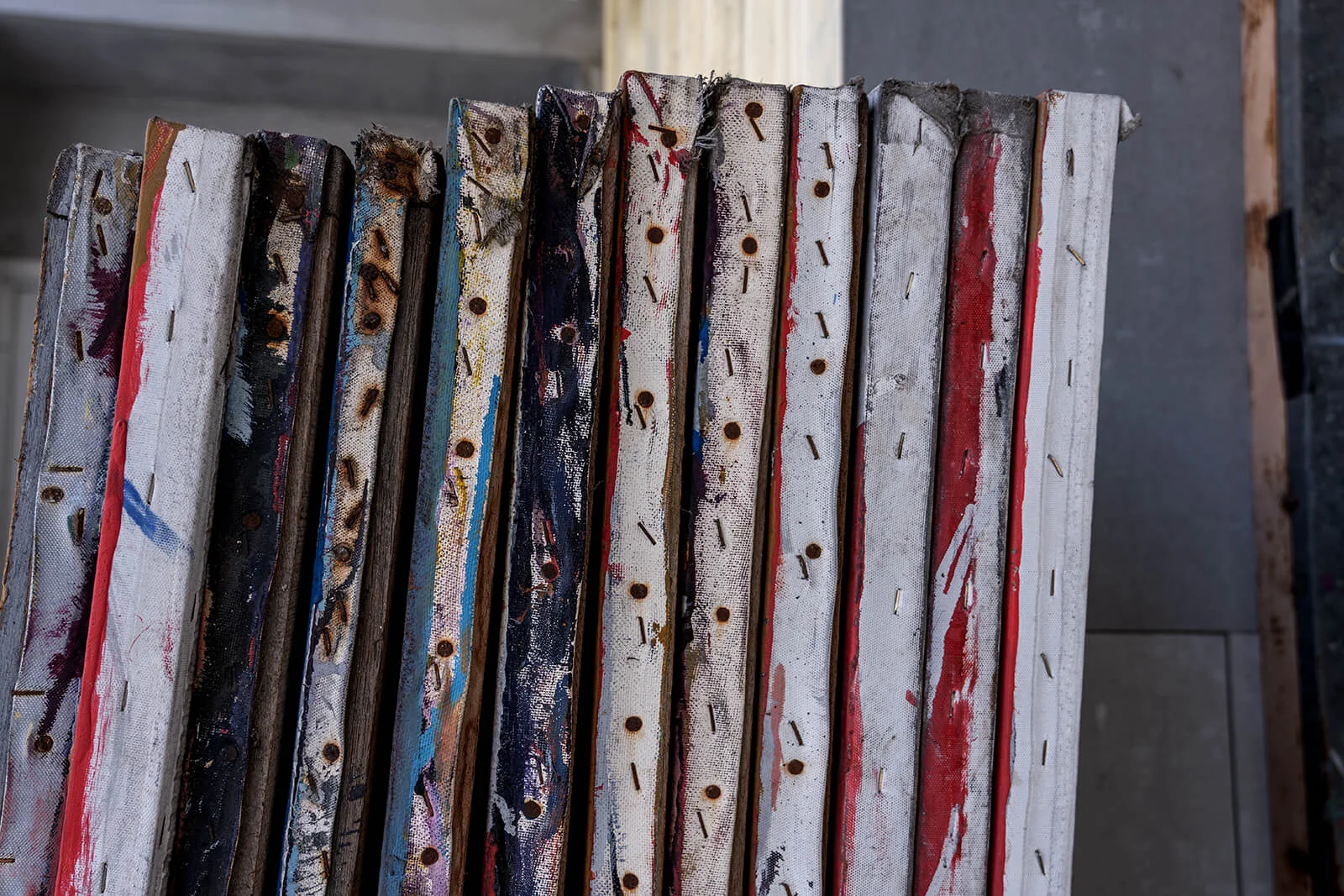
The paintings were part of the everyday streetscape. They were regularly replaced as new films entered the programme. In later years, around two to four new posters were produced each month, each assembled from several painted wooden panels. To keep costs down, these panels were reused repeatedly: old images disappeared beneath fresh layers of paint before the next poster took shape.
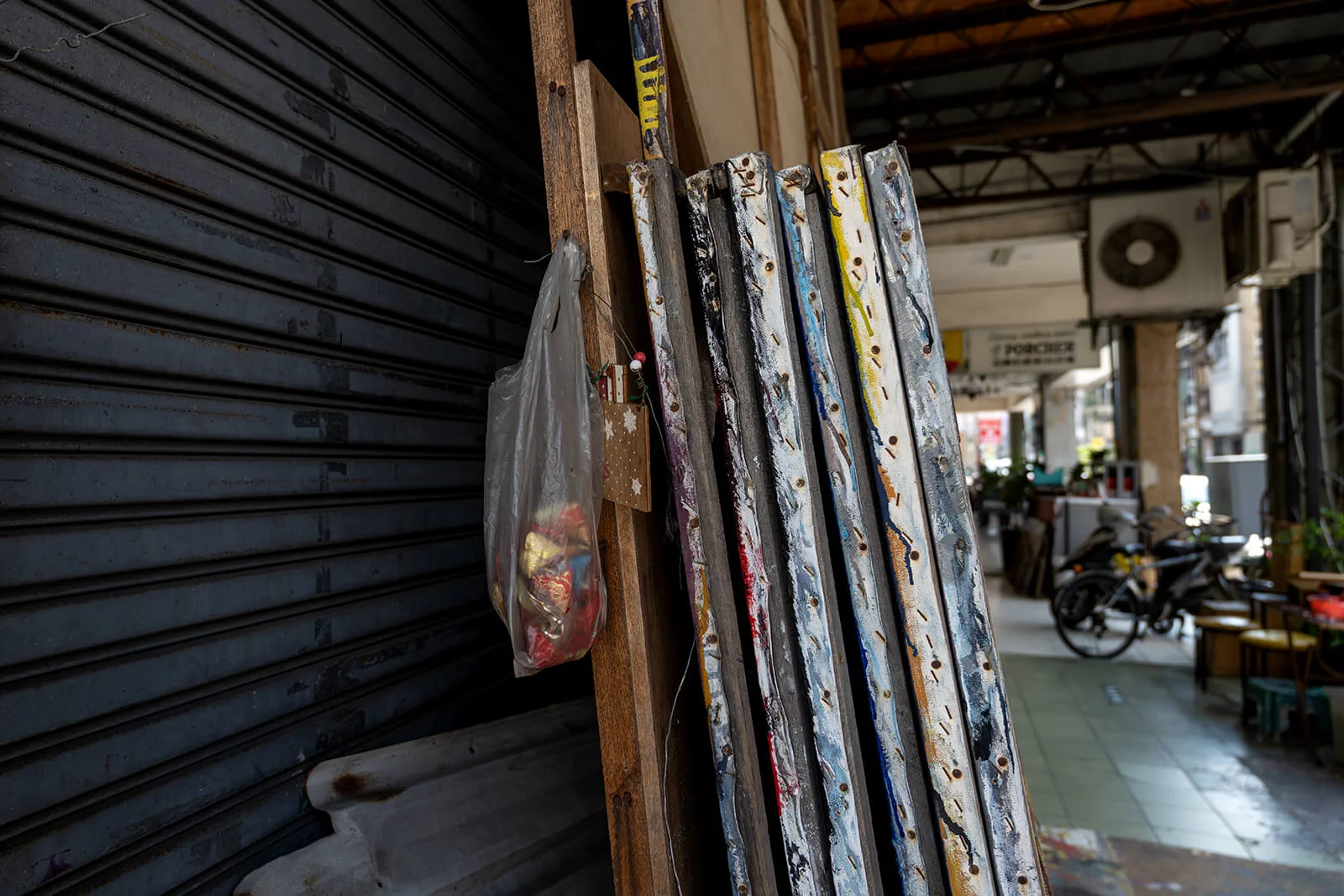
Their temporary nature was integral to their original purpose. What was regarded for decades as ordinary advertising has since become a rare testament to a nearly vanished form of visual culture.
For decades, this tradition was closely associated with Yan Jhen-fa, the cinema’s best-known poster painter. His workshop was located directly opposite the cinema, beneath the arcades of a building on Yongfu Road.
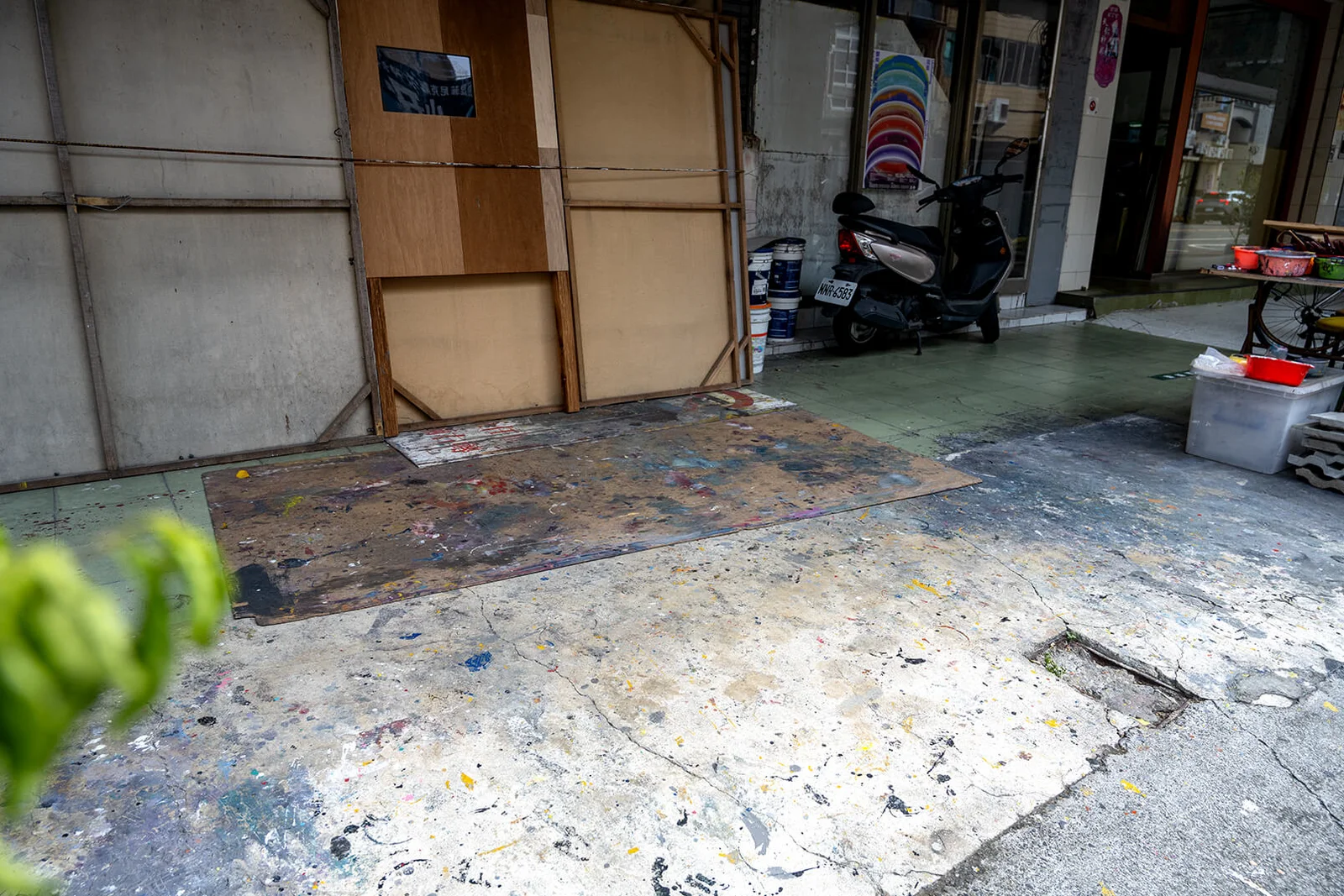
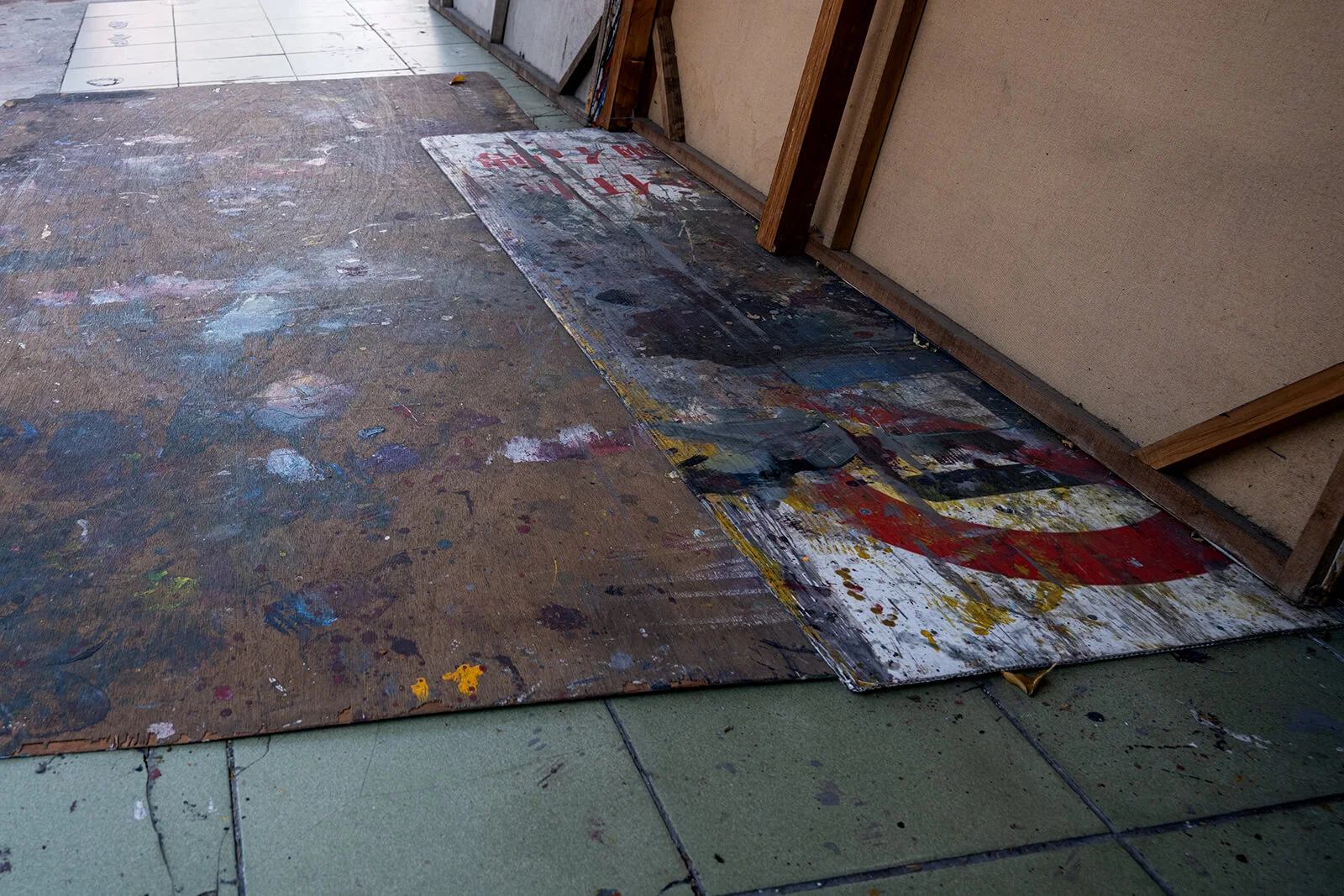
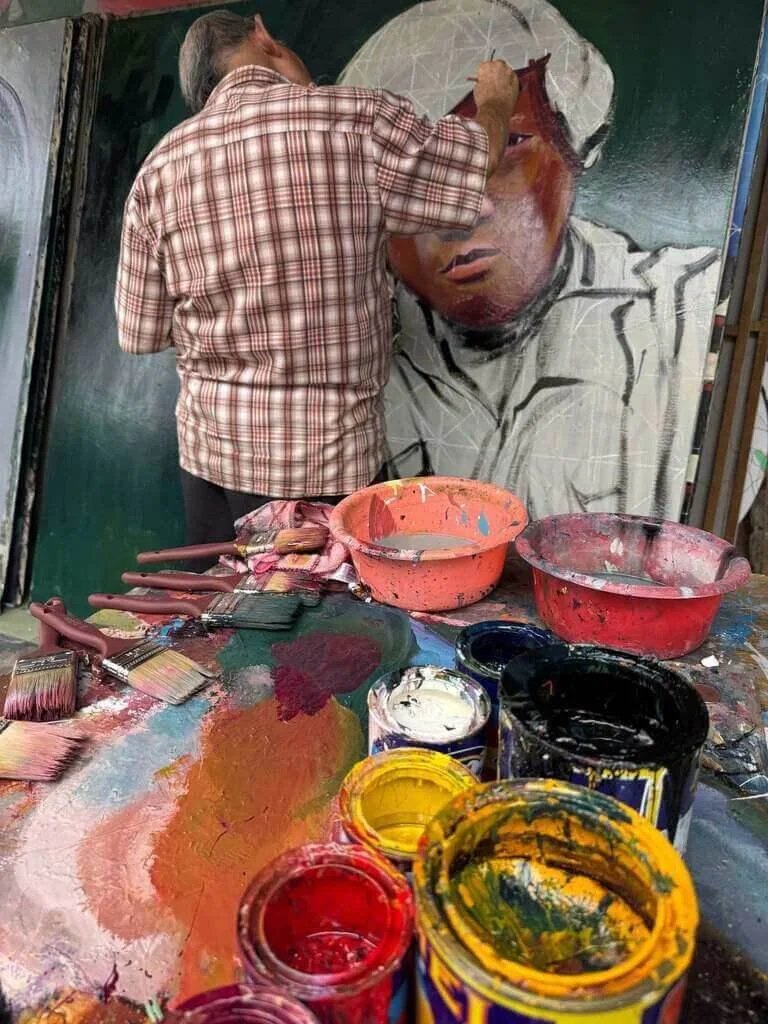
Surrounded by paints and large wooden panels, he worked in full public view. Passers-by would stop to watch him at work and take photographs.
The street thus became a kind of open-air studio. On one side stood the cinema with its finished paintings; on the other, the painter at work – and between them, an audience able to experience not only the films but also the creation of the images used to promote them.
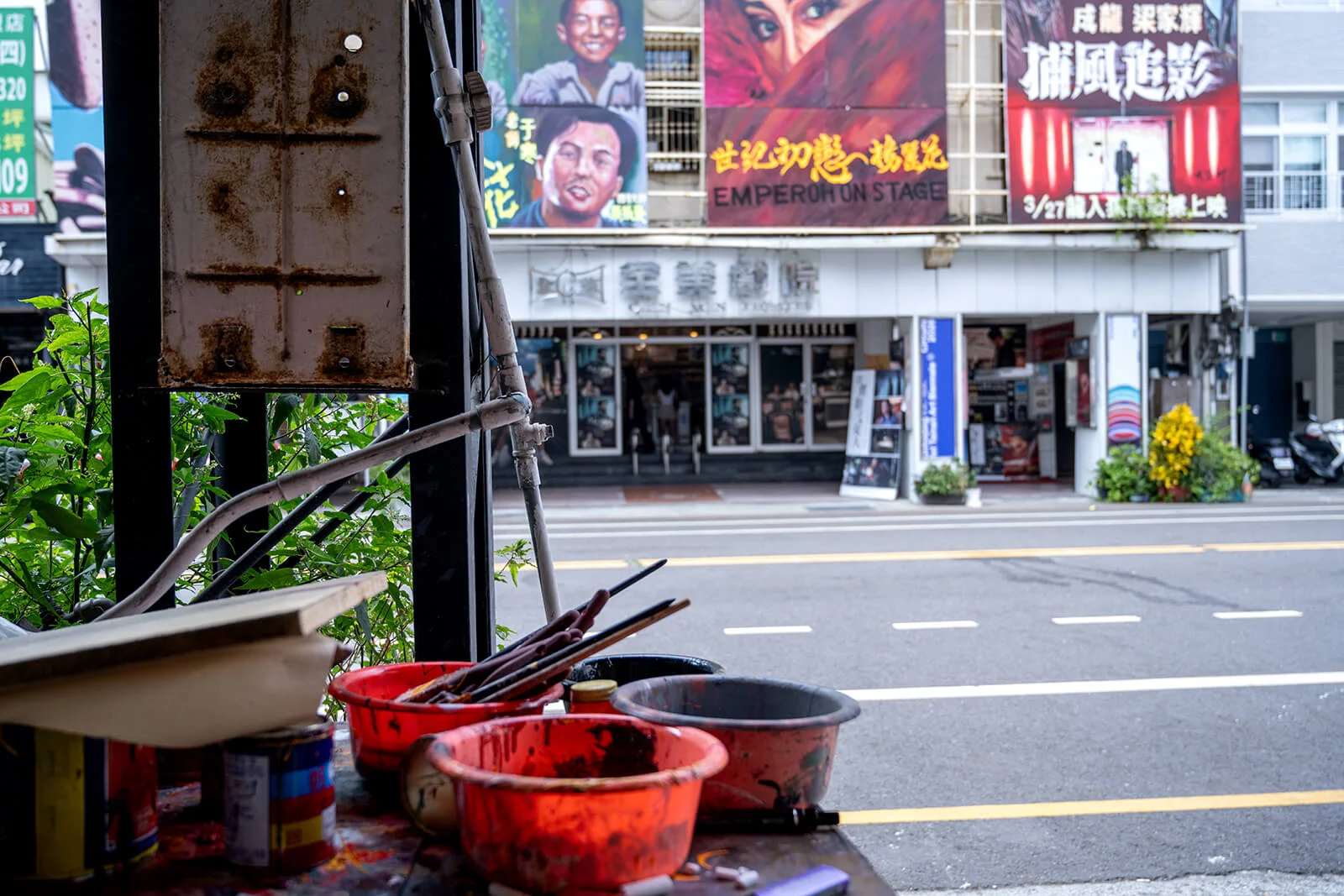

The workshop opposite the cinema is visible to passers-by around the clock

Between preservation and change
With the spread of television, followed by videocassettes and eventually digital entertainment, traditional cinemas gradually lost their audiences. The Chuan Mei Theater responded with various modernisation measures, including the conversion of its large auditorium into two smaller screening rooms in 1999. While many other traditional cinemas disappeared, the Chuan Mei Theater’s historic architecture and hand-painted posters survived. Yet growing public interest in the building and its history was not enough to compensate for the long-term decline in ticket sales.
The family running the cinema began exploring new possibilities for cultural use. Historic posters, photographs and cinema equipment were collected and exhibited, workshops with the poster painter were organised, and the premises were opened up for events.
In February 2025, just as the cinema marked its 75th anniversary, it announced that regular screenings would be temporarily suspended from 2 March. According to its management, the cinema had been operating at a loss for years. Its traditional business model, based on inexpensive tickets and double-feature screenings, was no longer financially sustainable.
The cinema has since resumed public screenings and is increasingly developing into a versatile cultural venue, hosting exhibitions, performances and other artistic events alongside its film programme.
Its participation in the inaugural Tainan Art Biennale in 2026 is a visible expression of this transformation. While the cinema itself hosts interdisciplinary performances, Yan Jhen-fa’s former workshop across the street has been turned into an exhibition space for Karolina Breguła’s project Square.
People.
Dedicated to cinema
Karolina Breguła – An artist between two cultures
Born in Katowice in 1979, Polish artist and filmmaker Karolina Breguła explores architecture, social change and collective memory in her work. Since taking part in an artist residency in Taipei in 2016, Taiwan has played an important role in her artistic practice. Among the projects she developed in Tainan was Le Tian Street Palace, a participatory work that brought memories of vanished cinemas to life in a temporary open-air cinema.
Her collaboration with poster painter Yan Jhen-fa also began in 2016. He created a film poster for Square and became part of the film himself, with Breguła documenting him at work.
Their renewed collaboration for the Tainan Biennale continues this connection. Yan’s specially created artwork links the fictional world of the film with the history of the cinema. Contemporary filmmaking and a nearly vanished graphic craft thus come together, both deeply rooted in the place and its people.
The Wu family – Keeping a cinema alive
For the Wu family, the question of how to preserve the historic cinema has been a concern for years. Its financial difficulties made it clear that not only the programme but also the building’s purpose would have to be reconsidered.
Opening the cinema to new cultural formats is intended to attract a wider audience and give the venue a future beyond its original function. But this is about more than preserving historic architecture: a cinema depends on its audience and the shared experiences it creates.
After the lunchtime screening, the woman running the cinema lets me take a look inside. Her family has managed the place for generations, she tells me, and she wants to keep the tradition alive for as long as possible. As I look around, people keep coming in to ask whether the cinema is open. The Biennale project also attracts visitors, who stop to photograph the façade or make their way up the stairs to the screening room.
Interest in the place clearly remains. The challenge is to turn that interest into a sustainable future without losing what makes the cinema unique.
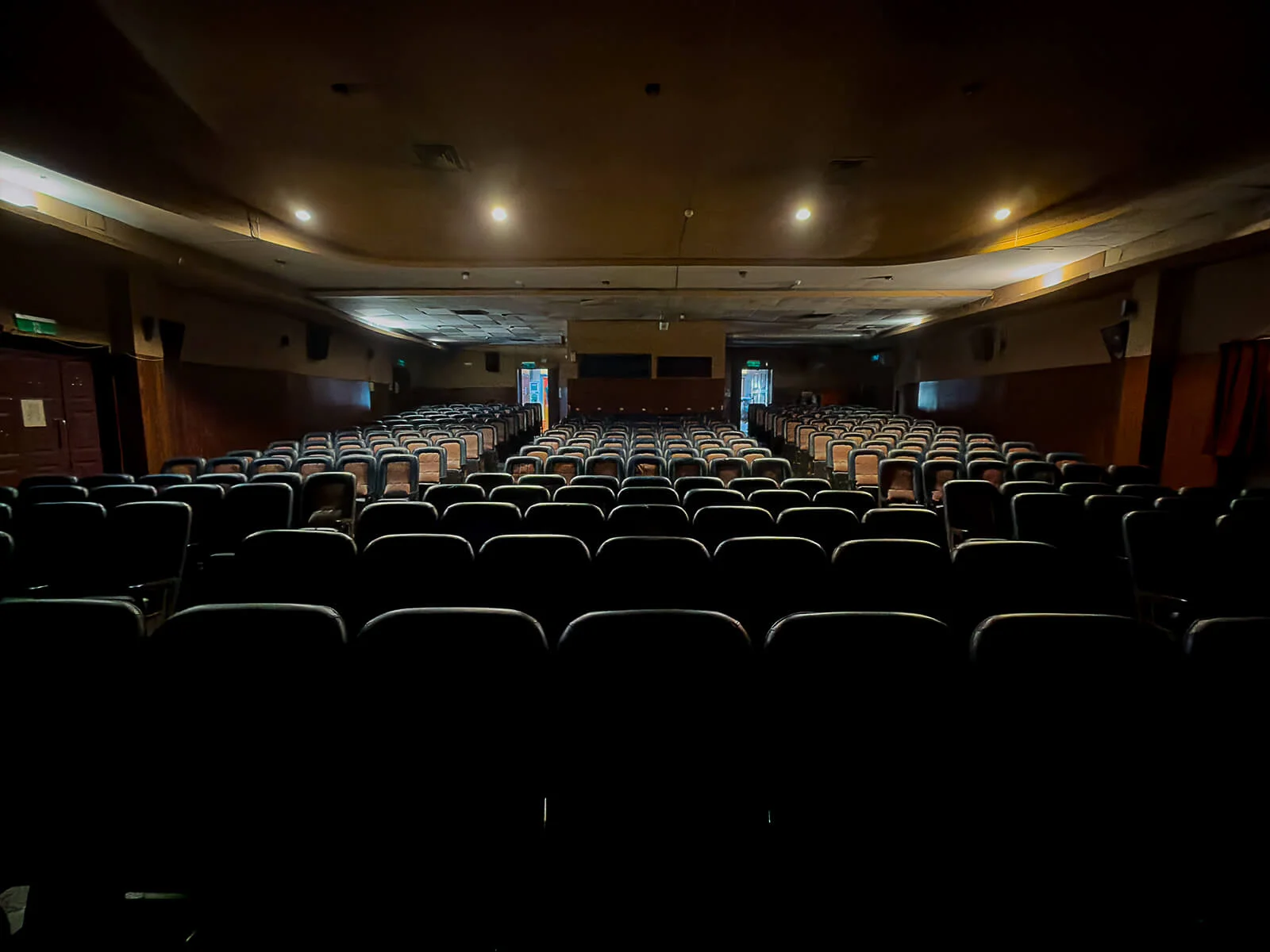
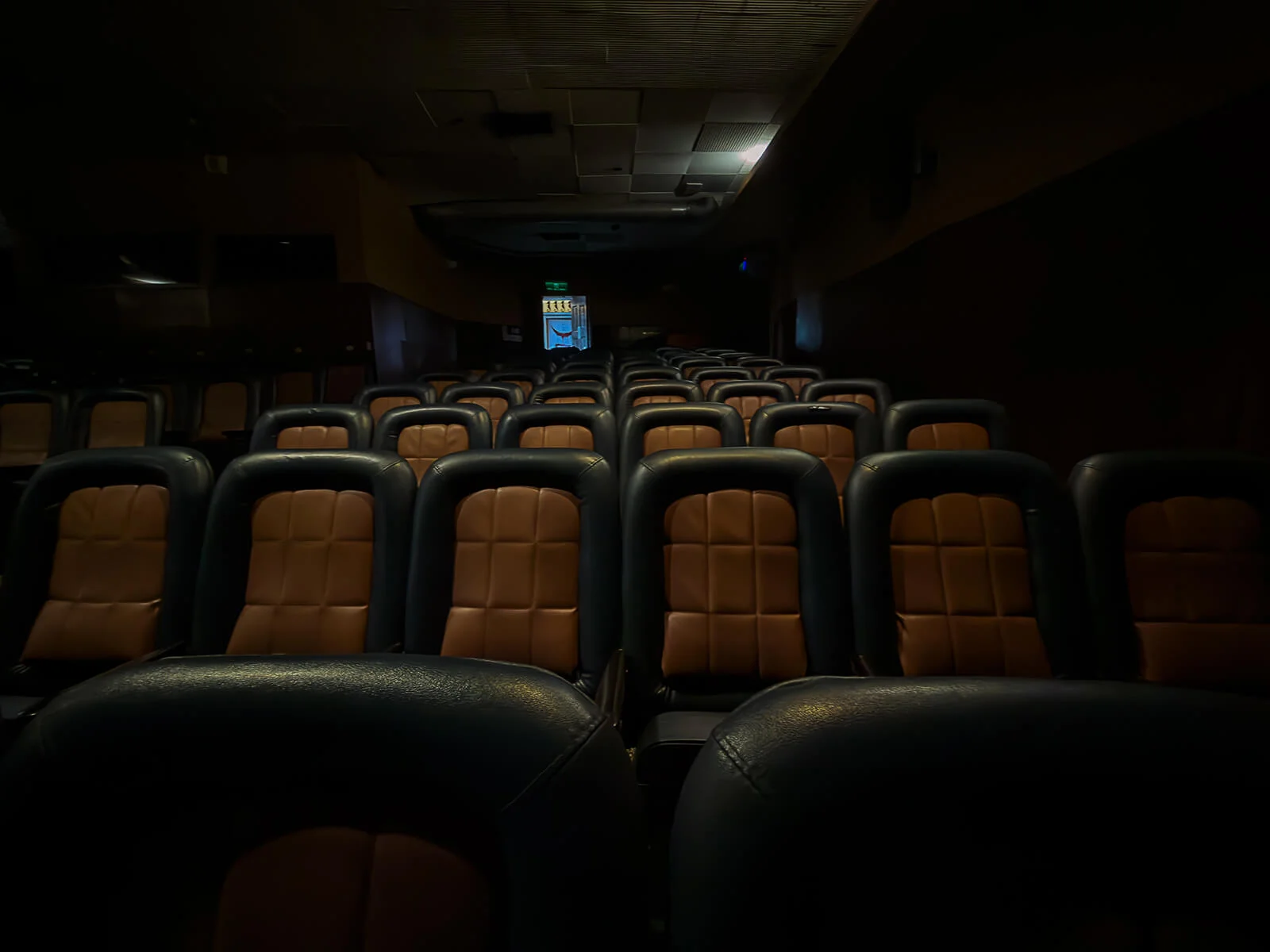
Inside the cinema, one can still sense its former splendour and the appeal it held for generations
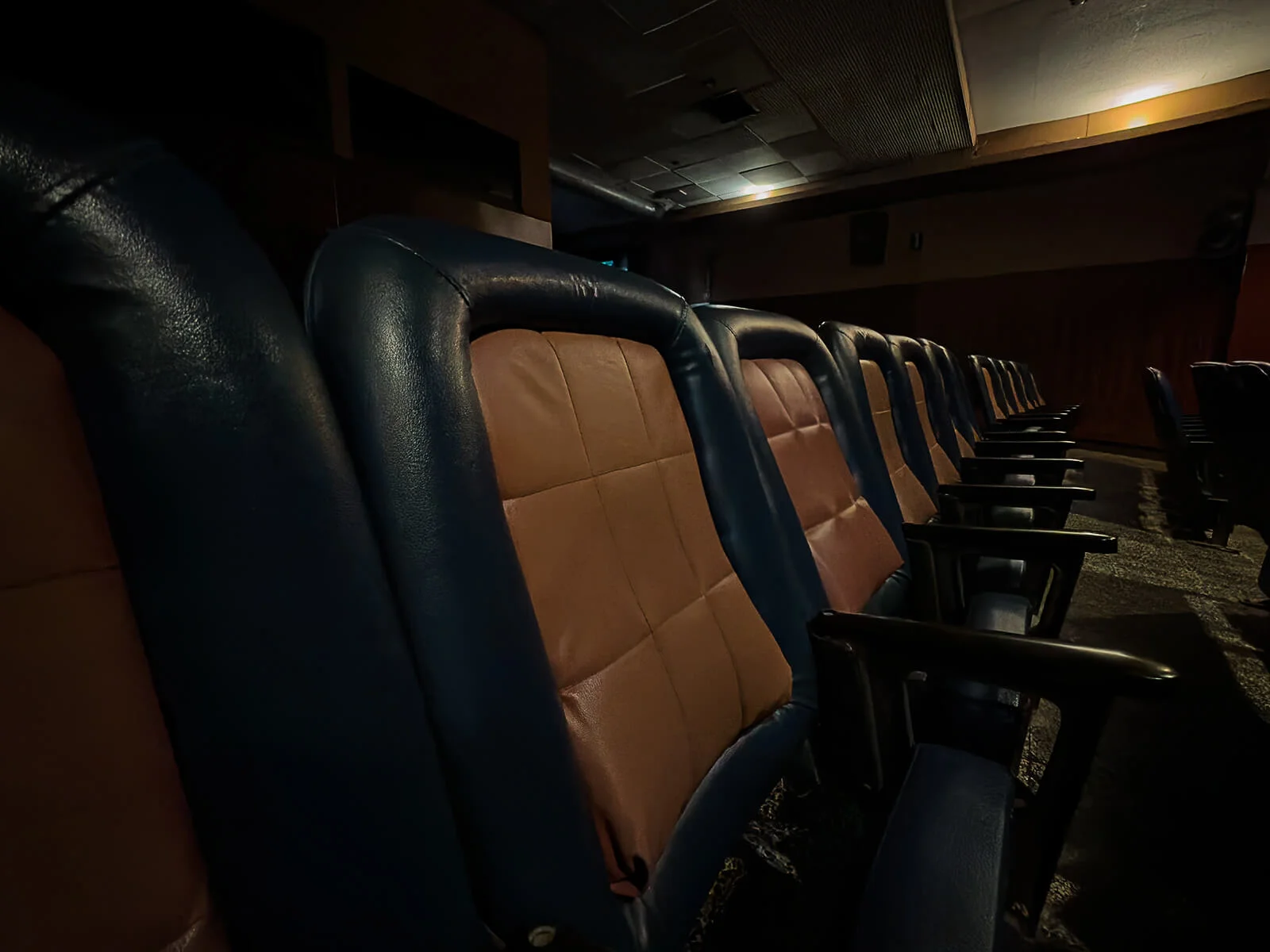
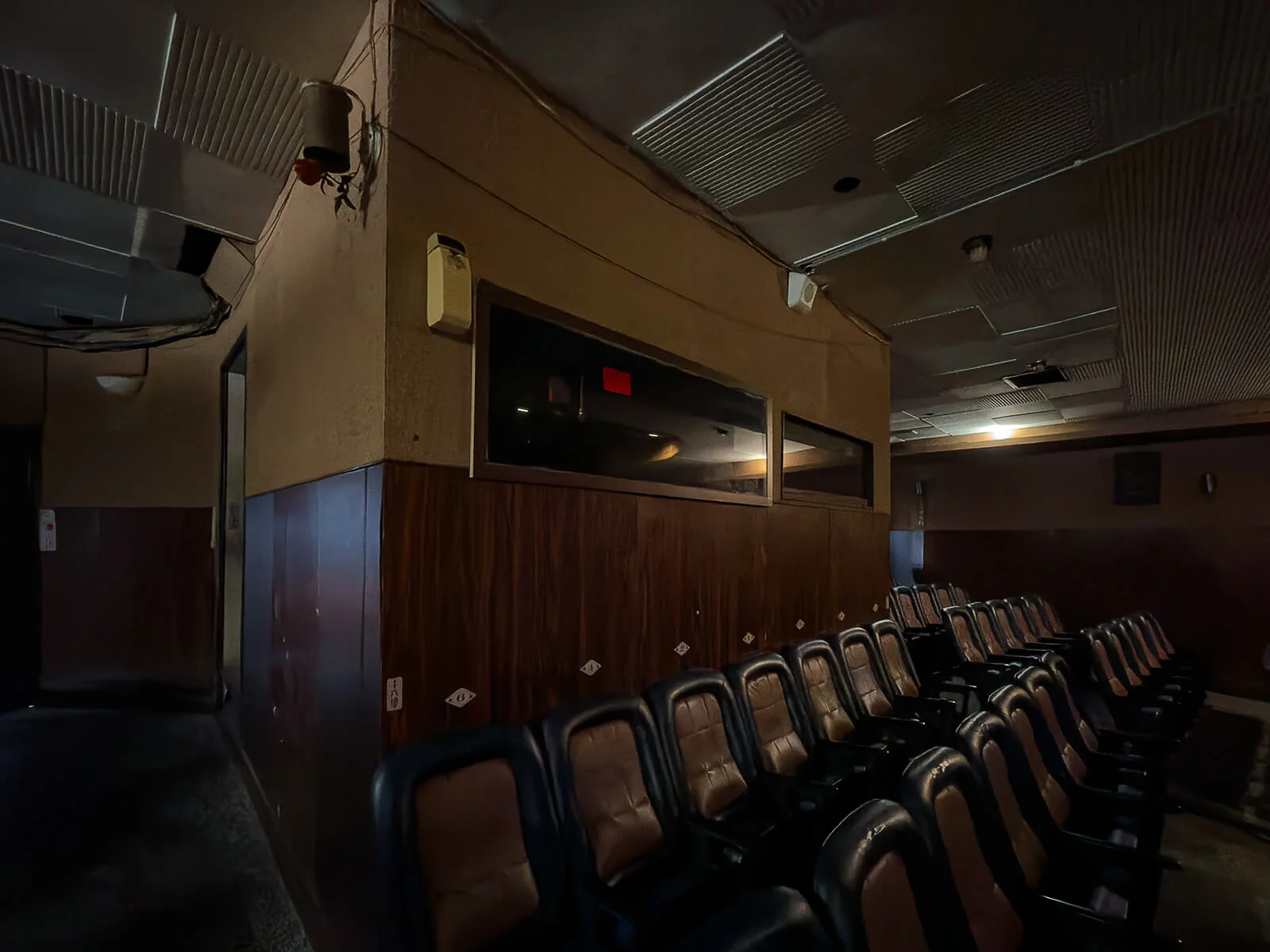
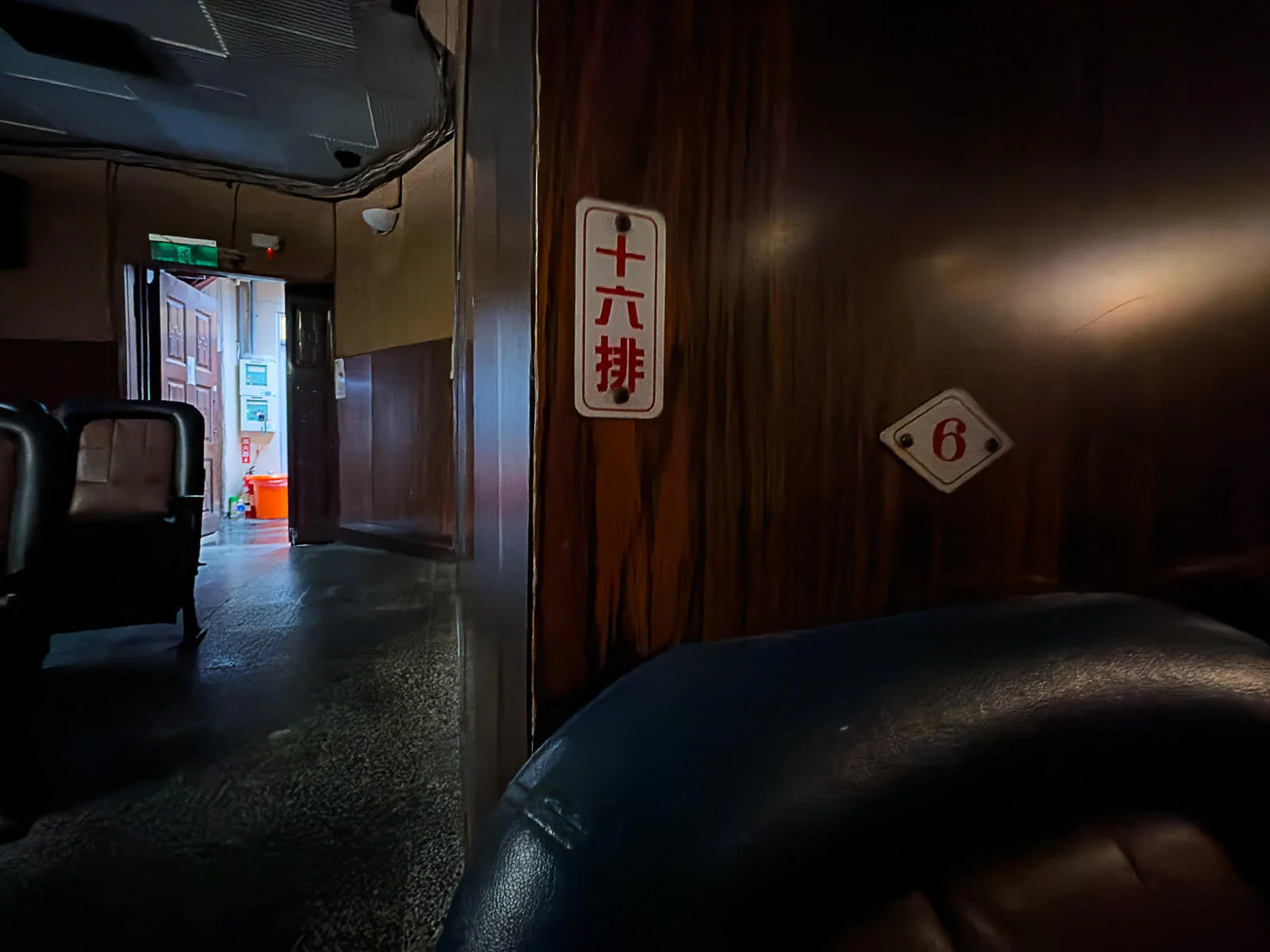
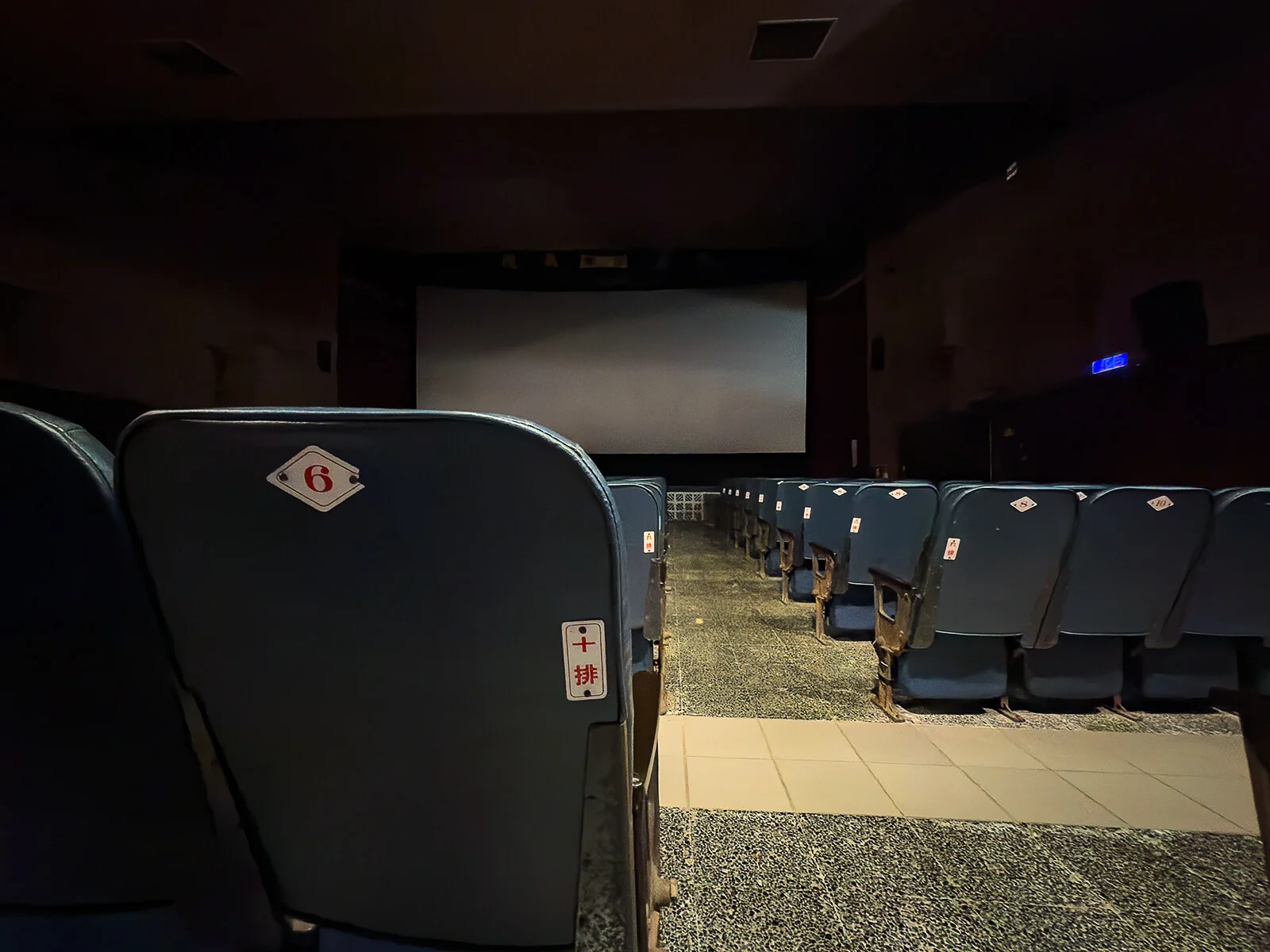
Inside the cinema, one can still sense its former splendour and the appeal it held for generations
Yan Jhen-fa – A life devoted to film posters
Born in 1953, Yan Jhen-fa is one of the last practitioners of a craft that was once an integral part of Taiwan’s film industry.
At the age of 18, he began training as a poster painter. His teacher, Chen Feng-yung, introduced him to the traditional technique of transferring small photographic references onto much larger surfaces using a grid. The original image is divided into a series of squares, which are then reproduced at a larger scale on the painting surface.
What sounds straightforward requires considerable drawing skills. Actors’ faces, in particular, must remain recognisable even from a distance. Eyes, expressions and proportions are crucial.
During the golden age of cinema, several painters would often work on commissions simultaneously. Films changed frequently, and posters had to be completed within tight deadlines. The work was physically demanding and involved long hours.
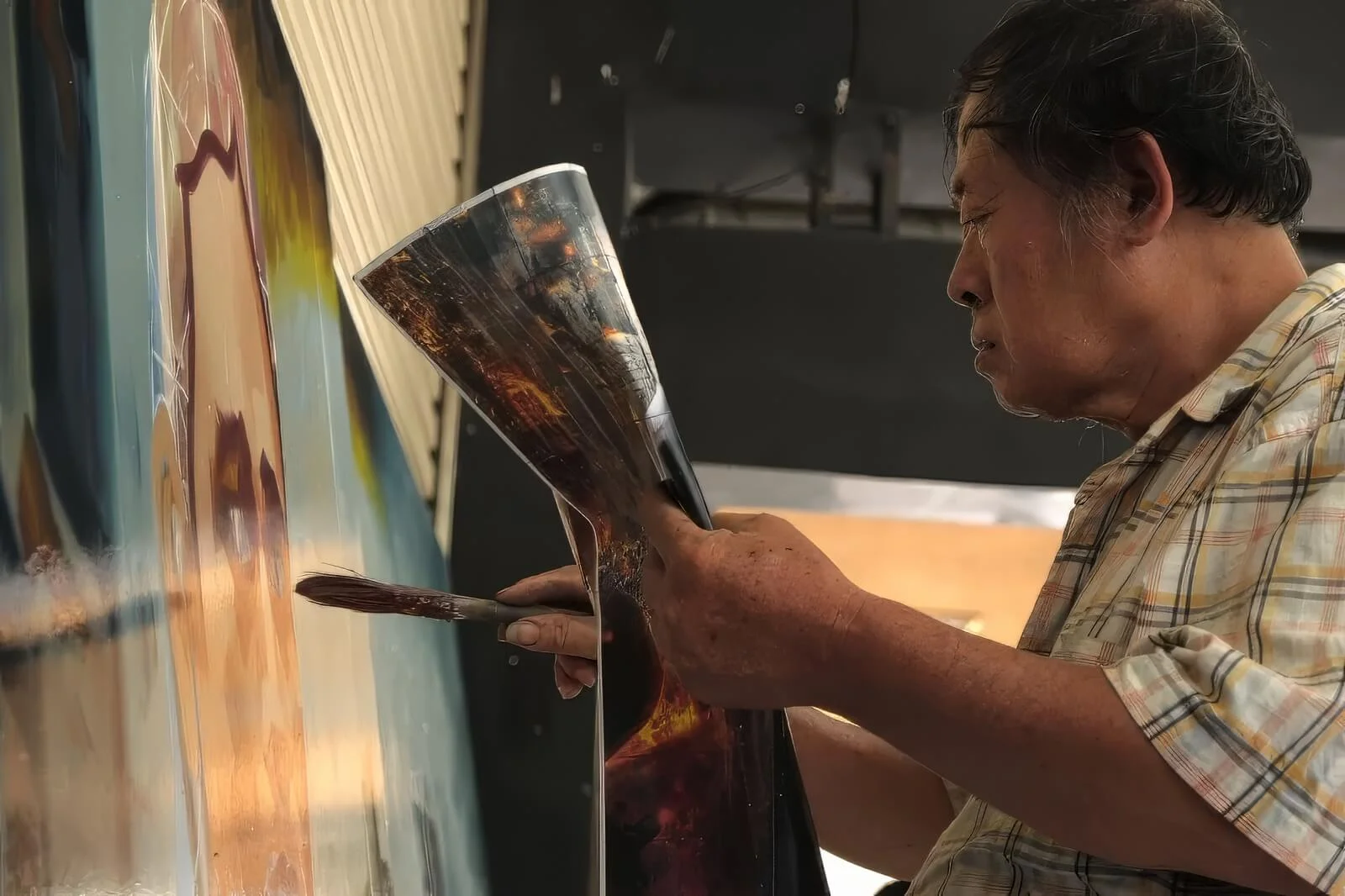
After completing his training, Yan worked for various cinemas in Tainan before the Chuan Mei Theater became his main client. His paintings came to define the cinema’s appearance and made it known far beyond the city.
With the advent of digital printing, demand for hand-painted film posters almost disappeared. Yan, however, continued his work. In 2018, a project for Gucci brought his work further international attention. Collaborations with musicians and film productions also introduced his craft to new audiences.
In 2024, Yan received the Outstanding Contribution Award at the Taipei Film Festival, recognising more than five decades of work and thousands of hand-painted film posters. The award also reflected a growing appreciation of the creative individuals who had spent decades working behind the scenes of the film industry.
Yet his career has not been without setbacks. In the summer of 2024, his long-standing collaboration with the Chuan Mei Theater came to an end, at least for the time being. That same year, he held his first exhibition of independent artistic works – a remarkable step after more than five decades devoted to commercial painting.
He has also faced health challenges. His eyesight is now severely impaired. As early as 2024, the Taipei Film Festival reported that he had lost his sight in one eye and had only limited vision in the other.
Despite these limitations, Yan Jhen-fa remains an influential figure in Taiwanese film culture. His story also reflects the changing status of a craft long regarded as purely commercial graphic art, which has only gained wider artistic recognition as it has gradually disappeared.
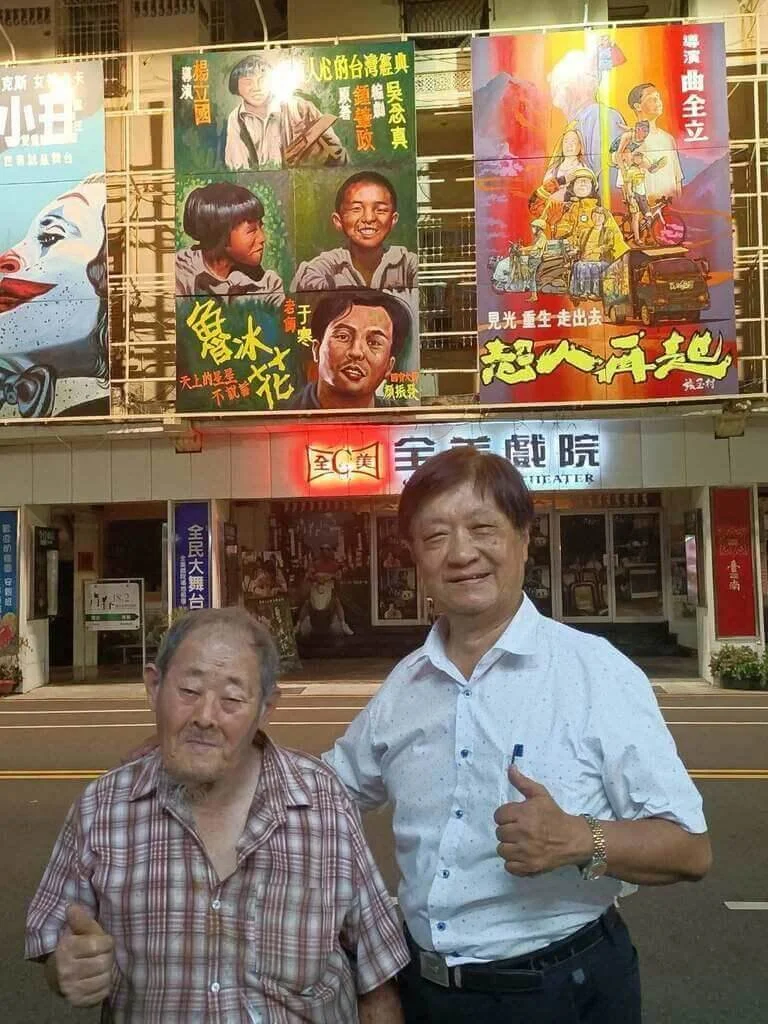
An artist, a family of cinema operators and a poster painter – each connected to film in a different way. Their stories come together in a thoughtfully conceived project, set in a place deeply rooted in Tainan’s identity.
Together, they create a space where personal memories and the city’s cultural history meet.
The inaugural Tainan Art Biennale runs until 1 March 2027.
Further reading
Project page on the 1st Tainan Art Biennale website
“Square” project and trailer on Karolina Breguła’s website
Chuan Mei Theater website: cm-movie.com.tw
Taiwan News:
Taipei Film Festival honors last movie billboard painter (2024)
Documentary about Yan Jhen-fa on Youtube (2019)
Historical photographs from a research project (in Taiwanese) marking the theater’s 70th anniversary, available on the National Culture and Arts Foundation (NCAF) website
Research project “Yan Zhenfa and the Documentation of Hand-Painted Signs” (in Taiwanese), available on the National Culture and Arts Foundation (NCAF) website


Write comment
Write comment
Comments
No Comments