Main content
A vistit to (the original) Hallstatt
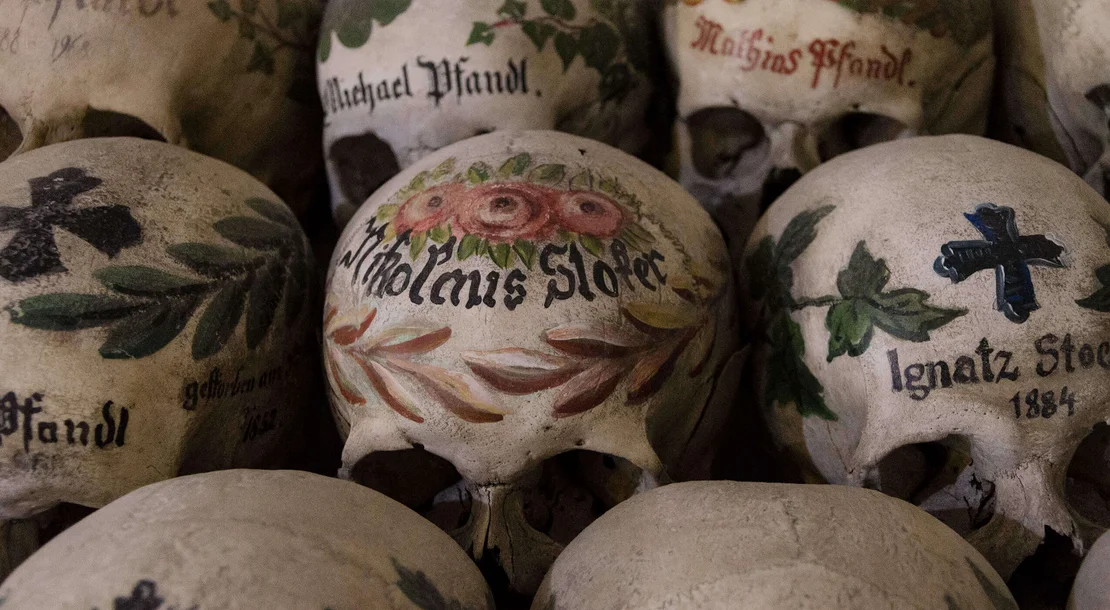
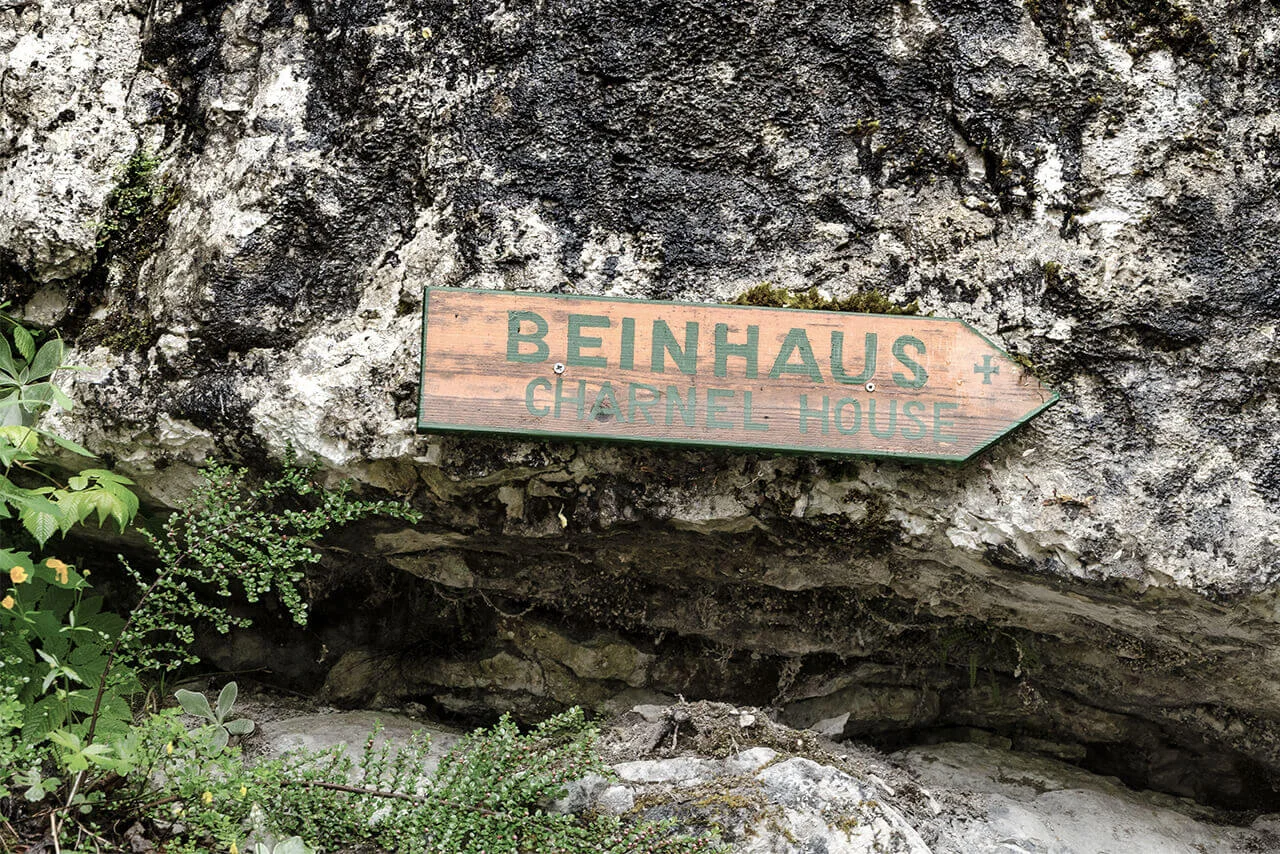
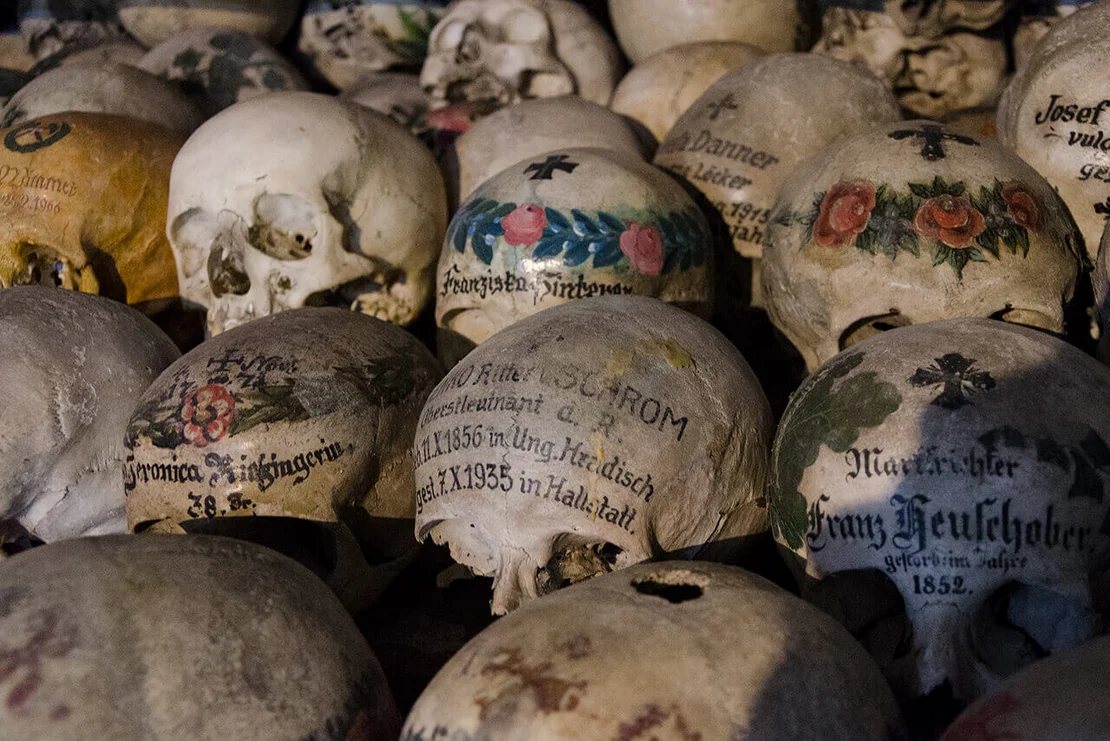
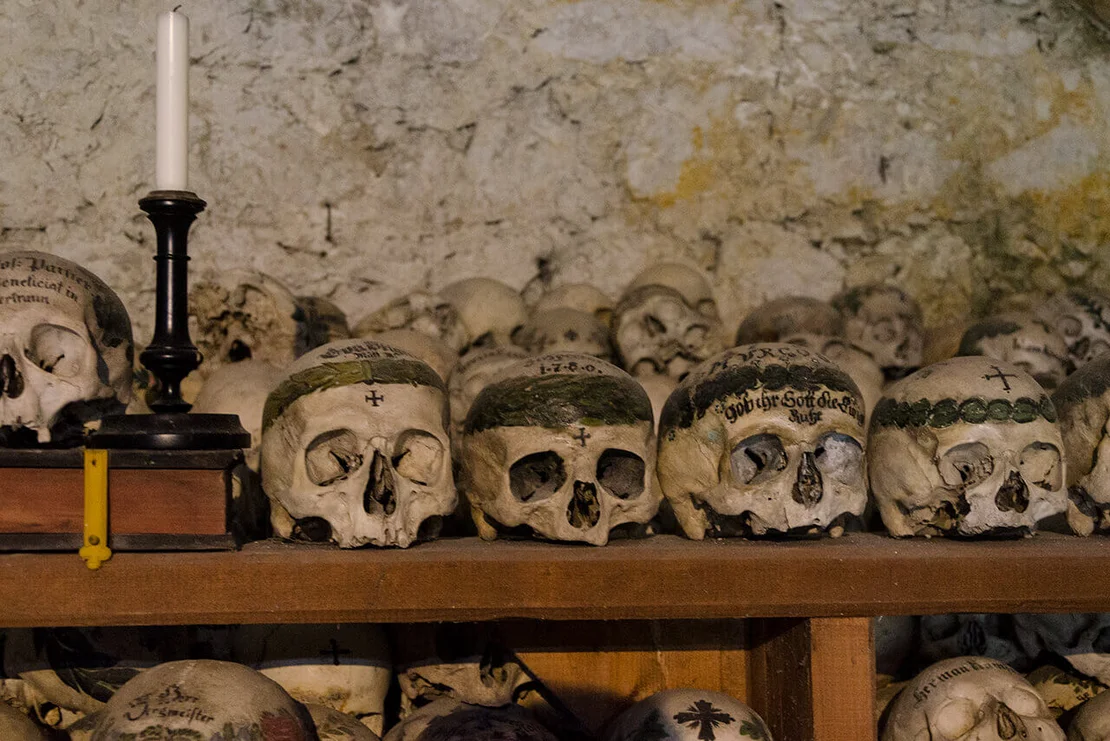
Hand-painted skulls in Hallstatt’s charnel house




In Hallstatt, where settlement space is constrained by the steep mountain slopes, burial grounds are likewise limited.
The small Catholic cemetery surrounding the parish church has long operated under regulations that permit the reopening of graves when space becomes scarce. In such cases, the remains are exhumed and transferred to the nearby charnel house, where a secondary burial takes place.
As part of this process, the bones are carefully cleaned and bleached.
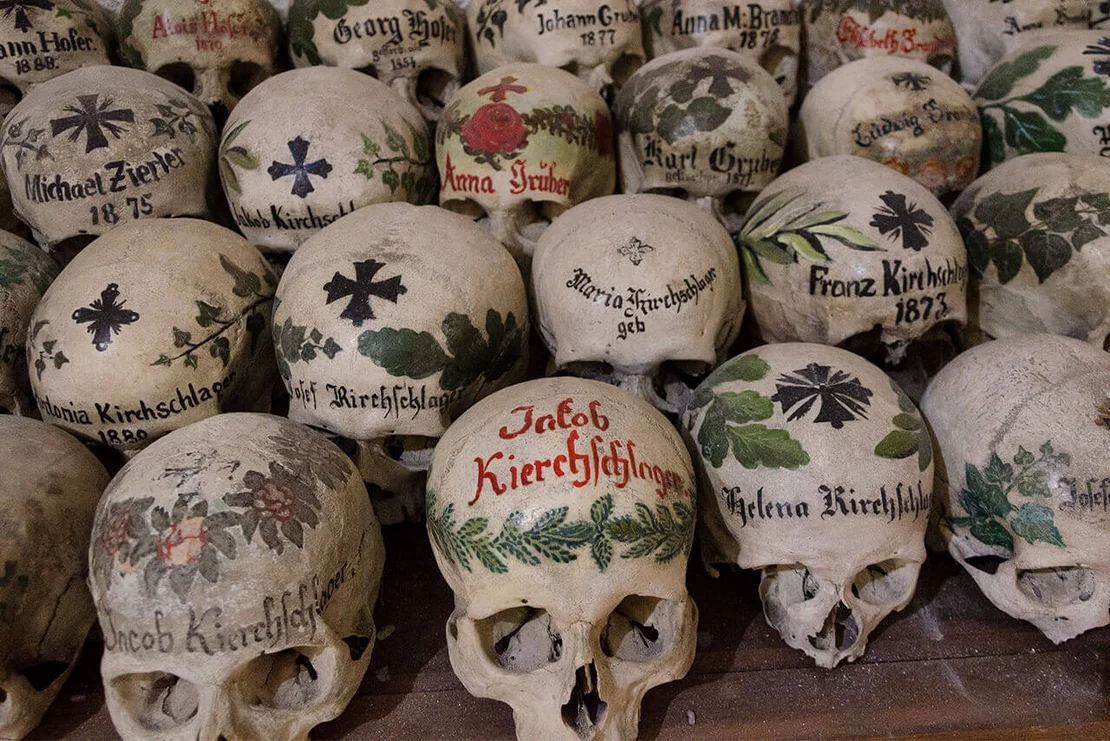
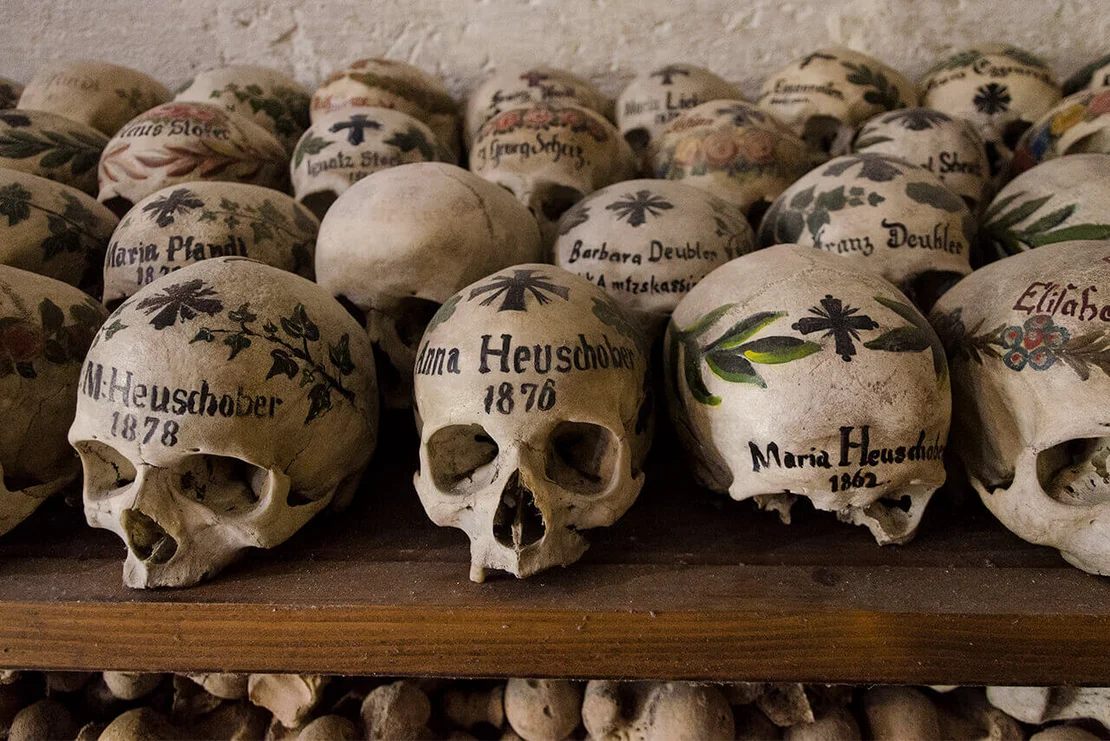
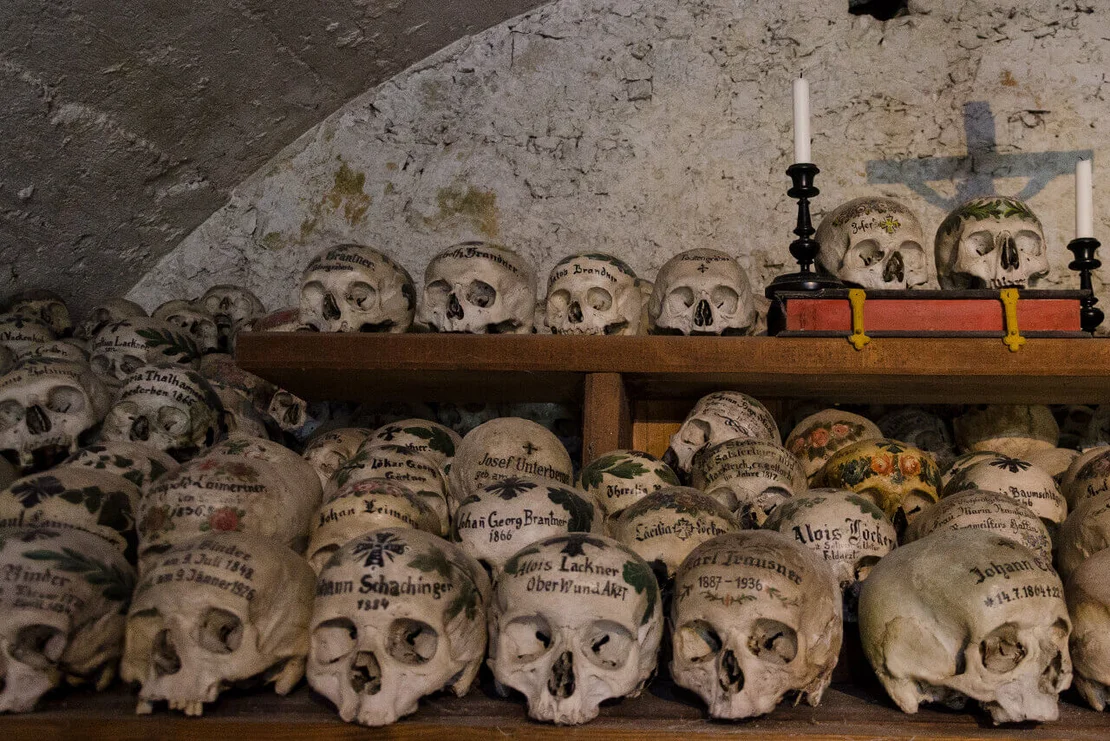
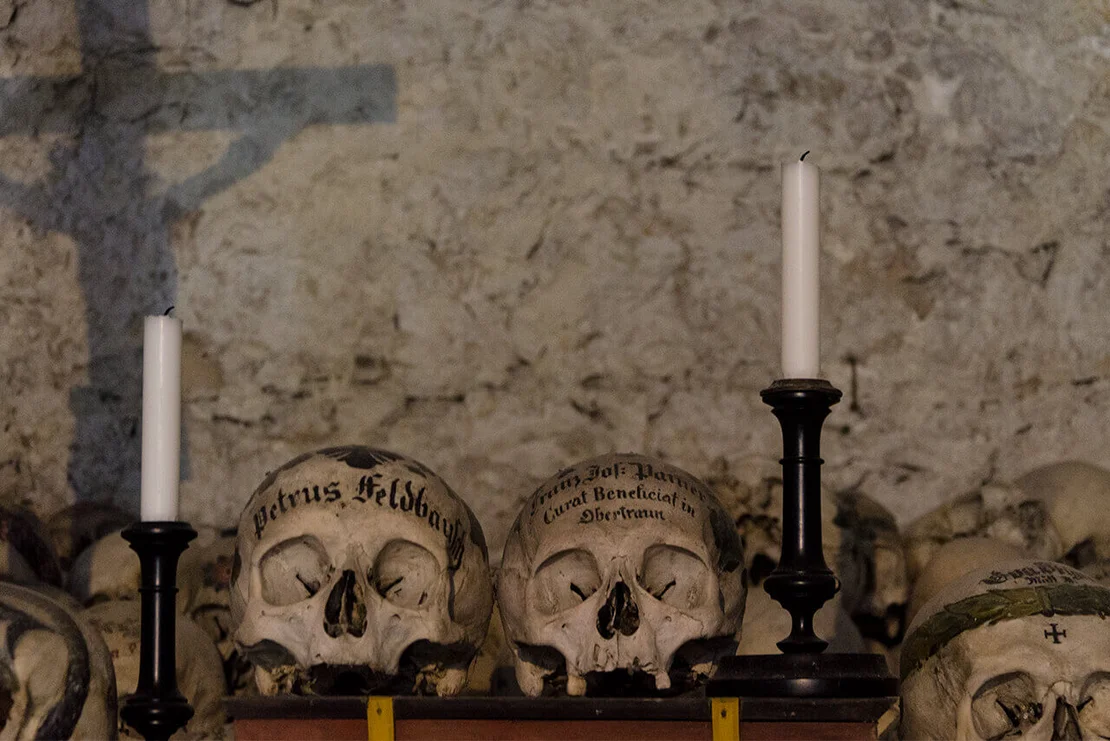
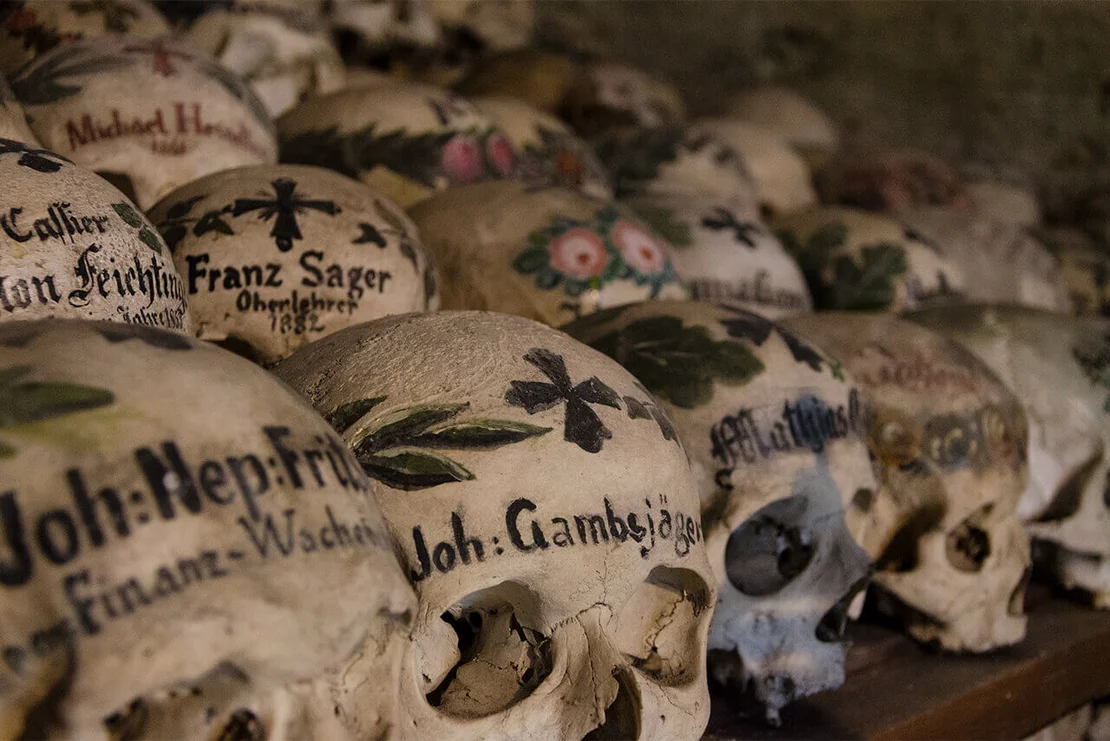
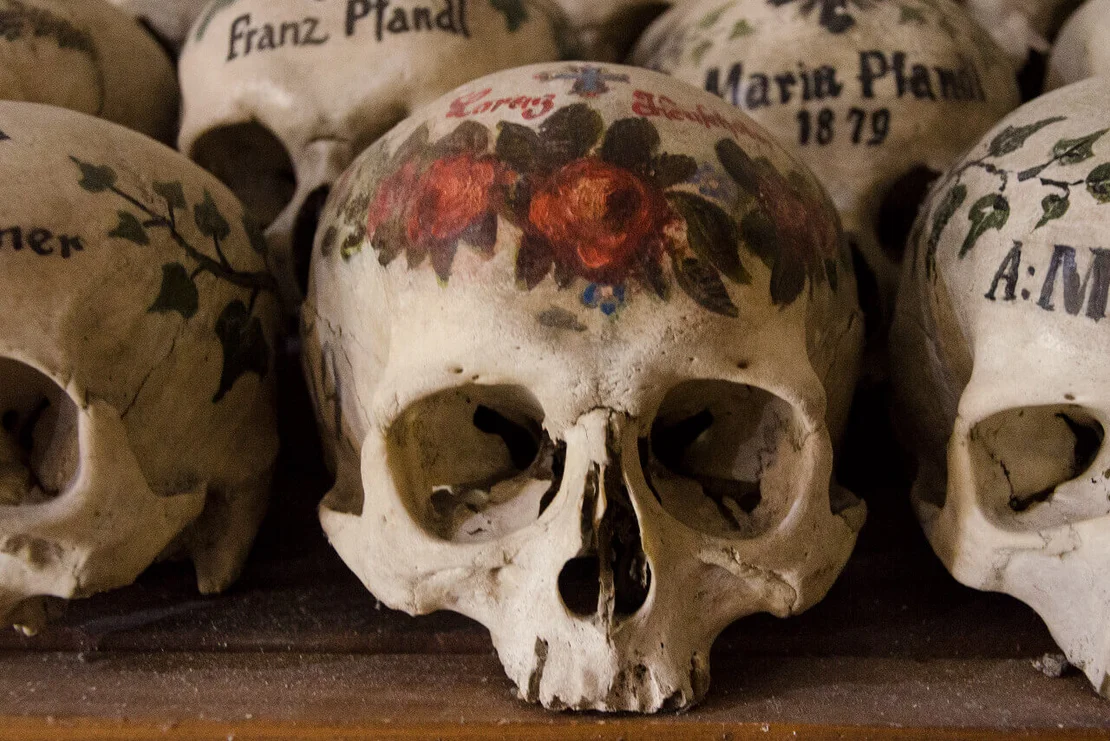
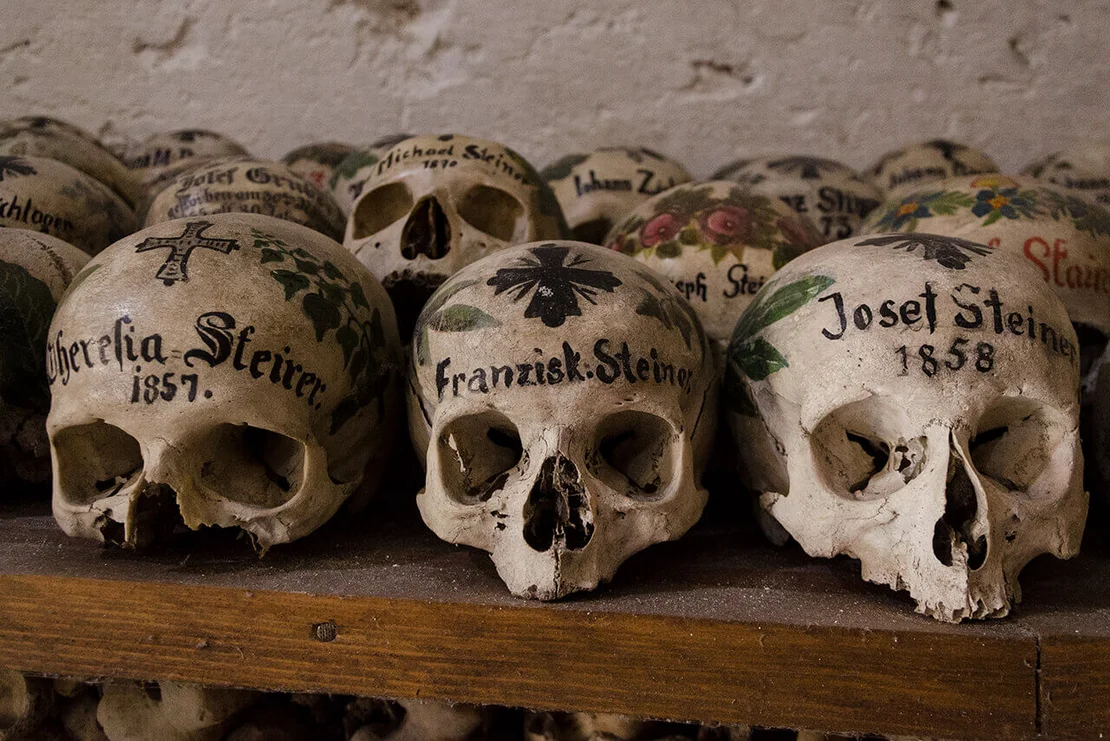
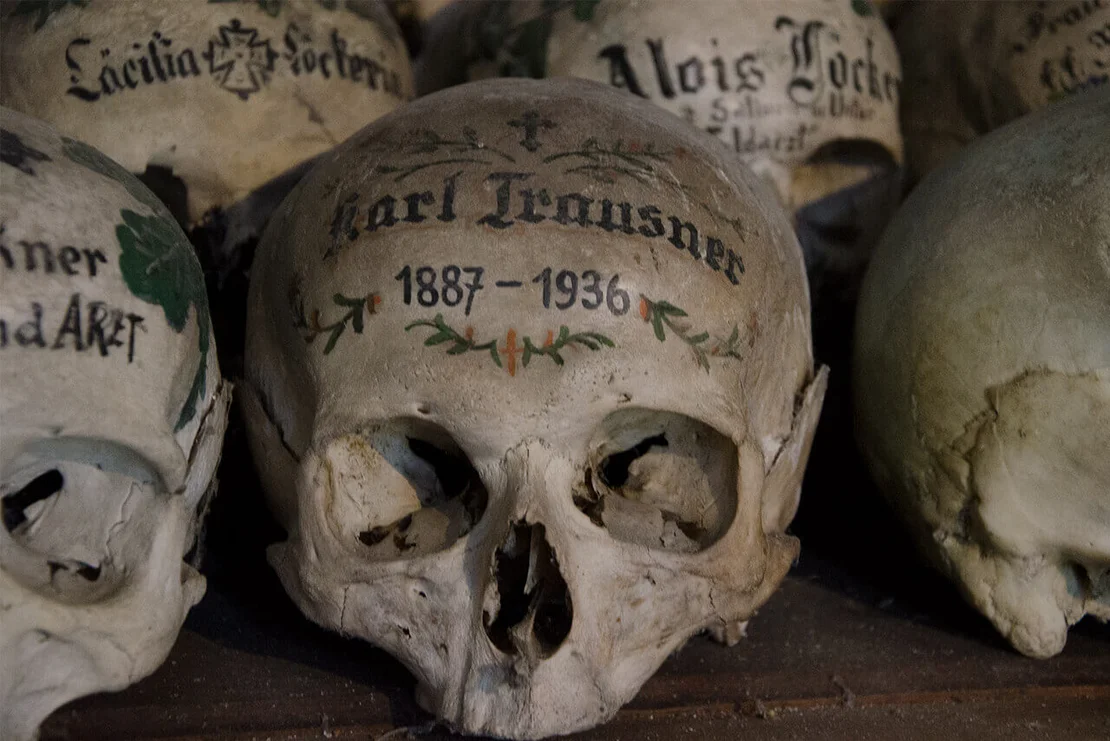
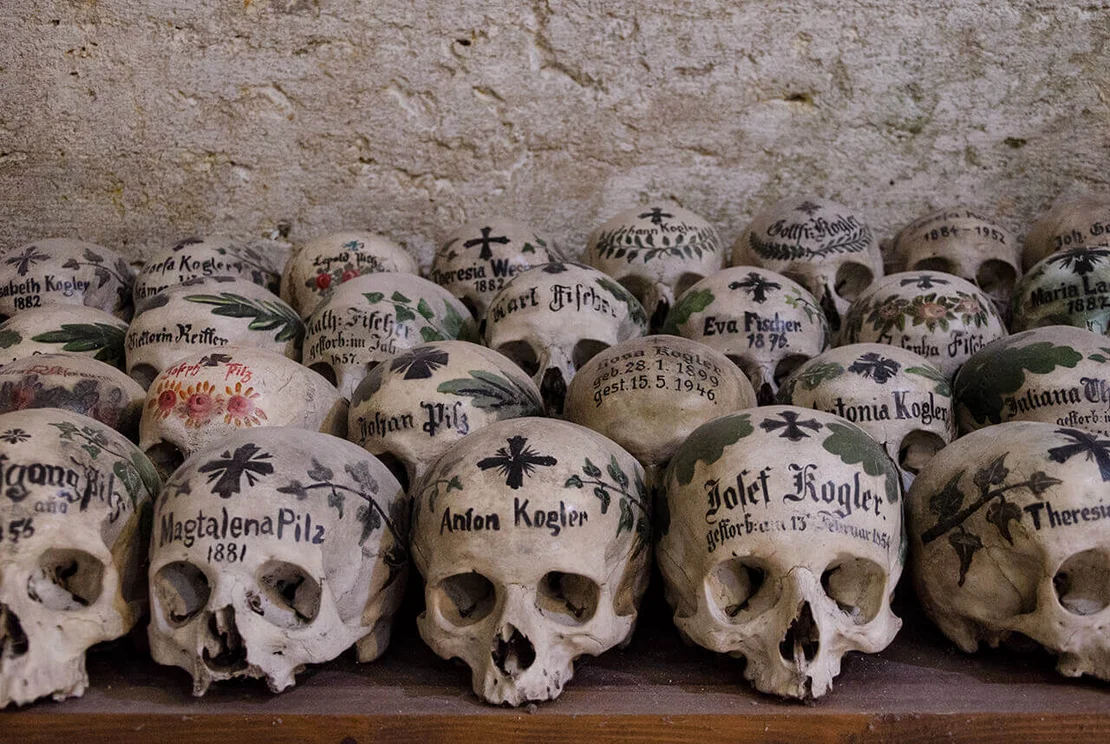
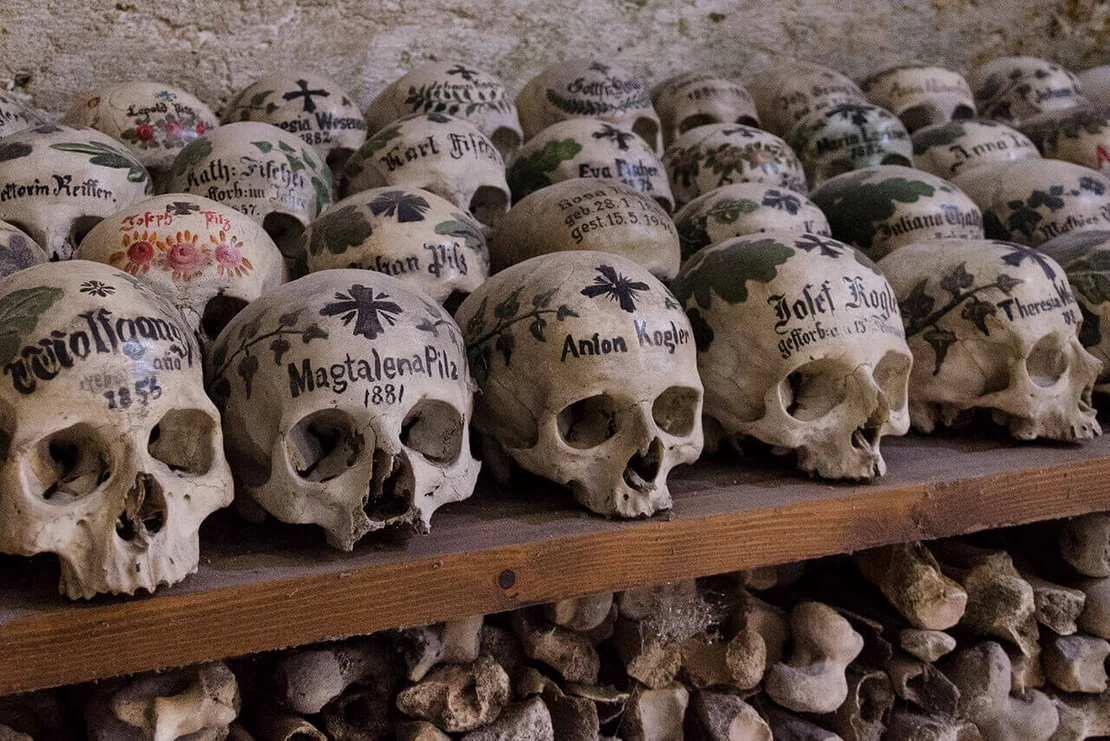
The skulls, in particular, are then ornamented with painted decoration and inscribed with the names and dates of the deceased, thereby preserving individual identity beyond the grave.
Although this practice has largely ceased in recent decades, the charnel house today contains some 610 painted skulls, arranged alongside the remains of successive generations.
This collection constitutes not only the largest assemblage of human skulls in Europe, but also a unique example of painted funerary artefacts, unparalleled elsewhere in the world.

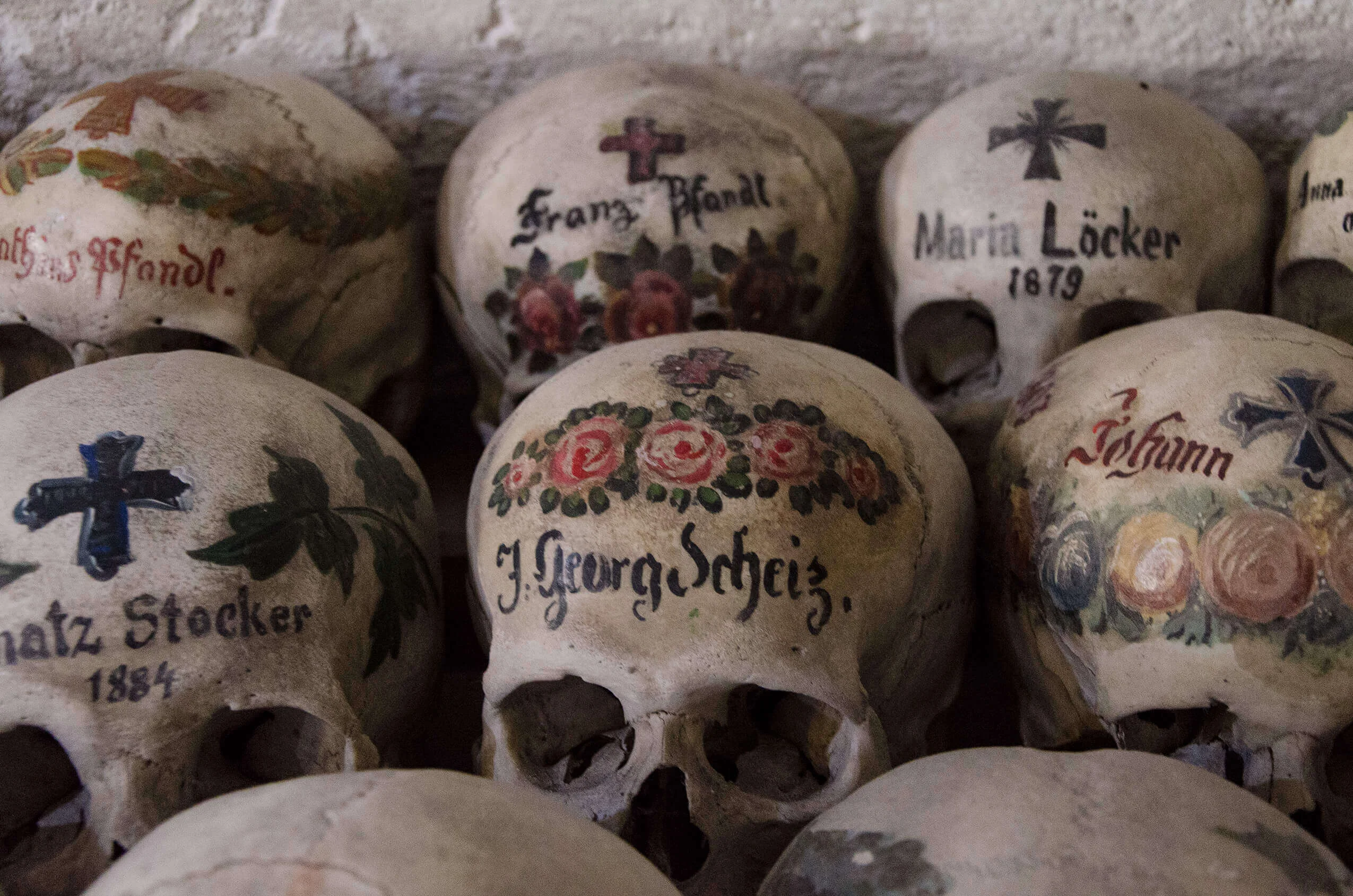
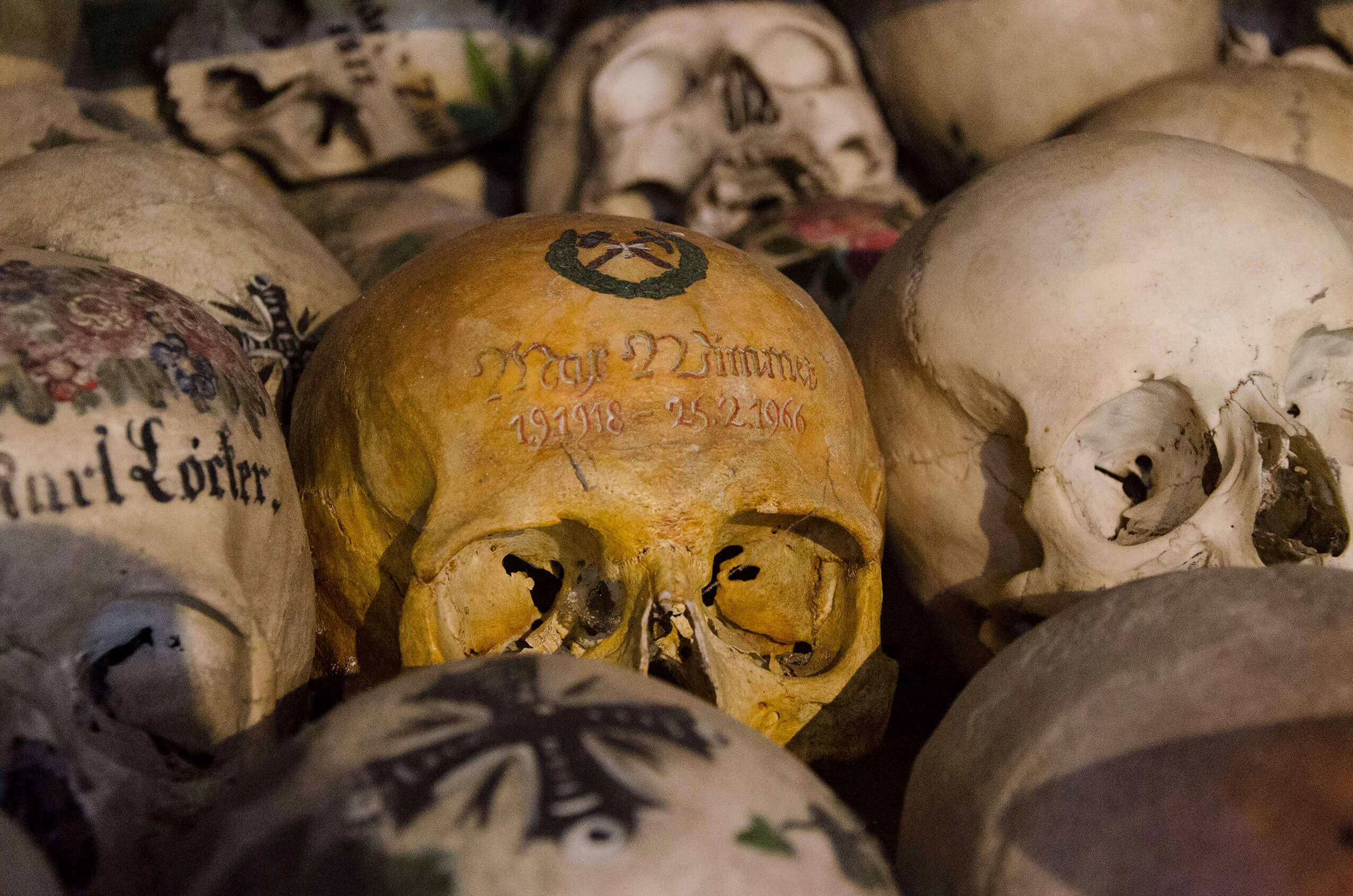
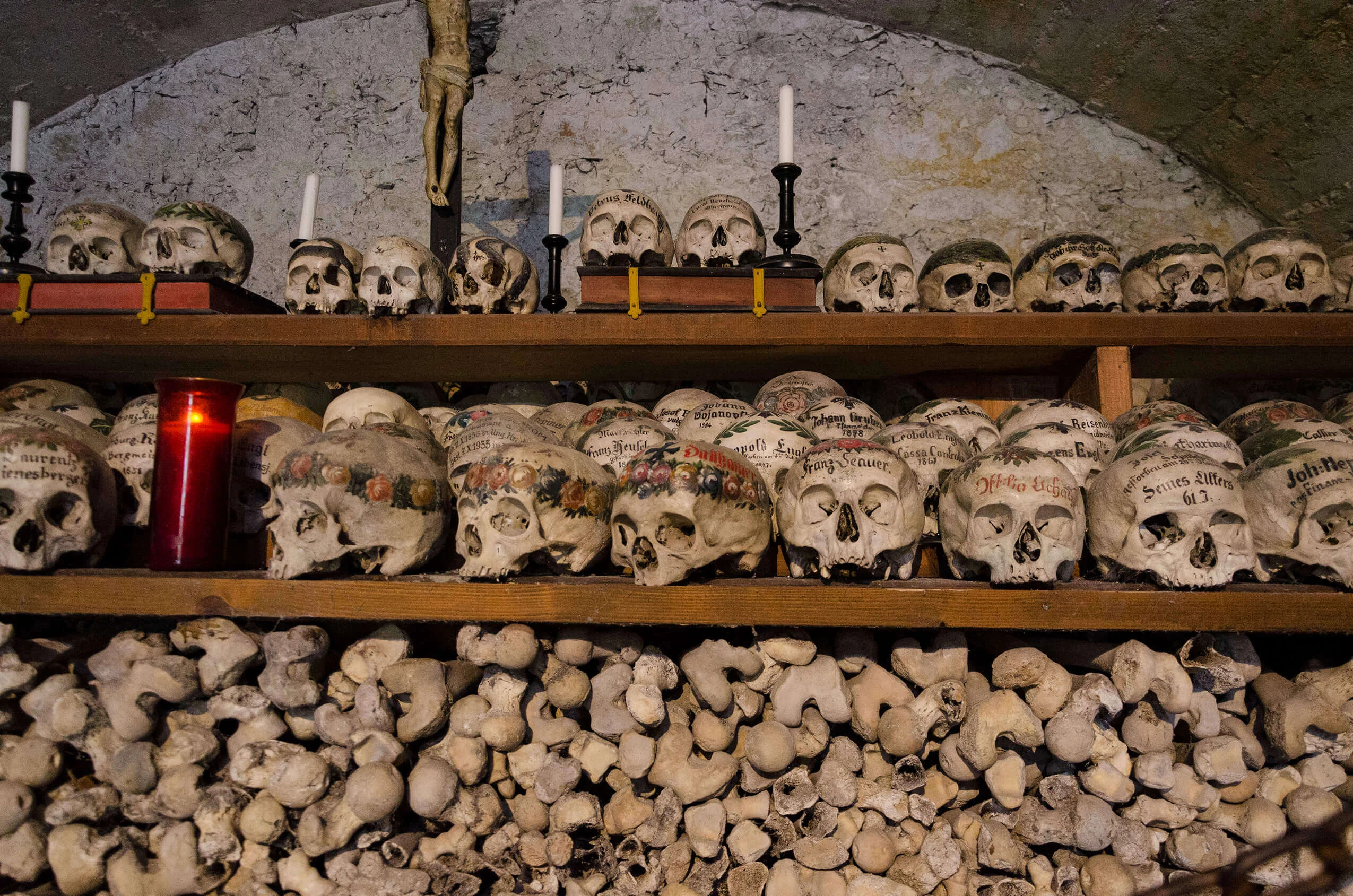
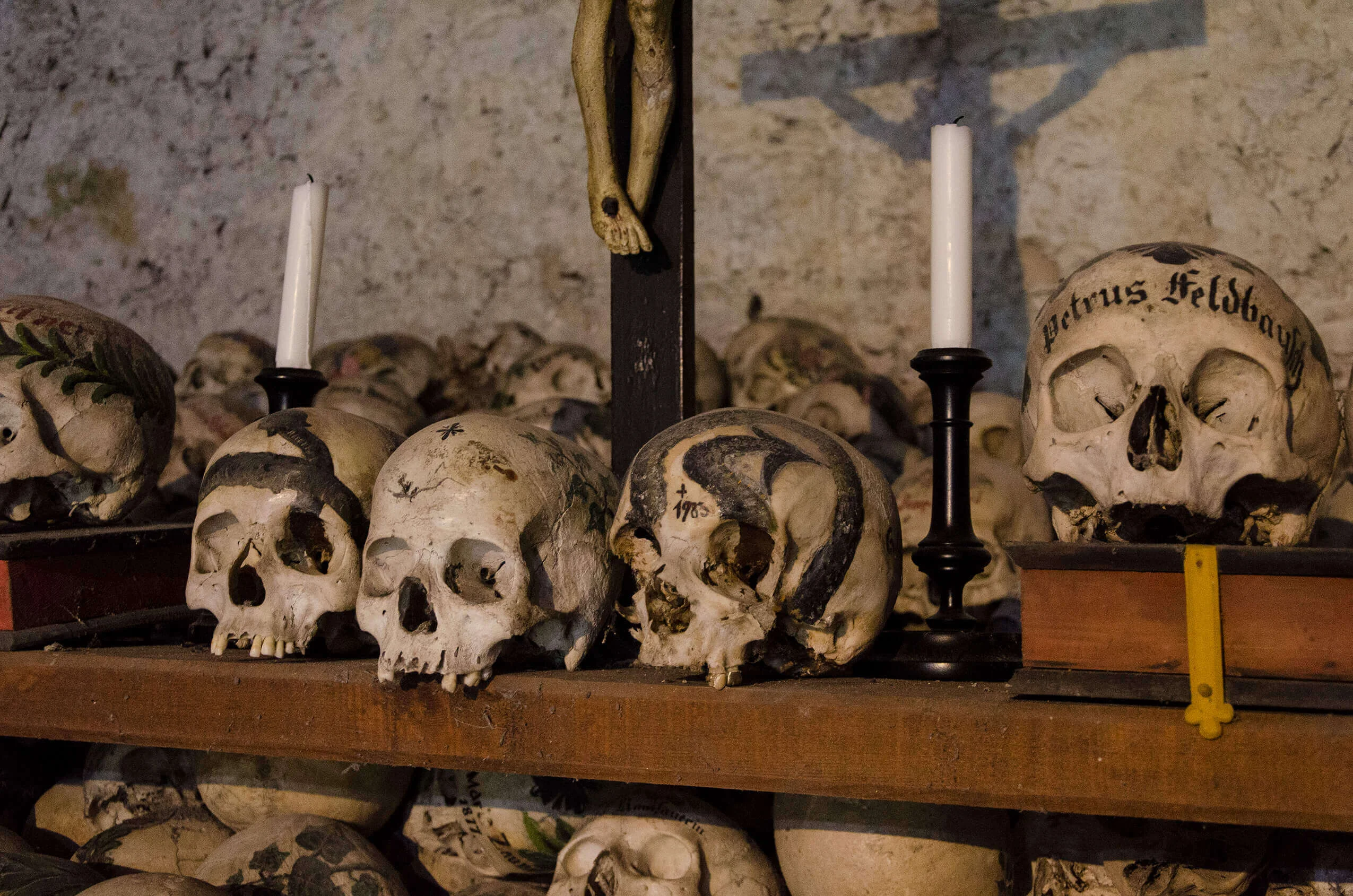
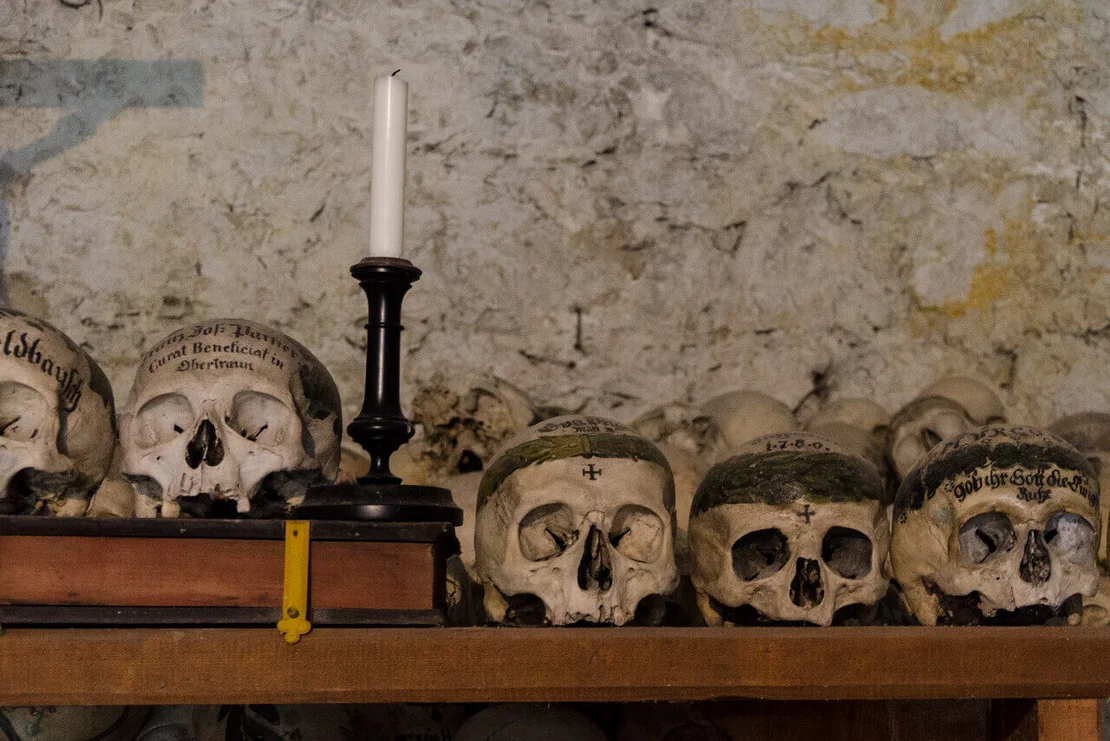
Most of the skulls in Hallstatt were painted between 1780 and 1900, with their decoration reflecting the prevailing aesthetic conventions of each period. Earlier examples tend to feature simple wreaths, while later styles introduced narrower garlands, coloured crosses with outlined forms, and increasingly elaborate motifs. Floral ornaments across the forehead—followed in later years by green foliage such as oak, ivy, or oleander on the temples—were particularly characteristic, often accompanied by a black cross at the centre.
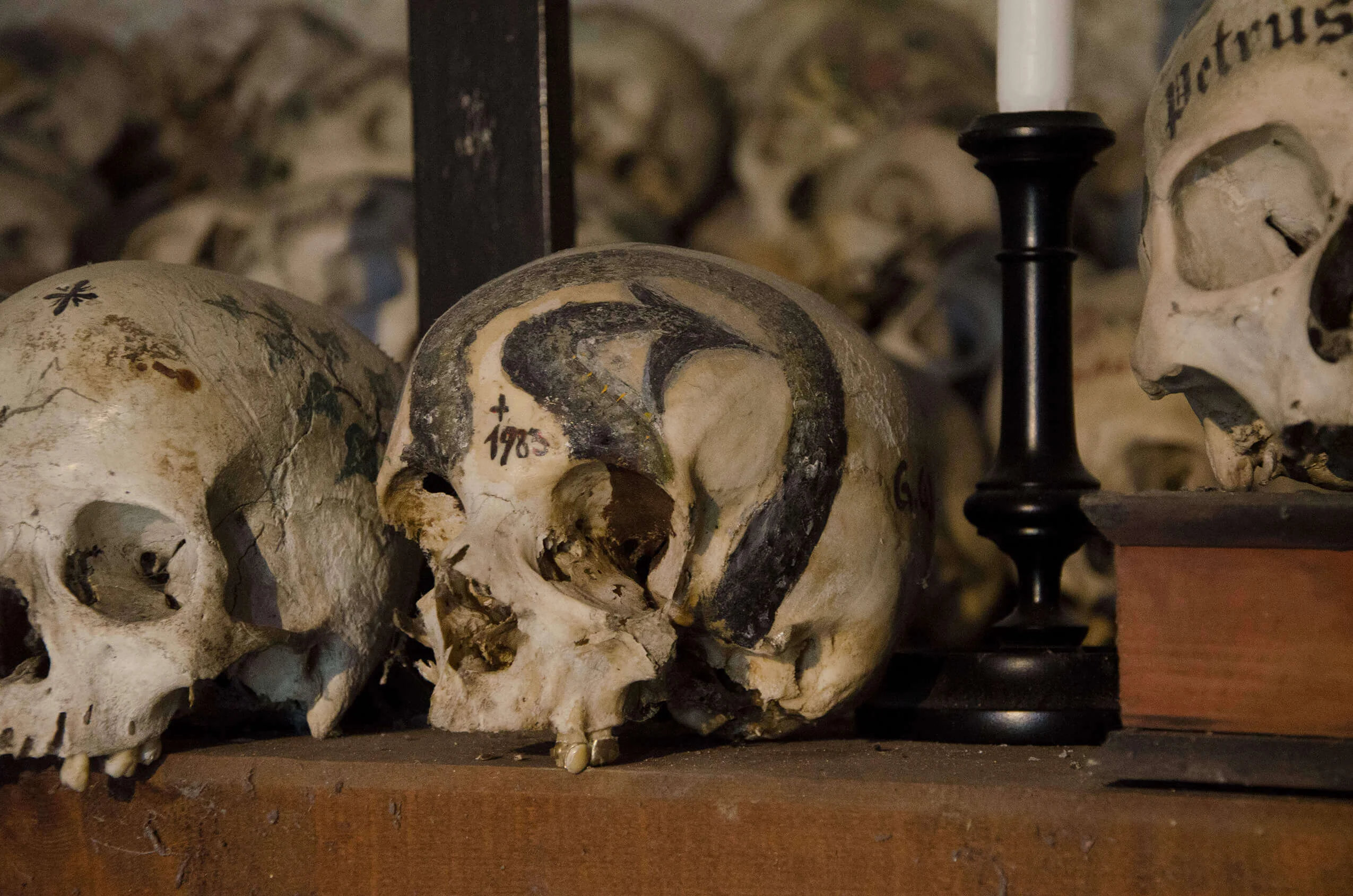
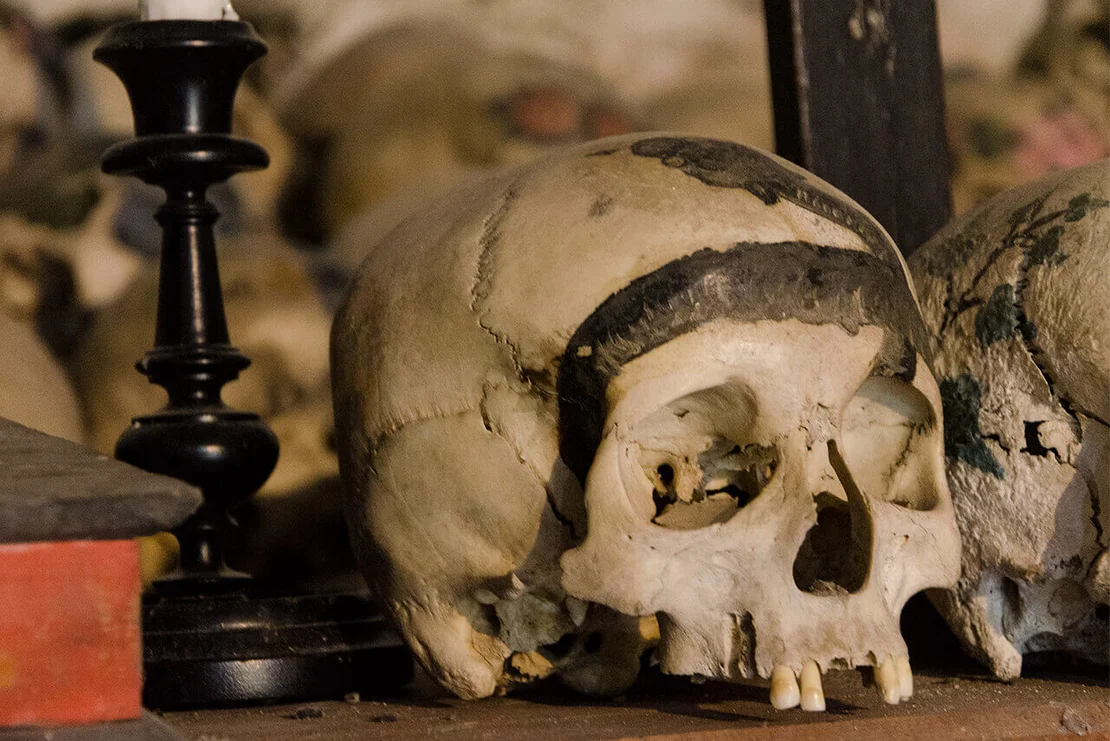
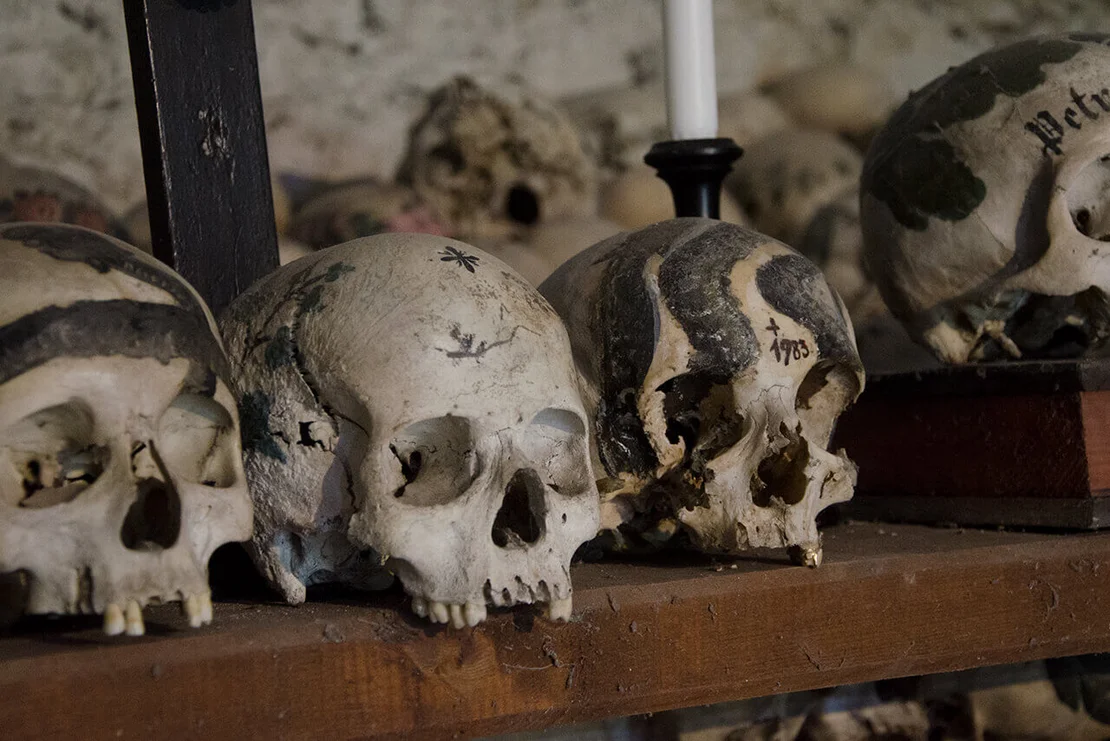
The painted inscriptions typically record the full name of the deceased above their dates of birth and death, occasionally including a professional title, such as senior wound doctor or cassa controller. A more recent example from 1983 features a contemporary serpent motif, illustrating the continuity of the tradition into modern times. It also offers a glimpse into the integrity of the local community: gold crowns and dental inlays remain plainly visible, left unaltered as part of the individual’s enduring identity.


Write comment
Write comment
Comments
No Comments