Main content
Chinatown on the Eve of the Pandemic
Chinese New Year
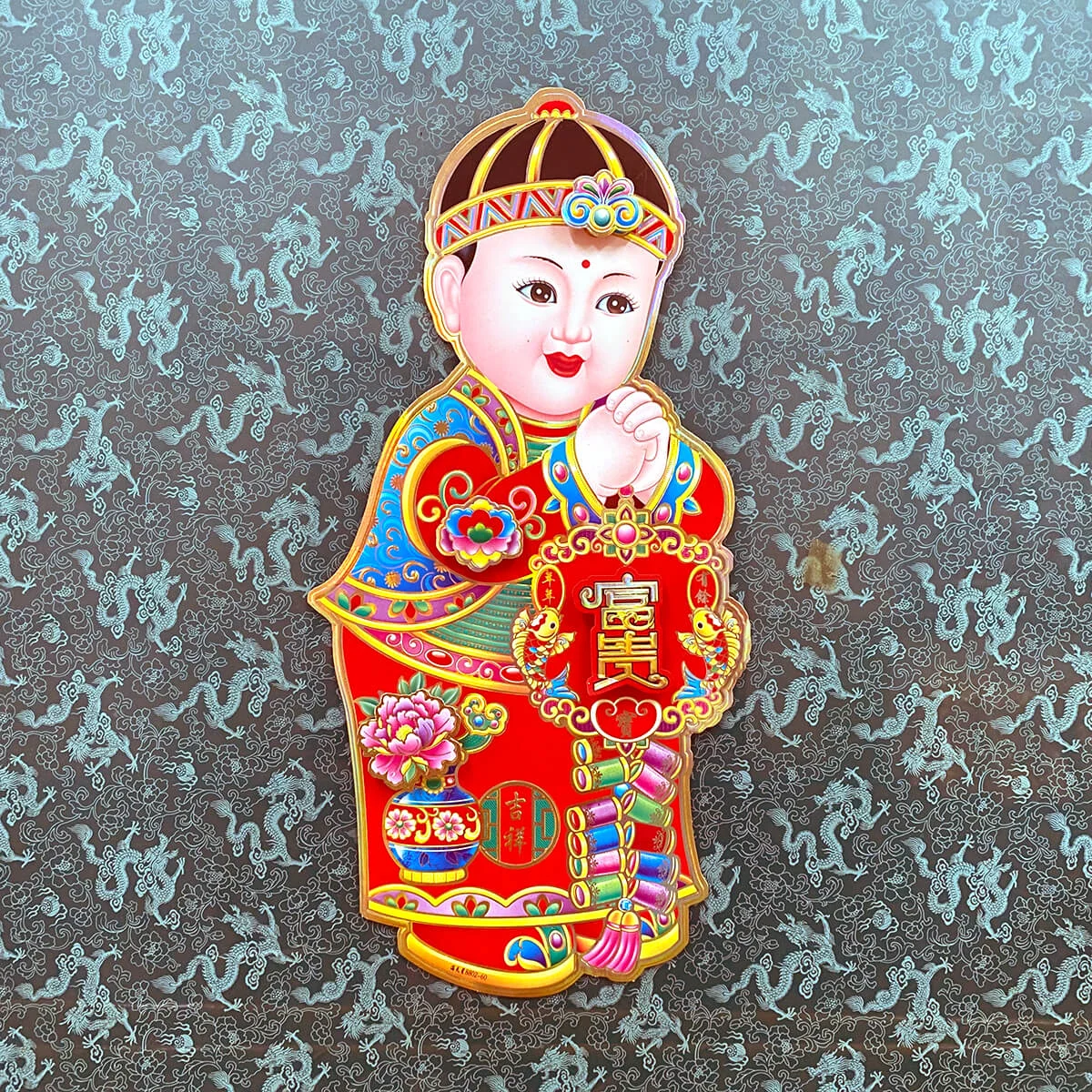

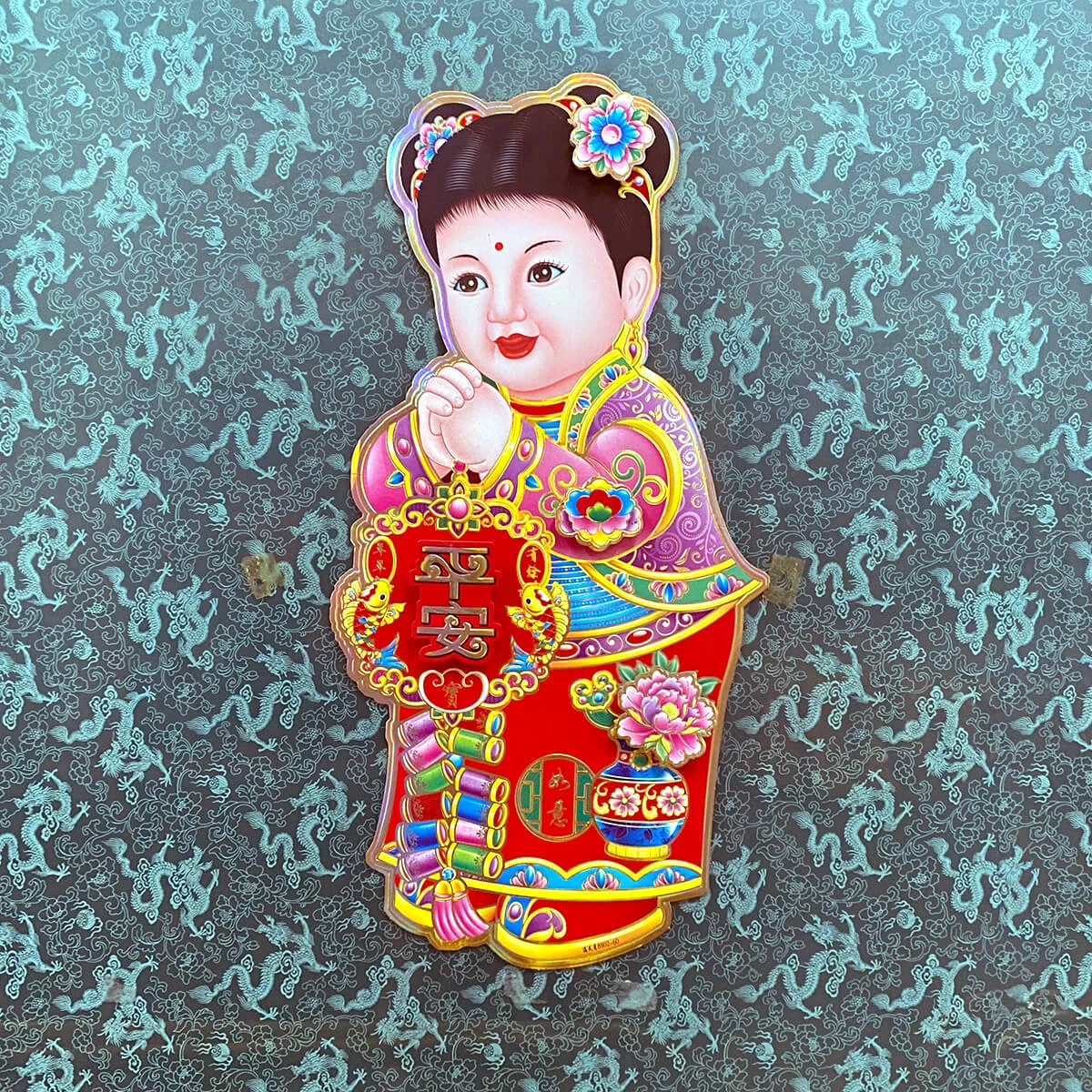
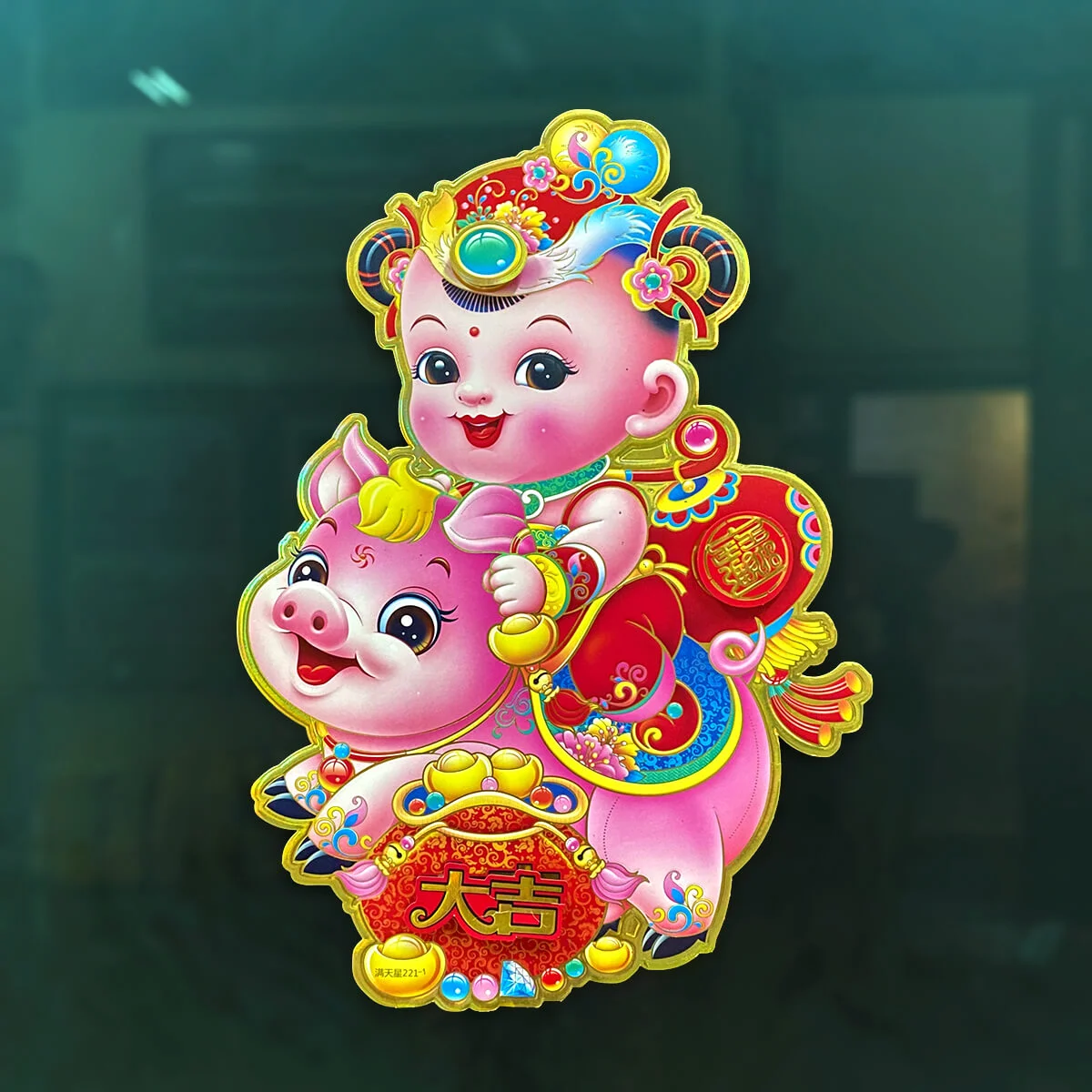
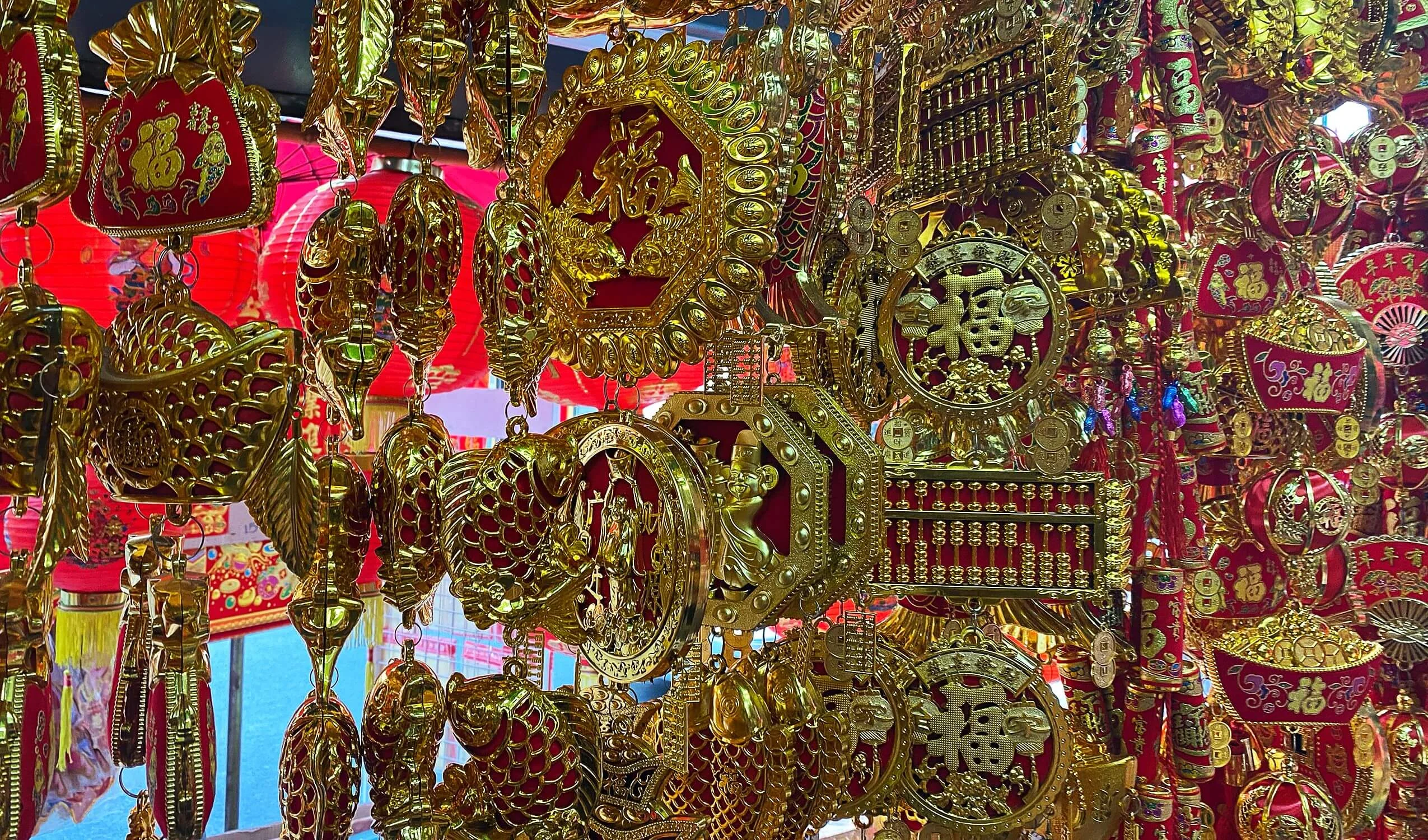
Orgies in Red and Gold
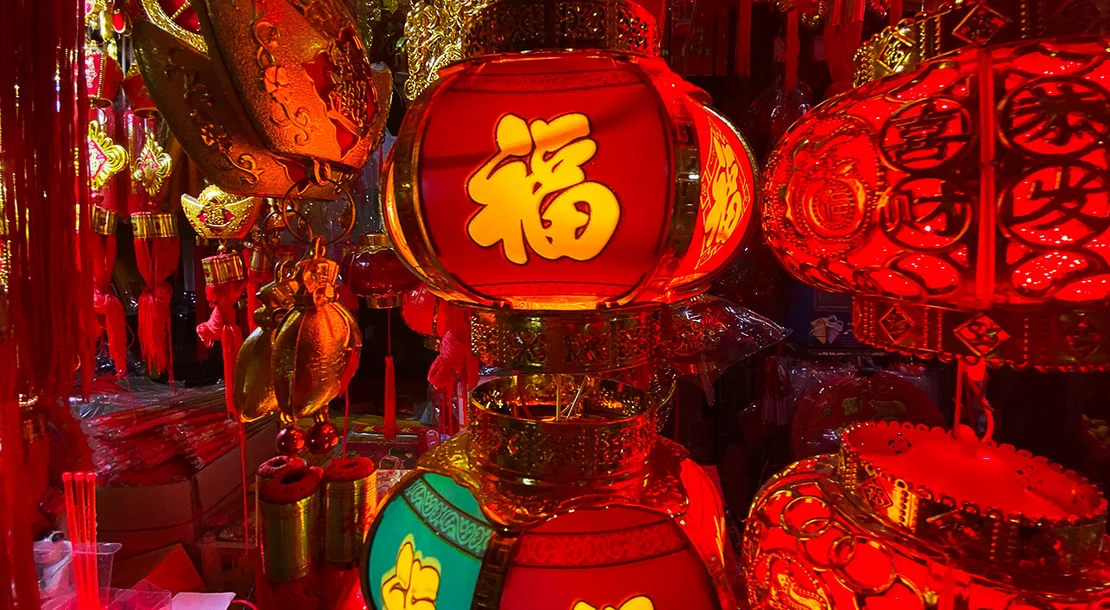
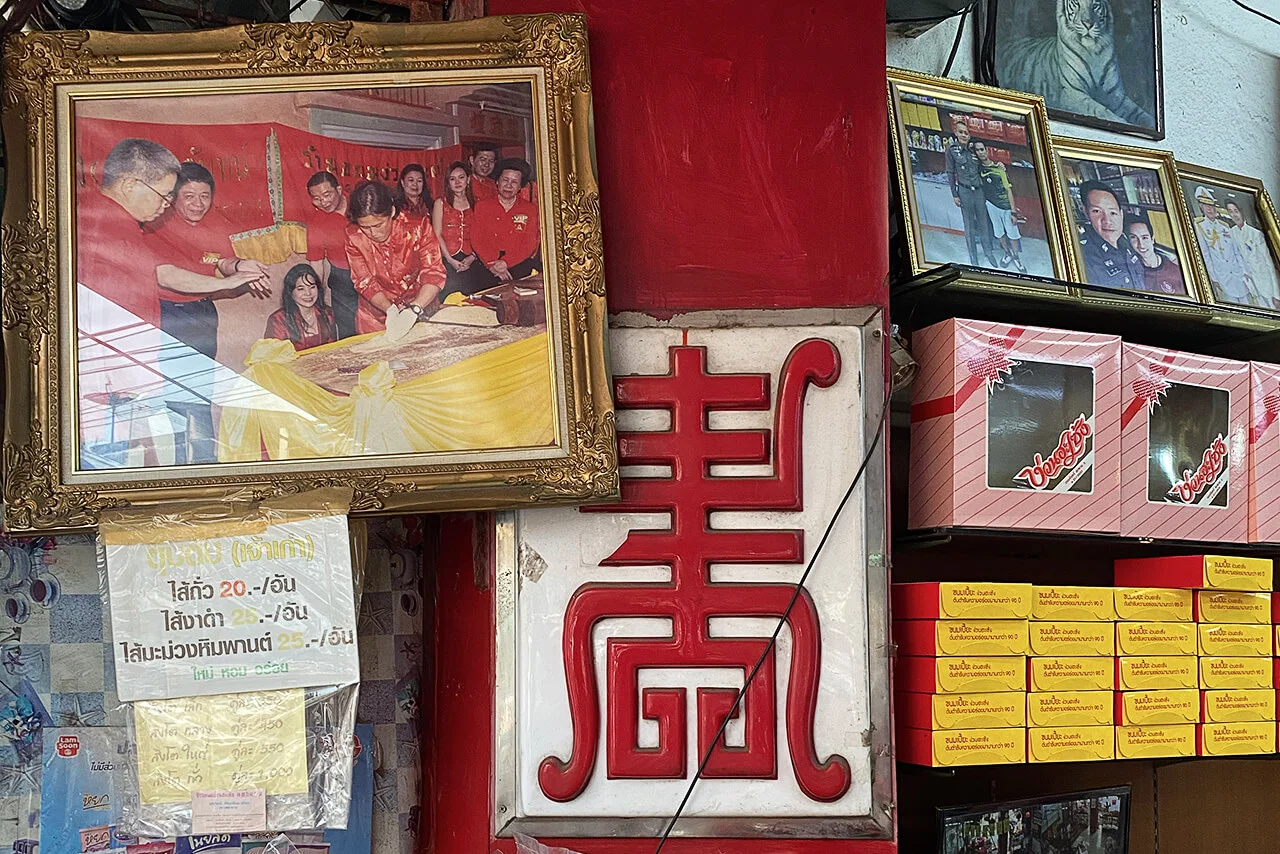
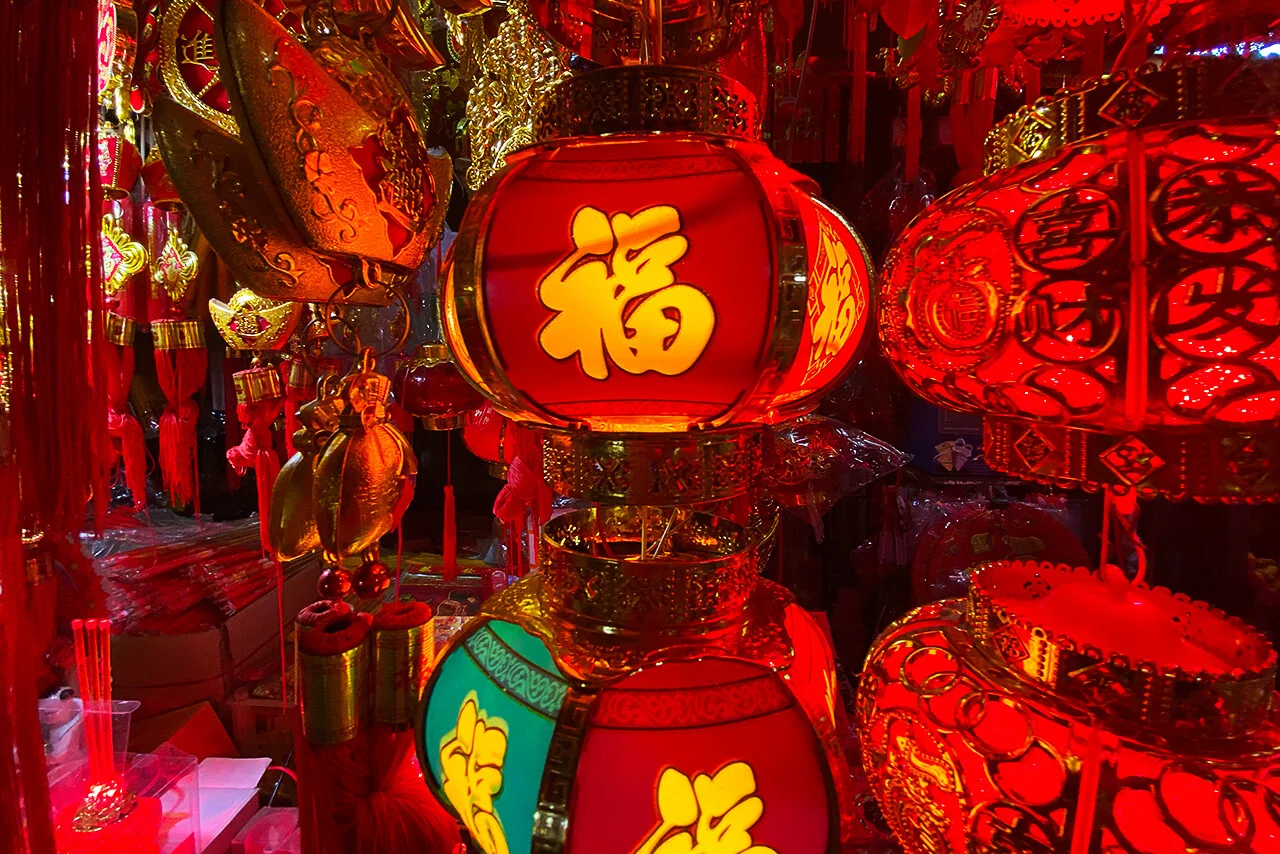
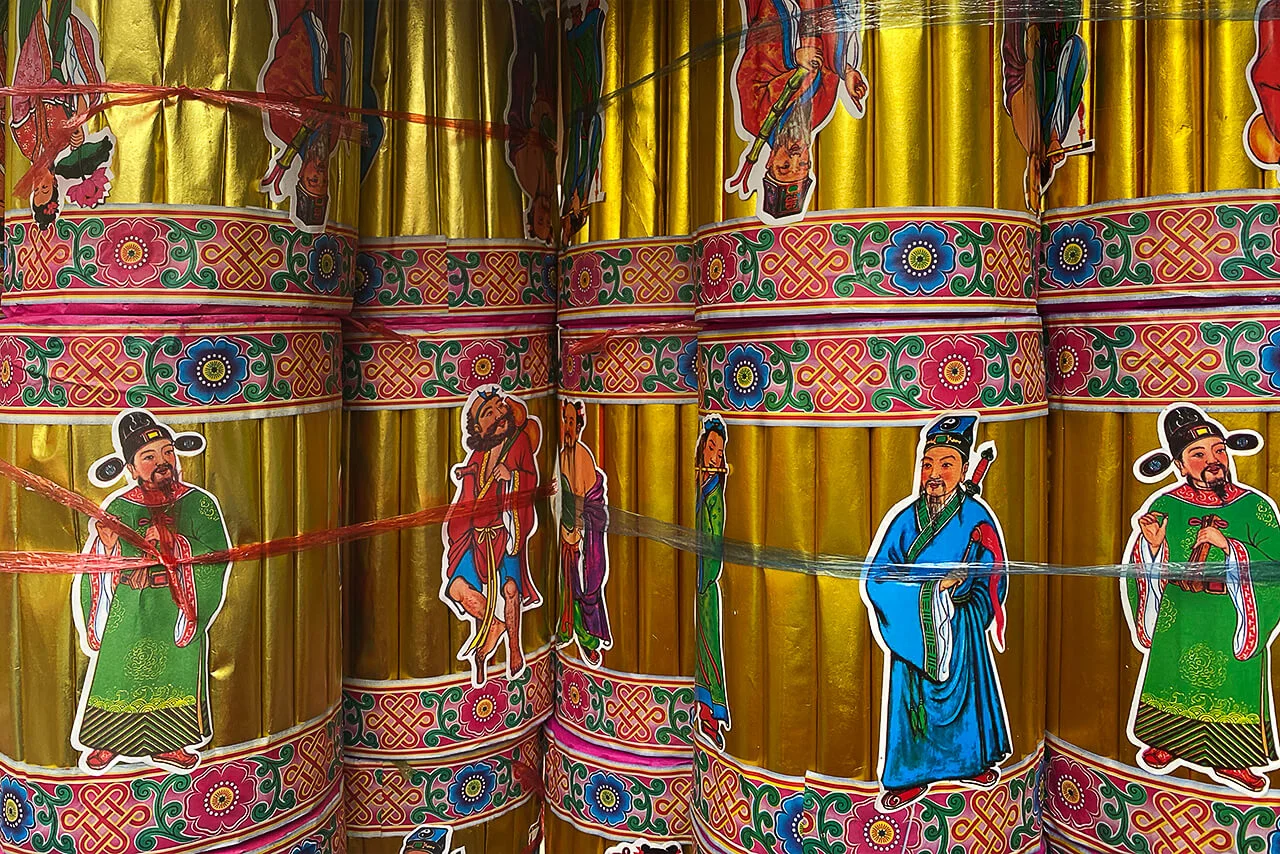
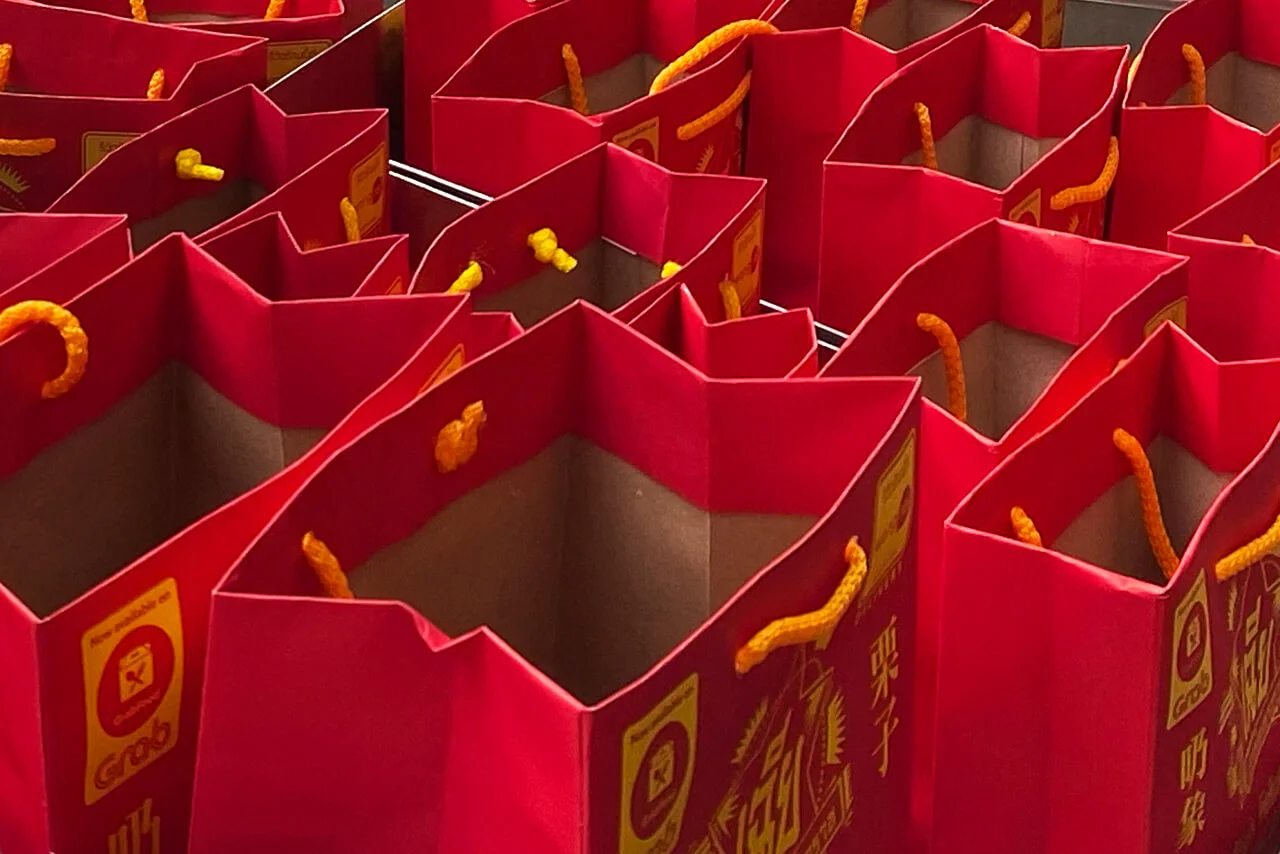
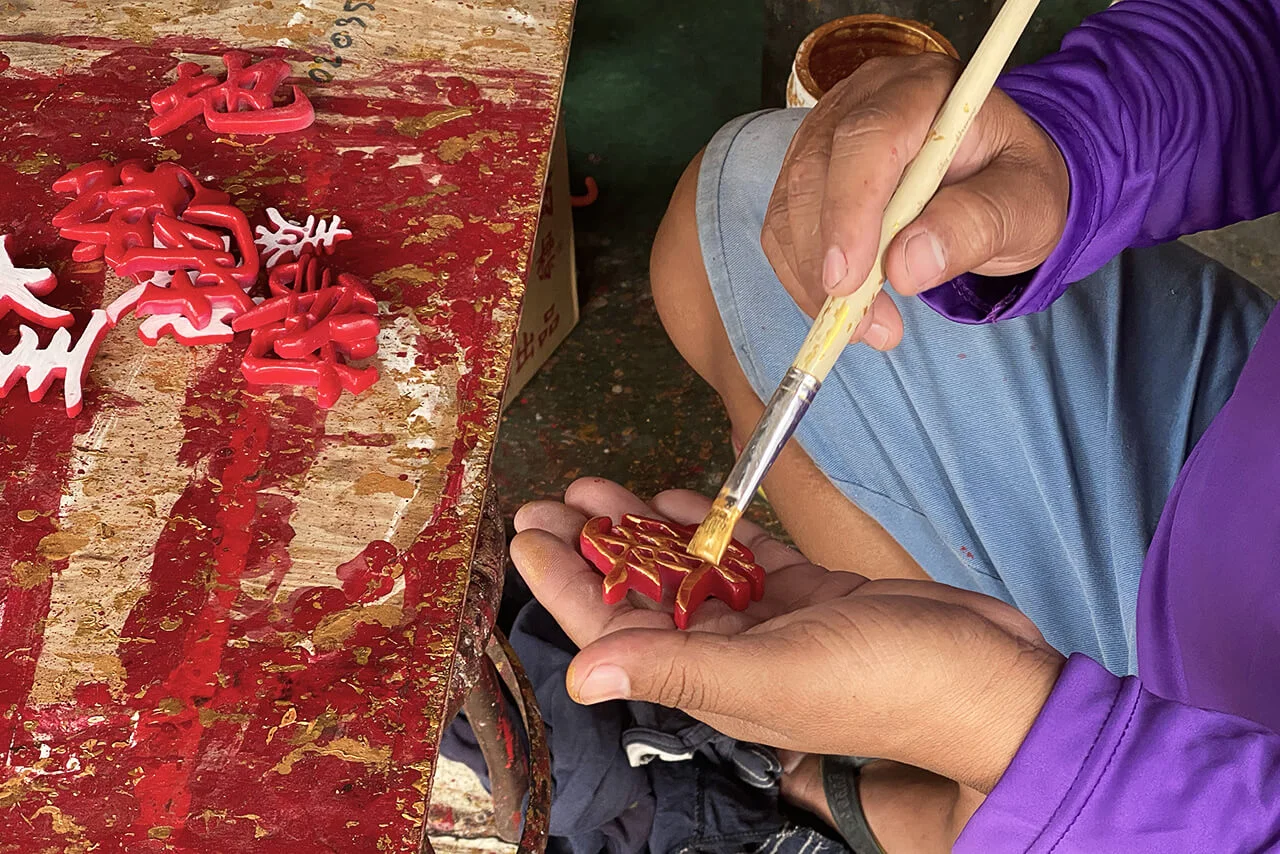
Lanterns, bags, garments, paper decorations—red is omnipresent during the Chinese New Year, a colour that embodies joy, prosperity, and good fortune. Monetary gifts, too, are traditionally presented in red envelopes, an age-old custom that is equally widespread in Thailand. In recent years, even the messaging platform WeChat has adopted the practice, introducing “digital red envelopes” for the virtual exchange of money.
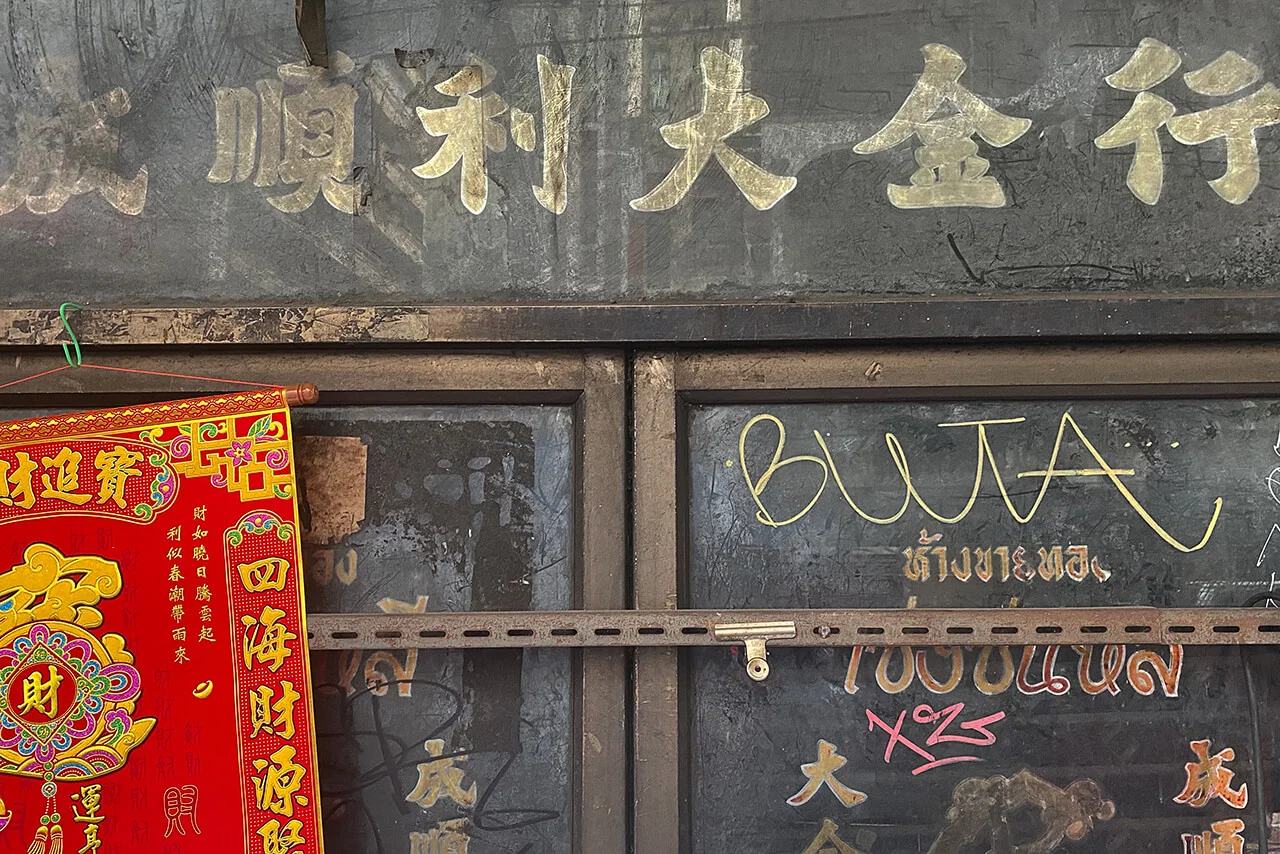
Yellow, by contrast, has long been regarded as the most prestigious of colours in Chinese culture. In imperial times, it was reserved exclusively for the emperor, adorning palaces, altars, and temples. Today, however, the colour bears a more ambivalent connotation: it has increasingly come to be associated with prostitution and pornography. Explicit publications are referred to as “yellow films” or “yellow booklets,” while women accused of prostitution have, at times, been dressed in yellow garments and publicly paraded.
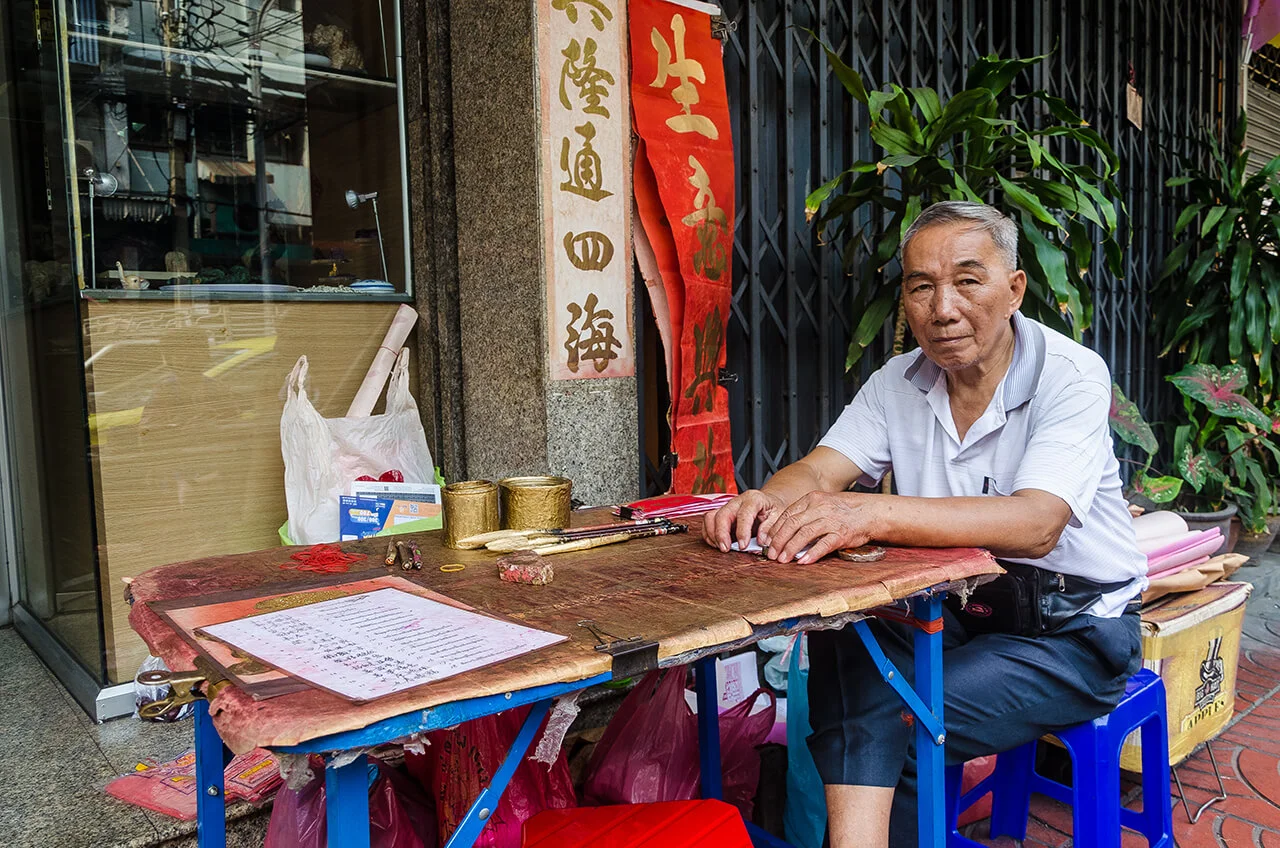
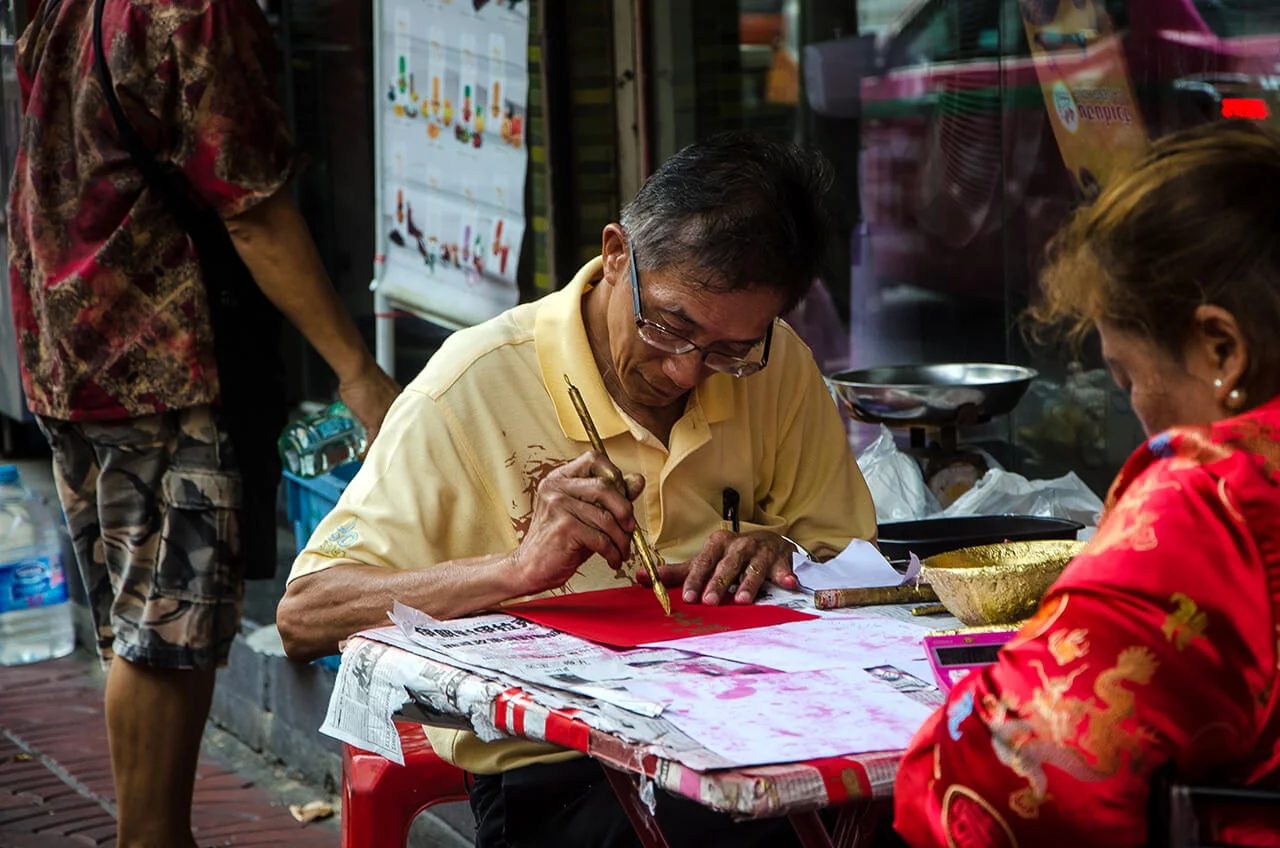
High Season for Itinerant Calligraphers
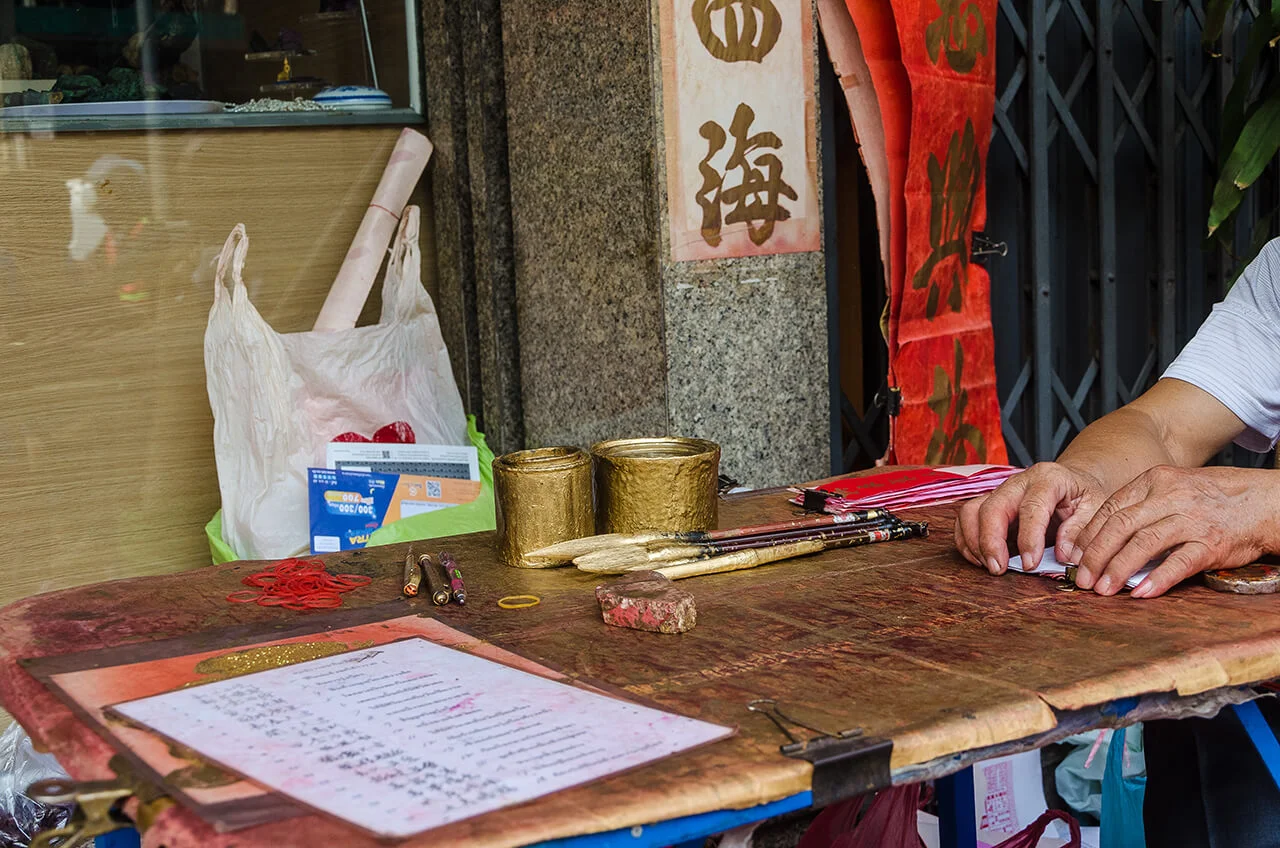
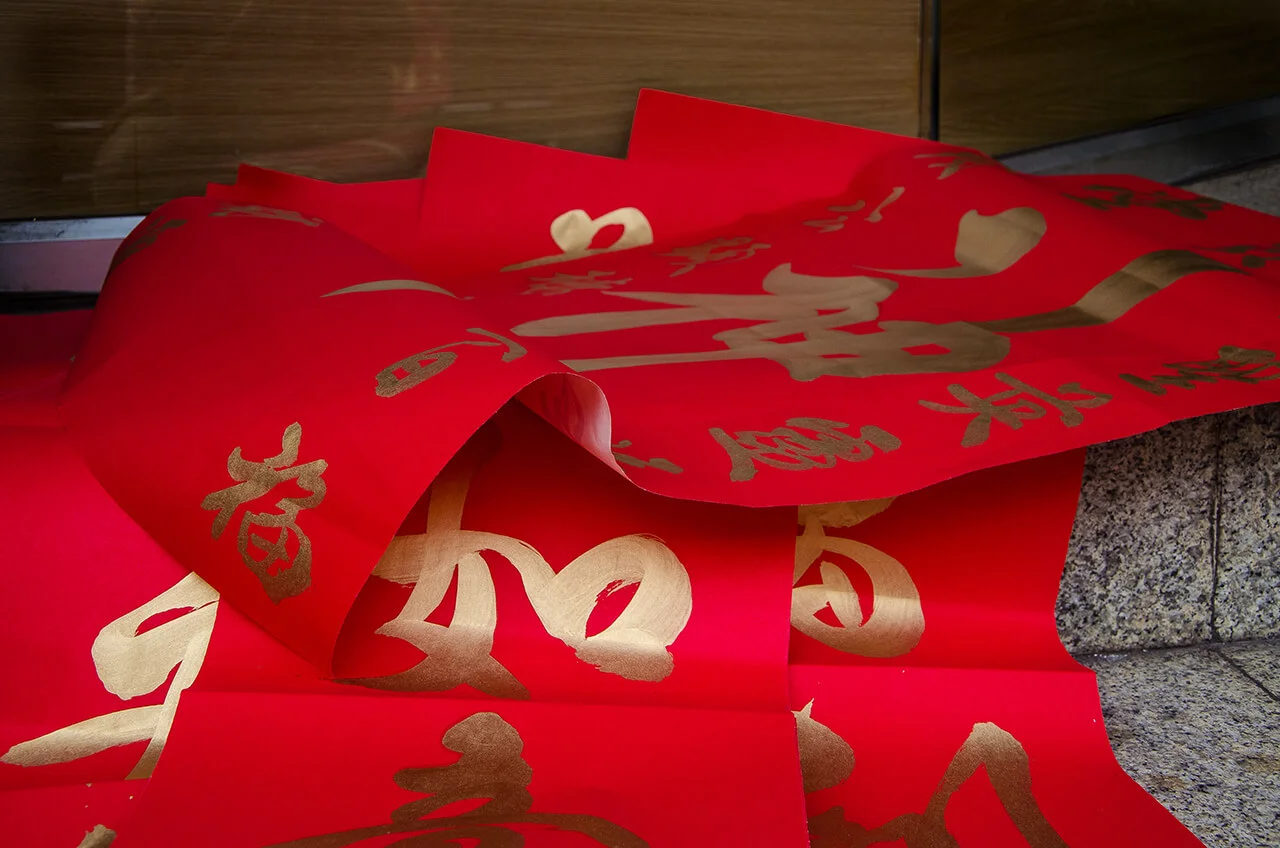
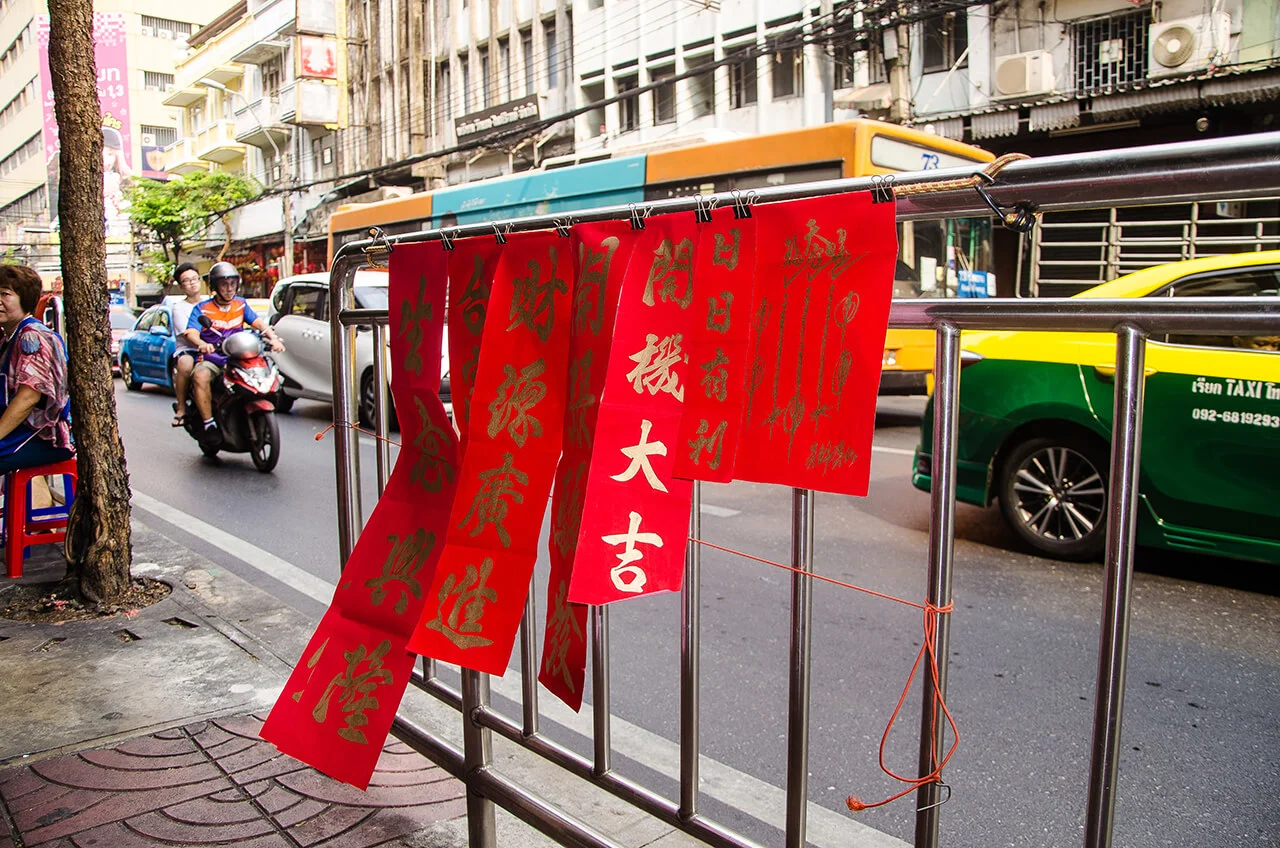
They offer their services directly along the roadside, composing for a modest fee the paired inscriptions that are affixed symmetrically to the entrance doors of homes. These poetic banners draw upon a tradition that spans more than a thousand years.
The number of characters on each strip is carefully balanced, while format and rhythm are either identical or deliberately complementary. Some calligraphers go further still, striving to employ alliteration or even shared radicals across corresponding words—an added layer of refinement within an already exacting art.
Hell Money
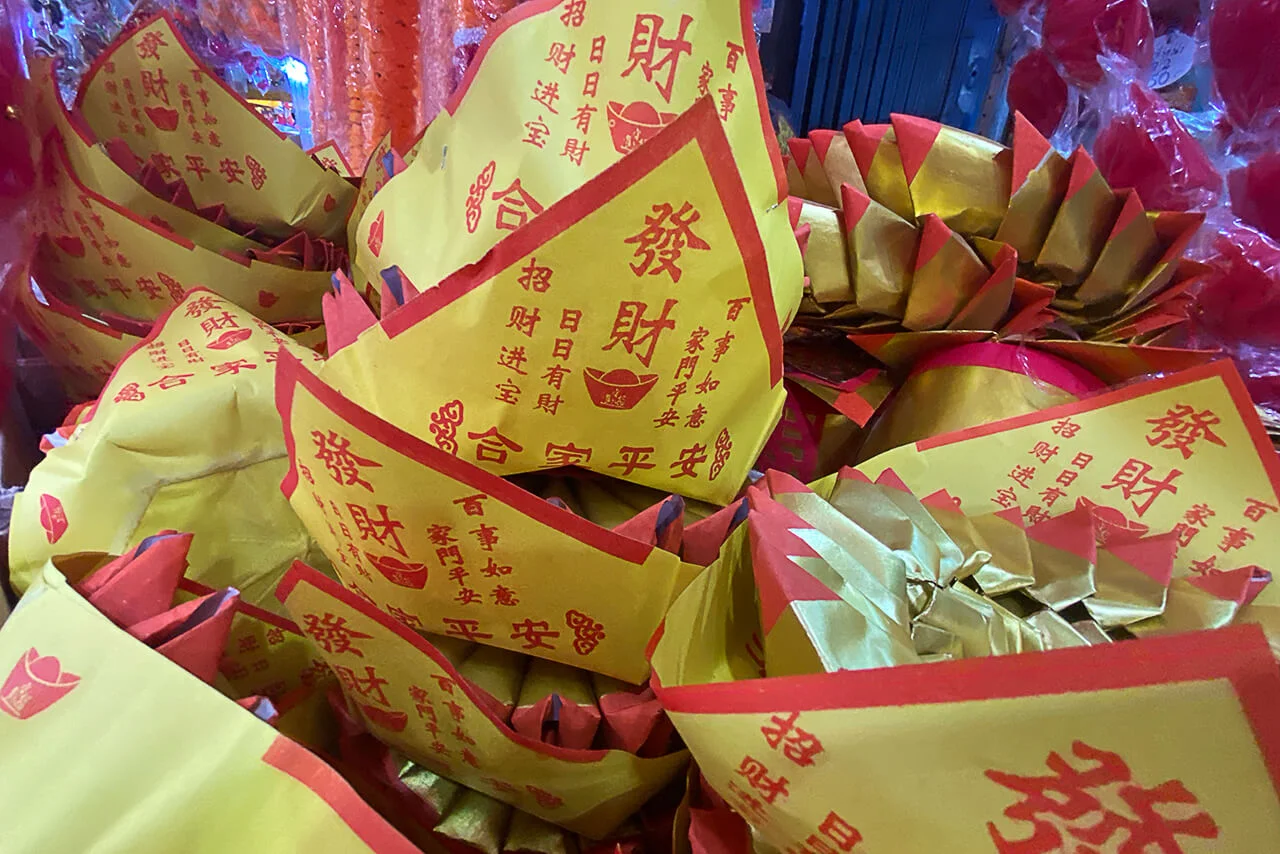
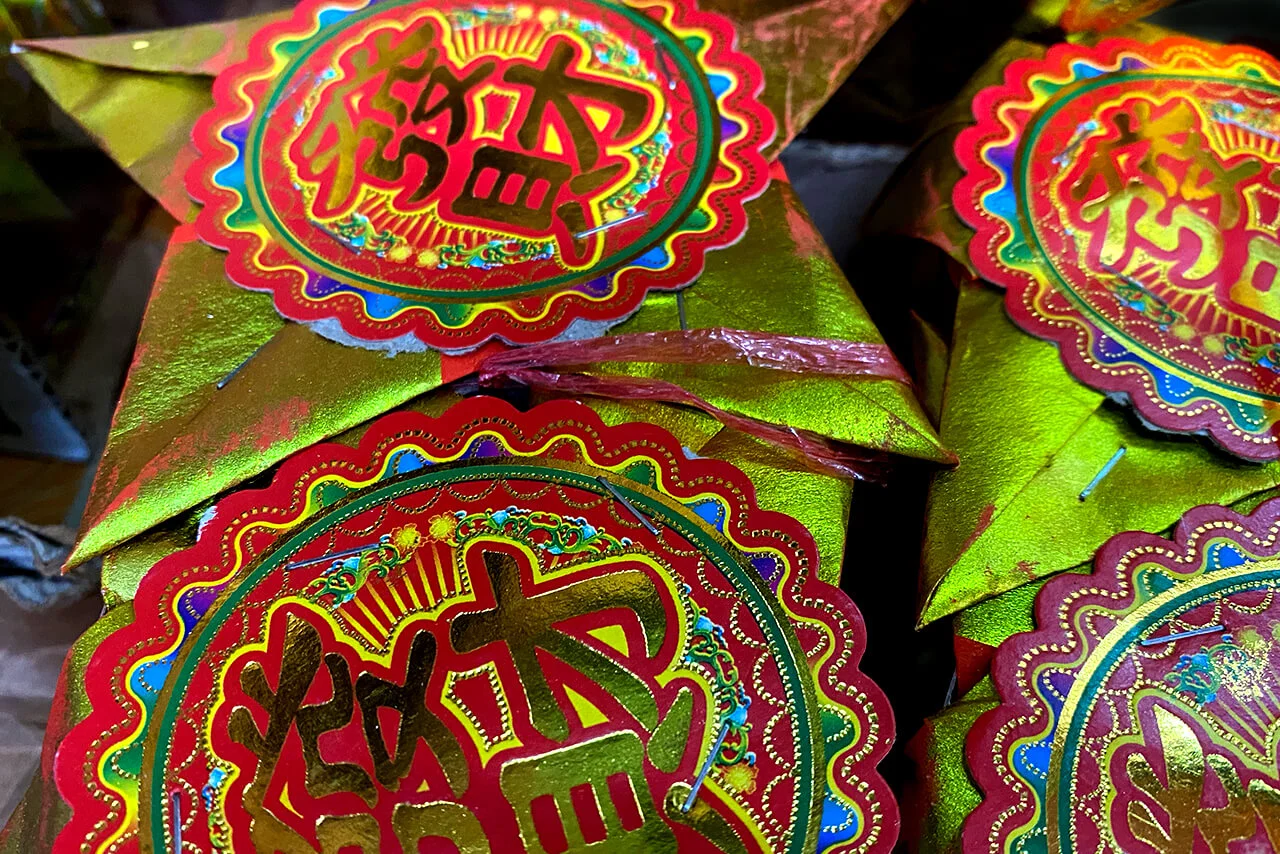
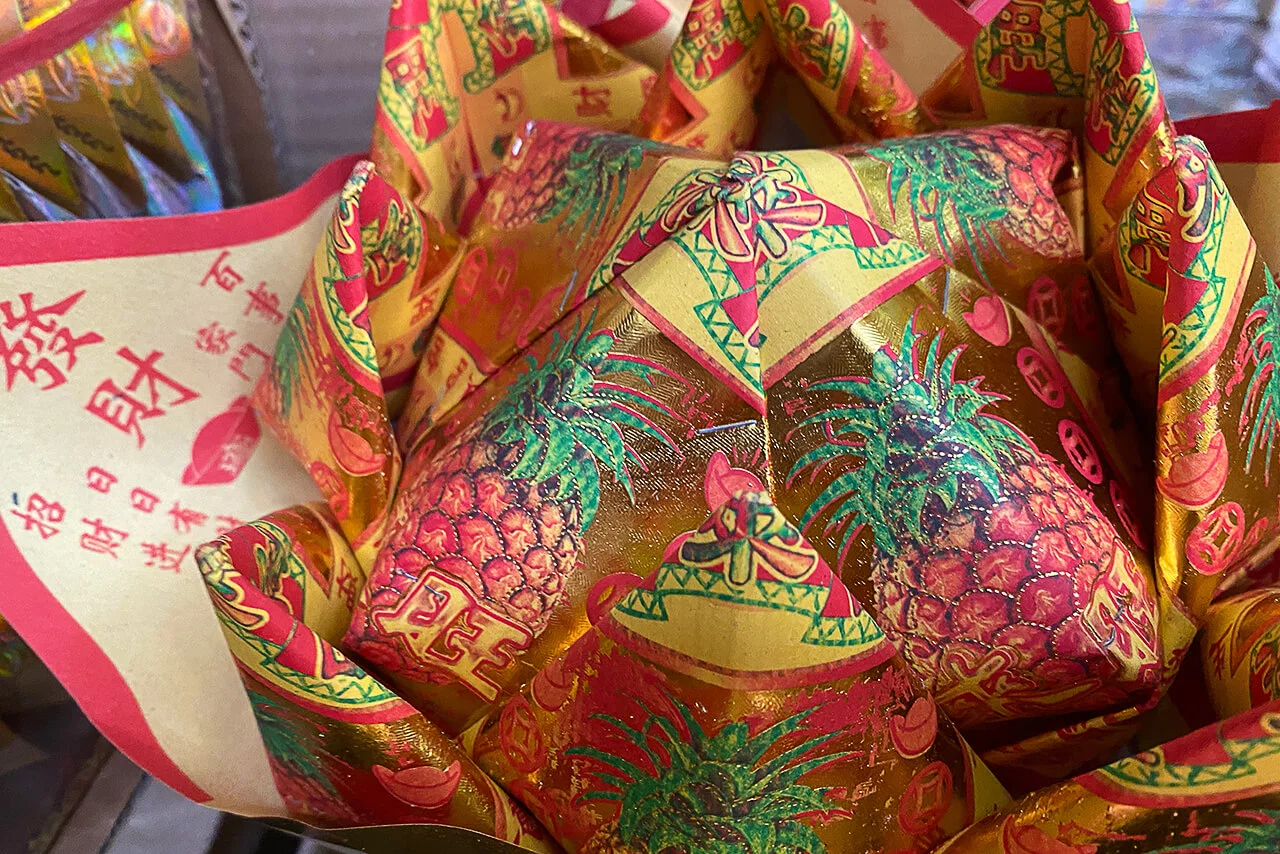
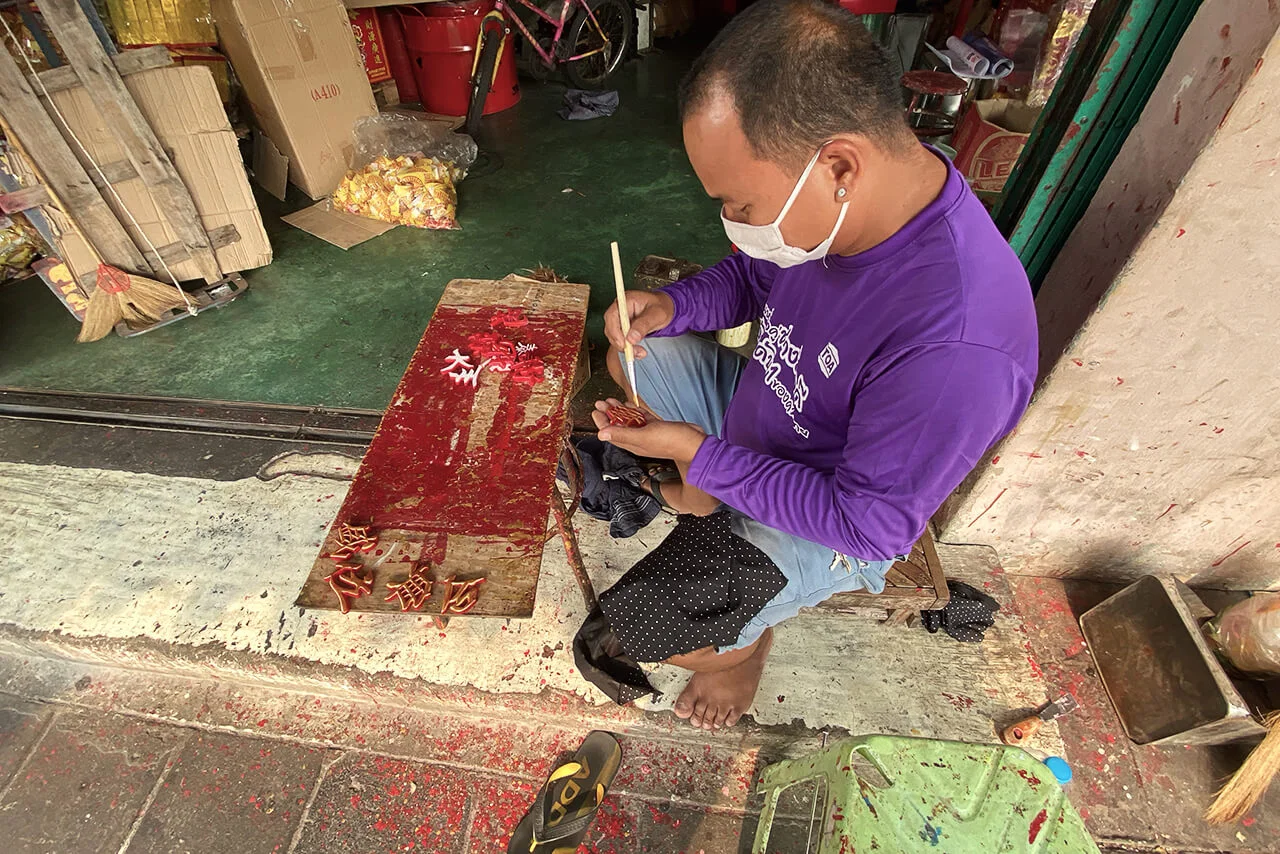
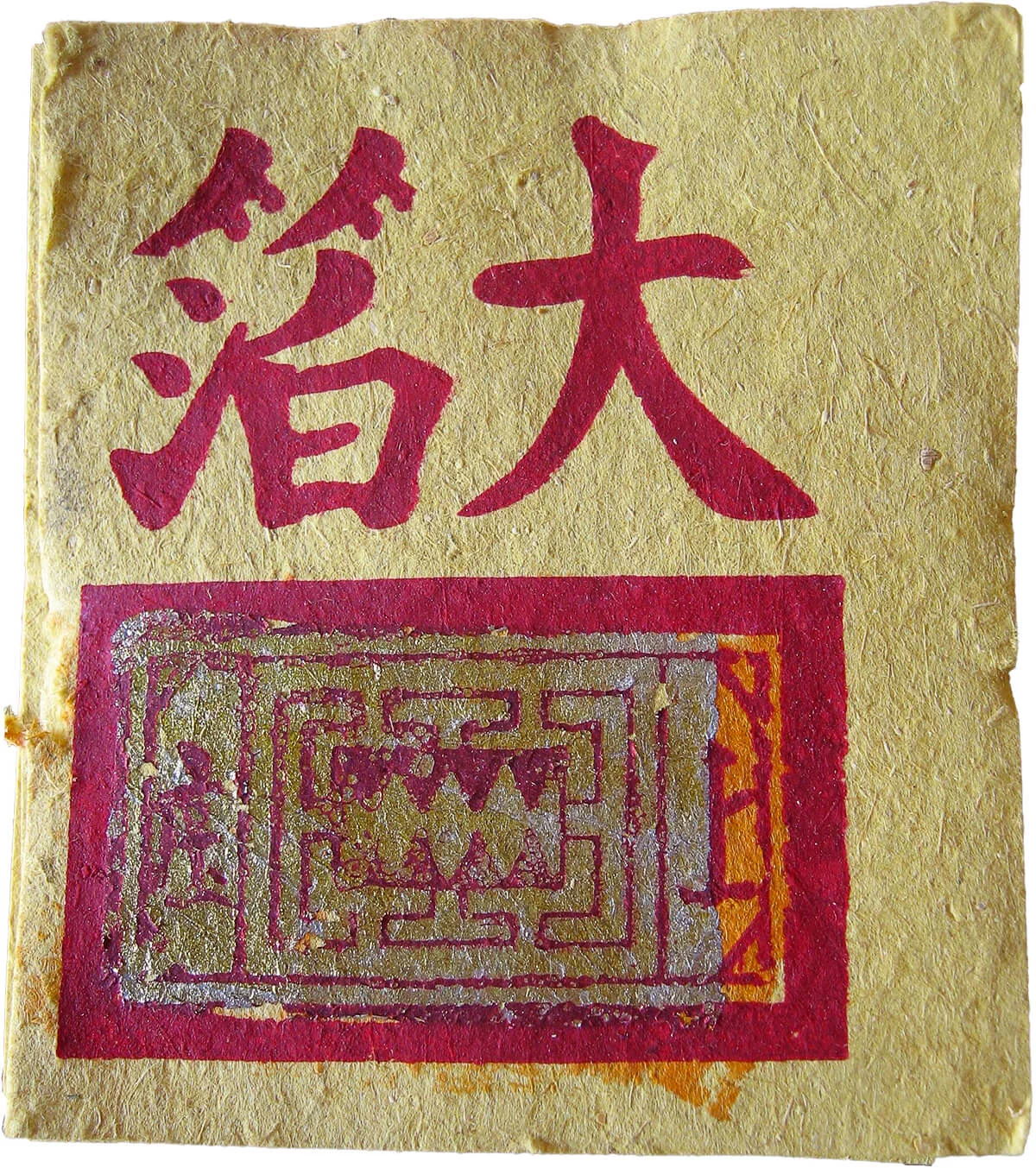
The burning of paper offerings has formed an integral part of traditional Chinese ancestor veneration for millennia. Early forms of so-called joss paper consisted of square sheets in yellow or white, partially coated with gold or silver pigment and often accented with red or orange. This “gold paper” was offered in ritual fire, intended to appease spirits and deities.
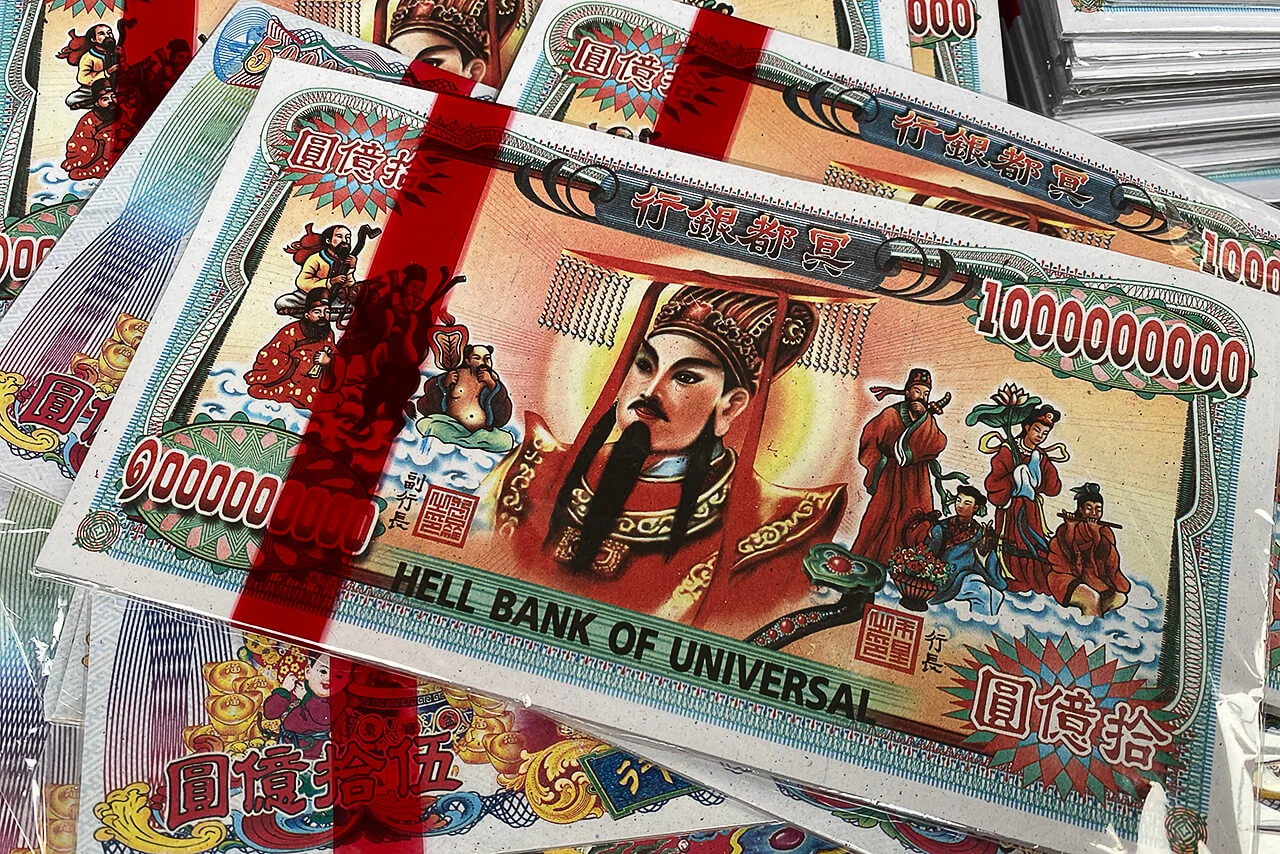
From the belief that deceased ancestors must settle debts in the afterlife emerged the practice of burning hell money—artificial banknotes printed with fantastically high denominations. Their design typically draws on the currency of the Republic of China: the obverse commonly features the Jade Emperor—Yu Di, regarded in Daoist cosmology as the “Ruler of Heaven”—alongside the signature of Yánluó, the “King of Hell.” The reverse depicts the so-called Hell Bank. Sold in thick bundles, these notes are burned in great quantities during the New Year festivities.
For a contemporary perspective on these materials, see Joss Paper Archive by Annette An-Jen Liu.
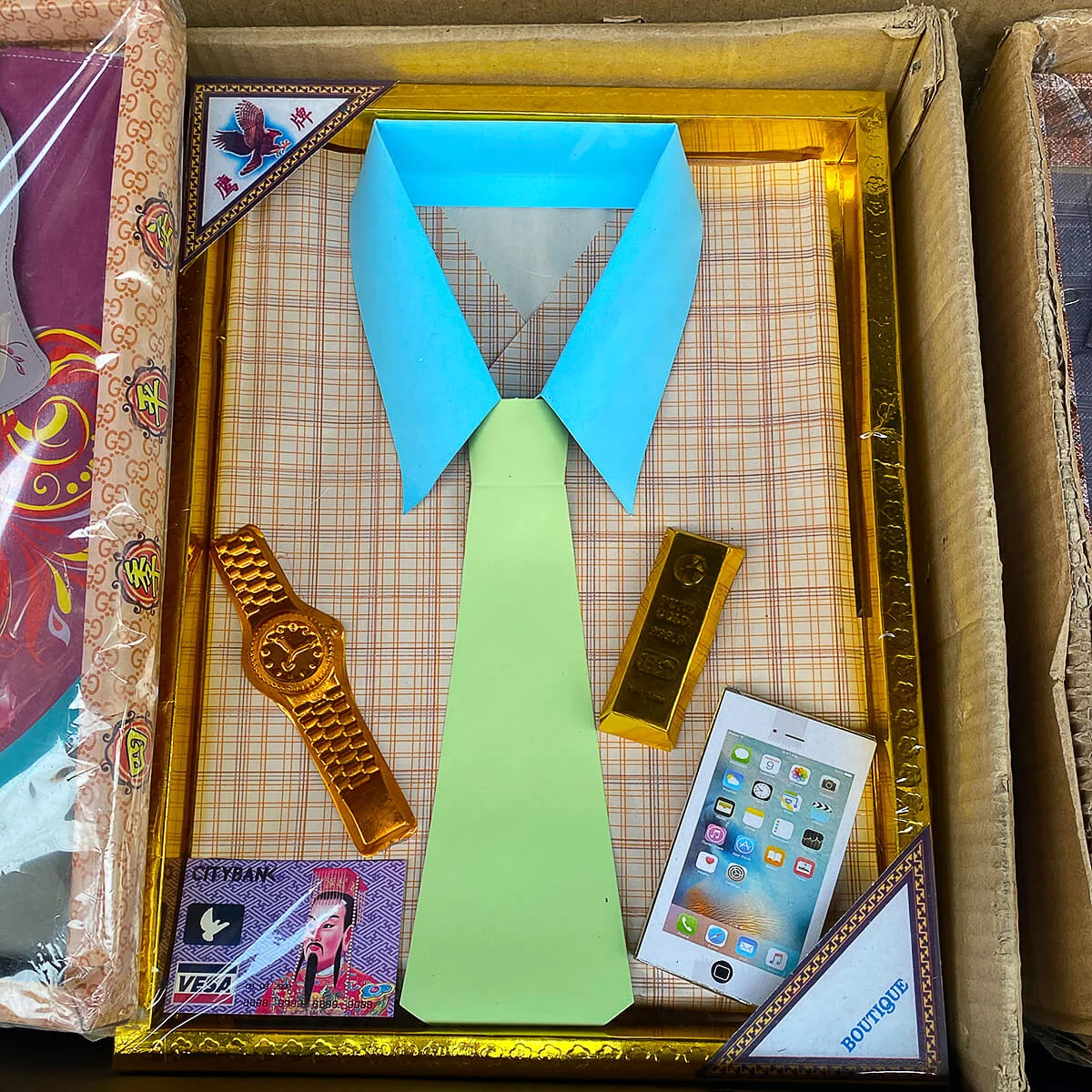
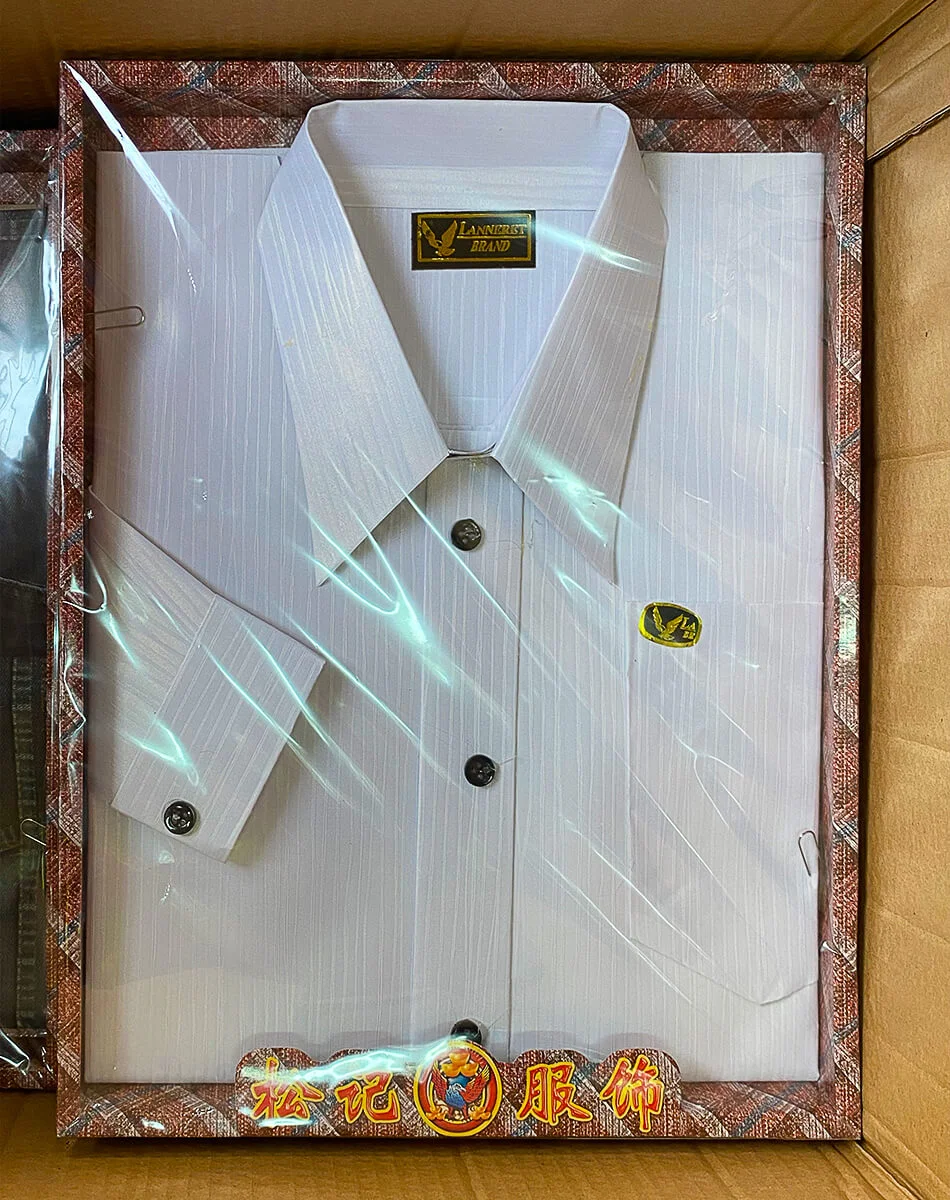
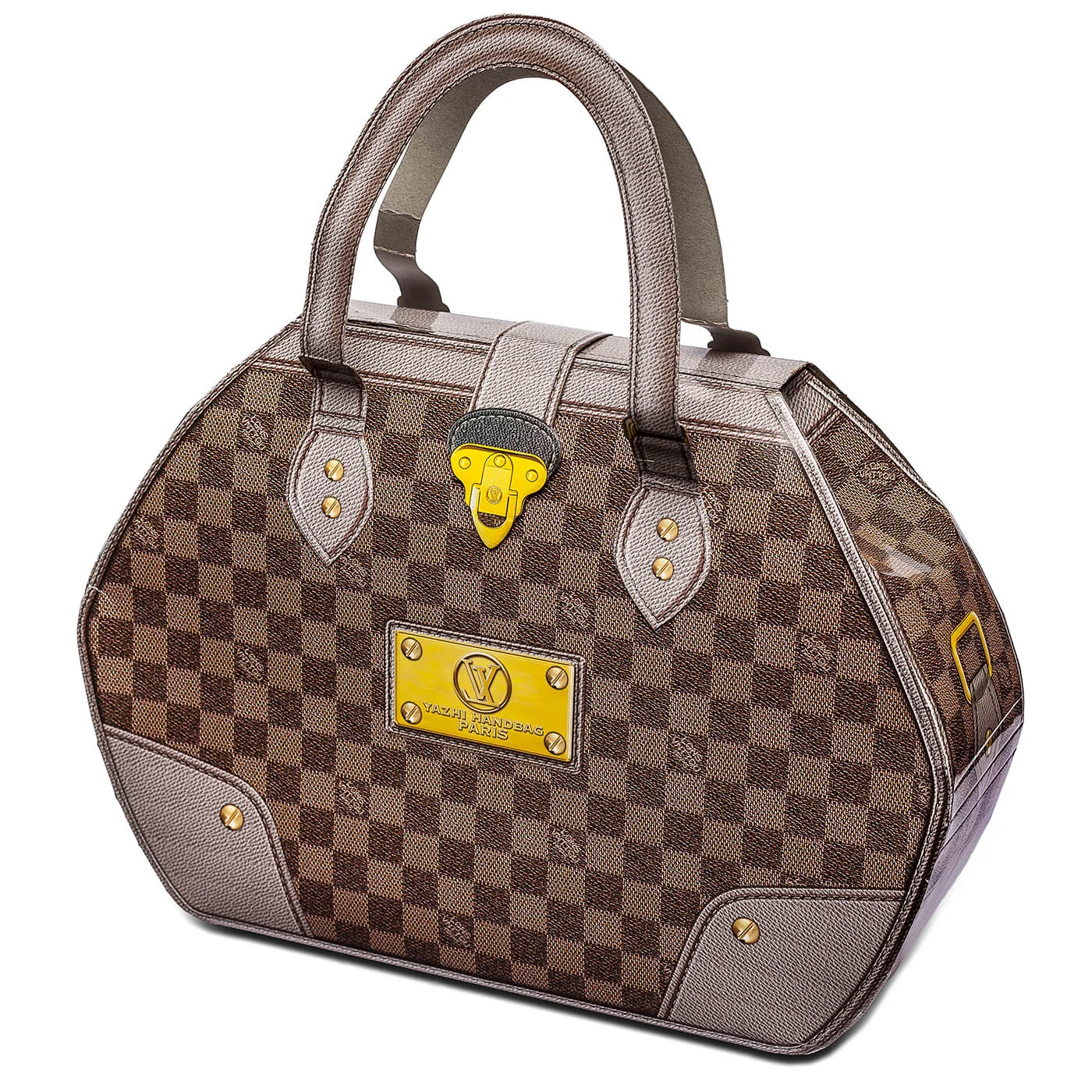
In recent years, the burning of paper offerings for the ancestors has taken on increasingly extravagant forms. Where once the ritual involved modest sets of cigarettes, dentures, and other everyday necessities, today it encompasses meticulous paper replicas of Western consumer goods.
From Chanel handbags and Lacoste shirts to Gucci shoes and even high-performance automobiles “made in Germany,” the ancestors are now supplied with the full spectrum of contemporary luxury culture. In 2004, the Chinese authorities sought—at least in part—to curb the more excessive manifestations of this practice, going so far as to prohibit paper replicas of items such as Viagra and hostesses.
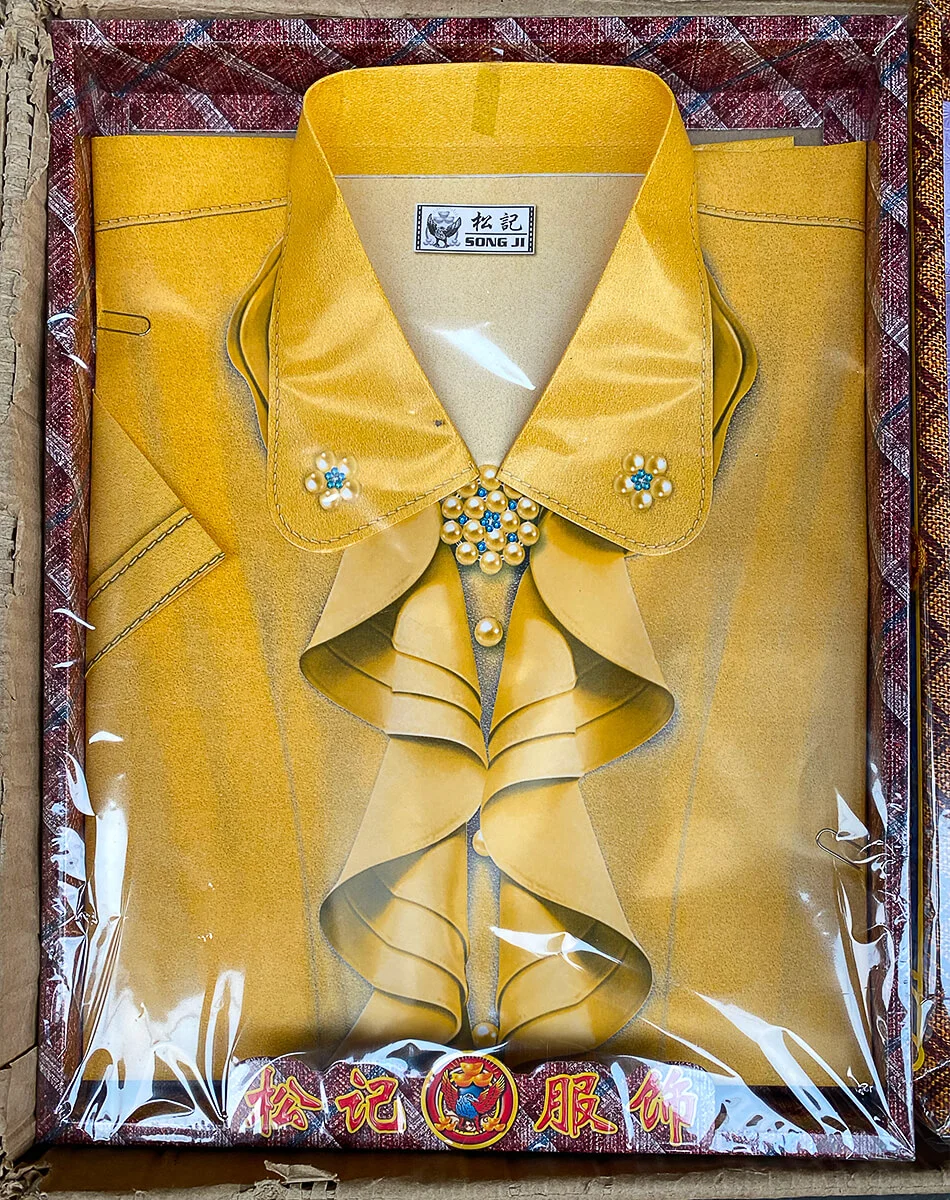
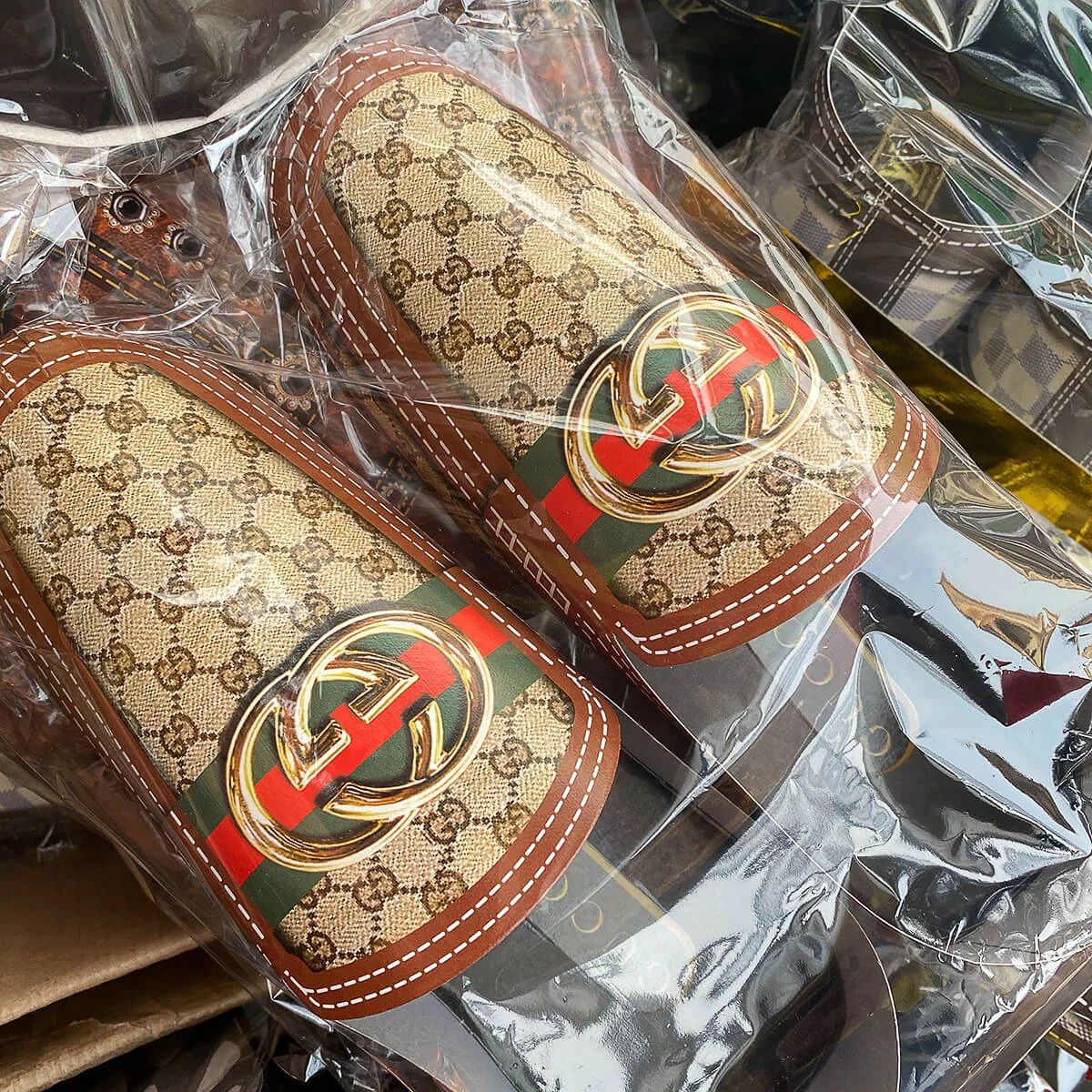
The excessive burning of paper offerings has come under increasing scrutiny. Medical professionals warn of carcinogenic substances detected in the ash residues, while during festive periods many residents report respiratory distress, irritated mucous membranes, and conjunctival inflammation. In Bangkok—already burdened by high levels of fine particulate pollution—calls for a ban are growing ever louder.
At the same time, a gradual shift in attitude can be observed within Chinatown itself. Many residents now argue that consideration should extend not only to the ancestors, but also to those living in the present, and have begun to limit the quantity of offerings burned. According to a report in the Bangkok Post, sales of joss paper declined by 20 to 30 per cent over the past year.
It is therefore entirely conceivable that these paper offerings may soon disappear from the streetscape of Chinatown altogether.


Write comment
Write comment
Comments
No Comments